

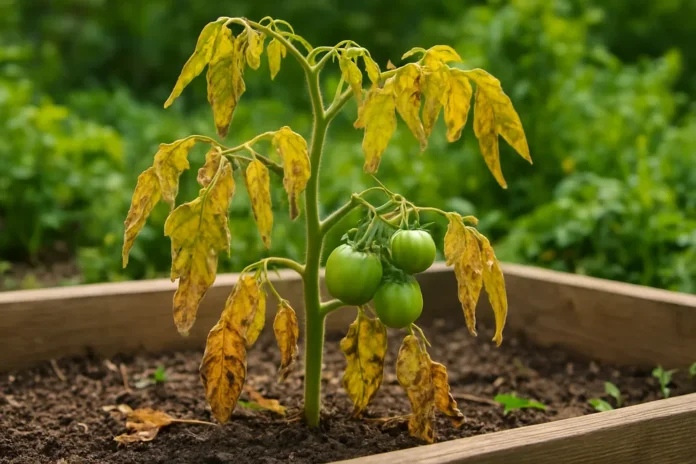
A tomato plant usually starts dying because of watering stress, disease, pests, root damage, or extreme temperatures. The exact cause often shows up in the pattern of wilting, yellowing, spots, stem damage, or poor fruit growth.
Seeing a tomato plant suddenly look weak, wilted, or discolored can be frustrating, especially when it seemed healthy just days earlier. A dying tomato plant is usually reacting to a problem in its roots, leaves, stem, or growing conditions rather than simply reaching the end of its life.
Tomatoes decline for a handful of common reasons: too much or too little water, fungal or bacterial disease, insect pressure, heat swings, nutrient imbalance, or physical root stress. The good news is that the symptoms often leave clues. A plant that wilts in wet soil points to a different issue than one with dry, crispy leaves or dark spots spreading up the stem.
In most home gardens, the fastest way to narrow it down is to match what you see with how the plant is growing. Look at the leaves, the stem near the soil line, the moisture level in the soil, and whether the damage is happening all over the plant or only on one side or one set of leaves.
The Most Common Reasons Tomato Plants Decline
Tomato plants are vigorous when conditions are right, but they are also quick to show stress. A plant may appear to be dying because it is losing water faster than roots can replace it, because roots are rotting in saturated soil, or because disease is blocking the plant's ability to move moisture and nutrients.
- Inconsistent watering that leads to wilt, blossom drop, and root stress
- Overwatering or poorly drained soil that causes yellow leaves and root rot
- Fungal or bacterial diseases such as early blight, fusarium wilt, verticillium wilt, or bacterial wilt
- Pests that weaken the plant, including aphids, spider mites, whiteflies, flea beetles, and hornworms
- Heat, cold snaps, or sudden weather shifts that shock the plant
- Nutrient problems, especially too much fertilizer or depleted soil
- Transplant shock, root disturbance, or container crowding
Some of these problems can be corrected quickly, while others are difficult to reverse once the vascular system or roots are badly damaged. That is why symptom pattern matters so much.
Watering Problems Are the Top Cause
Underwatering and Drought Stress
Tomatoes need steady moisture, especially once they begin flowering and fruiting. When the soil gets too dry, leaves may droop in the afternoon, curl inward, and eventually turn brown at the edges. Flowers may drop before setting fruit, and small fruit may stop developing.
A deeply thirsty plant usually perks up after a thorough watering, at least early in the problem. If drought stress continues, lower leaves often yellow and die back first because the plant is conserving resources.
Overwatering and Poor Drainage
Too much water can look surprisingly similar to too little water because both cause wilting. The difference is in the soil and leaf color. Overwatered tomatoes often sit in persistently wet soil, develop limp yellow leaves, and show slow growth even when temperatures are favorable.
If roots stay waterlogged, they cannot access oxygen. That leads to root rot, a condition that causes general decline, leaf drop, and sometimes a sour smell in containers. Once roots begin rotting, the plant may keep worsening even if you stop watering heavily.
- Dry soil with wilt usually suggests underwatering
- Wet soil with yellowing and wilt usually suggests overwatering or drainage issues
- Containers without enough drainage holes decline faster than in-ground plants
- Heavy clay soil keeps roots too wet after rain or frequent irrigation
Diseases That Make a Tomato Plant Look Like It Is Dying
Early Blight and Leaf Spot Diseases
Fungal diseases often begin on older lower leaves. You may see brown spots with yellow halos, target-like rings, or widespread yellowing that climbs upward. As more leaves die, the plant loses vigor and fruit is exposed to sunscald.
A tomato with severe foliar disease can appear to be dying because it cannot keep enough healthy leaf area to support growth. Humid weather, overhead watering, and crowded plants make these problems much worse.
Fusarium Wilt and Verticillium Wilt
Wilt diseases are especially frustrating because the soil may be moist while the plant still droops. Fusarium and verticillium move through the plant's vascular system, limiting water flow from the roots upward. Yellowing often starts on lower leaves and may affect one side of the plant before spreading.
Cutting a lower stem may reveal brown streaking inside. These diseases often worsen as the plant matures and temperatures rise. Unfortunately, infected plants rarely recover fully.
Bacterial Wilt and Stem Infections
Bacterial wilt can make a tomato collapse rapidly while leaves stay relatively green at first. The plant may wilt during the day and fail to recover overnight. In warm regions, this can happen very quickly.
Stem cankers, black lesions, or soft rotting tissue near the base can also explain a sudden crash. If the stem is badly damaged, the plant cannot move water properly and may die back fast.
Pests That Weaken or Kill Tomato Plants
Insects do not always kill tomatoes outright, but heavy infestations can drain plant energy, spread disease, and leave plants vulnerable to heat and water stress. Some pests are easy to miss until the plant is already declining.
Sap-sucking Pests
Aphids, whiteflies, and spider mites feed by piercing plant tissue. This can cause yellow speckling, leaf curl, sticky residue, and overall loss of vigor. Spider mites are especially common in hot, dry weather and can quickly turn leaves bronzed and crispy.
Chewing Pests
Tomato hornworms, cutworms, flea beetles, and caterpillars remove foliage or damage stems. Hornworms can strip leaves fast enough to make a healthy plant look bare in a day or two. Cutworms are more dangerous to young plants because they can sever stems near the soil line.
- Fine webbing and stippled leaves often point to spider mites
- Clusters of tiny insects on new growth suggest aphids
- Sudden missing foliage with large droppings often means hornworms
- Stem damage at the base is common with cutworms or physical injury
Heat, Cold, and Weather Stress
Tomatoes love warmth, but extremes can push them into rapid decline. Prolonged heat above about 90 degrees Fahrenheit can cause blossom drop, leaf roll, and persistent wilt even when the soil is moist. Black plastic, reflected heat from walls, and containers that bake in afternoon sun make this more severe.
Cold nights and late frosts can be even more dramatic. Chilled tomato plants may develop dark, water-soaked patches, drooping stems, and stalled growth. If the stem tissue freezes, the plant may never recover.
Strong wind, hail, and heavy storms can also shred leaves, crack stems, and disturb roots. After weather damage, plants may look like they are dying even though the original problem was physical injury rather than disease.
Root Stress and Container Problems
Transplant Shock
Newly planted tomatoes sometimes wilt and stall because roots were disturbed or because they were moved into sun, wind, or cooler nights too quickly. This is common with seedlings that were not hardened off well before planting outdoors.
A transplant-shocked tomato may look limp for several days but can recover if the stem remains firm and new growth begins to appear.
Root-bound Plants and Small Containers
Tomatoes grown in undersized pots dry out fast, heat up quickly, and run out of nutrients sooner. Roots circling a container may struggle to support top growth once the plant gets large and starts setting fruit. This often causes repeated wilting, yellow lower leaves, and poor fruit size.
Container tomatoes also suffer when potting mix compacts and drains unevenly. Water may run down the sides while the root ball stays dry in the middle, creating a hidden moisture problem.
Nutrient Issues and Fertilizer Mistakes
Tomatoes are heavy feeders, but more fertilizer is not always better. Too little nutrition can leave plants pale and weak, while too much fertilizer, especially high-nitrogen products, can burn roots or cause lush leafy growth with poor fruiting.
Nitrogen deficiency usually starts as general yellowing on older leaves. Magnesium deficiency can cause yellowing between leaf veins. Potassium shortage can lead to scorched leaf edges and weak fruit development. On the other hand, fertilizer burn may cause sudden leaf browning, crispy margins, and rapid wilt if salts build up around roots.
- Pale older leaves often suggest nutrient depletion
- Dark green, fast-growing plants with little fruit often have excess nitrogen
- Crispy leaf edges after feeding can signal fertilizer burn
- Container plants need more regular feeding than in-ground tomatoes
How to Tell What Is Happening by the Symptom Pattern
When a tomato plant seems to be dying, the pattern of decline usually tells more than any single symptom. Compare the condition of the leaves, soil, and stem before assuming one cause.
- Wilting in dry soil usually points to underwatering, root restriction, or heat stress.
- Wilting in wet soil often points to overwatering, root rot, or vascular wilt disease.
- Yellow lower leaves first commonly suggests watering stress, nutrient deficiency, or early disease.
- Spotted leaves spreading upward often indicate fungal or bacterial leaf disease.
- Sudden collapse of an otherwise green plant may suggest bacterial wilt, severe root injury, or stem damage.
- Leaf curl without major discoloration is often tied to heat, drought, pruning stress, or irregular watering.
- Chewed leaves or stripped stems strongly suggest insect feeding or animal damage.
One important note: older lower leaves naturally yellow as a tomato matures, especially late in the season. That alone does not mean the whole plant is dying. Trouble is more serious when symptoms move quickly, spread through most of the plant, or affect the growing tip and main stem.
Can a Dying Tomato Plant Recover?
Sometimes yes. A tomato suffering from drought, minor transplant shock, mild nutrient deficiency, or temporary heat stress often rebounds if conditions improve quickly. Plants with a healthy stem and active new growth have the best chance of recovering.
Recovery is less likely when the roots are badly rotted, the stem is girdled or split, or the plant has advanced wilt disease. In those cases, the plant may continue declining even after watering or feeding changes. Gardeners often waste time trying to save a plant that is too far gone, especially if the vascular tissue is already infected.
If only part of the plant looks affected, such as a few lower leaves with spotting, recovery is much more realistic than if the entire plant is limp, yellow, and failing to set new growth.
How to Prevent Tomato Plants From Dying in the Future
Prevention is much easier than trying to reverse a severe decline. Tomatoes grow best when watering, spacing, and sanitation are steady from the start.
- Water deeply and consistently rather than shallowly every day
- Use mulch to keep soil moisture even and reduce splash-up of disease spores
- Plant in full sun with good air circulation
- Avoid wetting leaves when possible, especially in humid weather
- Rotate where tomatoes are planted to reduce soilborne disease pressure
- Choose disease-resistant varieties when wilt diseases are common in your area
- Give container plants large pots, quality potting mix, and regular feeding
- Inspect leaves and stems weekly so pests and disease are caught early
Healthy roots are the foundation of a healthy tomato. Most serious decline starts below the soil line, either from moisture problems, compaction, root injury, or pathogens that take advantage of stressed plants.
When to Remove the Plant and Start Over
If a tomato is badly infected with wilt disease, collapsing from stem rot, or completely consumed by root problems, removal may be the best option. Leaving a diseased plant in place can increase pressure on nearby tomatoes, especially in warm, wet weather.
A plant is usually not worth saving when most leaves are dead, the main stem is soft or blackened, there is no healthy new growth, or wilting persists in properly moist soil. In containers, it is often easier to discard the plant, sanitize the pot, and start with fresh mix than to fight a severe root or disease issue.
Starting over is not failure. It is often the fastest way to protect the rest of the garden and get back to productive plants.
FAQ
Can a Tomato Plant Come Back After Wilting?
Yes, if the wilt is from temporary drought, heat, or mild transplant shock. Recovery is much less likely if the plant has root rot or a wilt disease.
Why Is My Tomato Plant Wilting Even Though the Soil Is Wet?
Wet-soil wilt often points to overwatering, poor drainage, root rot, or a vascular disease such as fusarium or bacterial wilt. The roots may be unable to move water through the plant.
Should I Cut Off Dying Tomato Leaves?
Remove leaves that are clearly yellow, brown, spotted, or diseased, especially near the bottom of the plant. Do not strip off too much healthy foliage at once because the plant still needs leaves to support growth.
Can Too Much Fertilizer Kill a Tomato Plant?
Yes. Excess fertilizer can burn roots, create salt buildup, and cause leaf scorch or rapid decline, especially in containers.
Why Is Only One Tomato Plant Dying While the Others Look Fine?
That often means a plant-specific issue such as transplant damage, stem injury, root rot in one spot, or a disease that infected that plant first. It can also happen if one container dries out faster or drains poorly.
How Often Should I Water a Tomato Plant That Looks Stressed?
Watering frequency depends on heat, soil type, and whether the plant is in a container or in the ground. Tomatoes do best with deep, even moisture rather than frequent light watering.
Do Yellow Leaves Mean My Tomato Plant Is Dying?
Not always. A few yellow lower leaves can be normal, but widespread yellowing with wilt, spotting, or stem damage usually signals a bigger problem.
Need the right fix fast? Read our tomato disease and treatment guides to match symptoms, choose effective products, and protect the rest of your plants before the problem spreads.
