

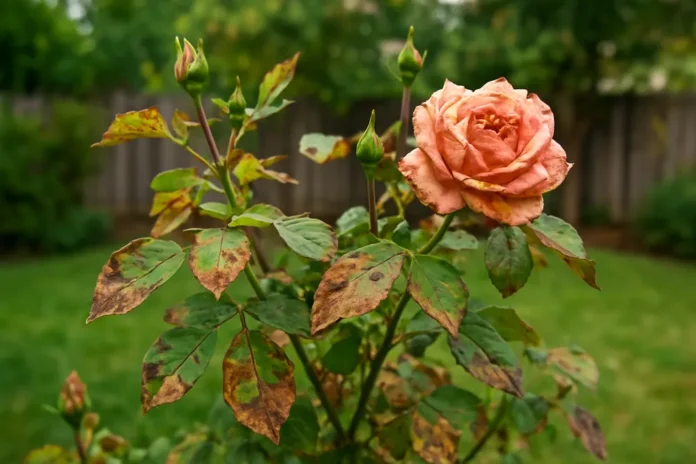
A rose plant usually turns brown because of water stress, disease, weather damage, pests, or normal cane dieback. Browning can show up on leaves, buds, flowers, or stems depending on the underlying problem.
Seeing a rose plant decline can be frustrating, especially when healthy green growth starts turning brown on leaves, petals, or canes. Browning is a general stress signal, not a single diagnosis, so the exact cause depends on where it appears and how fast it spreads.
In many home gardens, roses brown from inconsistent watering, fungal disease, intense heat, cold injury, pest pressure, or root problems. Sometimes the issue is minor and temporary, like spent blooms crisping in summer. Other times, brown stems or blackened tissue signal a more serious problem that needs prompt attention.
The good news is that roses often recover well once the cause is identified. Looking at the pattern of browning, the season, and recent weather usually makes it much easier to narrow down what is happening.
What Browning Usually Means on Roses
Brown tissue means plant cells have died or dried out. On roses, that damage may come from dehydration, infection, sun scorch, freezing temperatures, chemical burn, or injury to the roots. Because roses have leaves, flower buds, petals, and woody canes, browning can look very different from one plant to another.
The location matters. Brown leaf edges often point to water stress, salt buildup, or heat. Brown spots on leaves may suggest fungal disease. Brown petals or buds can come from thrips, botrytis, or weather swings. Brown canes often indicate winter kill, stem canker, or dead wood.
- Leaves turning tan or crispy often suggest drought, heat, wind, or chemical damage.
- Leaves with dark or purplish spots that later turn brown often point to fungal disease.
- Buds that brown before opening may be affected by botrytis blight, thrips, or erratic moisture.
- Flowers that brown quickly in hot weather may simply be aging faster than usual.
- Canes that are brown on the outside and brown inside when cut are usually dead.
Watering Problems Are a Leading Cause
Underwatering and Drought Stress
Roses need steady moisture, especially in summer and during active bloom. When soil gets too dry, the plant cannot move enough water to the leaves and flowers. Edges may brown first, petals may crisp, and new growth can wilt and then dry out. Container roses are especially vulnerable because pots heat up and dry faster than garden soil.
Overwatering and Poor Drainage
Too much water can also cause browning. Saturated soil pushes out oxygen, weakens roots, and encourages root rot. A rose with damaged roots may look dry even when the soil is wet because it can no longer take up water properly. Lower leaves may yellow, then brown and drop, while canes start declining from the base upward.
How This Browning Typically Looks
- Crispy leaf margins and dry buds often follow underwatering.
- Soft yellowing foliage that later browns often follows overwatering.
- A rose that browns quickly after a heat wave may have dried out between waterings.
- A rose that stays dull, limp, and discolored in wet soil may have root stress.
Heat, Sun, Wind, and Weather Extremes
Roses love sun, but even sun-loving plants can scorch during intense summer weather. High heat, reflective surfaces, dry wind, and sudden exposure after transplanting can all cause leaves or petals to brown. Afternoon sun is often harsher than morning sun, especially in hotter parts of the U.S.
Petals are often the first part to show weather damage. Blooms may brown along the edges, fade quickly, or collapse before opening well. White, pale pink, and thin-petaled roses tend to show scorch sooner than darker, thicker-petaled varieties.
Cold can be just as damaging. Late spring frosts may blacken or brown tender new growth, while winter injury can kill canes back to healthy tissue. In exposed sites, cold wind can dry out stems and buds even when the roots are still in frozen ground.
- Heat scorch often causes dry brown leaf edges and crisped blooms.
- Sunburn may create bleached areas that later turn tan or brown.
- Frost damage usually darkens soft new growth quickly after a cold night.
- Winter dieback often leaves canes brown from the tip downward.
Fungal Diseases Commonly Cause Brown Spots and Browning Growth
Black Spot and Other Leaf Diseases
Black spot is one of the most common rose diseases. It starts as dark spots on leaves, often with yellowing around them, and infected leaves eventually turn brown and drop. Cercospora leaf spot and anthracnose can look similar, especially in humid weather or when foliage stays wet for long periods.
Botrytis Blight on Buds and Flowers
Botrytis often appears in cool, damp conditions. Buds may fail to open, petals may develop brown blotches, and flowers can rot or collapse. This problem is especially common when roses are crowded or when old blooms are left on the plant during wet spells.
Stem Cankers and Cane Dieback
Brown or black lesions on canes may indicate a canker disease. These infections often enter through pruning cuts, winter injury, or other wounds. Once a cane is girdled, growth above that point turns brown and dies back.
- Leaf diseases usually begin as spots before whole leaves brown.
- Botrytis is more likely when buds brown in cool, wet weather.
- Cane cankers are more likely when only one or two stems die back while the rest of the plant looks normal.
- Poor airflow and overhead watering make fungal issues worse.
Pests Can Trigger Browning on Leaves, Buds, and Blooms
Insects and mites do not always leave obvious chew marks. Some feed by piercing plant tissue and sucking out juices, which can make leaves bronze, flowers brown, or buds fail to open. When feeding is heavy, the plant looks scorched even though disease is not the primary issue.
Thrips in Flower Buds
Thrips are tiny insects that feed inside buds and flowers. Petal edges may turn brown, blooms may open deformed, and lighter-colored roses often show the worst damage. Browning that is concentrated on petals rather than leaves often points in this direction.
Spider Mites During Hot, Dry Weather
Spider mites thrive in heat and low humidity. Leaves may look dusty, stippled, bronzed, or scorched before turning brown and dropping. Fine webbing can appear when infestations are advanced.
Rose Slugs and Other Feeders
Rose slugs, sawfly larvae, and similar pests skeletonize leaves, leaving a papery brown surface. Aphids are less likely to directly cause browning, but heavy infestations can distort tender growth and make the plant more vulnerable to stress.
Soil, Fertilizer, and Root Stress Can Also Be Responsible
Roses perform best in well-drained soil with steady moisture, moderate fertility, and a slightly acidic to neutral pH. If the root zone is compacted, salty, nutrient-poor, or chemically stressed, browning can follow. This is especially common near driveways, sidewalks, or lawns that receive weed-and-feed products.
Fertilizer Burn
Too much fertilizer can pull moisture out of roots and leaf tissue, leading to scorched brown edges. Fast-release products applied to dry soil are the most likely to cause damage. Browning may show up soon after feeding, especially if the plant was already stressed.
Salt Buildup in Containers
Potted roses are prone to salt accumulation from fertilizer and hard water. White crust on the soil or pot rim, along with brown leaf tips, is a common clue. Containers also magnify temperature swings and root crowding.
Transplant Shock and Root Damage
A newly planted rose may brown if roots were disturbed, planted too deeply, or allowed to dry during installation. Construction, digging, or repeated foot traffic around older plants can damage roots too, causing gradual decline above ground.
Sometimes Browning Is Normal Aging or Seasonal Dieback
Not every brown petal or cane means the plant is in trouble. Spent flowers naturally fade and dry. Older interior leaves may yellow and brown before dropping as the plant redirects energy to fresh growth. In colder regions, some winter dieback is common on less hardy varieties.
This kind of browning is usually limited and predictable. A healthy rose may lose old leaves low in the plant while continuing to produce strong green canes and fresh buds. Likewise, pruning often reveals a bit of dead tip growth after winter, even when the crown is healthy.
- Old flowers browning after peak bloom is normal.
- A few brown twig tips after winter can be normal dieback.
- Lower leaves aging out is less concerning than widespread browning across the whole plant.
- Uniform new growth failure is more serious than a few isolated brown parts.
How to Tell Which Problem You Are Dealing With
Pattern recognition is the fastest way to narrow down the cause. Start with which plant part is browning first, then match that to recent weather, watering, and general plant condition. Roses rarely brown randomly.
- Brown leaf edges after hot weather usually suggest heat, drought, or salt stress.
- Brown spotted leaves with yellow halos usually suggest fungal leaf disease.
- Brown buds that do not open in damp weather often suggest botrytis.
- Brown petal edges with distorted blooms often suggest thrips.
- Brown cane tips after winter usually suggest cold damage or dieback.
- Whole-plant decline in wet soil often points to root problems.
If the rose is in a pot, include root crowding, heat around the container, and salt buildup higher on the suspect list. If it is planted near turf, herbicide drift and shallow competition from grass may also contribute.
How to Help a Brown Rose Recover
Roses recover best when the basic stress is corrected quickly and the plant is not pushed with extra fertilizer or heavy pruning at the wrong time. Recovery starts with stabilizing moisture, improving airflow, and removing tissue that is clearly dead or diseased.
- Water deeply and consistently rather than lightly and often. Let the soil stay evenly moist, not constantly soggy.
- Mulch around the root zone to buffer heat and reduce moisture swings, while keeping mulch away from direct contact with the canes.
- Prune out dead canes and spent blooms, cutting back to healthy green tissue where appropriate.
- Remove badly diseased fallen leaves and debris from around the plant to reduce reinfection.
- Avoid wetting foliage late in the day, since long periods of leaf moisture encourage fungal problems.
- Pause fertilizer if the plant looks stressed or scorched. Resume only after healthy growth returns.
- If the rose is potted, consider repotting if roots are crowded or the soil drains poorly.
A rose with some green canes and healthy buds can often bounce back. A rose with brown, brittle canes all the way to the base is less likely to recover, especially if the crown and roots have been damaged.
When Browning Means the Plant May Not Survive
Severe browning is more serious when the entire plant is affected, canes are hollow or brown inside, and no green tissue remains near the base. Extensive root rot, crown injury, and advanced cane disease can permanently weaken a rose.
If a rose fails to leaf out in season, continues browning despite improved conditions, or shows progressive dieback from the crown outward, replacement may eventually be more practical than continued treatment. This is especially true for very old, heavily diseased, or repeatedly stressed plants.
FAQ
Why Are My Rose Leaves Turning Brown on the Edges?
Brown leaf edges usually point to drought stress, heat, wind, fertilizer burn, or salt buildup. It can also happen when roots are damaged and cannot supply enough moisture to the foliage.
Why Are My Rose Buds Turning Brown Before They Open?
Rose buds often brown before opening because of botrytis blight, thrips, erratic watering, or weather stress. Cool damp spells favor botrytis, while hot dry conditions can dry buds out before they fully develop.
Can Overwatering Make a Rose Turn Brown?
Yes. Overwatering can suffocate roots and lead to root rot, which causes yellowing, browning, wilting, and cane decline even when the soil feels wet.
Why Are My Rose Petals Turning Brown so Fast?
Petals brown quickly in high heat, intense sun, heavy rain, or when thrips feed inside blooms. Older flowers also brown naturally as they fade.
Should I Cut Off Brown Rose Canes?
Yes, if the cane is dead. Prune back gradually until you reach healthy tissue that looks green inside, and remove canes that are fully brown, brittle, or cankered.
Will a Rose Recover After Turning Brown?
Often, yes, if the roots and crown are still healthy and some green tissue remains. Recovery is more likely when the cause is temporary stress rather than severe disease or root failure.
Why Is My Potted Rose Turning Brown Faster than Roses in the Ground?
Container roses dry out faster, heat up more quickly, and are more prone to salt buildup and root crowding. Those stresses can make browning show up sooner and spread faster.
Need the right fix for a struggling rose? Read our rose care and treatment guides to choose the best fungicides, pruners, fertilizers, and watering tools for faster recovery.
