

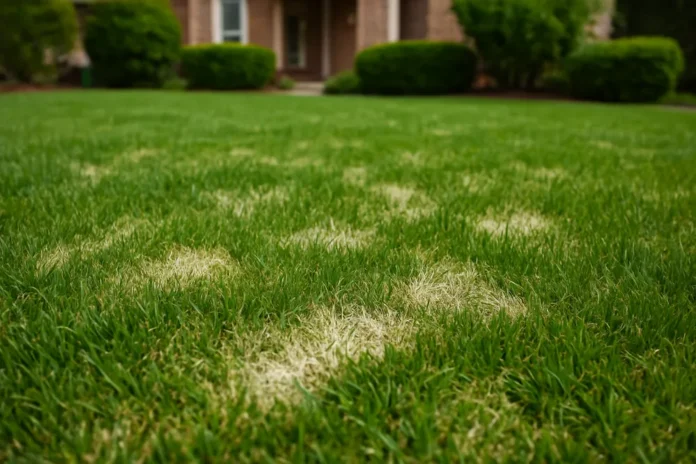
Grass develops white patches most often from fungal disease, powdery mildew, chemical burn, or bleached blades stressed by heat, drought, or improper treatments. In some lawns, insect activity or dead grass tissue can also make patches look pale or white.
Seeing grass turn pale can be alarming, especially when the damage shows up as white patches instead of the usual yellow or brown. In many lawns, white areas are not a single problem but a symptom that can come from fungal growth, residue sitting on the blades, chemical injury, drought stress, or sections of grass that have already died back and faded.
The key is to look closely at what the patch actually looks like. Some white patches appear dusty or fuzzy, some look bleached and straw-like, and others show a circular pattern that points to a lawn disease. Once you match the appearance and timing to the likely cause, it becomes much easier to choose the right fix and prevent the problem from spreading.
What White Patches in Grass Usually Mean
White patches are a visual clue, not a diagnosis by themselves. In a lawn, "white" can mean several different things: a powdery coating sitting on living blades, sun-bleached tissue that has lost color, fungal growth on the leaf surface, or dry dead grass that has faded from tan to almost white. That is why two lawns with similar-looking pale spots can have completely different causes.
Start by asking a few simple questions. Does the grass still feel alive and flexible, or is it brittle? Is there a dust-like coating you can rub off with your fingers? Did the patches appear after a fertilizer application, weed killer treatment, long wet weather, or a heat wave? Are the patches small and scattered, or are they round and expanding?
- A powdery or fuzzy white look often points to fungal activity, especially powdery mildew.
- A bleached, washed-out look often suggests chemical injury, sun scorch, or drought stress.
- A white-tan patch of dead grass may be advanced disease, grub damage, or severe drying.
- A white crust or film can sometimes be product residue, mineral buildup, or hard water deposits.
Common Causes of White Patches in Lawns
Powdery Mildew
Powdery mildew is one of the most common reasons grass looks white instead of yellow or brown. It creates a dusty, gray-white coating on the grass blades, almost like the lawn has been sprinkled with flour. It is especially common in shady areas with poor air circulation, high humidity, and cool to mild temperatures.
This disease is more likely in lawns that stay damp for long periods and receive limited direct sun. Grass under trees, along fences, or beside dense shrubs is particularly vulnerable.
Other Fungal Lawn Diseases
Several lawn diseases can make patches look pale or white, especially as the grass dies and dries out. Dollar spot, snow mold, and certain patch diseases may leave circular or irregular areas that start straw-colored and later fade to a whitish tan. Early in the morning, you may even see cobweb-like fungal threads on the surface.
Fungal issues are more common when lawns are overwatered, fertilized heavily with nitrogen at the wrong time, mowed with dull blades, or left wet overnight. Weather also plays a major role. Extended humidity and poor drainage create ideal disease conditions.
Chemical Burn or Herbicide Bleaching
If white patches appeared soon after applying weed killer, fertilizer, moss control, or another lawn product, chemical injury is a strong possibility. Some herbicides bleach grass tissue, especially if applied during hot weather, mixed too strongly, or sprayed unevenly. Fertilizer spills can also burn the lawn and leave pale or whitened areas.
This kind of damage often has a clear pattern. You may see streaks where a spreader overlapped, drip marks, footprints, or a distinct patch where product was spilled or overapplied.
Drought, Heat, and Sun Scorch
Grass under intense heat and drought can lose green color, then fade through tan into a pale straw color that may look white from a distance. This is especially common in thin lawns, compacted soils, and spots near sidewalks, driveways, and reflective walls that trap heat.
Unlike a powdery fungus, stressed grass usually looks dry and crisp rather than coated. You may also notice that the white patches match areas that dry out faster than the rest of the yard.
Pest Damage
Grubs and some surface-feeding insects can damage roots or blades badly enough that the turf dies back and turns pale tan or whitish. When roots are eaten, the grass may pull up easily like loose carpet. Pest damage is often confused with drought because both lead to dry-looking dead patches.
Not every insect issue creates white patches, but severe damage can leave behind bleached-looking dead turf, especially in sunny summer lawns.
Product Residue, Minerals, or Hard Water
Sometimes the grass is not actually turning white at all. A residue from irrigation water, soap-based sprays, foliar products, or nearby concrete dust can settle on the blades and create a pale film. This is less common than disease or stress, but it does happen, especially in high-pH water areas or where lawn products were applied without enough dilution.
How to Tell Which Cause You Are Dealing With
A close inspection usually narrows the problem quickly. Pull a few blades from the edge of the patch and look at them in bright light. The texture, pattern, and location reveal more than color alone.
- If the white material rubs off on your fingers, powdery mildew or residue is likely.
- If the grass is flat, matted, and dead in a circular patch, a lawn fungus is more likely.
- If the patch follows sprayer lines, spreader paths, or spill spots, think chemical injury.
- If the blades are dry, brittle, and hottest near pavement, heat or drought stress is a likely cause.
- If turf lifts easily from the soil, check for grub damage or failed roots.
- If the problem is worst in deep shade with poor airflow, powdery mildew should be high on the list.
Also pay attention to recent lawn care. A new treatment, a stretch of rainy weather, a sprinkler schedule change, or intense summer heat often explains why white patches appeared when they did.
What to Do for Each Type of White Patch
If It Is Powdery Mildew
Improve the growing conditions first. Powdery mildew thrives where grass stays shaded and damp. Prune surrounding trees or shrubs if possible, mow at the recommended height for your grass type, and avoid heavy nitrogen feeding that pushes soft growth. Water early in the morning so the lawn dries faster during the day.
In stubborn cases, reseeding shady areas with a more shade-tolerant turf type can work better than repeatedly treating disease. Fungicides may help, but cultural corrections are usually the long-term solution.
If It Is Another Fungal Disease
Reduce leaf wetness and lower stress on the lawn. Water deeply but less often, and do it in the morning rather than evening. Avoid overfertilizing, bag clippings if disease is active, and clean mower blades between cuts if the outbreak is severe.
For recurring disease, improve drainage and relieve compaction with core aeration. A lawn fungicide labeled for the suspected disease can be useful when symptoms are spreading quickly, but it works best alongside better watering and mowing practices.
If It Is Chemical Burn or Bleaching
Stop using the product until the lawn recovers and review the label carefully. If the treatment was applied very recently, watering the area may help dilute residue in the soil or wash product off the blades, depending on label directions. Severely damaged blades often will not turn green again, but the crown may recover and push new growth if the injury was not too deep.
When the damage comes from spreader overlap or concentrated spills, the pattern usually improves as unaffected grass fills in. Light overseeding may be needed if large areas died.
If It Is Drought or Heat Stress
Increase watering depth instead of frequency. A shallow daily sprinkle encourages weak roots, while a deeper soaking helps the lawn handle heat better. Raise the mowing height slightly during hot weather and avoid cutting when the lawn is badly stressed.
Focus extra attention on hot spots near pavement, slopes, and thin areas. If the grass has only gone dormant, it may green back up when conditions improve. If it is fully dead, reseeding or patch repair may be necessary.
If It Is Pest Damage
Confirm the pest before treating. Pull back a small section of turf and look for grubs in the root zone or other insects in the thatch. If root feeding is severe, use an appropriate lawn insect control product at the right timing for the pest, then water as directed.
Once pests are controlled, rake out dead material and encourage new growth with proper irrigation and light feeding if suitable for the season.
If It Is Residue on the Blades
Try rinsing the area with clear water and see whether the appearance changes. If it does, the grass may not be damaged at all. Review any recent foliar sprays, hose-end products, or irrigation water quality issues. In some cases, a simple wash and a return to clean watering practices solves the problem.
When White Patches Mean the Grass Is Already Dead
White or pale patches sometimes mean the grass has moved beyond stress and into full dieback. Dead grass often looks light tan, grayish white, or bleached, especially after sitting in sun for a while. At that point, watering or fertilizing will not restore those exact blades.
You can tell dead turf from dormant turf by checking the crown and roots. If the base is dry, brittle, and disconnected from the soil, the plant is gone. If crowns are still firm and some blades remain flexible, recovery may still be possible.
- Rake away loose dead material so you can see the soil surface.
- Address the cause before reseeding or patching, or the new grass may fail too.
- Loosen compacted soil if the area has poor drainage or hardpan.
- Use matching grass seed or sod so repaired areas blend better with the existing lawn.
How to Prevent White Patches From Coming Back
Most white patch problems improve when the lawn is managed to reduce stress and long periods of surface moisture. Healthy turf can handle occasional weather swings and minor product mistakes much better than weak turf.
- Water early in the day so grass blades dry quickly.
- Avoid frequent shallow irrigation that keeps the lawn damp and weakly rooted.
- Mow with sharp blades and follow the right height for your grass type.
- Do not overapply fertilizer, herbicides, or moss control products.
- Improve sunlight and airflow in heavily shaded sections.
- Aerate compacted soil and improve drainage where puddling occurs.
- Use lawn products only at labeled rates and avoid spraying during heat stress.
- Monitor for grubs and other pests before damage becomes severe.
If one part of your yard keeps developing white patches year after year, that area probably has a site issue such as too much shade, poor drainage, compacted soil, or chronic chemical exposure. Fixing the site usually matters more than repeating the same treatment.
When to Get a Closer Diagnosis
Some lawn problems overlap, and white patches are not always easy to identify from color alone. If the lawn keeps worsening after basic care adjustments, or if the affected area is spreading fast, it may be worth getting a local diagnosis. Cooperative extension offices, reputable garden centers, and lawn professionals can often distinguish between disease, chemical injury, and pest damage quickly.
This is especially helpful if you are managing a large front lawn, preparing to reseed, or deciding whether a fungicide or insecticide is actually necessary. A correct diagnosis prevents wasted time, unnecessary product use, and further turf loss.
FAQ
Can Powdery Mildew Kill Grass?
It usually does not kill a healthy lawn outright, but it weakens grass, reduces photosynthesis, and makes shaded areas look thin and patchy. Long-term infections can contribute to decline if the site stays dark and damp.
Will White Grass Turn Green Again?
It depends on the cause. Grass with surface mildew or mild bleaching may recover, but dead, brittle blades will not turn green again and need to be replaced by new growth.
Why Do White Patches Show Up More in Shady Parts of My Yard?
Shade reduces drying and airflow, which encourages diseases like powdery mildew. Shady lawns also tend to stay weaker and thinner, so stress symptoms show up faster.
Can Fertilizer Make Grass Turn White?
Yes. Overapplied fertilizer can burn turf, and spills or uneven spreader passes may leave pale or bleached patches. The pattern is often more obvious than with disease.
Are White Patches the Same as Brown Patch Disease?
Not always. Brown patch usually starts as brown or tan areas, but severely dried or dead turf can fade enough to look pale or whitish. White patches can also come from entirely different causes.
Should I Water Grass with White Patches More Often?
Only if drought stress is the cause. Extra watering can make fungal problems worse, especially if you water in the evening or keep the lawn constantly damp.
Can Lawn Weed Killers Bleach Grass Temporarily?
Yes. Some herbicides can cause temporary whitening or bleaching, especially during hot weather or if the turf is already stressed. Severe overapplication may cause longer-lasting injury.
Need the right fix fast? Read our lawn disease and treatment guide to compare fungicides, grub controls, and recovery products that match the cause of your white patches.
