

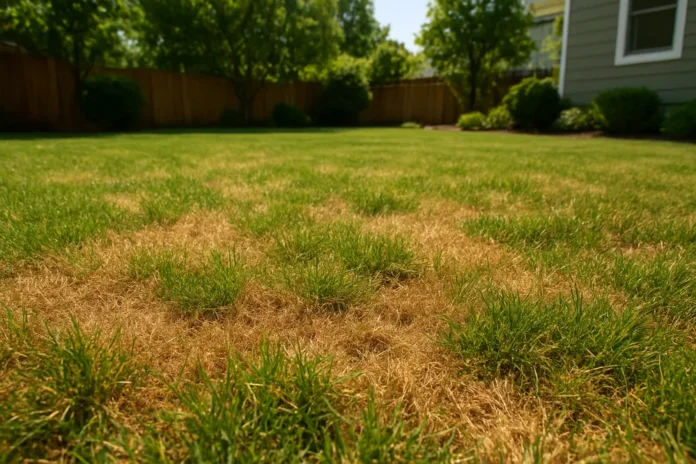
Grass usually turns brown because it is stressed by too little water, too much water, heat, disease, pet urine, or mowing damage. In some cases, brown grass is simply dormant rather than dead.
Seeing grass turning brown from green to straw-colored can be frustrating, especially when the change seems to happen fast. Turning brown is one of the most common lawn problems for home gardeners, and it can show up as scattered patches, broad dry areas, or an overall tan cast across the yard.
The good news is that brown grass does not always mean your lawn is dead. Many lawns bounce back once the source of stress is corrected, whether that is drought, compacted soil, overwatering, mowing mistakes, pet damage, insect feeding, or a common turf disease.
The pattern of browning usually gives the first clue. Small circular spots suggest one issue, crisp edges suggest another, and a lawn that browns evenly may point to watering or seasonal dormancy instead of a disease outbreak.
What Brown Grass Usually Means
Brown grass is a symptom, not a diagnosis. Turf turns brown when the blades lose moisture, roots stop taking up water and nutrients efficiently, or the crown of the plant becomes damaged. Sometimes only the leaf tissue is affected and the lawn can recover quickly. Other times the roots or crown are injured, which makes recovery slower and more patchy.
How the lawn looks and feels matters. Grass that is dry, folded, and brittle often points to drought stress. Grass that pulls up easily with weak roots can signal grubs or root rot. Brown tips on otherwise green grass often come from mowing or fertilizer issues. A tan lawn in peak summer may simply be going dormant to survive heat and lack of rain.
- A uniform brown cast often suggests drought, heat stress, or dormancy.
- A small patch or ring may indicate pet urine, fungus, or localized sprinkler problems.
- A brown lawn with soft, soggy soil often points to overwatering or poor drainage.
- A brown area with green grass around the edges is common with urine burn or some diseases.
- A brown lawn with torn blade tips may be related to mowing with a dull blade.
Drought Stress and Heat Are the Most Common Causes
Hot Weather Can Push Turf Into Survival Mode
In many U.S. lawns, the most common reason grass turns brown is simple water stress. Cool-season grasses such as Kentucky bluegrass, fescue, and ryegrass struggle during hot, dry stretches. They may stop active growth and turn tan or light brown to conserve energy. This is especially common in midsummer when temperatures stay high and rainfall is limited.
Drought-stressed grass usually looks dull before it browns. The blades may fold inward, footprints may linger after you walk across the lawn, and the soil may feel hard several inches down. If the lawn is dormant, the crowns are often still alive even though the blades look dry.
How to Tell Drought Stress From Dead Grass
- Dormant grass is usually tan but still anchored firmly in the soil.
- Dead grass often pulls out easily or shows obvious crown damage.
- Drought stress tends to appear first in sunny slopes, near driveways, and along sidewalks where heat builds up.
- Lawns with shallow roots brown faster than lawns watered deeply and less often.
If heat and lack of moisture are the cause, recovery depends on how long the stress lasted and whether the crowns survived. Many lawns green up again once temperatures ease and soil moisture improves.
Overwatering Can Also Make Grass Brown
It sounds backward, but too much water can cause brown grass too. Constantly wet soil pushes oxygen out of the root zone. When roots cannot breathe, they weaken, shallow out, and become more vulnerable to disease. The result can be yellowing first, then thinning, then broad brown patches.
Overwatered lawns often feel soft or spongy underfoot. You may notice fungal growth, thatch buildup, or areas that stay wet long after the rest of the yard dries. If your sprinkler runs daily or you water for short periods very often, the lawn may develop shallow roots that fail quickly in heat.
- Soil stays soggy for more than a day after watering
- Mushrooms or fungal patches appear regularly
- Grass looks thin, weak, and pale before turning brown
- Water runs off instead of soaking in because the soil is already saturated
- Browning is worse in low spots or poorly drained clay areas
Watering Problems Are Often Caused by Uneven Sprinkler Coverage
Many brown patches come down to uneven irrigation rather than too much or too little water overall. A clogged nozzle, misaligned sprinkler head, blocked spray pattern, or broken zone can leave some parts of the lawn thirsty while others stay green. This is especially common when one strip along a sidewalk or driveway browns first.
Coverage problems often create geometric patterns. You may see narrow brown bands, arcs, or dry circles that match sprinkler spacing. Trees and shrubs can also intercept irrigation so the lawn beneath them receives less water than expected.
If one area consistently turns brown while the rest of the yard looks healthy, irrigation uniformity is one of the first things to suspect.
Mowing Mistakes Can Leave a Lawn Brown and Stressed
Cutting Too Short Weakens the Lawn
Scalping is a common reason grass turns brown, especially during summer. When too much leaf blade is removed at once, the plant loses its ability to photosynthesize efficiently and shade its own roots. Soil heats up faster, moisture evaporates more quickly, and the lawn becomes more vulnerable to drought and weeds.
Dull Blades Tear Instead of Cut
A dull mower blade shreds the grass tips, leaving ragged ends that quickly dry out and turn tan or brown. From a distance, the whole lawn can look brownish even though the roots are fine. This type of browning is often most obvious a day or two after mowing.
- Raise the mowing height during hot weather
- Avoid removing more than one-third of the blade at one time
- Sharpen mower blades regularly through the growing season
- Mow when the lawn is dry to get a cleaner cut
Fertilizer Burn and Salt Buildup Can Scorch Grass
If grass turns brown soon after feeding, fertilizer burn may be the cause. Excess nitrogen and soluble salts draw moisture out of the grass blades and roots, causing a scorched look. The damage often appears in streaks, stripes, or spill-shaped patches that match the spreader path.
Pet urine creates a similar effect because it adds concentrated nitrogen and salts in a small area. The center may turn brown while the outer edge stays dark green from lower nutrient exposure.
- Browning appears right after fertilizing
- The pattern follows spreader lines or missed turns
- A dark green edge surrounds the brown center in pet spots
- Newly seeded areas are especially sensitive to overapplication
Always apply lawn fertilizers at the labeled rate and water them in when the product instructions call for it. More fertilizer does not equal faster greening.
Lawn Diseases Often Create Patches, Rings, or Fast Decline
Several turf diseases can cause brown grass, particularly during warm, humid weather or when the lawn stays wet overnight. Brown patch, dollar spot, summer patch, leaf spot, and red thread all affect home lawns in different regions. Most diseases are encouraged by a combination of moisture, poor airflow, excess thatch, or fertility imbalance.
Disease symptoms often have a defined pattern. Brown patch can create circular areas that expand outward. Dollar spot forms many small straw-colored spots that merge over time. Summer patch can produce rings or frog-eye patterns with healthier grass in the middle.
- Brown areas spread even when irrigation seems adequate
- Patches are circular or ring-like rather than random
- Grass blades show spots, lesions, or a water-soaked appearance
- The lawn stays wet overnight because of evening watering or poor airflow
- Browning increases during humid weather
Disease control depends on the specific pathogen, but cultural fixes usually matter most. Better mowing habits, improved drainage, more morning watering, and balanced fertilization often reduce repeat outbreaks.
Insects and Grubs Can Damage Roots and Cause Brown Patches
If grass turns brown and lifts easily like loose carpet, root-feeding insects may be involved. White grubs are a common culprit in many U.S. lawns. They feed below the surface, reducing the lawn's ability to absorb water. Chinch bugs, sod webworms, and billbugs can also cause browning, especially in hot, sunny areas.
Insect damage is often mistaken for drought because the lawn wilts and browns quickly. The difference is that adding water does not help much when the roots are gone or the stems are being fed on.
- Grass pulls up easily with little root resistance
- Birds, skunks, or raccoons are digging for insects
- Brown patches expand during warm weather despite watering
- You find grubs in the top few inches of soil
- Damage is heaviest in full sun or stressed turf
Compacted Soil and Heavy Thatch Can Starve the Root Zone
A lawn can turn brown even when you water correctly if the soil underneath is compacted. Compaction reduces pore space, making it harder for water, oxygen, and roots to move through the soil. This is common in play areas, along walkways, and anywhere vehicles or repeated foot traffic cross the lawn.
Thatch can create similar problems when it becomes too thick. A thin thatch layer is normal, but a heavy layer blocks water penetration, shelters pests, and keeps roots shallow. The lawn may dry out faster than expected and look patchy or stressed.
When the underlying problem is compaction or excess thatch, the grass often declines gradually and struggles repeatedly in the same areas year after year.
Pet Urine, Road Salt, and Chemical Exposure Cause Localized Browning
Localized brown spots often come from something spilled or deposited on the lawn. Dog urine is a classic cause, especially in small yards where the same spot gets used repeatedly. Ice melt products, road salt splash, herbicide drift, gas spills, and concentrated cleaning products can all scorch turf.
These cases usually create distinct areas rather than whole-lawn decline. Damage near sidewalks, driveways, and street edges is especially likely to involve salt or runoff. If the browning follows the edge of pavement, winter injury is a strong possibility in colder regions.
Seasonal Dormancy Is Sometimes Completely Normal
Not every brown lawn is a problem. Many cool-season grasses naturally go dormant during hot, dry summers, and warm-season grasses go dormant after frost. A dormant lawn is conserving energy, not necessarily dying. The grass crowns remain alive while the top growth turns tan or brown.
Regional timing matters. In the North, summer dormancy is common during extended heat. In the South, bermudagrass and zoysiagrass often turn brown in winter after temperatures cool. If the timing fits the grass type and season, dormancy may be expected.
- The browning happens during a known stress season for your turf type
- The lawn is evenly tan rather than blotchy and diseased-looking
- Grass crowns remain firm and rooted
- Nearby lawns with the same grass type show similar color change
How to Narrow Down the Real Cause in Your Yard
The fastest way to understand brown grass is to look at the pattern, the recent weather, and your lawn care routine. A single clue rarely tells the whole story, but several clues together usually point to the right cause.
- Look at the shape of the brown area. Rings and circles suggest disease, while straight lines or strips suggest irrigation or fertilizer issues.
- Feel the soil moisture several inches down. Bone-dry soil points one way, constantly soggy soil points another.
- Inspect the grass blades. Torn tips suggest mowing problems, while spots or lesions suggest disease.
- Check whether the grass pulls up easily. Weak anchoring can indicate grub damage or root rot.
- Think about timing. Browning after extreme heat, a fertilizer application, or a weather shift is often meaningful.
- Consider the location. Pavement edges, pet areas, shady corners, and low spots each have common causes.
If the lawn is browning in many places at once, look first at weather, irrigation, and mowing height. If the damage is isolated, investigate site-specific causes such as urine, sprinkler coverage, salt, or disease.
When Brown Grass Can Recover and when It May Need Repair
Grass often recovers when the crowns and roots are still alive. Drought dormancy, mild mowing injury, and temporary watering mistakes can improve within a few weeks once conditions change. Brown tips from dull blades are mostly cosmetic and usually grow out with healthy new leaves.
Recovery is less likely when the crown is dead, the roots are badly damaged, or the lawn has thinned enough for weeds to take over. Severe grub injury, chronic fungal decline, chemical burns, and prolonged drought without irrigation can leave dead patches that need reseeding or resodding.
A simple tug test helps. If the grass is still rooted firmly and you can see living tissue at the crown, there is a good chance of regrowth. If it detaches easily and the base is dry and dead, repairs may be necessary.
How to Prevent Your Lawn From Turning Brown Again
- Water deeply and less often instead of giving the lawn a light sprinkle every day.
- Water in the morning so leaves dry quickly and disease pressure stays lower.
- Mow at the proper height for your grass type, especially during summer heat.
- Keep mower blades sharp to avoid shredded brown tips.
- Apply fertilizer at labeled rates and avoid overfeeding during stressful weather.
- Aerate compacted soil and manage thatch if the lawn struggles year after year.
- Monitor for grubs and other pests before damage becomes severe.
- Train pets to use a designated area if urine spots are a recurring problem.
- Adjust sprinklers regularly so coverage stays even as the landscape changes.
- Choose grass varieties suited to your region, sun exposure, and traffic level.
A healthy lawn is much more resilient than a stressed one. Most browning problems become less frequent when the root system is deeper, the soil drains well, and routine maintenance matches the season and grass type.
FAQ
Will Brown Grass Turn Green Again?
Sometimes, yes. Grass often greens up again if it is dormant or temporarily stressed and the crowns are still alive. If the grass is truly dead from severe drought, disease, grubs, or chemical burn, the damaged areas usually need reseeding or sod.
How Do I Know if My Grass Is Dormant or Dead?
Dormant grass is usually tan but still firmly rooted, while dead grass often pulls up easily. Dormancy also tends to happen during expected seasonal stress, such as summer heat for cool-season grass or winter cold for warm-season grass.
Can Overwatering Really Make Grass Brown?
Yes. Too much water can suffocate roots, encourage fungal disease, and create shallow root systems that fail in heat. The lawn may first look pale or weak before turning brown.
Why Is My Grass Brown in Patches but Not Everywhere?
Patchy browning often points to localized problems such as pet urine, sprinkler gaps, lawn disease, grub activity, salt injury, or compacted spots. The shape and location of the patches can help narrow the cause.
Does Mowing Too Short Cause Brown Grass?
Yes. Scalping exposes the soil, stresses the roots, and removes too much of the leaf blade at once. This can make the lawn look brown quickly, especially during hot or dry weather.
Can Dog Urine Kill Grass?
It can. Repeated urine spots can burn the grass because of concentrated nitrogen and salts. The damage often shows as a brown center with a darker green ring around it.
What Lawn Diseases Make Grass Turn Brown?
Common lawn diseases include brown patch, dollar spot, summer patch, leaf spot, and red thread. They often create circular or expanding patches and are more likely when the lawn stays wet and humid.
When Should I Worry About Brown Grass?
You should be more concerned when the grass pulls up easily, the patches spread fast, the soil stays soggy, or the lawn fails to recover after weather improves. Those signs can point to root damage, disease, insects, or severe stress.
Want to bring your lawn back faster? Read our guide to the best lawn repair products and proven treatments for brown patches, thinning turf, and stressed grass.
