

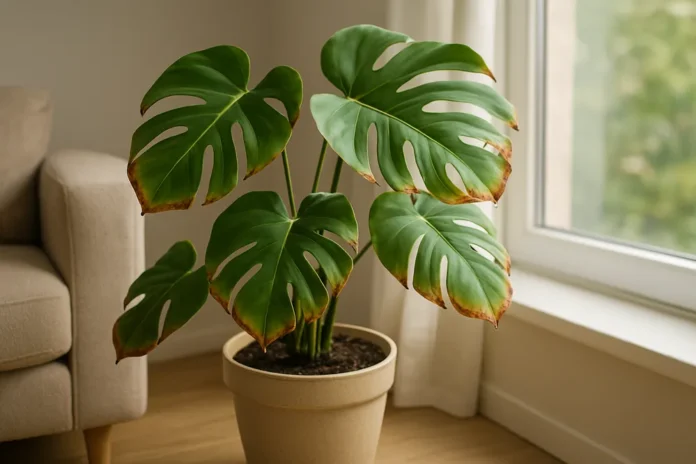
Monstera leaves usually get brown edges from moisture stress, especially inconsistent watering, dry indoor air, or excess fertilizer salts. Brown edging can also happen when roots stay too wet, become damaged, or struggle in poor soil.
Brown, crispy margins on Monstera leaves can be frustrating, especially when the rest of the plant still looks mostly healthy. When leaves develop brown edges, your plant is usually reacting to stress around water, humidity, roots, or fertilizer rather than to a single disease.
The good news is that this symptom is often fixable once you match the pattern to the cause. A Monstera with dry, papery edges needs a different solution than one with dark brown margins caused by soggy roots, so paying attention to texture, color, and recent care changes matters.
What Brown Edges Usually Mean On A Monstera
Brown edges are a form of leaf scorch. The outer tissue of the leaf dries out, dies back, and turns tan to dark brown. On Monsteras, this often starts at the tip and creeps along the margins because the plant cannot keep enough moisture moving to the farthest parts of the leaf.
This symptom is most often linked to inconsistent watering, low humidity, salt buildup from fertilizer or hard water, or root stress. Less commonly, strong direct sun, cold drafts, or pest damage can contribute. The exact shade and feel of the browning helps narrow it down.
- Dry, crispy, light brown edges usually point to underwatering, dry air, or salt buildup.
- Dark brown or blackish edges with yellowing can suggest overwatering and root trouble.
- Browning only on the sun-facing side may be leaf scorch from too much direct light.
- Sudden browning after repotting or moving often reflects environmental shock.
The Most Common Causes
Inconsistent Watering
Monsteras like evenly moist soil that dries slightly between waterings. If the potting mix stays bone dry for too long, the leaf edges are often the first part to suffer. Repeated cycles of severe drying and then heavy soaking stress the plant and commonly lead to crispy margins.
Many growers assume brown edges always mean the plant needs more water right now. Often the issue is not one missed watering, but a repeated pattern of letting the mix dry too far and then flooding it. That stop-and-start moisture supply makes it harder for the plant to support large leaves.
Low Indoor Humidity
Monstera deliciosa tolerates average indoor conditions fairly well, but very dry air can still crisp the edges, especially in winter. Heating systems lower indoor humidity fast, and large leaves lose moisture from their edges first. If your plant sits near a heat vent or in a room that feels dry to you, humidity may be part of the problem.
Low humidity alone may not cause dramatic damage if watering is consistent, but dry air often makes a mild watering issue much worse. That is why brown edges often show up during seasonal changes even if your routine has not changed much.
Salt Buildup From Fertilizer Or Hard Water
Excess fertilizer salts can build up in potting soil over time and burn leaf margins. This is especially common when houseplants are fed frequently, fertilized in winter, or watered with mineral-heavy tap water without occasional flushing. The roots struggle to take up water properly when salts accumulate, and the edges can brown even when the soil looks moist.
You may also see a white crust on the soil surface or around the pot rim. If brown edges appear not long after feeding, fertilizer burn moves higher on the list of likely causes.
Overwatering And Root Stress
Too much water can cause brown edges too, which surprises many plant owners. When roots sit in soggy, poorly aerated soil, they cannot function normally. Damaged roots take up less water, so the leaves show stress even though the pot is wet.
In this case, the browning may look darker and softer at first than drought damage. You may also notice yellowing leaves, a heavy pot that stays wet for many days, a sour smell from the soil, or stems that seem less firm.
Too Much Direct Sun
Monsteras prefer bright, indirect light. Hot direct sun, especially through a west or south window, can scorch exposed leaf tissue. Brown edges from sun stress are more likely if the plant was recently moved to a brighter spot or if only the window-facing leaves are affected.
Sun scorch often appears as tan, bleached, or brittle patches along edges and surfaces, not just uniform tip burn. The transition can look sharp, almost like the leaf was singed.
Temperature Swings And Drafts
Cold windows, air conditioning blasts, and heating vents can all dry or shock foliage. Monsteras are tropical plants, and repeated exposure to chilly air or hot forced air can damage leaf margins. If the browning is concentrated on one side of the plant, nearby airflow may be involved.
Repotting Shock, Root Bound Conditions, Or Poor Soil
A very root bound Monstera may dry out too quickly and develop brown edges from chronic moisture stress. On the other hand, dense soil that drains poorly can keep roots too wet. Either extreme interferes with steady water uptake.
After repotting, temporary browning can happen if roots were disturbed or the plant was moved into a mix that holds much more or much less water than before. This usually stabilizes once the root system adjusts, as long as aftercare is good.
How To Tell Which Cause Is Most Likely
The pattern of damage tells you more than the brown color alone. Before changing your care routine, look at the texture of the leaf edge, the condition of the soil, and whether the symptom is showing up on old leaves, new leaves, or both.
- Crispy, thin, tan edges with dry soil usually mean underwatering or dry air.
- Dark brown edges with yellowing and wet soil often point to overwatering or root rot.
- Brown edges appearing soon after fertilizing suggest salt or fertilizer burn.
- Damage mostly on the brightest side of the plant fits sun scorch.
- Only a few older leaves affected while new growth looks healthy can mean mild past stress rather than an active major problem.
- Widespread browning on many leaves at once usually signals an ongoing issue with roots, watering, or environment.
Also think about timing. Did the symptom appear after a vacation, a heat wave, winter heating season, a repot, or a feeding? Those recent changes often reveal the trigger faster than the leaf alone.
How To Fix Brown Edges On Monstera Leaves
Correct The Watering Routine
Water thoroughly when the top 2 inches of the potting mix feel dry, then let excess water drain completely. Do not give tiny sips on a schedule if the soil is still damp, and do not wait until the whole root ball has turned powder dry. The goal is consistent moisture, not constant wetness.
For many indoor Monsteras, that means watering more often in bright light and warm months, and less often in winter. The exact timing depends on pot size, soil mix, room temperature, and light level, so a fixed calendar usually causes trouble.
Raise Humidity Modestly
If your home is very dry, aim for moderate humidity rather than trying to create a tropical greenhouse. A humidifier nearby is the most effective option. Grouping plants together can help a little, and moving the plant away from heat vents or drafty windows often helps more than misting.
Occasional misting gives only a short-lived boost and is not a reliable fix for persistent brown edges. Focus on the room environment instead.
Flush Excess Salts From The Soil
If fertilizer burn or mineral buildup seems likely, slowly run plenty of room-temperature water through the pot and let it drain well. This helps wash accumulated salts from the root zone. Hold off on feeding for a few weeks afterward.
Going forward, fertilize only during active growth and at a modest rate. If your tap water is very hard, using filtered water occasionally or flushing the pot monthly can reduce future edge burn.
Check For Root Problems
If the pot stays wet for a long time, smells musty, or the plant keeps declining despite careful watering, inspect the roots. Healthy roots are generally firm and light colored. Rotting roots are often dark, mushy, and may slough off when touched.
Trim away rotted roots with clean pruners and repot into a chunky, well-draining aroid mix. A good Monstera mix usually includes potting soil plus ingredients such as bark, perlite, pumice, or coco chips to improve air flow around the roots.
Adjust Light
Move the plant into bright, indirect light if it is getting harsh afternoon sun. A sheer curtain can soften direct light without making the room too dim. If the plant is in a very low-light corner, it may also stay wet too long between waterings, which indirectly contributes to brown edges.
Improve Pot And Soil Conditions
Always use a pot with drainage holes. If your Monstera is root bound, repot one size up rather than jumping into a much larger container. Oversized pots hold excess moisture and can make root problems worse.
If the current mix feels compacted, muddy, or slow to drain, refreshing it can make a major difference. Good root oxygen is one of the best defenses against recurring leaf-edge problems.
Should You Cut Off The Brown Parts?
Brown tissue will not turn green again, so trimming is mostly cosmetic. If the damaged edge bothers you, use clean scissors to follow the natural outline of the leaf and remove only the dead, crispy tissue. Leave a very thin margin of brown behind rather than cutting into healthy green tissue.
If a leaf is mostly brown or yellow, it may be better to remove the whole leaf at the petiole base. But if only the edges are damaged, keeping the leaf is still useful because it can continue photosynthesizing.
When Brown Edges Might Be A Pest Or Disease Issue
Pests are not the first cause most people should suspect, but they can contribute. Spider mites, thrips, and scale can stress the plant enough to cause browning, especially if leaves also look dull, stippled, distorted, or dusty.
- Spider mites often leave fine stippling and sometimes webbing.
- Thrips can cause silvery scarring, distorted new leaves, and brown edges.
- Scale appears as small bumps on stems or leaf undersides and weakens the plant over time.
True leaf diseases are less common indoors unless the plant is staying wet, crowded, and poorly ventilated. If the browning appears as irregular spots with yellow halos, or spreads rapidly in a soft, water-soaked way, disease may be involved. In that case, improve airflow, avoid wetting the foliage unnecessarily, and remove badly affected leaves.
How To Prevent Brown Edges From Coming Back
Once your Monstera recovers, prevention comes down to steady care rather than perfect care. This plant handles small mistakes well, but repeated extremes usually show up on the leaf margins first.
- Water based on soil dryness, not by the calendar alone.
- Use a chunky, well-draining potting mix and a pot with drainage holes.
- Keep the plant in bright, indirect light.
- Avoid placing it near heating vents, AC blasts, or cold window glass.
- Fertilize lightly during spring and summer, and reduce or stop in winter.
- Flush the pot occasionally to prevent salt buildup.
- Check leaves and roots early when you notice changes, rather than waiting for widespread damage.
If your plant already has a history of brown edges, small adjustments are usually enough. More stable watering and better root conditions fix far more Monsteras than aggressive pruning or heavy feeding ever will.
When To Be Concerned
A few brown edges on older leaves are not usually an emergency. They can simply reflect past dryness, a missed watering, or the plant adjusting to your home. Concern rises when the symptom is spreading quickly, affecting new growth, or paired with yellowing, wilting, mushy stems, foul-smelling soil, or obvious pests.
If new leaves emerge with brown edges right away, focus on root health, humidity, and fertilizer practices first. New growth problems usually mean the stress is current rather than old damage finally showing up.
FAQ
Can Brown Edges on Monstera Leaves Turn Green Again?
No. Once leaf tissue has turned brown, it will not recover. You can trim the dead edges for appearance, but the real fix is correcting the underlying care issue so new growth stays healthy.
Should I Mist My Monstera to Stop Brown Edges?
Misting is not the most effective solution. It gives only a brief humidity boost. A humidifier, better watering consistency, and moving the plant away from vents usually help more.
Do Brown Edges Mean My Monstera Is Overwatered or Underwatered?
Either is possible. Crispy, pale brown edges usually lean toward underwatering or dry air, while darker brown edging with yellowing and persistently wet soil more often points to overwatering and root stress.
Can Tap Water Cause Brown Edges on Monstera?
Yes. Hard tap water can leave mineral salts in the soil over time, and that buildup can burn leaf edges. Flushing the pot regularly or occasionally using filtered water may help if your tap water is very mineral-heavy.
Is Direct Sunlight Bad for Monstera Leaves?
Strong direct afternoon sun can scorch Monstera leaves and cause brown, brittle edges or patches. Bright, indirect light is usually the safest placement indoors.
Should I Repot My Monstera if the Leaves Have Brown Edges?
Repot only if the plant is root bound, sitting in compacted soil, or showing signs of root rot. Repotting a healthy root system unnecessarily can add stress rather than solve the problem.
Why Do Only the Older Leaves Have Brown Edges?
Older leaves often show past stress first because they have been exposed longer and the plant may redirect resources toward newer growth. If new leaves look healthy, the issue may already be improving.
Need the right setup for healthier Monstera growth? Explore our guide to the best Monstera soil mixes, pots, and humidity tools so you can stop brown edges before they spread.
