

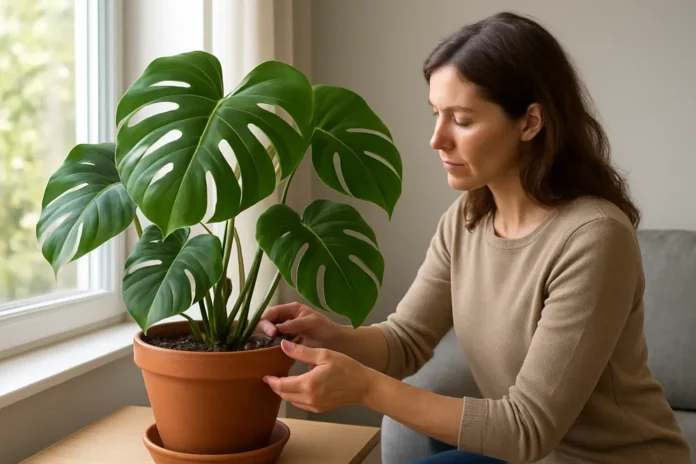
A Monstera usually stops making new leaves because it is not getting enough light, warmth, root space, or energy to support active growth. Seasonal dormancy, inconsistent watering, and root stress are also common reasons.
If your monstera looks healthy enough but still is not unfurling fresh growth, the plant is telling you that one or more basic growing conditions are off. New leaves do not appear on a steady schedule when light is too weak, temperatures are cool, roots are crowded, or the plant is recovering from stress.
In many homes, not growing new leaves does not mean the plant is dying. It often means growth has slowed because the environment is only good enough for survival, not strong enough for active development. Monsteras can sit in place for weeks or even months when conditions are mediocre, especially in fall and winter.
The good news is that once you correct the main bottleneck, a Monstera often resumes growth with a new leaf or vine extension. The key is figuring out whether the slowdown is seasonal and normal or a sign that light, water, roots, nutrients, or plant age are holding it back.
When Slow Growth Is Normal
Monsteras are not constant growers year-round in most U.S. homes. They grow fastest in spring and summer, when days are longer, light is stronger, and indoor temperatures tend to be warmer. During fall and winter, a healthy plant may produce no new leaves at all or may only push one small leaf over a long stretch.
A recently repotted plant can also pause before sending out new foliage. Instead of top growth, it may be spending energy on new roots. The same thing happens after shipping, moving to a new room, pruning, or recovering from underwatering or cold exposure.
- No new leaves for several weeks can be normal in winter.
- Young plants grow more slowly than large, established specimens in ideal conditions.
- A plant that recently rooted into fresh soil may pause above ground while roots expand below the surface.
- Growth may slow after environmental changes, even if the plant still looks green.
Low Light Is the Most Common Cause
If a Monstera is not making new leaves, low light is the first thing to suspect. These plants are often marketed as low-light tolerant, but tolerance is not the same as active growth. A Monstera can remain alive in a dim corner for a long time while producing little or no new foliage.
For steady growth, Monsteras usually need bright indirect light. Near an east window, a few feet back from a south or west window with filtered light, or directly in front of a bright north-facing setup can work well depending on your region and season. In darker homes, the plant may need a grow light to gain enough energy for leaf production.
Signs Your Monstera Needs More Light
- Long gaps between leaves along the vine
- Small new leaves compared with older ones
- Stems stretching toward the nearest window
- Little to no fenestration on mature plants
- Soil staying wet for a long time because the plant uses water slowly
If your plant is several feet from a window and growth has stalled, the placement is likely too dim. Increasing light is often the single change that gets a stalled Monstera moving again.
Watering Problems Can Stall Leaf Production
Monsteras need moisture to grow, but they also need oxygen around the roots. Both underwatering and overwatering can stop new leaves from forming. When the roots stay too dry for too long, the plant cannot maintain pressure for pushing and unfurling new growth. When the soil stays soggy, roots weaken and cannot support the top of the plant.
What Underwatering Looks Like
- Drooping or curling leaves
- Dry soil pulling away from the pot edge
- Crispy brown tips or margins
- Very slow or absent new growth
What Overwatering Looks Like
- Yellowing lower leaves
- Persistently wet potting mix
- A sour smell from the soil
- Soft stems or blackened roots in severe cases
A better watering approach is to let the top inch or two of soil dry before watering again, then water thoroughly until excess drains from the bottom. How often that happens depends on pot size, light, soil mix, and season. A schedule alone is usually not reliable.
Root Issues Can Keep Your Plant in Survival Mode
A Monstera that has outgrown its pot may stop making leaves because the roots have little room left to expand. Root-bound plants dry out fast, become harder to water evenly, and may not have enough access to moisture and nutrients to support new foliage.
On the other hand, a pot that is too large can also slow growth if the soil volume stays wet too long. That can reduce oxygen around the roots and encourage rot. The goal is not a giant pot. It is a pot that fits the root ball with a bit of room to grow.
Clues the Roots Are Part of the Problem
- Roots circling heavily at the bottom of the pot
- Water running straight through because the root mass is dense
- The plant wilting quickly after watering because the pot is packed with roots
- A history of soggy soil, yellow leaves, and mushy roots that points to root rot
If you slide the plant from the pot and see a dense mat of roots with very little soil left, it may be time to repot. If roots look dark, mushy, or smell rotten, the issue is not just tight quarters. It is root damage that needs correction before new leaves can resume.
Poor Soil and Weak Drainage Limit Healthy Growth
Monsteras prefer a chunky, airy mix that drains well but still holds some moisture. Dense, compacted soil can stay wet too long and suffocate roots. Old potting mix can also break down over time, reducing air pockets and making growth sluggish.
A good Monstera mix often includes standard potting soil plus bark, perlite, pumice, or coco chips to improve airflow. The exact recipe matters less than the result. Water should move through the mix easily, and roots should not sit in a soggy mass for days.
- Use a pot with drainage holes.
- Avoid heavy garden soil indoors.
- Refresh compacted or sour-smelling potting mix.
- Choose a loose mix that balances moisture retention and aeration.
Nutrient Shortages Can Slow New Leaves
A Monstera does not need heavy feeding, but it does need access to nutrients during the growing season. If it has been in the same potting mix for a long time and has not been fertilized, the plant may simply be short on the fuel needed to build new tissue.
Nitrogen supports leafy growth, while potassium and phosphorus help overall plant function. Deficiencies do not always appear as dramatic discoloration at first. Sometimes they show up as a slow, stagnant plant that looks pale, undersized, or unwilling to push a fresh leaf.
Fertilizer Habits That Help
- Feed lightly in spring and summer with a balanced houseplant fertilizer.
- Reduce or stop feeding in fall and winter when growth naturally slows.
- Do not overfertilize, since salt buildup can damage roots and stall growth too.
- If the plant was recently repotted into fresh mix, wait before feeding heavily.
If your Monstera gets good light and proper water but has not been fed in many months, light fertilizer during active growth may help restart leaf production.
Temperature and Humidity Affect Growth Speed
Monsteras are tropical plants, so they grow best in warm, stable indoor conditions. Cool rooms, cold drafts, or sudden swings from heating and air conditioning can slow or stop growth. If nighttime temperatures regularly drop too low, your plant may hold off on producing leaves.
Average home humidity is usually enough for survival, but very dry air can make leaf development slower and less reliable. Dry air does not usually stop growth by itself, but combined with weak light or inconsistent watering, it can contribute to stalled performance.
- Aim for temperatures roughly between 65 and 85 degrees Fahrenheit.
- Keep the plant away from cold windows in winter and HVAC vents year-round.
- Moderate humidity helps new leaves unfurl more smoothly.
- Consistency matters more than chasing perfect tropical conditions.
Aerial Support Can Make a Big Difference
Monsteras are climbers. In nature, they grow upward along trees, and that climbing habit often influences leaf size and vigor indoors. A plant left to trail or sprawl without support may still survive, but it often grows more slowly and produces smaller leaves than a supported plant.
Adding a moss pole, coir pole, plank, or sturdy stake can encourage more active upward growth. When a Monstera has something to climb, it often responds with stronger stems, larger leaves, and more regular leaf production.
Support is especially helpful for mature plants that have started vining but seem stuck at a small leaf size. While it is not always the sole reason new leaves are missing, it can be an important part of getting the plant back into an active growth pattern.
Pests and Disease Can Quietly Drain Plant Energy
A Monstera with spider mites, thrips, mealybugs, or scale may stop producing new leaves because the plant is under constant stress. These pests feed on sap and tissue, reducing the resources available for fresh growth. In early infestations, leaf production can slow before obvious damage appears.
Disease problems are less common indoors but can occur when roots stay too wet or leaves remain damp in stagnant air. Root rot is especially important because it directly interrupts the plant's ability to take up water and nutrients.
Watch for These Warning Signs
- Fine webbing or stippling from spider mites
- Silvery scars or distorted growth from thrips
- Cottony clusters from mealybugs
- Sticky residue from scale or other sap-feeding pests
- A collapsing, yellowing plant with wet soil that suggests root rot
Plant Age and Propagation History Matter
Not every Monstera grows at the same pace. A small cutting with limited roots may take a while to establish before it starts producing leaves regularly. If your plant was propagated recently, it may be focused on building roots rather than foliage.
Juvenile plants also make simpler leaves and grow more slowly than mature plants with strong climbing support and lots of light. If you are comparing your plant to large, fenestrated Monsteras online, keep in mind that age, size, and conditions make a huge difference.
How to Tell Which Cause Is Most Likely
Most stalled Monsteras are dealing with more than one minor issue rather than one dramatic problem. A plant in low light might also be staying wet too long. A root-bound plant might also be overdue for feeding. Looking at the whole setup usually reveals the bottleneck.
- Start with light. If the plant is in a dim room, improve that first.
- Check watering patterns and how long the soil stays wet or dry.
- Look at the pot size, drainage, and condition of the potting mix.
- Consider temperature, drafts, and seasonal slowdown.
- Inspect leaves and stems for pests.
- Review whether the plant has support and whether it has been fertilized during active growth.
If several factors are slightly off, fixing the biggest one first usually brings the fastest improvement. For many indoor gardeners, that means brighter light and better root-zone management.
What Helps a Monstera Start Growing Again
Once you know the likely cause, your goal is to create steady, supportive conditions instead of making constant changes. Monsteras respond best when the environment remains consistent for several weeks.
- Move the plant to brighter indirect light or add a grow light.
- Water only when the top layer of mix has dried slightly, then soak thoroughly.
- Repot if roots are badly crowded or if the soil has broken down.
- Use a chunky, well-draining aroid mix.
- Feed lightly during spring and summer if nutrients are depleted.
- Keep the plant warm and away from cold drafts.
- Provide a pole or stake for climbing support.
- Treat pests early before they weaken the plant further.
Do not expect overnight results. Even after you correct the problem, your Monstera may need a few weeks to rebuild energy before sending up a new leaf. Healthy recovery often shows first as firmer stems, better posture, and more stable moisture use.
When to Worry About No New Growth
A Monstera that is simply resting will usually keep its existing leaves looking reasonably stable. You should be more concerned if the lack of new growth is paired with yellowing, black stems, a foul-smelling root zone, severe drooping, pest damage, or ongoing leaf loss.
If the plant has gone an entire growing season with no new leaves despite bright light and otherwise decent care, that is a strong sign something below the surface is wrong. Root problems, exhausted soil, or hidden pests become much more likely in that situation.
FAQ
How Long Can a Monstera Go Without Growing a New Leaf?
In winter, a Monstera may go several weeks or even a few months without producing a new leaf. During spring and summer, long pauses usually point to low light, root stress, or another care issue.
Will a Monstera Grow New Leaves in Low Light?
It can, but usually very slowly. Most Monsteras need bright indirect light to produce leaves regularly and to make larger, healthier growth.
Does a Root-bound Monstera Stop Growing?
Yes, it can. When roots fill the pot too densely, the plant may dry out too quickly, struggle to take up nutrients, and slow or stop new leaf production.
Should I Fertilize My Monstera if It Is Not Growing?
Only if light and watering are already reasonably good and the plant is in active growing season. Fertilizer helps when nutrients are low, but it will not solve poor light or root rot.
Can Winter Make My Monstera Stop Producing Leaves?
Yes. Shorter days, cooler temperatures, and lower indoor light often cause a normal seasonal slowdown, even in healthy plants.
Does a Monstera Need a Moss Pole to Grow New Leaves?
It does not strictly need one to survive, but support often improves vigor, leaf size, and growth rate. Climbing plants usually perform better than unsupported trailing ones.
Why Is My Monstera Alive but Not Growing?
That usually means the plant's conditions are good enough for maintenance but not strong enough for active growth. Low light is the most common reason, followed by watering issues and root stress.
Want faster, healthier Monstera growth? Read our guide to the best Monstera soil mixes, grow lights, and moss poles so you can fix stalled growth with the right setup.
