

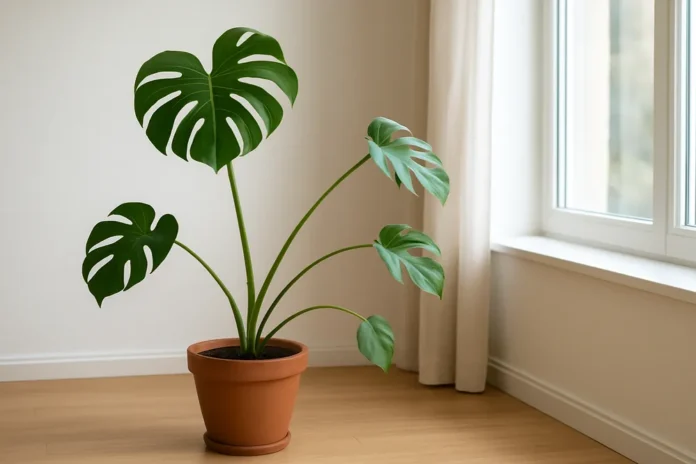
A leggy monstera is usually stretching for more light, which causes long stems and wider gaps between leaves. Sparse growth can also come from age, missed pruning, or conditions that slow healthy leaf production.
If your monstera looks tall, stretched out, and a little bare, you are probably dealing with a leggy growth pattern rather than a disease. Legginess happens when the plant produces long stems with fewer leaves, larger gaps between nodes, and an overall loose shape instead of the full, lush look most people want indoors.
In most homes, the biggest reason a monstera becomes leggy is insufficient light. But light is not the only factor. A plant can also look leggy because of natural vining growth, irregular rotation, overcrowded stems, poor pruning habits, or stress that slows new leaf development. The good news is that this problem is usually fixable, and once you know the cause, you can help your plant grow back fuller over time.
Below, you will learn how to tell whether your monstera is truly leggy, what commonly causes it, and what changes make the biggest difference in restoring compact, balanced growth.
What Leggy Growth Looks Like on a Monstera
Many gardeners use the word leggy to describe any plant that looks awkward, but true legginess has a specific look. On a monstera, it usually means the stems are elongating faster than the plant is producing leaves that fill out the space.
- Long stretches of stem between leaves or nodes
- Sparse foliage, especially near the base of the plant
- Growth leaning strongly toward a window or light source
- Small or less dramatic leaves compared with earlier growth
- A loose, vine-like shape instead of a fuller, bushier look
A mature monstera is naturally a climbing vine, so some length and spread are normal. The difference is that a healthy climbing plant still produces leaves regularly and looks vigorous, while a leggy one appears stretched, thin, and underfilled.
Low Light Is the Most Common Cause
The most common reason a monstera gets leggy is low light. Monsteras prefer bright, indirect light. In dim corners or rooms far from windows, the plant has to stretch to find more light, and that creates longer stems with fewer leaves along the way.
Why Low Light Changes the Shape
Plants use light to make the energy they need for dense, balanced growth. When light is limited, a monstera shifts into survival mode. Instead of building a compact canopy, it extends its stems in search of brighter conditions. That stretching creates the open, lanky form people describe as leggy.
Signs Your Plant Is Not Getting Enough Light
- New growth is farther apart than older growth
- The plant leans toward one side
- Leaves stay smaller than expected
- Fenestrations are reduced or absent on newer leaves
- Growth is slow even during spring and summer
A monstera can survive in moderate light, but surviving is not the same as thriving. If your plant lives in a dark room, near a north-facing window, or behind heavy curtains, it may remain alive while becoming increasingly stretched out.
Natural Growth Habit Can Make It Look Sparse
Monsteras are vining plants, not naturally bushy shrubs. That means they often grow upward and outward on long stems, especially as they mature. If you were expecting a dense, rounded houseplant, normal vining growth can sometimes look like legginess even when the plant is healthy.
A healthy monstera often sends out a new leaf from one active growth point, then continues along that vine. Over time, the older lower sections may look barer while the active tip keeps extending. This is not always a problem. It simply means the plant wants to climb rather than stay compact.
How to Tell Normal Vining From True Legginess
- Normal vining still includes strong leaves and steady growth
- Legginess usually includes long bare stretches and weaker growth
- A healthy vine looks directional and sturdy rather than thin and floppy
- Good light plus support often improves natural vining, but poor light worsens legginess
Lack of Support Can Encourage Stretching
In nature, monsteras climb trees. Indoors, they often grow better when given a moss pole, stake, or trellis. Without support, stems can sprawl outward, flop over the pot edge, or twist toward available light. That growth pattern can make the plant appear more leggy than it would if it were growing upright.
Support does not completely solve low light, but it helps the plant follow its natural climbing habit. When attached to a pole or trellis, many monsteras produce larger, better-positioned leaves and look more structured overall.
- Loose stems may spread apart and look sparse without support
- A climbing surface can help aerial roots anchor the plant
- Upright growth often makes the plant look fuller in the same pot
- Supported plants are easier to rotate and shape
Uneven Light Causes Leaning and Gaps
Even when a monstera gets enough total light, it can still become misshapen if the light comes strongly from one direction and the plant is never rotated. The stems and leaves naturally orient toward the brightest source, which can cause the plant to lean, stretch, and become fuller on one side than the other.
This kind of growth often happens on windowsills, side tables, or plant stands where one side stays shaded for weeks at a time. The result may not be classic low-light legginess, but it still creates a lopsided, open appearance.
What This Looks Like
- Leaves all face one direction
- One side of the pot looks bare
- Stems arc toward the window
- The plant seems fuller at the top than near the middle or base
Pruning Habits Affect Fullness
If you never prune your monstera, it may continue extending its longest vines while lower parts stay sparse. Unlike some plants that naturally branch often, monsteras do not always fill in densely on their own. Strategic pruning can encourage a more controlled shape and prevent one or two stems from dominating the plant.
On the other hand, removing too many leaves or cutting in the wrong places can temporarily make the plant look even barer. Pruning works best when it is used to reshape the plant gradually rather than strip it down all at once.
When Pruning Helps
- A few vines are much longer than the rest
- The base is bare but the tips keep growing
- The plant is too wide or floppy for its space
- You want to propagate cuttings and restart a fuller pot
Pot Size, Roots, and General Stress Can Slow Better Growth
Legginess is not usually caused by the pot itself, but a stressed plant often produces weaker growth that exaggerates a sparse shape. If a monstera is badly rootbound, sitting in exhausted soil, or struggling with poor drainage, it may not push out leaves as strongly as it should.
When healthy new foliage slows down, the existing stems keep aging and the plant can start to look stretched and thin. Stress does not always directly cause long internodes the way low light does, but it can reduce the lush growth that balances a vine's length.
Stress-related Clues to Watch For
- Roots circling densely inside the pot
- Soil that dries out extremely fast or stays soggy too long
- Yellowing leaves along with sparse growth
- Small new leaves that stall before opening fully
- Slow growth during the active growing season
Watering and Feeding Problems Can Contribute
Water and nutrients do not usually create classic legginess by themselves, but poor care in these areas can make the plant weaker and less leafy. Underwatering can stunt leaf size and slow new growth. Overwatering can damage roots, which limits the plant's ability to support healthy foliage. A nutrient-starved monstera may also produce smaller, less impressive leaves.
If your plant is stretching because of low light and also struggling from inconsistent watering or depleted soil, the leggy look tends to become more obvious. Several mild problems together often create a plant that looks much worse than any one issue alone would suggest.
Care Issues That Can Make Legginess Worse
- Watering on a rigid schedule instead of checking soil moisture
- Keeping the soil constantly wet
- Letting the plant dry out severely again and again
- Never fertilizing during spring and summer
- Using a dense potting mix that limits airflow to roots
How to Make a Leggy Monstera Fuller Again
A leggy monstera will not suddenly become dense overnight, but you can absolutely improve its shape. The goal is to support healthier new growth while deciding whether to keep, cut back, or propagate the longest stems.
Move It to Brighter Indirect Light
Place the plant near a bright window where it gets strong indirect light for much of the day. An east-facing window often works well, while a few feet back from a south- or west-facing window can also be effective if harsh afternoon sun is filtered. Better light helps future growth come in more compactly.
Add a Moss Pole or Sturdy Support
Guiding the stems upward helps the plant look tidier and encourages a more natural growth habit. Secure the vines gently and allow aerial roots to contact the pole when possible.
Prune the Longest Stems
Cutting back stretched vines improves shape and redirects attention to stronger growth. Use clean pruners and cut near a node if you want to propagate the removed section. Be realistic though: older bare sections generally do not magically fill in with leaves, so pruning is often the fastest path to a better-looking plant.
Propagate and Replant for a Fuller Pot
Many growers take healthy cuttings from long vines, root them, and plant them back into the same container. This can create a fuller look faster than waiting for the original plant to branch on its own.
Improve Routine Care
- Water when the top portion of the mix has dried slightly, not by the calendar alone
- Use a chunky, well-draining aroid mix
- Feed lightly during active growth with a balanced houseplant fertilizer
- Rotate the pot regularly for more even development
- Repot if roots are crowded and growth has stalled
What Will Not Reverse Existing Legginess
It helps to know what changes can and cannot do. Better light, support, and care improve future growth, but they do not shorten already elongated stems. If a section is long and bare now, it will usually stay that way unless you prune it off or hide it with newer, fuller growth.
That is why many gardeners feel disappointed after moving a monstera to a brighter location. The plant may absolutely be healthier, but the visible improvement comes with new leaves over time, not instant correction of old stretched growth.
How to Prevent Leggy Growth in the Future
Prevention is easier than correction. Once a monstera has strong light and support from the start, it is much easier to maintain a balanced shape.
- Give bright, indirect light year-round
- Rotate the plant every week or two
- Provide a climbing support before stems sprawl too far
- Prune occasionally to control shape and length
- Keep watering, feeding, and repotting consistent with the growing season
- Watch new growth closely, since it reveals problems earlier than old leaves do
If your home is naturally dim, a grow light can make a major difference. Many indoor monsteras become leggy simply because the room feels bright to people but is still too dark for compact plant growth.
When Legginess Points to a Bigger Care Problem
Legginess by itself is usually cosmetic, but if it comes with other symptoms, take a broader look at the plant's health. Yellowing, drooping, mushy stems, leaf loss, or severe stunting suggest more than just a light issue.
In those cases, root stress, overwatering, cold drafts, or pest pressure may be slowing the plant down. A healthy monstera can tolerate minor mistakes, but a stressed one often loses the vigor needed to produce strong new leaves.
- Check for soft or blackened roots if overwatering is suspected
- Inspect leaves and stems for spider mites, thrips, or scale
- Keep the plant away from cold vents and drafty windows
- Review whether the potting mix still drains well
FAQ
Can a Leggy Monstera Recover?
Yes. It can produce healthier, more compact new growth once light and care improve, but the old stretched stems usually stay elongated unless you prune them.
Should I Cut Back a Leggy Monstera?
Usually, yes, if the long stems look bare or unbalanced. Pruning is often the fastest way to improve shape, and the cut sections can often be propagated.
Will More Sunlight Fix a Leggy Monstera?
More bright, indirect light helps prevent further stretching and improves future growth. It will not shorten existing stems, but it can make new growth fuller and stronger.
Is a Monstera Supposed to Be Viney?
Yes. Monsteras are natural climbers, so some vining is normal. They become a problem only when the stems are overly stretched, sparse, weak, or clearly reaching for light.
Does a Moss Pole Help with Legginess?
A moss pole can help a lot, especially when the plant is sprawling or unsupported. It improves structure and often encourages better leaf development, though it does not replace proper light.
Why Is My Monstera Tall but Not Full?
The most likely causes are low light, a lack of support, or natural vining growth that has not been pruned or shaped. Stress from watering or root issues can also slow the leaf growth that makes the plant look full.
Can I Plant Propagated Cuttings Back Into the Same Pot?
Yes. Many gardeners do this to create a fuller-looking plant. Rooted cuttings added around the base can help fill in a sparse pot over time.
Want a fuller, healthier houseplant faster? Read our guide to the best monstera supports, potting mixes, and grow lights so you can correct leggy growth with the right setup.
