

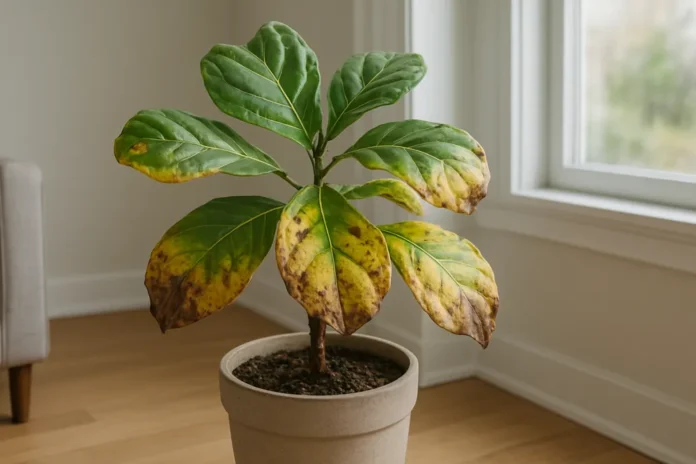
A fiddle leaf fig usually starts dying because of overwatering, poor drainage, low light, root damage, or sudden stress from temperature changes. Pests and inconsistent care can also weaken the plant until it drops leaves and declines.
A fiddle leaf fig can look dramatic and healthy one month, then suddenly start dropping leaves, developing brown spots, or leaning toward collapse the next. When a plant seems dying, the cause is often not just one issue but a combination of stress factors that built up over time.
Most fiddle leaf fig problems come back to water, light, roots, and environment. These plants are beautiful, but they are not especially forgiving. If conditions stay off for too long, the plant will show it through leaf drop, browning, yellowing, stunted growth, or a soft trunk.
The good news is that many struggling fiddle leaf figs can recover if you identify the likely cause early and correct the care routine. Once you understand what symptoms point to root rot, dehydration, poor light, or pest pressure, it becomes much easier to stop the decline.
What a Dying Fiddle Leaf Fig Usually Looks Like
A fiddle leaf fig rarely goes from healthy to dead overnight. In most cases, it declines in visible stages. Early signs may include a few yellow leaves, dry brown edges, small brown spots, or slower growth. As stress gets worse, the plant may drop multiple leaves, develop blackened stems, show mushy roots, or stop producing new foliage entirely.
- Lower leaves turning yellow and falling off
- Brown spots that spread across the leaf blade
- Crispy edges or curled leaves
- Soft, dark spots near the center of leaves
- A drooping or leaning main stem
- Foul-smelling, soggy potting mix
- No new growth during the active growing season
Because several problems can cause similar symptoms, the pattern matters. Dry, brittle leaves suggest a different issue than soft yellow leaves with a wet pot. The goal is to match the plant's signals with the conditions around it.
Overwatering Is the Most Common Cause
If your fiddle leaf fig is dying, overwatering is one of the first things to suspect. These plants like evenly moist soil, but they do not tolerate constantly wet roots. When air spaces in the soil stay filled with water, roots begin to suffocate and decay. Once roots are damaged, the leaves cannot get water properly, even though the soil is wet.
Signs of Overwatering
- Yellowing leaves, especially older lower leaves
- Brown or black spots with a soft texture
- Leaf drop while soil still feels wet
- A musty smell from the pot
- Soft stems or signs of rot near the base
Overwatering is not only about how often you pour water into the pot. It can also happen when a plant sits in a container without drainage, grows in dense soil that dries very slowly, or lives in low light where it uses less moisture. In winter, a watering routine that worked in summer may suddenly become too much.
Why It Turns Deadly Fast
Once root rot starts, the plant can decline quickly. Damaged roots cannot support the canopy, so the plant may look both wilted and waterlogged at the same time. That combination often confuses growers into watering even more, which makes the problem worse.
Underwatering and Drought Stress Can Also Cause Decline
While overwatering gets most of the attention, underwatering can make a fiddle leaf fig look just as miserable. When the root ball stays too dry for too long, leaves lose firmness, edges crisp up, and the plant may shed foliage to conserve moisture.
Signs the Plant Is Too Dry
- Dry, crunchy brown edges
- Leaves curling inward
- Drooping that improves after watering
- Soil pulling away from the sides of the pot
- Very lightweight pot between waterings
Repeated cycles of bone-dry soil followed by soaking can stress the roots badly. A neglected plant may lose leaves from shock, even after it is watered again. If the potting mix has become compacted and hydrophobic, water may run straight down the sides without fully rewetting the root ball.
Low Light Weakens the Plant Over Time
Fiddle leaf figs need bright light to stay strong. They can survive for a while in dim corners, but survival is not the same as health. In low light, growth slows, soil stays wet longer, and the plant uses less water. That creates the perfect setup for root problems and leaf drop.
A plant that used to thrive in a brighter spot may also decline after being moved farther from a window. If new leaves are smaller than older ones, internodes stretch, or the plant leans dramatically, insufficient light is likely part of the issue.
Common Low-light Symptoms
- Slow or no new growth in spring and summer
- Leaf drop without obvious dryness
- Leaning toward the nearest light source
- Thin, weak stems
- Soil staying damp for an unusually long time
Root Rot and Poor Drainage Are Major Threats
Root rot is often the final result of a drainage problem. Even if you water carefully, a fiddle leaf fig can decline if excess moisture has nowhere to go. Decorative cachepots without drainage holes, heavy mixes with too much peat, and oversized containers all increase the risk.
Healthy roots are firm and pale. Rotten roots are brown or black, mushy, and may slough off when touched. A badly rotted root system cannot support the upper growth, so leaves may yellow, spot, wilt, and drop in quick succession.
Drainage Issues That Lead to Root Trouble
- Pot has no drainage hole
- Saucer stays full after watering
- Plant sits in a nursery pot inside a sealed decorative pot
- Soil mix is dense and soggy for days
- Pot is much larger than the root system
Temperature Shock and Drafts Can Trigger Sudden Leaf Loss
Fiddle leaf figs dislike abrupt environmental changes. Cold drafts from windows, blasts from air conditioning vents, heat from radiators, or frequent moving around the house can all cause stress. A plant may respond by dropping leaves even if watering has been mostly correct.
These plants prefer stable indoor temperatures and do best when kept away from extremes. If leaf loss started soon after you brought the plant home, repotted it, moved it outdoors, or placed it near a drafty doorway, shock may be a major factor.
Pests Can Slowly Drain a Fiddle Leaf Fig
Spider mites, scale, mealybugs, and thrips are all capable of weakening a fiddle leaf fig. Pest infestations often begin subtly. Leaves may look dusty, stippled, or sticky before the insects are easy to see. Over time, sap-feeding pests reduce vigor, distort new growth, and contribute to yellowing and leaf drop.
Pest Clues to Look For
- Fine webbing on leaf undersides or where leaves meet stems
- Tiny speckles or faded-looking foliage
- Sticky residue on leaves or nearby surfaces
- Cottony white clusters in leaf joints
- Small bumps attached to stems or leaves
A healthy plant can tolerate minor pest pressure better than a stressed one. When light is low or watering is inconsistent, pests often gain ground faster and push the plant into a steeper decline.
Nutrient Problems and Salt Buildup Can Mimic Disease
A fiddle leaf fig that has stayed in the same pot for a long time may run short on nutrients, especially during active growth. Pale leaves, weak new growth, and generally poor vigor can all follow. On the other hand, too much fertilizer can burn roots and create brown margins that resemble drought stress.
Salt buildup from fertilizer or hard water can accumulate in containers over time. This may show up as a crust on the soil surface or pot rim, along with leaf edge burn and sluggish growth. While nutrient issues are usually not the first reason a plant is dying, they can compound other problems.
Repotting Mistakes and Rootbound Stress
Repotting can help a struggling fiddle leaf fig, but it can also cause setbacks when done at the wrong time or in the wrong way. Moving a plant into a pot that is too large often keeps the mix wet too long. Breaking too many roots during transplanting may trigger drooping and leaf drop.
At the same time, a severely rootbound plant can also decline. If roots circle tightly inside the pot, water may run through quickly and the plant may dry out much faster than expected. A rootbound fiddle leaf fig may stop growing, wilt frequently, or drop lower leaves from chronic stress.
How to Tell Which Problem Is Most Likely
The best diagnosis comes from combining symptoms with growing conditions. One symptom alone can be misleading, but a full pattern usually points in the right direction.
- Yellow leaves plus wet soil usually suggest overwatering or root trouble.
- Crispy edges plus dry soil usually suggest underwatering or low humidity stress.
- Leaf drop after a move often points to environmental shock.
- Blackened spots with a soft texture often indicate excess moisture or rot.
- Fine speckling and webbing strongly suggest spider mites.
- Weak, sparse growth in a dim room usually points to inadequate light.
When several stressors happen together, the plant may show mixed symptoms. For example, low light can lead to overwatering, and root stress can make the plant more vulnerable to pests. That is why recovery depends on correcting the whole setup, not just one visible symptom.
How to Help a Dying Fiddle Leaf Fig Recover
Recovery starts with stability. Fiddle leaf figs do not bounce back instantly, so focus on creating consistent conditions and avoiding repeated changes. New healthy growth is a better sign of recovery than old damaged leaves improving.
Best Recovery Steps
- Move the plant to bright, indirect light, ideally near a large east- or south-facing window with filtered sun.
- Water only when the top inch or two of the mix feels dry, rather than on a fixed calendar.
- Make sure the pot has a drainage hole and never let the plant sit in standing water.
- Inspect roots if the soil stays wet, smells sour, or the plant declines rapidly despite watering less.
- Trim away badly damaged leaves only if the plant still has enough healthy foliage to support recovery.
- Treat visible pests promptly with repeated applications appropriate for indoor houseplants.
- Avoid fertilizing a severely stressed plant until you see signs of active recovery.
If root rot is advanced, repotting into a fresh, well-draining mix may be necessary. Remove mushy roots, keep only firm healthy tissue, and use a container sized appropriately to the remaining root mass. After repotting, do not keep the mix constantly wet in an effort to help it recover.
When Your Fiddle Leaf Fig May Not Be Salvageable
A plant with a completely rotted root system, a soft collapsing trunk, or no viable stems left may not recover. If all leaves are gone and the wood under the bark is dry and brittle rather than green, the plant may be dead. Still, if the main stem remains firm and green under the surface, there may be a chance for regrowth.
Sometimes the top growth is too far gone, but healthy stem sections can still be propagated. That can be a practical way to save part of the plant if the root system is beyond repair.
How to Prevent the Problem From Happening Again
- Keep the plant in bright, consistent light year-round.
- Use a chunky, well-draining indoor potting mix.
- Choose a pot with drainage and empty saucers after watering.
- Check soil moisture by touch before watering.
- Keep the plant away from strong drafts and heating vents.
- Inspect leaves regularly for mites, scale, and mealybugs.
- Repot only when needed and avoid oversizing the next container.
The healthiest fiddle leaf figs usually live on a simple routine. Stable light, moderate watering, good drainage, and regular observation prevent most major setbacks before they become severe.
FAQ
Can a Fiddle Leaf Fig Come Back After Losing All Its Leaves?
Sometimes. If the stems and roots are still alive, the plant may push new growth after conditions improve. If the trunk is soft, rotted, or completely dry under the bark, recovery is much less likely.
Should I Cut Off Brown Leaves From a Dying Fiddle Leaf Fig?
You can remove heavily damaged leaves, but avoid stripping the plant bare. Leaves still provide energy, so it is best to keep any foliage that is partly healthy while the plant recovers.
How Often Should I Water a Fiddle Leaf Fig?
There is no perfect schedule for every home. Most indoor plants do best when watered after the top inch or two of soil dries, with timing changing by season, light level, pot size, and humidity.
Do Fiddle Leaf Figs Need Direct Sun?
They do best in very bright light and can handle some gentle direct morning sun. Harsh afternoon sun through hot glass can scorch leaves, especially if the plant was previously kept in lower light.
What Does Root Rot Look Like in a Fiddle Leaf Fig?
Root rot usually causes yellowing leaves, dark soft spots, leaf drop, and a wet sour-smelling pot. When you inspect the roots, rotten ones are brown or black, mushy, and weak instead of firm and pale.
Why Is My Fiddle Leaf Fig Dropping Leaves After I Moved It?
These plants often react badly to sudden changes in light, temperature, and humidity. A move can trigger temporary stress and leaf drop, especially if the new location is darker or draftier.
Can Low Humidity Kill a Fiddle Leaf Fig?
Low humidity alone usually does not kill the plant, but it can cause browning edges and make it more vulnerable to spider mites and general stress. Combined with watering or light problems, it can contribute to decline.
Need the right fix fast? Read our guide to the best soil mixes, grow lights, and indoor plant treatments for fiddle leaf figs so you can stop the decline and rebuild healthy growth.
