

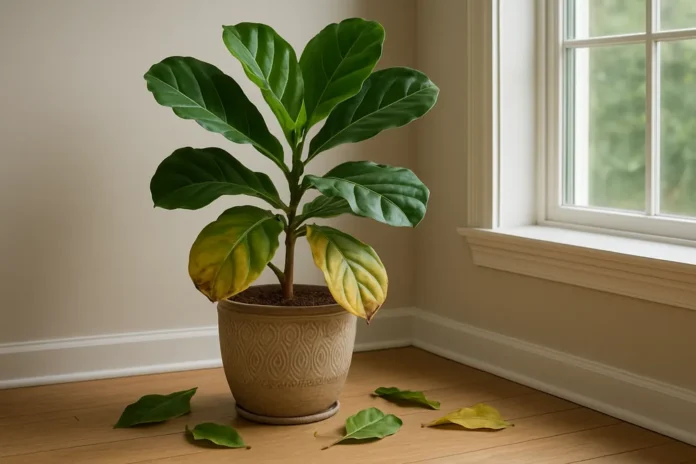
A fiddle leaf fig usually loses leaves because of watering stress, low light, temperature swings, dry indoor air, or root trouble. Sudden changes in its environment can also trigger leaf drop.
Seeing a fiddle leaf fig suddenly drop healthy-looking foliage can be frustrating, especially when the plant seemed fine just days earlier. When leaves start falling off, your plant is usually reacting to stress rather than randomly declining.
In most homes, fiddle leaf fig leaf drop happens because of inconsistent watering, poor light, cold drafts, dry air, transplant shock, or pests. The good news is that this plant often gives clear clues about what is wrong once you know what to look for.
Below, you will learn the most common causes, how to tell them apart, and what changes help your plant recover. Catching the cause early gives you the best chance of stopping more leaves from dropping.
What Normal Leaf Drop Looks Like
Not every dropped leaf means your fiddle leaf fig is in serious trouble. It is normal for an older, lower leaf to yellow and fall occasionally as the plant matures and redirects energy into new growth.
Normal leaf loss is usually slow and limited to one leaf at a time near the bottom of the plant. If several leaves fall within a short period, especially from the middle or top of the plant, that points to a care or environmental problem.
- Usually normal: one older bottom leaf drops every so often
- Usually a problem: several leaves drop at once
- Usually a problem: leaves fall after yellowing, browning, spotting, or sudden drooping
- Usually a problem: leaf drop begins soon after moving the plant or changing care
Watering Stress Is the Most Common Cause
Underwatering
If the soil stays too dry for too long, a fiddle leaf fig may drop leaves to reduce moisture loss. Underwatered plants often have crispy brown edges, curling leaves, dry potting mix that pulls from the pot sides, and a droopy overall look.
Leaf drop from dryness often starts after missed waterings or when a plant is placed near a heating vent, sunny window, or warm room that dries soil faster than expected. Smaller nursery pots can dry out surprisingly quickly indoors.
Overwatering
Too much water can be just as damaging. When roots sit in soggy soil, they lose oxygen and begin to decline. That weakens the plant's ability to support its leaves, which may yellow, develop brown spots, and drop.
Overwatering does not always mean you water too often. It can also mean the pot drains poorly, the soil stays dense too long, or the plant is in low light and uses water slowly. A heavy, wet pot days after watering is a common clue.
- Signs of underwatering: dry soil, crisp edges, limp leaves, leaf curl, lighter pot weight
- Signs of overwatering: yellowing leaves, soft brown patches, lingering wet soil, musty smell, black or mushy roots
Low Light Weakens the Plant Over Time
Fiddle leaf figs need bright light to maintain strong growth and hold onto their leaves. In homes, they often survive in moderate light for a while, then slowly begin shedding lower or interior leaves because the plant cannot support all its foliage.
Low light leaf drop is usually gradual rather than sudden. You may also notice stretched stems, slower growth, smaller new leaves, or the plant leaning hard toward a window.
A spot near a bright east or south-facing window often works well, especially if the plant gets several hours of strong indirect light or gentle direct morning sun. If your room is dim, the plant may need a grow light to stay full.
Sudden Changes Can Trigger Shock
Fiddle leaf figs dislike abrupt change. Moving the plant to a new room, bringing it home from a store, repotting, rotating it too dramatically, or shifting it outdoors and back inside can all trigger leaf drop.
This is often called environmental shock. The leaves may still look decent when they drop because the plant is reacting to a sudden shift in light, temperature, humidity, or root disturbance.
- Recent move to a new home or office
- Potting up into a much larger container
- Placement near an exterior door or drafty window
- Seasonal indoor heating or air conditioning changes
- Moving from low store light into intense direct sun
Temperature Swings and Dry Air Matter More than Many Gardeners Expect
These tropical plants prefer stable indoor conditions. Cold drafts, hot blasts from vents, and sharp day-to-night swings can cause leaves to yellow, brown, or fall. Problems often show up in winter when plants sit near chilly glass or forced-air heat.
Very dry air does not always cause immediate leaf drop by itself, but it adds stress and can worsen watering issues. A plant that is already borderline dry may begin dropping leaves faster in a heated room with low humidity.
Try to keep your plant away from heater vents, fireplaces, frequently opened doors, and air conditioning blasts. Consistent conditions are often more important than chasing a perfect humidity number.
Root Problems Can Lead to Fast Decline
Root Rot
Root rot is a serious form of overwatering damage. When roots stay wet too long, fungi and bacteria can take hold. The plant can no longer absorb water properly, so leaves may yellow and drop even though the soil feels wet.
If you slide the root ball out and see dark, mushy, foul-smelling roots instead of firm pale roots, rot is likely involved. Advanced root rot often causes continued leaf drop until the plant is repotted into fresh, airy mix.
Rootbound Stress
A severely rootbound fiddle leaf fig can also shed leaves. When roots circle tightly and fill the pot, water runs through too quickly or the root ball dries unevenly. The plant becomes harder to keep consistently hydrated.
Rootbound plants may wilt soon after watering, dry out rapidly, or show slowed growth. If roots are circling densely with very little soil left, stepping up one pot size can help.
Pests Can Cause Hidden Stress
Several houseplant pests feed on fiddle leaf fig leaves and stems. Spider mites, scale, mealybugs, and thrips can all weaken the plant enough to trigger leaf drop, especially if the infestation goes unnoticed for weeks.
Spider mites are especially common in dry indoor conditions. They may cause stippling, dull leaves, fine webbing, and eventual leaf drop. Scale and mealybugs often gather along stems or leaf veins and slowly sap the plant's strength.
- Spider mites: tiny speckling, dusty look, fine webbing
- Scale: small brown bumps on stems or leaf undersides
- Mealybugs: white cottony clusters in leaf joints
- Thrips: silvery scarring, distorted new growth, black specks
Nutrient Issues Are Possible but Less Common
A lack of nutrients can contribute to weak growth and occasional leaf drop, but it is not usually the first cause to suspect. Most indoor leaf loss comes from water, light, root, or environmental stress before fertilizer is the main issue.
That said, a plant kept in the same exhausted potting mix for years may become pale, slow growing, and less able to hold leaves. Heavy fertilizer buildup can also damage roots and mimic watering stress.
During active growth, a balanced houseplant fertilizer used at the recommended rate can help support healthy foliage. Avoid feeding a badly stressed plant until watering and light problems are corrected first.
How to Tell Which Cause Is Most Likely
The fastest way to diagnose fiddle leaf fig leaf drop is to match the symptom pattern with recent changes in care. Leaf drop is the result, but the details around it reveal the cause.
- Dry, crispy, curled leaves with light pot weight usually point to underwatering
- Yellow leaves with soft brown areas and wet soil usually point to overwatering or root rot
- Gradual drop of lower leaves with weak growth usually points to low light
- Sudden leaf drop soon after moving the plant usually points to environmental shock
- Speckled, sticky, scarred, or webbed leaves suggest pests
- Leaf drop near windows, doors, or vents often points to temperature stress
How to Stop the Leaf Drop and Help It Recover
Fix Watering First
Water thoroughly when the top part of the soil has dried but before the entire root ball becomes bone dry. Let excess water drain fully and never leave the pot sitting in a saucer full of water. If the soil stays wet too long, consider repotting into a chunky, fast-draining mix.
Improve Light
Place the plant in bright indirect light with as much consistent exposure as your space allows. If natural light is limited, a grow light can reduce future leaf loss and support stronger replacement growth.
Keep Conditions Stable
Avoid moving the plant repeatedly once you find a good spot. Keep it away from hot and cold drafts, and aim for steady indoor temperatures. Stable care helps the plant reset after stress.
Check Roots and Drainage
If the pot has no drainage hole, change that as soon as possible. If root rot is suspected, inspect the roots, trim mushy sections with clean pruners, and repot into fresh mix. If roots are packed tightly, move up only one container size.
Treat Pests Promptly
Isolate the plant if pests are present. Wipe leaves, rinse the foliage if practical, and use insecticidal soap or another houseplant-safe treatment labeled for the pest involved. Repeated treatments are often needed.
What Recovery Looks Like
A recovering fiddle leaf fig does not usually replace dropped leaves along bare lower stems right away, so patience is important. The first signs of improvement are often that leaf drop slows, the remaining leaves stay firm, and new growth appears at the top.
Do not expect instant results. After the main problem is fixed, the plant may take several weeks to stabilize and longer to start pushing strong new leaves, especially outside its active growing season.
When Leaf Drop May Be Too Advanced to Fully Reverse
If your fiddle leaf fig has lost most of its leaves and also has severe root rot, stem softness, or ongoing pest pressure, recovery becomes less certain. You may still be able to save the plant if the main stem remains firm and some healthy roots are left.
In extreme cases, growers sometimes prune back healthy stem sections for propagation. That can be a useful backup if the lower root system is failing but the top growth still has viable tissue.
FAQ
Will Dropped Fiddle Leaf Fig Leaves Grow Back?
Usually, a dropped leaf does not grow back in the exact same spot right away. Most recovery shows up as new growth at the top, though pruning and improved care can help the plant fill out over time.
How Often Should I Water a Fiddle Leaf Fig to Prevent Leaf Drop?
There is no fixed schedule that works in every home. Water when the upper portion of the soil has dried and the pot feels lighter, then water deeply and let excess drain away.
Can a Fiddle Leaf Fig Lose Leaves After Being Moved?
Yes. Moving a fiddle leaf fig can trigger stress from changes in light, temperature, airflow, and humidity, and leaf drop is a common response.
Do Yellow Leaves Always Mean Overwatering?
Not always. Yellow leaves are common with overwatering, but low light, nutrient stress, and normal aging of lower leaves can also cause yellowing.
Should I Remove Damaged Leaves From My Fiddle Leaf Fig?
Yes, you can remove leaves that are mostly yellow, brown, or badly damaged. If a leaf is still mostly green, it can still help the plant photosynthesize while it recovers.
Can Low Humidity Make Fiddle Leaf Fig Leaves Fall Off?
Yes, especially when combined with dry soil, heat, or winter indoor air. Low humidity alone is not always the main cause, but it can increase overall stress.
Is Leaf Drop Worse in Winter?
Often, yes. Winter brings lower light, cooler drafts, and drier heated air, all of which can make fiddle leaf figs more likely to drop leaves.
Need the right fix fast? Read our guide to the best soils, pots, grow lights, and pest treatments for fiddle leaf figs so you can stop leaf drop and get fuller growth sooner.
