

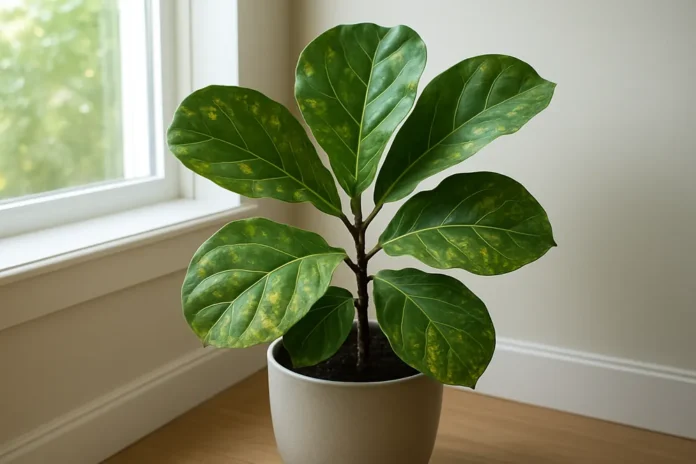
Yellow spots on a fiddle leaf fig are most often caused by watering stress, early root rot, pest feeding, or nutrient-related chlorosis. The pattern and location of the spots usually point to which problem is affecting the plant.
Seeing yellow spots on your fiddle leaf fig can be frustrating, especially when the rest of the plant seems mostly healthy. This symptom is common indoors and usually means the plant is reacting to stress rather than failing all at once.
In many cases, yellow spotting starts when roots stay too wet, the soil dries too much between waterings, or the leaves are under attack from pests like spider mites. Nutrient issues, hard water buildup, and sudden changes in light or temperature can also leave a spotted, mottled look on leaves.
The good news is that leaf spotting often gives clues before a fiddle leaf fig declines further. Once you match the spot pattern to the likely cause, you can usually stop the spread and help new growth come in healthy.
What Yellow Spots Usually Mean on a Fiddle Leaf Fig
Yellow spots are not a disease by themselves. They are a symptom of stress or damage in the leaf tissue. On fiddle leaf figs, the most common triggers are inconsistent watering, poor drainage, root stress, pest feeding, and nutrient problems. The exact shade, shape, and placement of the spots can help narrow down the cause.
For example, tiny pale yellow speckles often suggest sap-sucking pests, while larger yellow patches near brown areas can point to overwatering or root issues. If older leaves are affected first, think about watering and root health. If newer leaves show interveinal yellowing, nutrient availability may be part of the problem.
- Small speckles or stippling often indicate spider mites or thrips.
- Soft yellow areas that later turn brown often suggest overwatering or root rot.
- Crisp yellowing near dry brown edges may come from underwatering or dry indoor air.
- Yellowing between green veins can point to nutrient deficiency or pH-related uptake problems.
- Random patchy yellow marks after a move may be linked to light or temperature stress.
Overwatering and Early Root Rot
Why Excess Moisture Causes Yellow Spotting
The most common reason fiddle leaf figs develop yellow spots is excess moisture around the roots. When potting mix stays wet too long, roots cannot access oxygen properly. As roots weaken, the plant struggles to move water and nutrients evenly to the leaves. Early on, this can show up as yellow blotches or spots before entire leaves start yellowing or dropping.
If root rot is beginning, the yellow areas may look soft or translucent and may later turn tan or brown. Lower leaves are often the first to show symptoms because the plant sheds older foliage first when it is stressed.
Signs That Point to Overwatering
- Soil stays damp for many days after watering
- Pot feels heavy long after irrigation
- Yellow spots appear on older or lower leaves first
- Leaves may eventually develop brown patches or drop
- A sour smell from the pot can suggest decaying roots
- Growth slows even during spring and summer
How to Correct It
Let the top 2 to 3 inches of soil dry before watering again. Make sure the container has drainage holes and never let the pot sit in standing water. If the mix is dense or stays wet too long, repot into a chunky indoor plant blend with added bark or perlite. If you suspect root rot, inspect the roots. Healthy roots are firm and light-colored, while rotting roots are dark, mushy, or foul-smelling.
Underwatering and Dry Soil Stress
While overwatering is more common, underwatering can also cause yellow spots. When a fiddle leaf fig gets too dry, leaf cells lose pressure and some tissue begins to fail. This can appear as pale yellow patches that eventually turn crisp and brown, especially around the edges or tips.
Plants in bright windows, terra cotta pots, or heated rooms can dry out faster than expected. A rootbound plant may also act thirsty because there is less soil available to hold moisture.
- Soil pulls away from the sides of the pot
- Leaves feel limp before they become dry and crispy
- Yellow areas often develop near edges or tips
- The plant perks up noticeably after a thorough watering
- Leaf drop may happen after repeated drought cycles
To fix underwatering, water deeply until excess drains from the bottom, then empty the saucer. Resume watering only when the upper soil layer is dry, not bone dry all the way through. Consistency matters more than following a rigid calendar.
Pests That Cause Yellow Speckles and Mottling
Spider Mites
Spider mites are a frequent cause of tiny yellow spots on fiddle leaf figs, especially in dry indoor conditions. These pests feed by piercing leaf tissue and sucking out plant juices, leaving fine stippling that can merge into a faded, dusty look. You may also see faint webbing on leaf undersides or where leaves meet stems.
Thrips and Scale
Thrips can create silvery or yellow streaks and irregular spotting, often on newer leaves. Scale insects are less likely to cause widespread stippling, but they can weaken the plant and contribute to yellow patches if populations build up. Sticky residue may accompany some sap-sucking pests.
How to Tell if Pests Are the Issue
- Tiny scattered yellow dots across the leaf surface
- More damage on leaf undersides or tender new leaves
- Fine webbing, sticky residue, or visible insects
- Spots that keep spreading even when watering is corrected
- Nearby houseplants also showing stippling or decline
For mild infestations, rinse the foliage and wipe both sides of leaves with a soft cloth. Follow with insecticidal soap or horticultural oil labeled for indoor plants, making sure to coat undersides where pests hide. Repeat treatments as directed because one application rarely solves the problem.
Nutrient Deficiencies and pH Problems
A fiddle leaf fig that has been in the same potting mix for a long time can begin to show nutrient stress. Nitrogen deficiency more often causes overall pale yellowing, but deficiencies in iron, magnesium, or other micronutrients may create spotty or interveinal yellowing. This is more likely if the plant has not been fertilized during active growth or if salts have built up in the soil.
Water quality can also affect nutrient uptake. Hard water and excess fertilizer salts may shift the root zone chemistry enough that nutrients are present in the soil but less available to the plant. In that case, leaves can show yellowing even when you are feeding regularly.
Clues That Suggest a Feeding Issue
- New growth is smaller and paler than normal
- Yellowing appears between veins while veins stay greener
- The plant has not been repotted or fertilized in a long time
- White crust on soil or pot rim suggests salt buildup
- Growth season arrives but the plant barely pushes new leaves
Use a balanced houseplant fertilizer during spring and summer at the label rate or slightly diluted if your plant is sensitive. Flush the pot occasionally with plain water to wash out salts, provided the container drains well. If the soil is old and compacted, repotting into fresh mix may do more good than adding more fertilizer.
Light Stress, Sunburn, and Sudden Environmental Changes
Fiddle leaf figs like bright light, but sudden changes can shock the leaves. A plant moved from a dim corner into direct afternoon sun can develop yellowed or bleached patches that later turn brown and papery. On the other hand, a plant kept too far from a window may become weak and more prone to yellowing from other stresses.
Temperature swings can create similar symptoms. Cold drafts from winter windows, blasts from air conditioning vents, and hot dry air from heaters can all damage leaf tissue. This kind of stress often shows up after a move, a weather shift, or a seasonal change in indoor conditions.
- Sunburn usually appears on the side facing the light source
- Cold injury can cause blotchy yellowing followed by brown collapse
- Low light weakens the plant and slows drying, which can worsen watering issues
- Rapid environmental changes often affect several leaves at once
Place your plant in bright indirect light or gentle morning sun, then acclimate it gradually if you want to increase exposure. Keep it away from strong vents and cold drafts. Stable conditions help prevent new spotting even if damaged leaves do not fully recover.
Leaf Spot Disease and Secondary Infections
True leaf spot diseases are less common than watering or pest problems on indoor fiddle leaf figs, but they can happen. Fungal or bacterial spotting may begin as yellow halos around darker brown, black, or water-soaked centers. Poor airflow, consistently wet foliage, and overly damp soil can all increase the chance of infection.
Because many leaf spot symptoms overlap, disease is often overdiagnosed. If the spots are sharply defined, increasing in number, and showing dark centers or ringed margins, infection becomes more likely. If the plant simply has a few yellow patches on older leaves, root or watering stress is still the better first suspect.
How to Respond
- Remove severely affected leaves with clean pruners
- Avoid misting if leaves stay wet for long periods
- Improve airflow around the plant
- Water the soil directly instead of splashing foliage
- Correct drainage and moisture problems first
Fungicides are usually unnecessary for minor indoor cases unless symptoms are clearly spreading and cultural fixes have not helped. Good sanitation and better root-zone conditions often stop the issue from worsening.
How to Diagnose Yellow Spots by Their Pattern
Instead of guessing, look at where the spots started and how they behave over time. Pattern-based diagnosis is the fastest way to separate root problems from pests or nutrition issues.
- Tiny even speckles: usually spider mites or thrips.
- Large soft yellow blotches: commonly overwatering or root stress.
- Yellow with crispy brown edges: often underwatering or dry air stress.
- Yellow between veins on newer leaves: often nutrient uptake problems.
- Bleached patches on sun-facing leaves: commonly sunburn.
- Yellow halos around dark lesions: more consistent with leaf spot disease.
Also consider timing. If the spotting began right after repotting, moving, or a watering change, environmental stress is a strong possibility. If it developed gradually over several weeks and the soil stays wet, start with the roots.
What to Do Right Now to Stop the Problem From Spreading
Yellow spots on existing leaves may not disappear, but you can prevent new damage by correcting the underlying cause. Focus first on the factors most likely to harm the plant long term: root health, pests, drainage, and light placement.
- Check soil moisture 2 to 3 inches down before watering.
- Confirm the pot has drainage holes and is not sitting in water.
- Inspect leaf undersides for mites, thrips, or scale.
- Move the plant to bright indirect light if it is in harsh direct sun or deep shade.
- Trim only badly damaged leaves, leaving healthy tissue to support recovery.
- Hold fertilizer if roots are stressed, then resume light feeding once growth stabilizes.
If several problems may be happening at once, treat the most serious one first. For example, suspected root rot matters more than light feeding, and an active mite infestation needs attention even if watering is also imperfect.
How to Prevent Yellow Spots in the Future
Prevention comes down to consistency. Fiddle leaf figs dislike extremes, especially cycles of soggy soil followed by drought. A stable environment and a predictable care routine make leaf spotting much less likely.
- Water only when the top layer of mix has dried appropriately
- Use a fast-draining indoor potting mix
- Repot if roots are circling tightly or soil has compacted
- Keep the plant in bright filtered light
- Rotate the pot for even growth but avoid frequent relocations
- Wipe leaves regularly so you can catch pests early
- Feed during active growth and flush salts from the pot occasionally
- Protect the plant from HVAC vents, drafts, and sudden temperature swings
When your plant is putting out healthy new leaves without fresh spotting, that is the best sign the problem has been solved. Old damaged leaves may hang on for a while, but recovery shows up in the new growth first.
FAQ
Can Yellow Spots on Fiddle Leaf Fig Leaves Turn Green Again?
Usually no. Damaged leaf tissue rarely returns to normal color. The goal is to stop new spots from forming and encourage healthy new growth.
Should I Remove Leaves with Yellow Spots?
Remove leaves only if they are heavily damaged, diseased, or mostly brown. Leaves with mild spotting can still help the plant photosynthesize while it recovers.
Do Yellow Spots Always Mean Root Rot?
No. Root rot is common, but yellow spots can also come from underwatering, pests, sunburn, nutrient issues, or leaf spot disease. The size, texture, and location of the spots matter.
How Often Should I Water a Fiddle Leaf Fig with Yellow Spots?
Water based on soil dryness rather than a fixed schedule. Most plants do best when the top 2 to 3 inches of soil dry before the next thorough watering.
Can Tap Water Cause Yellow Spots on a Fiddle Leaf Fig?
Sometimes. Hard water and mineral buildup can contribute to nutrient uptake problems and leaf discoloration over time, especially in older potting mix.
What Pests Cause Tiny Yellow Dots on Fiddle Leaf Fig Leaves?
Spider mites are the most common culprit, and thrips can cause similar damage. Check the undersides of leaves for fine webbing, moving specks, or silvery scarring.
Is Misting Helpful for a Fiddle Leaf Fig with Yellow Spots?
Not usually. Misting does little for humidity and can keep foliage damp, which may encourage spotting problems. Better airflow and proper watering are more helpful.
Need the right fix fast? Read our guide to the best fiddle leaf fig soils, moisture meters, and pest treatments so you can choose the products that actually solve yellow spot problems.
