

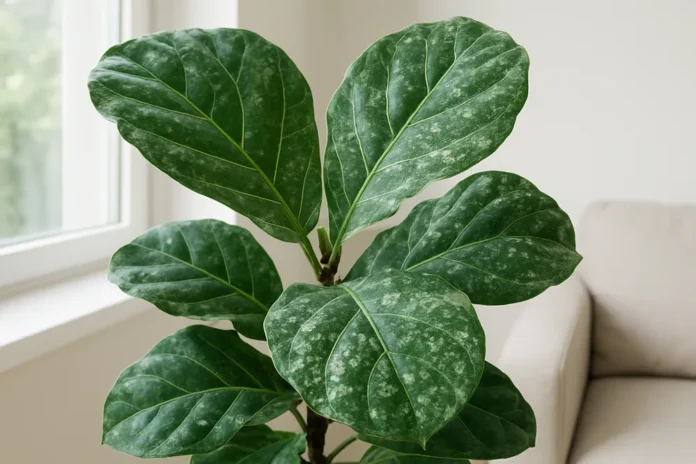
White powder on a fiddle leaf fig is usually mineral residue, dust, powdery mildew, or a pest-related buildup like mealybugs. The most common cause indoors is residue left behind by tap water, hard water misting, or leaf-cleaning products.
A fiddle-leaf fig with white powder on the leaves can look alarming, especially when the coating seems to appear overnight. In many homes, the cause is not a serious disease at all. It is often leftover mineral residue from tap water, humidifiers, or leaf sprays that dries into a chalky film.
That said, not every white coating is harmless. A powdery patch can also point to powdery mildew, mealybugs, or environmental stress that makes residue and fungal issues more likely. The key is to look at where the powder sits, how easily it wipes away, and whether the plant is also showing yellowing, leaf drop, sticky spots, or distorted new growth.
Once you know what you are looking at, the fix is usually straightforward. Most cases can be managed with better cleaning, improved air circulation, corrected watering habits, or targeted pest treatment.
What the White Powder Usually Is
White powder on a fiddle leaf fig generally falls into one of four categories: mineral residue, ordinary dust, fungal growth, or pest-related material. The appearance matters. A dry, chalky film that sits flat on the leaf surface and wipes off cleanly is commonly residue. A fuzzy or spreading patch can be fungal. Small white cottony clusters in leaf joints usually suggest mealybugs rather than true powder.
- Mineral residue often looks pale, flat, and dusty, especially after misting or wiping with tap water.
- Household dust can settle on large fiddle leaf fig leaves and create a dull gray-white coating.
- Powdery mildew appears as a soft white fungal film that may spread across several leaves.
- Mealybugs look more like white cotton or fluff than loose powder and often hide along stems and veins.
Because fiddle leaf fig leaves are broad, glossy, and dark green, even a light coating stands out. That makes this plant especially likely to show cosmetic residue that would go unnoticed on smaller or lighter foliage.
Mineral Residue Is the Most Common Indoor Cause
How Hard Water Leaves a White Film
If you mist your fiddle leaf fig, run a humidifier nearby, or wipe leaves with tap water, minerals such as calcium and magnesium can dry on the surface and leave a powdery haze. This is especially common in homes with hard water. The coating tends to appear evenly across exposed leaf surfaces rather than in isolated spots.
What Residue From Products Looks Like
Leaf shine sprays, fertilizer splash, insecticidal soap overspray, and even dried droplets from foliar feeding can leave pale streaks or powdery patches. These marks are often more visible near the leaf tip or edges where droplets dried. If the white material appeared shortly after a cleaning or treatment, residue is a likely explanation.
- Residue usually wipes away with a damp microfiber cloth.
- It does not normally distort leaves or cause sticky areas.
- It often returns after misting with tap water or using a mineral-heavy humidifier.
- It is more noticeable on mature, glossy leaves.
When Powdery Mildew Is the Problem
Powdery mildew is a fungal disease that creates a whitish coating on leaves, stems, or new growth. Indoors, it is less common than residue but still possible, particularly in rooms with poor air movement, crowded plants, fluctuating humidity, and leaves that stay damp. Unlike mineral deposits, mildew tends to spread over time.
Signs That Point to Mildew
- The white material looks soft or velvety rather than chalky.
- Patches expand or appear on multiple leaves.
- New growth may look weak, twisted, or lightly damaged.
- Leaves may develop yellowing or brown areas after the fungal coating appears.
- The coating does not fully disappear with a simple dry wipe.
Powdery mildew often starts on leaves with less airflow, such as interior foliage or areas close to a wall. It may first show up as a few pale circles before joining into larger patches. If your fiddle leaf fig has been in a dim corner or near other crowded houseplants, mildew becomes more likely.
Pests That Can Look Like White Powder
Not all white buildup is actually powder. Mealybugs are one of the most common houseplant pests mistaken for powdery residue. They produce a white, cottony wax that collects in clusters at leaf joints, under leaves, along stems, and around fresh growth.
How Mealybugs Differ From Residue
- The material is clumpy or fluffy instead of evenly dusty.
- It gathers where leaves meet stems and along veins.
- You may notice sticky honeydew on leaves or nearby surfaces.
- Ants, if present indoors or on patio plants, may be attracted to the sweet residue.
- Growth can become stunted, curled, or misshapen.
Scale insects can also create pale waxy buildup, though they typically look more like small bumps than powder. Spider mites are less likely to look powdery, but heavy webbing can catch dust and create a white cast. If the coating has texture or appears concentrated around plant crevices, inspect closely for insects.
Less Common Causes Homeowners Overlook
A few other issues can leave white marks on fiddle leaf fig leaves. Dust from drywall, remodeling work, or nearby vents can settle quickly and mimic residue. Salt buildup from overfertilizing can splash onto lower leaves when you water. In rare cases, guttation residue from plant sap and dissolved minerals can dry into pale spots, though fiddle leaf figs are less known for this than some other houseplants.
- Recent construction or cleaning can coat leaves with fine household dust.
- A humidifier using tap water can leave white dust on nearby foliage and furniture.
- Fertilizer crystals or splash marks can dry white after feeding.
- Repeated misting can create buildup even if each application seems light.
How to Tell Which Cause You Have
The easiest way to identify the cause is to compare texture, pattern, and plant symptoms. White powder from water minerals or dust usually sits on top of the leaf in a fairly even layer and comes off with gentle cleaning. A fungal issue spreads and may be paired with discoloration. Pests cluster in protected areas and often bring stickiness or distorted growth.
- Wipe one affected leaf with a damp cloth. If it clears easily and the leaf beneath looks healthy, residue or dust is most likely.
- Check the stem joints, the underside of leaves, and the central veins. Cottony clumps suggest mealybugs.
- Look for spread. If the white coating keeps expanding onto fresh leaves, suspect powdery mildew.
- Notice whether the plant has sticky spots, yellowing, or curled new growth. Those symptoms make pests or disease more likely than simple residue.
- Think about recent care. Misting, humidifier use, leaf shine sprays, or foliar products strongly point toward buildup on the leaf surface.
One clue many gardeners miss is where the white material appears first. Residue usually shows up on the broad top surfaces that catch droplets. Mealybugs gather in hidden nooks. Mildew often starts where air circulation is weakest.
How to Remove White Powder Safely
For Mineral Residue and Dust
Wipe leaves gently with a soft microfiber cloth dampened with distilled water or filtered water. Support each leaf from underneath so you do not crease it. For stubborn residue, a very diluted solution of water with a small splash of white vinegar can help dissolve mineral deposits, but always wipe again with plain water and avoid soaking the leaf.
For Powdery Mildew
Remove heavily affected leaves if only a few are involved. Improve airflow around the plant and avoid wetting foliage. Many gardeners use neem oil, potassium bicarbonate, or a houseplant-safe fungicide labeled for powdery mildew. Follow the label exactly and test any spray on a small area first, since fiddle leaf fig leaves can be sensitive.
For Mealybugs
Isolate the plant right away. Dab visible mealybugs with a cotton swab lightly moistened with isopropyl alcohol, then follow up with insecticidal soap or neem according to label directions. Expect repeated treatment, because eggs and hidden insects often survive the first pass.
- Do not scrub hard or use abrasive pads on the leaves.
- Avoid heavy leaf shine products that can clog leaf surfaces and attract more residue.
- Never mix homemade sprays at random, especially vinegar, soap, oils, and alcohol together.
- Keep the plant out of harsh direct sun until leaves are fully dry after cleaning or treatment.
How to Prevent It From Coming Back
Prevention depends on the original cause, but a few care habits reduce almost every kind of white buildup. Fiddle leaf figs do best with bright indirect light, steady watering, moderate humidity, and enough space for air to move around the leaves. Stress from low light, overwatering, and stagnant air makes disease and pest issues more likely.
- Use distilled, filtered, or rainwater for misting or leaf wiping if your tap water is hard.
- Skip misting altogether if your room already has adequate humidity.
- Run humidifiers with low-mineral water when possible to reduce white dust.
- Wipe leaves every few weeks so dust does not build up.
- Do not crowd the plant tightly against walls, curtains, or other plants.
- Water the soil directly instead of spraying the foliage.
- Inspect new houseplants before bringing them near your fiddle leaf fig.
If powdery mildew has shown up before, airflow matters more than many homeowners realize. Even a beautiful plant can struggle if it lives in a dim corner with still air and regularly damp leaves.
When the White Powder Is a Sign of a Bigger Care Issue
Sometimes the powder itself is not the main problem. A stressed fiddle leaf fig is more vulnerable to mildew and pests, and poor routine care can cause repeated residue buildup. If you are also seeing dropping leaves, brown edges, yellowing, or weak new growth, step back and review the whole environment.
- Low light slows growth and can make foliage stay damp longer.
- Overwatering weakens the plant and encourages disease problems.
- Sudden temperature swings from vents or drafty windows increase stress.
- Heavy fertilizing can leave salt residue and contribute to root stress.
- A potting mix that stays soggy can lead to multiple symptoms at once.
In other words, removing the white film may improve appearance, but the problem can return if the plant's growing conditions are not corrected. Consistent indoor care usually prevents repeat flare-ups.
FAQ
Is White Powder on a Fiddle Leaf Fig Always Powdery Mildew?
No. Indoors, white powder is often mineral residue or dust rather than fungal disease. Powdery mildew is more likely when the coating spreads and is paired with yellowing or weak growth.
Can I Wipe the Leaves with Tap Water?
You can, but tap water often leaves mineral spots on dark glossy leaves, especially in hard water areas. Distilled or filtered water is a better choice if residue keeps coming back.
What Does Mealybug Damage Look Like on a Fiddle Leaf Fig?
Mealybugs leave cottony white clusters, sticky honeydew, and sometimes curled or stunted new growth. They usually gather where leaves join the stem and on the undersides of leaves.
Should I Mist My Fiddle Leaf Fig to Raise Humidity?
Light misting usually does very little for humidity and can leave residue on the leaves. A room humidifier or naturally moderate indoor humidity is usually more effective.
Can White Vinegar Damage Fiddle Leaf Fig Leaves?
Strong vinegar can damage leaves, so use it only in a very diluted form for stubborn mineral deposits and wipe the leaf again with plain water. Test one small area first before cleaning the whole plant.
Will Powdery Mildew Kill a Fiddle Leaf Fig?
It usually does not kill the plant quickly, but it can weaken growth and spread if ignored. Early treatment and better airflow usually keep it manageable.
Why Does the White Powder Keep Coming Back After I Clean It Off?
If it returns in the same general pattern, the source is often hard water misting, humidifier dust, or repeated product residue. If it spreads to new leaves or shows up in clumps, reconsider mildew or pests.
Need the right fix fast? Read our guide to the best fiddle leaf fig pest and disease treatments so you can choose the safest spray, soap, or fungicide for your plant.
