

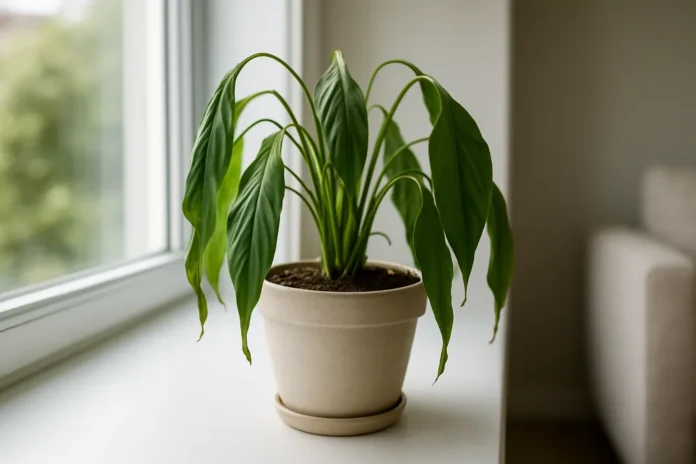
Peace lily leaves usually droop because the plant is stressed by watering problems, poor drainage, root issues, or sudden environmental changes. In many cases, thirst or overly wet soil is the main trigger.
A peace lily with drooping leaves is one of the most common indoor plant problems home gardeners face. The good news is that drooping does not always mean the plant is dying. Peace lilies are expressive houseplants, and they often show stress quickly when something in their care routine is off.
In most cases, drooping points to watering stress, but that stress can come from either soil that is too dry or roots that have stayed too wet for too long. Light, temperature, humidity, container size, and root health can also affect how upright the leaves stay. Once you narrow down the cause, peace lilies often recover well.
The key is to look at the full picture instead of assuming every droopy plant just needs more water. Leaf texture, soil moisture, pot drainage, recent repotting, and room conditions all help tell you what your peace lily is trying to say.
What Drooping Means in a Peace Lily
Drooping happens when the leaves lose the internal pressure that keeps them upright. In a healthy peace lily, roots absorb water and move it through the plant, allowing the stems and leaves to stay firm. When that process is interrupted, the leaves bend, sag, or collapse outward.
Sometimes the cause is simple dehydration. Other times, the roots are damaged and cannot take up water even though the soil is wet. That is why drooping can happen at both extremes of watering. Understanding this makes it easier to avoid the most common mistake, which is adding more water without checking whether the roots can actually use it.
- Mild drooping with dry soil often points to underwatering.
- Persistent drooping with soggy soil often suggests overwatering or root damage.
- Sudden drooping after a move may be caused by transplant shock or environmental stress.
- Drooping with yellowing leaves can indicate root stress, drainage problems, or aging foliage.
Underwatering Is the Most Common Cause
Peace lilies are famous for dramatic wilting when they get too dry. Their leaves can go from upright to limp surprisingly fast, especially in warm rooms or during active growth. If the soil feels dry several inches down and the pot feels light, thirst is a strong possibility.
When the potting mix dries too much, the roots cannot absorb enough moisture to support the leaves. The plant responds by drooping to reduce stress. A thirsty peace lily may also have leaf tips that look brown or crispy, and the foliage may feel softer than usual.
Signs Your Peace Lily Is Too Dry
- Soil is dry below the surface, not just on top.
- The pot feels much lighter than usual.
- Leaves droop evenly across the plant.
- Leaf edges or tips may be crisp or brown.
- The plant perks up within a day after proper watering.
A peace lily that is occasionally allowed to dry a bit is usually fine, but repeated severe wilting stresses the plant and can damage roots over time. That is why frequent dramatic drooping should be treated as a sign that the watering routine needs adjusting.
Overwatering Can Cause Drooping Too
It seems counterintuitive, but a peace lily can droop because it has had too much water. In waterlogged soil, air spaces disappear and roots struggle to breathe. Once roots are deprived of oxygen, they stop functioning well and may begin to rot. At that point, the plant cannot absorb water properly, so the leaves droop even though the pot is wet.
This is one of the easiest problems to misread. A gardener sees drooping leaves, assumes the plant is thirsty, and waters again. That keeps the soil saturated longer and worsens the problem.
Clues That Overwatering Is the Issue
- Soil stays wet for several days after watering.
- The pot feels heavy all the time.
- Leaves are limp but not dry or crisp.
- Older leaves may turn yellow along with drooping.
- The pot has poor drainage or sits in a saucer of water.
Overwatering is not only about how often you water. It can also be caused by dense soil, a pot that drains poorly, low light that slows water use, or cool indoor conditions that keep moisture from evaporating.
Poor Drainage and Root Rot Are Serious Possibilities
If your peace lily stays droopy even after the watering routine improves, the root system may be struggling. Peace lilies need moist but well-drained potting mix. When excess water cannot leave the pot, roots stay soggy and begin to decline.
Root rot develops when harmful fungi and bacteria thrive in overly wet conditions. Damaged roots turn brown or black, become mushy, and stop taking up water efficiently. At that stage, drooping may be joined by yellow leaves, slowed growth, a musty smell, or blackened stems near the soil line.
Situations That Increase the Risk of Root Rot
- A decorative cachepot that traps runoff
- A nursery pot with clogged drainage holes
- Heavy soil that stays compacted and soggy
- Frequent watering on a fixed schedule without checking the mix
- A large pot that holds more moisture than the root ball can use
A healthy peace lily root system should be firm and pale, often white or cream colored. If roots look dark, smell sour, or fall apart when touched, root problems are likely playing a major role in the drooping.
Light and Temperature Changes Can Make Leaves Sag
Peace lilies do best in bright, indirect light. When light is too low, growth slows and the soil stays wet longer, which can indirectly lead to drooping through overwatering stress. When light is too strong, especially direct afternoon sun, leaves may lose water faster than roots can replace it.
Temperature matters too. Peace lilies prefer stable indoor conditions, generally between 65 and 80 degrees Fahrenheit. Sudden cold drafts from doors, air conditioners, or winter windows can shock the plant. Hot air from vents or very warm rooms can also increase water loss and trigger wilting.
Environmental Stress Often Shows Up After
- Moving the plant to a brighter window
- Placing it near a heater or AC vent
- Leaving it in direct sun for part of the day
- Bringing it home from a store or greenhouse
- Exposing it to cold air during transport
If the drooping started soon after one of these changes, the plant may be reacting to its environment rather than only to a watering mistake.
Low Humidity and Dry Indoor Air Can Add Stress
Peace lilies tolerate average home humidity better than some tropical plants, but they still prefer moderately humid air. In very dry homes, especially during winter heating season, leaves can lose moisture faster than usual. That may not be the only cause of drooping, but it can make a mildly stressed plant look much worse.
Low humidity often shows up along with browning tips, curling edges, or a general tired appearance. If the plant is near a heat source, fan, or drafty window, the air may be drying the foliage more than you realize.
Repotting Shock and Crowded Roots Can Lead to Droop
A peace lily may droop after repotting because the roots were disturbed. Even when repotting is done carefully, the plant often needs time to reestablish contact with the new potting mix. Minor drooping right after transplanting is common.
On the other hand, a peace lily that has become rootbound can also start drooping more often. When roots fill most of the pot, there is less soil to hold moisture, and the plant may dry out too quickly between waterings. A tightly packed root ball can also reduce healthy water movement.
Signs Your Peace Lily May Need Repotting
- Roots circle the inside of the pot or come out of drainage holes.
- Water runs through the pot very quickly.
- The plant wilts much faster than it used to.
- Growth has slowed even in the active season.
- The root ball pushes upward or crowds the soil surface.
Choose only one pot size larger when repotting. Oversized containers can hold too much moisture and create a fresh overwatering problem.
Pests, Disease, and Natural Aging Are Less Common Causes
While watering and root stress cause most cases of drooping, pests can also weaken a peace lily. Spider mites, mealybugs, and scale insects feed on plant sap, which can reduce vigor and cause leaves to look limp or tired. Pest damage is more likely if you also notice stippling, sticky residue, webbing, or white cottony clusters.
Disease is less common indoors but can happen in persistently wet conditions. Bacterial or fungal issues may cause soft tissue, spotting, foul smells, or collapse near the crown. In addition, older peace lily leaves naturally decline over time. If only one or two lower leaves droop and yellow while the rest of the plant looks healthy, simple aging may be the explanation.
How to Tell Which Cause Is Most Likely
The fastest way to diagnose drooping is to combine soil moisture with leaf symptoms and recent plant history. Do not rely on the leaves alone. The same droopy look can come from opposite problems.
Use These Patterns to Narrow It Down
- Dry soil + limp leaves + quick recovery after watering usually means underwatering.
- Wet soil + yellowing + sour smell or slow decline often points to overwatering or root rot.
- Drooping after a move or repotting suggests transplant or environmental shock.
- Drooping near a sunny window or heat source can indicate heat stress or faster-than-normal drying.
- Drooping with pest signs may mean sap-sucking insects are weakening the plant.
If the soil is only slightly moist, the leaves are droopy, and the plant has been in the same pot for a long time, a crowded root system may be making it hard to maintain even moisture. If the soil is very wet and the drooping is persistent, focus on drainage and root health first.
How to Help a Drooping Peace Lily Recover
Recovery depends on matching the fix to the real cause. A thirsty peace lily often bounces back quickly. A plant with damaged roots may need more time and more careful changes to recover.
If the Soil Is Dry
Water thoroughly until excess moisture drains out of the bottom. Let the pot drain fully, then return it to its spot. Many peace lilies begin to perk up within several hours and look much better within a day.
If the Soil Is Soggy
Hold off on more watering and improve drainage conditions right away. Empty any standing water from saucers or outer pots. If the soil stays saturated for too long or smells bad, inspect the roots and consider repotting into fresh, airy mix.
If the Plant Was Recently Moved
Give it time in a stable location with bright, indirect light and steady temperatures. Avoid more major changes while it adjusts.
If Roots Are Crowded or Damaged
Repot into a container with drainage holes using a loose indoor potting mix. Trim obviously dead or mushy roots before replanting. Keep the soil lightly moist, not soaked, while the plant reestablishes.
If Humidity Is Very Low
Move the plant away from dry air sources and consider raising humidity around it. This will not cure root issues, but it can reduce leaf stress while the plant recovers.
How to Prevent Drooping in the Future
Once your peace lily recovers, prevention comes down to consistency. These plants like evenly moist soil, good drainage, stable indoor temperatures, and medium to bright indirect light. They do not need a rigid watering schedule as much as they need regular observation.
- Check soil moisture before watering instead of watering by calendar alone.
- Use a pot with drainage holes every time.
- Never leave the root ball sitting in collected water.
- Repot when the plant becomes rootbound, but avoid oversized pots.
- Keep it in bright, indirect light rather than harsh direct sun.
- Protect it from cold drafts, heaters, and air conditioning blasts.
- Watch for yellowing, odor, or constant wet soil, which can signal root trouble early.
A healthy peace lily will still droop occasionally if it gets a little too dry, but it should not stay limp for long. Repeated or ongoing drooping is your signal that something in the plant's root zone or environment needs attention.
FAQ
Will a Drooping Peace Lily Perk Back Up?
Yes, many peace lilies recover well once the cause is corrected. A thirsty plant may perk up within hours, while a plant with root damage can take longer.
How Do I Know if My Peace Lily Needs Water or Has Too Much Water?
Check the soil rather than judging by leaves alone. Dry soil and a light pot usually suggest underwatering, while wet soil, yellowing leaves, and a heavy pot suggest overwatering.
Can Direct Sunlight Make Peace Lily Leaves Droop?
Yes. Too much direct sun can increase water loss and stress the leaves, especially in a warm window. Peace lilies do best in bright, indirect light.
Should I Cut Off Drooping Peace Lily Leaves?
Only remove leaves that are badly damaged, yellow, brown, or clearly dying. If the leaf is still mostly green, leave it in place while the plant recovers.
Why Is My Peace Lily Drooping After Repotting?
Repotting can disturb the roots and cause temporary transplant shock. Mild drooping after repotting is common and often improves once the plant settles into its new pot.
Can Low Humidity Cause a Peace Lily to Droop?
It can contribute, especially in dry heated homes, but it is usually not the only cause. Low humidity often adds stress on top of watering or root issues.
How Often Should I Water a Peace Lily to Stop Drooping?
There is no perfect fixed schedule because watering depends on pot size, light, temperature, and season. Water when the soil begins to dry slightly, not when it is still soggy and not after it becomes bone dry.
Want a healthier, fuller peace lily year-round? Read our guide to the best indoor plant soils, pots, and watering tools so you can fix drooping faster and prevent it from coming back.
