

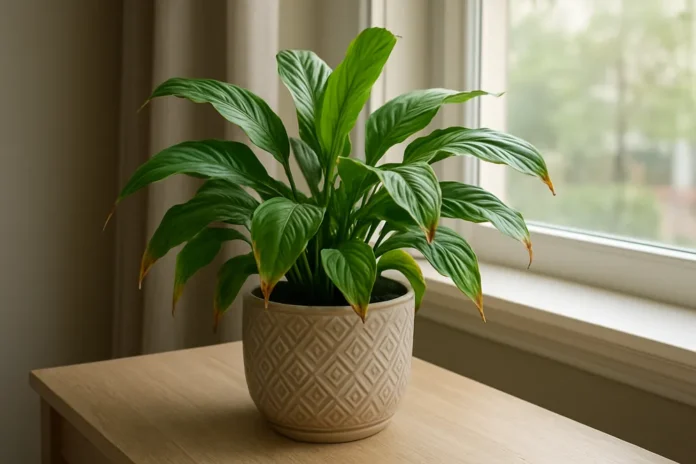
Peace lily leaf tips usually turn brown because the plant is stressed by dry air, uneven watering, mineral-heavy water, or excess fertilizer. Aging foliage, temperature swings, and root problems can also cause brown tip damage.
If your peace lily is developing brown tips, the problem is usually tied to moisture stress or a buildup of minerals and salts. Peace lilies are famous for dramatic wilting when they get too dry, but even when the rest of the leaf still looks green, the tip can start crisping and browning first.
Brown tips do not always mean your plant is dying. In many homes, they are a response to dry indoor air, inconsistent watering, tap water sensitivity, overfertilizing, or roots that are not functioning well. The good news is that the pattern of browning often gives clues about what is happening, and peace lilies usually recover well once conditions improve.
In this guide, you will learn the most common causes of brown peace lily tips, how to tell them apart, and what to change so new growth comes in healthier and cleaner.
What Brown Leaf Tips Usually Mean On Peace Lilies
When only the ends of the leaves are turning brown, the plant is often reacting to stress that affects water movement through the leaf. The tip is one of the first places where dehydration, salt injury, or environmental damage shows up. That is why you may see a dry brown point even when most of the leaf blade is still green.
A clean brown tip with a narrow yellow halo often points to watering inconsistency, low humidity, or excess salts from fertilizer or tap water. Larger brown patches, limp growth, yellowing lower leaves, or a sour-smelling potting mix suggest the issue may be deeper, especially if the roots are struggling from overwatering or poor drainage.
- Crispy brown tips usually suggest dryness, salt buildup, or fertilizer burn.
- Soft brown areas can suggest roots staying too wet or beginning to rot.
- Brown tips on older leaves only can be part age-related, but repeated damage on new leaves means active stress.
- If many leaves brown at once after a recent change, think about location, watering habits, or feeding.
Dry Air And Low Humidity
Why Indoor Air Dries the Tips First
Peace lilies are tropical plants that prefer moderate to high humidity. In many U.S. homes, especially in winter or in air-conditioned rooms, humidity can drop low enough that leaf tips lose moisture faster than the roots can replace it. The result is a tan or brown, papery tip that slowly expands.
This is especially common near heating vents, fireplaces, drafty windows, and rooms with constant forced air. Even if you water regularly, low humidity can still cause tip burn because the plant is losing moisture through the leaves all day long.
Signs Humidity Is Part of the Problem
- Tips look crisp and dry rather than mushy
- Damage is worse in winter
- The plant sits near HVAC airflow
- New leaves emerge smaller or slightly wrinkled
- The potting mix seems to dry faster than expected
If the rest of the plant looks healthy but the tips keep browning a little at a time, dry air is one of the most likely causes.
Inconsistent Watering And Drought Stress
How Underwatering Causes Brown Tips
Peace lilies like evenly moist soil, not bone-dry conditions followed by soaking. When the root ball gets too dry, the leaves lose internal moisture pressure and the tips can brown permanently. Even if the plant perks back up after watering, that dead tip tissue does not turn green again.
Some gardeners wait until the plant droops dramatically every time before watering. Peace lilies can survive this, but repeated drought cycles often lead to tip burn, browning edges, and slower growth over time.
How to Recognize Watering Inconsistency
- Leaves wilt noticeably between waterings
- Browning starts after missed watering days
- The potting mix pulls away from the sides of the pot
- Tips are dry and brittle rather than soft
- Lower leaves may yellow after severe dry downs
A peace lily does best when watered before it reaches the dramatic collapse stage. Steady moisture helps prevent tip damage on both old and new leaves.
Overwatering And Root Stress
Why Too Much Water Can Also Brown the Tips
Brown tips are not always a sign that the plant is too dry. If roots sit in soggy mix for too long, they cannot take up oxygen well, and damaged roots stop supplying moisture to the leaves correctly. The foliage can respond with browning at the tips and edges even though the soil is wet.
This confuses many indoor gardeners because the symptoms can look similar to underwatering at first. The difference is that the potting mix stays wet for a long time, leaves may feel limp rather than crispy, and yellowing often appears along with the browning.
Clues Pointing to Overwatering
- Soil stays damp several days after watering
- The pot feels unusually heavy
- Leaves look droopy even when the soil is wet
- Lower leaves yellow or collapse
- The plant has a musty smell or the roots look dark and soft
If a peace lily is kept too wet long enough, root rot can begin. At that stage, brown tips are only one symptom of a bigger root health problem.
Tap Water Minerals, Fluoride, And Salt Buildup
Why Peace Lilies Can Be Sensitive to Water Quality
Peace lilies are often sensitive to chemicals and dissolved minerals in tap water. Fluoride, chlorine byproducts, and hard water minerals can accumulate in the potting mix over time. As salts build up around the roots, leaf tips may dry out and turn brown even when you are watering on schedule.
This is especially common if you rarely flush the pot thoroughly, if your water is very hard, or if the plant has been in the same soil for a long time. A white crust on the soil surface or around the rim of the pot is a strong hint that mineral buildup is contributing to the problem.
Common Signs of Mineral Stress
- Brown tips keep returning despite decent watering
- White residue appears on soil or pot edges
- The plant is watered mostly with hard tap water
- Older leaves show more tip burn over time
- Growth is slower without another obvious cause
Using filtered, distilled, or rainwater often reduces future tip damage on sensitive peace lilies.
Too Much Fertilizer
How Fertilizer Burn Shows Up
Peace lilies are not heavy feeders. When they receive fertilizer too often, at too strong a dose, or when slow-release granules build up in the mix, salts can scorch the roots and leaf tips. This creates a dry, brown, sometimes yellow-edged burn pattern that may start at the very end of the leaf.
Fertilizer damage is more likely when the plant is already a little dry, when feeding continues during low-light winter months, or when a recently repotted plant was placed into nutrient-rich soil and then fertilized again on top of that.
Red Flags for Overfeeding
- Browning started after a feeding schedule changed
- You use full-strength houseplant fertilizer regularly
- There is a crust on the soil surface
- Leaf tips brown while the plant is otherwise dark green
- The plant is not actively growing but is still being fed
Peace lilies usually prefer light feeding during active growth rather than frequent or strong applications.
Pot Size, Compacted Soil, And Rootbound Plants
A peace lily that has outgrown its pot or is sitting in old, compacted mix may develop brown tips because water is no longer moving through the root zone properly. Rootbound plants dry out quickly and may become difficult to rehydrate evenly. Compacted soil can do the opposite by staying wet on top while leaving parts of the root ball poorly aerated.
In both cases, roots become stressed. That stress often appears on the leaf margins and tips before the plant shows more dramatic decline. If water rushes straight through the pot, roots are circling tightly, or the mix has broken down into a dense mass, the container setup may be a major factor.
- Roots emerge from drainage holes
- The plant wilts soon after watering
- Soil shrinks, hardens, or becomes spongy and old
- Water pools on top before slowly soaking in
- New growth is smaller than older growth
Light, Temperature, And Location Stress
Too Much Direct Sun
Peace lilies prefer bright, indirect light. Strong direct sun, especially afternoon sun through glass, can dry and scorch leaves. While full sun often causes larger bleached or brown patches, it can also worsen brown tips by increasing water loss faster than the roots can keep up.
Cold Drafts and Hot Blasts
Sudden temperature swings stress the foliage. Cold air from doors or windows and hot, dry airflow from heating vents can both injure leaf tips. The damage often shows up shortly after the location change or after seasonal heating starts.
- Browning is worse on the side facing a window
- Damage appeared after moving the plant
- Leaves have pale or scorched patches along with brown tips
- The plant sits near a vent, exterior door, or drafty glass
- The room gets very warm during the day or chilly at night
Natural Aging And Minor Cosmetic Damage
Not every brown tip means something is seriously wrong. Older peace lily leaves naturally age, and a small amount of tip browning can happen over time even in well-kept plants. Tiny imperfections may also result from a one-time dry spell, a brief missed watering, or mechanical injury when a leaf rubs against furniture or a wall.
If only a few older leaves are affected and the plant is producing healthy new growth, the issue may be mostly cosmetic. In that case, focus on preventing new damage rather than worrying about every existing brown point.
How To Tell Which Cause Is Most Likely
Peace lily brown tips are easiest to diagnose by looking at the whole pattern rather than one damaged leaf. Soil moisture, leaf texture, air conditions, and recent care changes all help narrow the cause.
- If tips are crisp and the plant often droops before watering, inconsistent watering or dry air is likely.
- If the soil stays wet and leaves are limp or yellowing, overwatering and root stress are more likely.
- If tip browning keeps returning despite decent moisture, think about hard water, fluoride, or fertilizer salts.
- If the plant sits in direct sun, near vents, or by cold windows, location stress may be the trigger.
- If roots are crowded or the soil is old and dense, the potting setup may be limiting root function.
Many cases involve more than one factor. For example, a rootbound peace lily in dry winter air watered with hard tap water can show brown tips from several overlapping stresses.
How To Fix Brown Tips On A Peace Lily
Stabilize Moisture
Keep the potting mix lightly and evenly moist instead of letting it swing between soaked and bone dry. Water thoroughly, let excess drain, and avoid leaving the pot in standing water.
Improve Humidity
Move the plant away from heating and cooling vents, and raise humidity if your home is very dry. Grouping houseplants together or using a room humidifier often helps more than misting.
Switch Water Sources if Needed
If your tap water is hard or heavily treated, use filtered, distilled, or rainwater when practical. Flushing the pot occasionally with clean water can also help reduce built-up salts.
Fertilize Lightly
Feed only during active growth and use a diluted houseplant fertilizer. Peace lilies generally need less fertilizer than many indoor foliage plants.
Repot when Roots or Soil Need Attention
If the plant is severely rootbound or the mix has become dense and tired, repot into a container with drainage using a loose, moisture-retentive but airy indoor plant mix.
Trim for Appearance
Brown tips will not turn green again. You can trim the dead portion with clean scissors, following the leaf's natural shape and leaving a very thin brown edge so you do not cut into healthy tissue.
How To Prevent Brown Tips From Coming Back
Once a peace lily starts producing healthy new leaves again, prevention is mostly about consistency. The plant prefers steady care more than dramatic interventions.
- Keep it in bright, indirect light
- Water before the plant experiences severe wilt
- Use a pot with drainage holes
- Avoid heavy fertilizer use
- Refresh old potting mix when it becomes compacted
- Protect the plant from direct hot sun and drafts
- Consider lower-mineral water if tip burn is a recurring issue
- Maintain moderate indoor humidity, especially in winter
A little browning on an older leaf is common, but repeated browning on fresh growth means the plant still needs an environmental adjustment.
FAQ
Should I Cut the Brown Tips Off My Peace Lily?
Yes, if you want a cleaner look. Use clean scissors and trim only the dead brown part, following the natural point of the leaf. The damaged tissue will not recover, but trimming does not hurt the plant when done carefully.
Can Tap Water Cause Peace Lily Leaf Tips to Turn Brown?
Yes. Peace lilies can be sensitive to fluoride, chlorine byproducts, and hard water minerals. Over time, these can build up in the soil and contribute to tip burn.
Do Brown Tips Mean My Peace Lily Needs More Water?
Sometimes, but not always. Underwatering is a common cause, yet overwatering and root damage can create similar browning because stressed roots cannot support the leaves properly.
Will Brown Peace Lily Tips Turn Green Again?
No. Once the leaf tissue has turned brown, it stays brown. What you are aiming for is healthier new growth after the underlying stress is corrected.
Is Misting Enough to Stop Brown Tips on a Peace Lily?
Usually not. Misting gives only brief moisture and often does little for long-term humidity. A humidifier, better placement, and steady watering habits are usually more effective.
Why Does My Peace Lily Still Get Brown Tips Even Though I Water It Regularly?
Regular watering helps, but it is not the only factor. Dry air, fertilizer salts, hard tap water, compacted soil, root crowding, and poor light or temperature conditions can all contribute.
Can Too Much Fertilizer Burn Peace Lily Leaves?
Yes. Peace lilies are fairly light feeders, and excess fertilizer can leave salt buildup in the potting mix. This often shows up as dry brown tips or edges.
Want healthier, glossier houseplants with fewer leaf problems? Read our guide to the best indoor plant fertilizers, humidifiers, and watering tools so you can fix stress fast and keep peace lilies thriving.
