

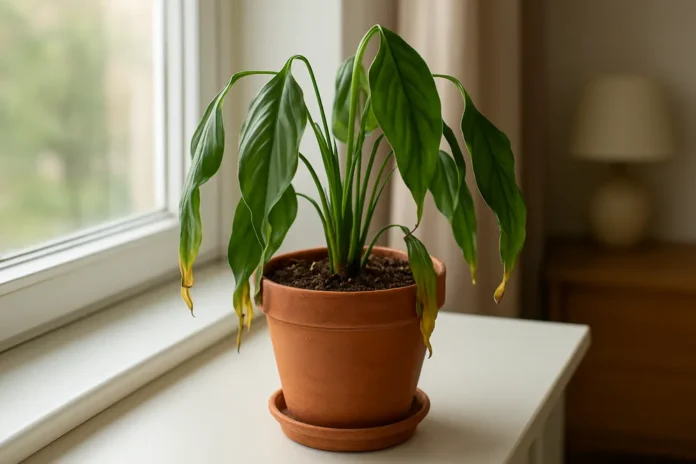
A peace lily usually starts dying because of watering problems, poor drainage, low humidity, temperature stress, or too much direct sun. Root rot, pests, and old compacted soil can also cause a fast decline.
A peace lily can go from glossy and upright to limp, yellowing, and distressed surprisingly fast. When a dying peace lily starts dropping leaves or developing brown tips, the problem is usually tied to water, light, roots, or indoor conditions rather than one mysterious disease.
The good news is that peace lilies often recover well once the real cause is corrected. These plants are expressive, so symptoms like wilting, black stems, yellow leaves, crispy edges, or a lack of new growth can tell you a lot about what is going wrong.
What a Dying Peace Lily Usually Looks Like
Peace lilies show stress in a few common ways. Some plants collapse and wilt even when the soil is wet. Others slowly fade with yellow leaves, brown tips, or stalled growth. The exact symptom pattern matters because overwatering, underwatering, sun scorch, root issues, and cold damage can look similar at first glance.
- Leaves droop and feel soft or limp
- Leaf tips or edges turn brown and dry
- Older leaves turn yellow one by one
- Several leaves yellow at once and stems feel mushy
- Growth slows or stops completely
- The plant smells sour or swampy near the soil
- Flowers and foliage stay small or fail to develop
A single older leaf fading is not always a crisis. A peace lily that is losing multiple leaves, staying wilted for days, or showing blackened stems needs attention quickly.
Overwatering and Root Rot Are the Most Common Causes
Why Too Much Water Is so Damaging
Peace lilies like evenly moist soil, but they do not want to sit in soggy mix. When the pot stays wet for too long, roots cannot get enough oxygen. That stress weakens the plant, and fungi or bacteria can begin rotting the roots. Once root rot starts, the plant often wilts even though the soil is still wet.
Signs of Overwatering
- Drooping leaves with wet or heavy soil
- Yellow leaves appearing in clusters
- Mushy stems or blackened leaf bases
- A sour smell from the pot
- Little or no new growth
- Roots that are brown, soft, or stringy instead of firm and pale
How to Fix It
Stop watering until the top inch of soil starts to dry. If the plant is in a cachepot or saucer, empty standing water right away. Slide the plant out of the pot and inspect the roots if decline is severe. Trim away soft, rotten roots with clean scissors and repot in fresh, airy houseplant mix. Choose a container with drainage holes, and avoid moving the plant into an oversized pot that stays wet too long.
Underwatering Can Make a Peace Lily Collapse Fast
Peace lilies are famous for dramatic drooping when they get too dry. A plant may look nearly dead after missing water for too long, especially in a warm room or near bright windows. Repeated cycles of severe dryness weaken roots, crisp the foliage, and make recovery slower over time.
Signs the Plant Is Too Dry
- Leaves droop but the soil feels dry several inches down
- Leaf edges turn tan or brown and papery
- The pot feels very light when lifted
- Water runs straight through the pot because the mix has dried out too much
- New leaves emerge smaller than usual
How to Fix It
Water thoroughly until excess drains from the bottom. If the potting mix has become hydrophobic and water is rushing through, soak the root ball for a short time in a sink or basin until the soil rehydrates. After that, water when the top inch feels dry instead of waiting until the entire pot is bone dry.
Poor Drainage and Compacted Soil Slowly Suffocate the Roots
Sometimes the issue is not how often you water but what happens after you water. Peace lilies decline in dense, compacted, old potting mix that holds too much moisture and too little air. This is especially common in store-bought plants that have been in the same nursery soil for a long time.
A pot without drainage holes makes the problem worse because extra water collects around the roots. Even careful plant owners can accidentally create root stress if water cannot escape.
- Repot into a fresh, loose indoor plant mix
- Use a container with at least one drainage hole
- Do not add rocks to the bottom of the pot, which can trap water higher in the root zone
- Choose a pot only slightly larger than the current root ball
Too Much Direct Sun Can Scorch the Leaves
Peace lilies prefer bright, indirect light. A plant placed in strong afternoon sun may develop bleached patches, crispy brown areas, or general decline from heat and moisture loss. Direct sun through a south- or west-facing window can be much harsher than many indoor gardeners expect.
Sun Damage Symptoms
- Pale, faded, or yellowed leaves on the window-facing side
- Dry brown patches that look scorched
- Drooping during the hottest part of the day
- Faster drying and repeated wilting
Move the plant a few feet back from the window or filter the light with a sheer curtain. Bright indirect light is ideal. Very low light usually will not kill a peace lily quickly, but it can reduce vigor and flowering over time.
Cold Drafts, Heat Vents, and Low Humidity Create Hidden Stress
Peace lilies are tropical plants, so indoor climate swings affect them more than many people realize. Cold drafts from doors and windows, blasts from air conditioning, or dry heat from vents can cause curling, browning, drooping, and leaf drop. Temperatures below about 55 degrees Fahrenheit can trigger real damage.
- Keep the plant in a room that stays roughly 65 to 80 degrees Fahrenheit
- Move it away from drafty entryways and HVAC vents
- Raise humidity with a pebble tray, room humidifier, or grouping with other plants
- Avoid pressing leaves against cold glass in winter
Low humidity alone does not usually kill a peace lily, but it often contributes to brown tips and makes drought stress happen faster.
Fertilizer Buildup and Poor Water Quality Can Damage Roots and Leaf Tips
Peace lilies are not heavy feeders. Too much fertilizer can burn roots and cause yellowing, browning, and a general tired appearance. Mineral salts from softened water or heavily chlorinated water may also contribute to brown leaf tips in sensitive plants.
Clues That Salts May Be Building Up
- White crust on the soil surface or pot rim
- Brown tips despite otherwise decent care
- Weak growth after frequent feeding
- Roots that look burned or brittle
Flush the soil thoroughly with room-temperature water to wash out excess salts. Cut back fertilizing to a diluted houseplant fertilizer every 6 to 8 weeks during active growth, or even less if the plant is in moderate light. If your tap water is very hard or softened, filtered or distilled water may reduce tip burn.
A Rootbound Peace Lily Can Start Failing Even when You Water Correctly
Peace lilies tolerate being somewhat snug in a pot, but an extremely rootbound plant may decline because the roots crowd out soil, dry too fast, and absorb water unevenly. The plant may wilt often, stop growing, or produce smaller leaves.
- Roots circling densely around the pot interior
- Water running down the sides instead of soaking in
- Needing water far more often than before
- A plant pushing itself upward out of the container
Repot into a container about 1 to 2 inches wider than the current one. Loosen circling roots gently and replace old compacted soil with fresh mix. Avoid jumping into a much larger pot, which increases the risk of overwatering.
Pests Can Weaken a Peace Lily Over Time
A pest problem is less common than watering trouble, but it can definitely make a peace lily look like it is dying. Spider mites, mealybugs, scale, and fungus gnats are the usual suspects indoors. Some suck sap from leaves, while others indicate consistently wet soil.
What to Watch For
- Fine webbing or stippled leaves from spider mites
- White cottony clusters from mealybugs
- Brown bumps on stems or leaf undersides from scale
- Tiny black flies around the soil from fungus gnats
Isolate the plant if pests are present. Wipe leaves clean, rinse the foliage, and treat with insecticidal soap or neem according to label directions. For fungus gnats, let the top layer of soil dry more between waterings and consider sticky traps plus a soil-targeted treatment.
Disease Is Possible, Especially After Chronic Overwatering
Peace lilies can develop fungal or bacterial issues when foliage stays wet, airflow is poor, or roots sit in soggy soil for too long. Crown rot and root rot are the most serious because they can kill the plant quickly. Leaf spot diseases may look alarming but are usually secondary compared to root problems.
- Blackened or collapsing stems at the base
- Rapid yellowing along with soft tissue
- Dark leaf spots with yellow halos
- Persistent foul smell from the root zone
Remove badly damaged leaves, improve airflow, and correct watering immediately. If the crown is mushy all the way through, recovery may be limited. If healthy roots remain, repotting into clean mix and pruning rotten tissue gives the best chance of saving the plant.
Transplant Shock and Sudden Environmental Change Can Look Dramatic
A newly purchased or recently repotted peace lily may droop, yellow slightly, or pause growth while it adjusts. Changes in light, temperature, watering routine, and humidity can all trigger temporary stress. This is especially common after moving a plant from a greenhouse or nursery into a drier home.
Give the plant stable conditions and avoid compounding the problem by watering too often out of panic. Most mildly shocked peace lilies improve within a couple of weeks if the roots are healthy and the environment remains consistent.
How to Tell Which Problem Is Most Likely
Look at the soil, roots, light exposure, and pattern of damage together. Peace lily diagnosis gets easier when you match symptoms with conditions rather than guessing from a single yellow leaf.
- Drooping plus wet soil usually points to overwatering or root rot
- Drooping plus dry soil usually points to underwatering
- Brown crispy patches on exposed leaves often suggest sun scorch
- Brown tips on many leaves can suggest dry air, salt buildup, or inconsistent watering
- Yellow leaves with mushy stems strongly suggest root trouble
- Frequent wilting despite regular watering can mean rootbound soil or damaged roots
How to Revive a Dying Peace Lily
Recovery depends on fixing the cause rather than trying random plant tonics. A peace lily with some healthy roots and a living crown can often bounce back, but speed matters if rot is involved.
- Check the soil moisture with your finger or a wooden skewer.
- Inspect the pot for drainage holes and empty any trapped water.
- Slide the plant out gently if decline is severe and examine the roots.
- Trim rotten roots and damaged foliage with clean tools.
- Repot in fresh, well-draining indoor potting mix if the soil is compacted or sour.
- Place the plant in bright, indirect light away from heat vents and direct afternoon sun.
- Resume watering only when the top inch of soil begins to dry.
- Hold fertilizer until you see healthy new growth.
Do not expect damaged leaves to turn green again. Judge recovery by the firmness of the plant, steadier water use, and new healthy leaves emerging from the center.
How to Prevent Future Decline
Peace lilies stay healthiest with consistency. They do not need complicated care, but they respond best when light, moisture, and temperature stay fairly stable.
- Water when the top inch of soil is dry, not on a rigid calendar
- Use a pot with drainage and a loose houseplant mix
- Keep the plant in bright, indirect light
- Protect it from cold drafts and hot, dry airflow
- Repot every couple of years or when roots become crowded
- Fertilize lightly during spring and summer only
- Wipe leaves and inspect regularly for pests
FAQ
Can a Peace Lily Come Back After Looking Completely Wilted?
Yes, if the crown and roots are still alive. Peace lilies can recover from severe drooping caused by dryness, but recovery is less likely if the roots or base are mushy from rot.
Should I Cut Off Yellow or Brown Peace Lily Leaves?
Yes. Remove leaves that are mostly yellow, brown, or collapsed so the plant can direct energy to healthy growth. Use clean scissors and cut near the base.
How Often Should I Water a Peace Lily?
Water based on soil moisture rather than a fixed schedule. Most peace lilies do best when watered after the top inch of soil dries, which may be every few days or every week depending on light, temperature, and pot size.
Why Is My Peace Lily Drooping Even Though the Soil Is Wet?
That usually points to overwatering, poor drainage, or root rot. When roots are damaged, the plant cannot move water properly, so it wilts despite moist soil.
Do Peace Lilies Need Sunlight Indoors?
Yes, but they prefer bright, indirect light rather than harsh direct sun. Too little light slows growth, while too much direct sun can scorch the leaves.
Can Tap Water Kill a Peace Lily?
Tap water usually does not kill a peace lily outright, but hard water, softened water, or mineral buildup can contribute to brown tips and root stress over time.
When Should I Repot a Peace Lily?
Repot when roots are circling heavily, water runs through too quickly, the plant wilts more often than usual, or the potting mix has become compacted and old.
Still troubleshooting indoor plant decline? Read our guide to the best potting mixes, drainage pots, and houseplant treatments so you can revive stressed plants faster and prevent repeat problems.
