

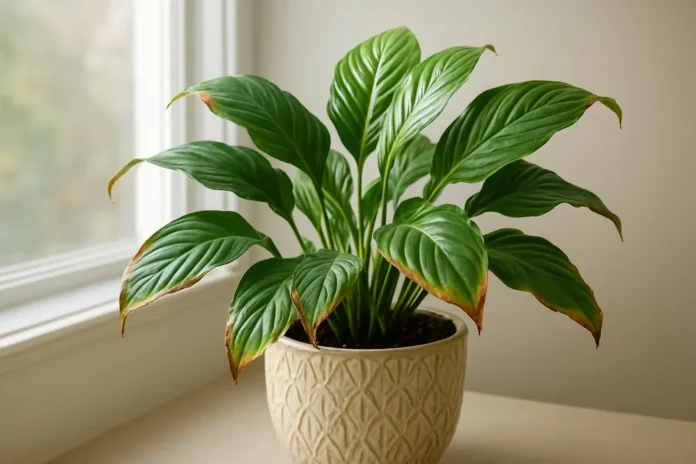
Peace lily leaves usually develop brown edges from watering stress, low humidity, mineral-heavy water, or excess fertilizer. Brown margins can also appear when the plant gets too much direct sun, temperature stress, or age-related leaf decline.
If your peace lily has leaves with brown edges, the plant is usually reacting to stress rather than disease. Peace lilies are famous for dramatic drooping when they need water, but browning leaf margins often build more slowly and can point to several care issues happening at once.
In most homes, the biggest causes are inconsistent watering, dry indoor air, fertilizer salt buildup, and tap water minerals. Less often, direct sun, chilly drafts, heat vents, root crowding, or simple aging can make the edges crisp and tan. The good news is that brown edges are often manageable once you match the symptom pattern to the underlying problem.
What Brown Edges Usually Mean On A Peace Lily
Brown edges mean the leaf tissue along the margin has dried out or been chemically damaged. That damage is permanent, so the goal is not to turn existing brown tissue green again. The goal is to stop the browning from spreading to newer leaves.
On peace lilies, edge browning often shows up before the whole leaf turns yellow or collapses. If only the tips and edges are crispy while the center of the leaf still looks green, think first about moisture balance, humidity, and salt exposure. If the whole leaf is pale, scorched, or limp, the problem may be broader.
- Crispy brown edges with dry soil often point to underwatering or low humidity.
- Brown edges with soggy soil and yellowing leaves can signal overwatering and root stress.
- Brown tips and margins after feeding often suggest fertilizer burn or salt buildup.
- Pale leaves with browned edges on the sun-facing side can indicate too much direct light.
Most Common Causes Of Brown Leaf Edges
Inconsistent Watering
Peace lilies like evenly moist soil, not bone dry and not constantly waterlogged. If the potting mix repeatedly dries too far between waterings, the finest root hairs die back and the leaves start showing brown edges. Even one severe dry spell can leave a lasting mark on tender foliage.
Inconsistent watering can also mean overcorrecting. A plant that cycles from very dry to very wet experiences stress both ways. The roots struggle to regulate moisture, and the leaves often respond with browning margins.
Low Humidity
Peace lilies are tropical plants, so they tolerate average indoor conditions but do best with moderate humidity. In heated or air-conditioned homes, especially in winter, dry air pulls moisture from leaf edges faster than the roots can replace it. The result is a thin brown rim or crispy tip.
Low humidity is especially likely if the plant sits near a heat register, fireplace, sunny window, or constantly running HVAC vent. New leaves may emerge smaller or softer than usual when the air is very dry.
Tap Water Minerals And Chemical Sensitivity
Peace lilies can be sensitive to fluoride, chlorine, and dissolved minerals found in some tap water. Over time, those compounds accumulate in the potting mix and stress the roots. Brown edges and tips are a common response, especially if your local water is hard.
This issue tends to appear gradually. The plant may otherwise look healthy, but older leaves begin showing narrow brown margins and the problem returns even when watering seems correct.
Too Much Fertilizer
Peace lilies are not heavy feeders. When fertilizer is applied too often or mixed too strong, salts build up in the soil and draw moisture away from roots. That chemical burn commonly shows up as brown leaf edges or burnt tips.
A recently fertilized plant with browning margins, white crust on the soil surface, or residue around the drainage holes is a strong candidate for salt injury.
Too Much Direct Sun
Peace lilies prefer bright, indirect light. Harsh direct sun, especially afternoon sun, can scorch the thin leaf tissue. Scorched leaves may develop tan or brown edges, bleached patches, or large dry areas where the sun hit hardest.
Sun damage is often more noticeable on the side of the plant facing the window. If only the exposed leaves are affected while sheltered leaves remain green, light is a likely cause.
Less Obvious Problems That Can Cause Browning
Root Stress From Poor Drainage
A pot without drainage, compacted soil, or a saucer that stays full of water can suffocate roots. Damaged roots cannot absorb water well, so the leaves may brown at the edges even though the soil feels wet. This is why overwatering and underwatering can look surprisingly similar above the soil line.
Rootbound Conditions
Peace lilies do not mind being a little snug in the pot, but a severely rootbound plant dries out too fast and struggles to take up nutrients evenly. If roots circle tightly around the root ball and water runs straight through the pot, the leaf margins may brown from chronic moisture stress.
Temperature Swings And Drafts
Cold windows, exterior doors, air conditioning vents, and heat blasts can all damage leaf edges. Peace lilies like stable indoor temperatures. Repeated exposure to cold or hot moving air dries the foliage and can create brown rims or irregular crispy patches.
Natural Aging
Sometimes the oldest leaves naturally decline. A lower, older leaf may develop a few brown edges before yellowing and dying off. If the rest of the plant looks vigorous and only one or two old leaves are affected, this is normal rather than a care emergency.
Pests
Spider mites, thrips, and other sap-feeding pests can worsen browning by damaging leaf tissue and increasing water loss. Pest injury usually comes with other clues like stippling, silvery streaks, webbing, distorted new growth, or tiny moving insects on leaf undersides.
How To Tell Which Cause Is Most Likely
The fastest way to narrow it down is to compare the browning pattern with your care routine and the plant's location. Brown edges are a symptom, not a diagnosis, so context matters.
- If the soil is often dry several inches down and the plant droops between waterings, underwatering is likely.
- If the soil stays wet for many days and leaves are yellowing or soft, overwatering or root stress is more likely.
- If the plant sits near a vent or the air is dry, low humidity may be contributing.
- If the issue began after feeding, or there is crusty buildup on the soil, think fertilizer salts.
- If the plant gets direct sun and affected leaves face the window, suspect sun scorch.
- If you use hard tap water and the problem keeps returning despite decent care, water quality may be a major factor.
It is very common for more than one factor to be involved. For example, a peace lily in dry air may be more sensitive to slight underwatering. A rootbound plant may also show stronger fertilizer burn than a freshly repotted one.
How To Fix Brown Edges On Peace Lily Leaves
Reset Your Watering Routine
Water when the top inch of soil feels dry, or just before the plant reaches the dramatic wilt stage. Apply enough water so excess drains from the bottom, then empty the saucer. This wets the whole root ball and helps flush minor salt buildup.
Do not water on a rigid calendar without checking the soil. Light, room temperature, pot size, and season all affect how quickly the mix dries.
Increase Humidity Modestly
Aim for moderate humidity rather than trying to create a greenhouse. Grouping houseplants, moving the peace lily away from vents, or using a small humidifier nearby can help. Bathrooms with bright indirect light often suit peace lilies well.
Pebble trays can offer slight local humidity support, but they are usually less effective than a humidifier. Avoid misting as your main strategy because it offers only a brief boost and can encourage spotting on leaves.
Switch Water Sources If Needed
If your tap water is hard or heavily treated, try filtered, distilled, or rainwater for a few weeks. You can also let tap water sit out overnight to reduce some chlorine, though this does not remove fluoride or dissolved minerals.
Flush the potting mix occasionally by watering thoroughly until plenty of water runs out the drainage holes. This helps rinse away accumulated salts.
Cut Back On Fertilizer
Feed lightly during active growth, usually spring through early fall. A balanced houseplant fertilizer at reduced strength is often enough. If the plant was overfed, pause fertilizing for a while and flush the soil well.
Never fertilize a severely dry plant. Dry roots are easier to burn.
Improve Light Placement
Move the plant to bright, indirect light if it currently receives direct sun. An east-facing window with gentle morning light or a few feet back from a bright south or west window often works well. Peace lilies can survive in lower light, but very dim conditions may reduce vigor and flowering.
Repot If Roots Or Soil Are The Problem
Repot if the plant is badly rootbound, the soil has become dense and sour, or drainage is poor. Choose a pot with drainage holes and go only one size up. Use a loose indoor potting mix that holds moisture but still drains well.
Should You Trim Off The Brown Parts?
Yes, if the brown edges bother you visually. Use clean scissors and follow the natural shape of the leaf, trimming away only the dead brown tissue while leaving a thin margin of brown behind if needed. Cutting into healthy green tissue can create a fresh wound.
If a leaf is mostly damaged, remove the whole leaf at the base with clean pruners. Do not remove too many healthy leaves at once, since the plant still needs them for energy.
How To Prevent Brown Edges From Coming Back
- Keep soil evenly moist, not soaked and not fully dry for long periods.
- Use a pot with good drainage and never let the plant sit in standing water.
- Provide bright, indirect light instead of strong afternoon sun.
- Maintain moderate humidity, especially in winter or in air-conditioned rooms.
- Fertilize sparingly during active growth.
- Flush the soil occasionally to reduce salt and mineral buildup.
- Use filtered or distilled water if your tap water is hard or your plant is sensitive.
- Check periodically for pests on the undersides of leaves.
When care is steady, new peace lily leaves usually emerge clean and green even if older leaves still show old damage. That new growth is the best sign that the plant has recovered.
When Brown Edges Are A Sign Of A Bigger Problem
Brown edges by themselves are often minor, but pay closer attention if they come with leaf yellowing, mushy stems, foul-smelling soil, severe drooping that does not improve after watering, or obvious pests. Those signs can point to root rot, chronic overwatering, or a more advanced stress issue.
Also watch the plant's newest leaves. If fresh growth comes in deformed, burnt, or rapidly browns at the edges, the underlying problem is still active. If new leaves look healthy, your care changes are likely working.
FAQ
Can Brown Edges on a Peace Lily Turn Green Again?
No. Brown tissue is dead and will not recover. Focus on correcting the cause so future leaves stay healthy, then trim the damaged edges if you want a cleaner look.
Is Tap Water Bad for Peace Lilies?
It can be, depending on your local water. Hard water, fluoride, chlorine, and other dissolved minerals may contribute to tip and edge browning over time, especially in sensitive plants.
Do Peace Lilies Like to Be Misted?
Misting is not harmful as an occasional refresh, but it is not the best fix for low humidity. A humidifier, better placement, or grouping plants usually helps more.
Should I Cut Off Brown Peace Lily Leaves?
You can trim the brown parts for appearance or remove an entire badly damaged leaf at the base. Use clean scissors or pruners and avoid cutting deeply into healthy green tissue.
Can Too Much Sunlight Cause Brown Edges on Peace Lily Leaves?
Yes. Direct sun can scorch peace lily foliage, causing pale patches, tan areas, and crispy brown margins, especially on leaves closest to the window.
How Often Should I Water a Peace Lily with Brown Edges?
Water based on soil dryness, not a fixed schedule. In most homes, watering when the top inch of soil feels dry works better than waiting until the plant collapses or keeping it constantly wet.
Do Brown Edges Mean My Peace Lily Has Root Rot?
Not always. Brown edges are more commonly caused by inconsistent watering, dry air, or salt buildup, but root rot becomes more likely if the soil stays soggy and leaves also yellow or wilt persistently.
Want to stop indoor plant problems before they spread? Read our guide to the best watering tools, humidifiers, and houseplant fertilizers for healthier peace lilies and easier care.
