

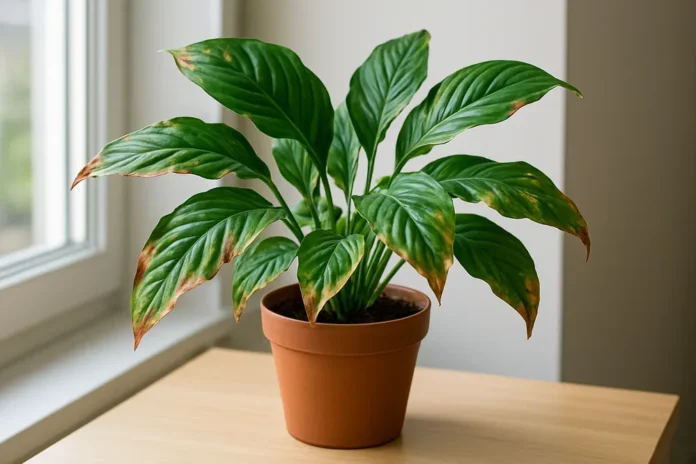
Peace lily leaves develop brown spots most often from watering stress, dry air, direct sun, mineral-heavy water, or fertilizer buildup. Brown spotting can also come from pests, fungal or bacterial leaf problems, and normal aging on older leaves.
Brown spotting on a peace lily can be frustrating because the plant usually looks healthy right up until the leaf damage starts to spread. When leaves develop brown spots, the cause is often a mix of moisture stress, humidity problems, mineral buildup, light exposure, or a minor pest or disease issue.
The good news is that peace lilies are very readable houseplants once you know what the spots are trying to tell you. The size, color, and location of the damage can help you tell the difference between sunburn, overwatering, underwatering, fertilizer burn, and leaf infections, so you can correct the problem before more foliage is affected.
In most cases, brown spots are not a sign that the whole plant is doomed. If you catch the pattern early and adjust care, your peace lily can push out fresh, healthy growth and recover its tidy, glossy look.
What Brown Spots on Peace Lily Leaves Usually Mean
Brown spots are damaged leaf tissue. That damage may be dry and crisp, soft and dark, or surrounded by a yellow halo. The texture and pattern matter because they often point to the source of the stress.
- Crispy tan or brown patches often suggest sun scorch, dry air, underwatering, or fertilizer burn.
- Dark brown or blackish spots can point to overwatering, root stress, or leaf disease.
- Spots with yellow edges are more likely to be linked to bacterial or fungal leaf spot.
- Damage concentrated at tips and margins often means low humidity, inconsistent watering, or salt buildup.
- Random spotting on exposed leaves often happens after sudden sun exposure or cold drafts.
If the newest leaves look clean while only the oldest leaves have a few spots, the issue may be minor or simply related to age. If many leaves are developing new spots at once, look for an environmental or care problem that has changed recently.
Watering Problems Are the Most Common Cause
Overwatering and Soggy Soil
Peace lilies like evenly moist soil, but they do not want to sit in constantly wet potting mix. When roots stay waterlogged, they struggle to take up oxygen. That root stress can show up as dark spots, yellowing, drooping, and leaves that slowly decline even though the soil feels wet.
If brown spots are appearing along with a musty smell, limp stems, or a pot that stays wet for many days, overwatering is a strong suspect. This is especially common in decorative pots without drainage, dense soil mixes, or low-light rooms where the plant uses water slowly.
Underwatering and Drought Stress
Peace lilies are famous for dramatic drooping when they get too dry. If the plant repeatedly wilts hard between waterings, leaf tissue can become damaged and form tan or brown patches. Older leaves usually show this first, and the spots may feel crisp instead of soft.
A peace lily that swings between bone-dry soil and heavy soaking is under stress even if it perks up after watering. That inconsistency alone can lead to spotting, browning tips, and uneven leaf damage.
- Overwatering signs include wet soil, yellowing, dark mushy spots, and drooping that does not improve quickly.
- Underwatering signs include wilted leaves, dry soil pulling from the pot edge, crispy spots, and brown tips.
- Inconsistent watering often causes mixed symptoms, including droop, tip burn, and patchy brown damage.
Low Humidity and Dry Indoor Air Can Spot the Foliage
Peace lilies are tropical plants, so they prefer moderate to high humidity. In many U.S. homes, especially during winter heating or summer air conditioning, the air is much drier than the plant likes. Dry air usually causes browning at tips and edges first, but it can also contribute to scattered brown patches on tender leaves.
Humidity stress tends to be worse near heating vents, radiators, drafty windows, and forced-air returns. A plant that is otherwise watered correctly may still develop brown spotting if the air is consistently dry.
- Leaf tips turn brown first in dry air.
- New leaves may emerge smaller or unfurl imperfectly.
- Damage is often worse in winter or in rooms with strong airflow.
Too Much Direct Sun Can Cause Leaf Scorch
Peace lilies prefer bright, indirect light. Direct afternoon sun can burn the leaf surface, leaving pale bleached areas that later turn tan or brown. These spots are often broad, dry, and concentrated on the side of the plant facing the window.
Sun scorch is especially common after moving a peace lily from a dim room to a bright windowsill without a transition period. Even a few hours of harsh sun through glass can be enough to mark the leaves.
Unlike a disease, sun damage usually stays where it started and does not spread from leaf to leaf in a wet-looking pattern. Once tissue is scorched, it will not turn green again, but new leaves should be normal if lighting is corrected.
Tap Water Minerals and Fertilizer Salts May Be Burning the Leaves
Peace lilies are sensitive to excess salts, fluoride, and mineral-heavy water. Over time, dissolved minerals from tap water and leftover fertilizer salts can build up in the potting mix. This can irritate the roots and show up as brown tips, edge burn, or small brown patches.
This problem is more likely if you fertilize often, use softened water, or see a whitish crust on the soil surface or pot rim. In many homes, leaf spotting blamed on disease is really chemical stress from the root zone.
When Salt Buildup Is More Likely
- You fertilize every time you water or use a strong liquid feed.
- The plant has been in the same soil for a long time.
- Your tap water is hard or heavily treated.
- The pot drains poorly, so minerals are not flushed out.
Salt injury usually affects the overall plant gradually rather than creating one isolated damaged leaf. If spotting appears along with browning tips on multiple leaves, this is worth considering.
Pests Can Leave Specks, Scars, and Brown Patches
Several common houseplant pests feed on peace lily leaves and can leave small brown spots or damaged areas behind. Spider mites, thrips, scale, and mealybugs are the most common culprits. Pest injury often starts as tiny stippling, silvery scarring, or fine discoloration before it turns brown.
Spider mites are more common in dry indoor air and may leave faint webbing. Thrips can cause streaked or bronzed patches, especially on newer leaves. Scale insects and mealybugs weaken the plant over time and may lead to yellowing and spotty decline.
- Look for tiny moving insects on the underside of leaves.
- Check for sticky residue, webbing, cottony clusters, or shell-like bumps.
- Notice whether new growth looks distorted or scarred.
Pest damage usually appears unevenly and often affects the undersides of leaves or tender new growth first.
Fungal and Bacterial Leaf Spots Are Possible
Although care issues are more common, peace lilies can develop true leaf spot diseases. These usually appear as dark brown, black, or water-soaked lesions, sometimes with yellow halos. High humidity by itself does not cause disease, but wet leaves, poor air circulation, contaminated tools, and overcrowded conditions can help pathogens spread.
Bacterial spots often look wet or greasy at first. Fungal spots may be more defined and circular. If spots continue to expand, merge together, or jump quickly to multiple leaves despite stable care, disease becomes more likely.
Conditions That Encourage Leaf Disease
- Water sitting on leaves for long periods
- Poor airflow around the plant
- Repeated overhead watering
- Pruning with dirty tools
- Crowded houseplant groupings where leaves stay damp
Temperature Stress and Physical Damage Can Also Be Involved
Peace lilies do best in stable indoor temperatures. Cold drafts from windows, blasts from air conditioners, or contact with hot glass can damage leaf tissue and create brown patches. The same thing can happen if a leaf is bent, bruised, or rubbed repeatedly against a wall or furniture.
This kind of spotting often looks sudden and localized. If only one or two leaves are affected and the pattern matches where the plant touches a surface or sits in a draft, physical or temperature injury may be the whole explanation.
How to Tell Which Cause Fits Your Peace Lily
Before changing everything at once, match the symptoms to the likely cause. Brown spots are much easier to solve when you read the pattern instead of guessing.
- If the spots are crispy and on sun-exposed leaves, think direct sun or dry air.
- If the spots are dark, soft, and paired with yellow leaves, think overwatering or root stress.
- If the spots show yellow halos or water-soaked edges, think bacterial or fungal leaf spot.
- If the plant has brown tips plus a white crust on soil, think mineral or fertilizer buildup.
- If you see tiny insects, webbing, or silvery scarring, think pests.
- If the plant recently wilted hard or dried out repeatedly, think underwatering stress.
Also think about timing. A recent move, repotting, new fertilizer routine, window change, or heating season shift can often explain why spotting started now.
How to Fix Brown Spots and Prevent More Damage
Adjust Watering
Water when the top inch of soil feels dry, not by a rigid calendar. Let excess water drain fully, and never leave the root ball sitting in water for long periods. If the soil stays wet too long, consider repotting into a lighter indoor potting mix and a container with drainage holes.
Improve Humidity
Move the plant away from heating vents and drying airflow. A pebble tray or room humidifier can help in dry homes. Grouping houseplants together may also slightly raise local humidity.
Correct the Light
Place peace lilies in bright, indirect light. Filter direct sun with a sheer curtain if needed. If the plant has been in low light, increase light gradually rather than moving it straight into strong sun.
Reduce Mineral and Fertilizer Stress
Use distilled water, rainwater, or filtered water if your tap water is harsh. Fertilize lightly during active growth and skip feeding when the plant is stressed. Flush the potting soil occasionally by watering thoroughly and allowing excess to run out, which helps wash away accumulated salts.
Treat Pests or Disease Promptly
Isolate the plant if you suspect pests or contagious leaf problems. Remove badly affected leaves with clean scissors. Houseplant-safe insecticidal soap or neem products may help with soft-bodied pests, while improving airflow and avoiding wet foliage can limit many leaf spot issues.
Trim Damaged Tissue if Desired
Brown spots do not heal, so you can trim or remove damaged leaves for appearance. Cut back to healthy tissue or remove an entire leaf at the base if more than one-third is damaged. Always sanitize tools before and after pruning.
When Brown Spots Are Normal and when to Worry
An occasional older leaf with a few brown patches is not unusual. Houseplants naturally shed older foliage over time, and minor cosmetic damage does not always mean there is a serious problem.
It becomes more concerning when multiple leaves are developing fresh spots quickly, the spots are enlarging, or the plant also shows yellowing, collapse, root odor, or distorted new growth. Those clues suggest an active stressor that needs attention rather than normal aging.
- Less urgent: one or two old leaves with minor browning
- More urgent: spreading dark lesions, mushy stems, bad-smelling soil, or widespread spotting on new growth
- Most urgent: signs of root rot, heavy pest infestation, or rapidly spreading bacterial-looking spots
FAQ
Should I Cut Off Peace Lily Leaves with Brown Spots?
Yes, if the damage is extensive or unattractive. Brown tissue will not turn green again, so removing badly spotted leaves can improve appearance and help you monitor whether new damage is still forming.
Can Brown Spots on a Peace Lily Be Caused by Tap Water?
Yes. Peace lilies can react to fluoride, chlorine, and mineral-heavy water, especially over time. This often shows up as brown tips, edges, or scattered brown patches when salts build up in the potting mix.
Do Brown Spots Mean My Peace Lily Has Root Rot?
Not always. Brown spots can come from root rot, but they are also common with dry air, sunburn, fertilizer burn, underwatering, pests, and leaf disease. Root rot is more likely when the soil stays soggy and the plant droops despite being wet.
Can Too Much Sunlight Cause Brown Spots on Peace Lily Leaves?
Yes. Direct sun can scorch peace lily leaves, leaving pale patches that later turn tan or brown. This is especially common on leaves facing a bright window.
Will Misting Stop Brown Spots on a Peace Lily?
Not usually by itself. Misting gives only brief humidity relief and can keep leaves wet, which is not ideal if disease is a concern. A humidifier, better placement, and steady watering are usually more effective.
How Often Should I Water a Peace Lily with Brown Spots?
Water based on soil dryness rather than a set schedule. In most homes, watering when the top inch of soil feels dry works better than frequent light watering or waiting for severe wilt.
Can a Peace Lily Recover After Brown Spots Appear?
Yes. Existing spots stay damaged, but the plant can recover and produce healthy new leaves once the underlying cause is corrected.
Need the right fix fast? Read our peace lily care and treatment guides to compare the best watering tools, humidifiers, and houseplant-safe pest controls for healthier new growth.
