

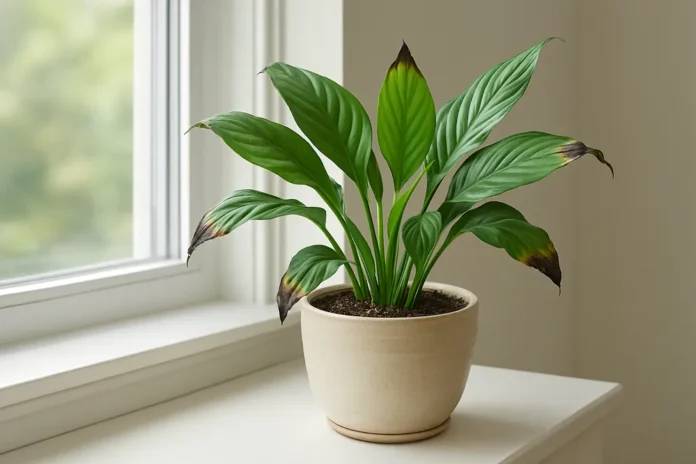
Peace lily leaf tips usually turn black from watering stress, dry indoor air, fertilizer salt buildup, or poor water quality. In some cases, cold damage, root rot, or natural aging can also darken the tips.
If your peace lily is developing black leaf tips, the plant is usually reacting to stress rather than a mysterious disease. In most homes, the most common triggers are uneven watering, low humidity, mineral or fertilizer salt buildup, and roots that stay too wet for too long.
Because leaf tips are the farthest part of the leaf from the roots, they often show trouble first. A tip may start brown, then darken to nearly black as the tissue dies. The good news is that this symptom is often manageable once you correct the growing conditions.
What Black Tips Usually Mean on a Peace Lily
Blackening at the tips is a form of tissue death called necrosis. Peace lilies are sensitive houseplants, and their leaf edges and tips tend to react quickly when moisture, salts, temperature, or roots are out of balance. The damage itself will not turn green again, but the pattern can tell you a lot about what the plant has been dealing with.
- A crisp, dry black tip often points to underwatering, low humidity, or salt buildup.
- A soft, dark tip that appears along with yellowing leaves may suggest overwatering or root trouble.
- Blackening on several leaves at once can happen after a sudden temperature shock or poor-quality tap water over time.
- A few older leaves with dark tips may simply be aging, especially if new growth looks healthy.
Look at the whole plant, not just the damaged tip. If the leaves are drooping often, yellowing, or smelling sour near the potting mix, the root zone is probably involved. If the plant otherwise looks good but the tips are dry and dark, humidity or mineral stress is more likely.
Watering Stress Is the Most Common Cause
Underwatering Can Scorch the Tips
Peace lilies like evenly moist soil, not repeated drought. When the potting mix gets too dry, the plant loses water faster than it can replace it. Leaf tips dry out first, then turn brown or black. This is especially common if you wait until the plant droops hard before watering every time.
- Tips feel dry or papery
- Leaves may droop but perk up after watering
- Potting mix pulls away from the sides of the pot
- Damage shows most on larger, older leaves first
Overwatering Can Damage Roots and Darken Tips
Too much water can cause a similar symptom for the opposite reason. When roots sit in soggy mix, they cannot get enough oxygen. Stressed or rotting roots stop moving water properly, and leaf tips may darken. In this case, the black tips may be accompanied by yellow leaves, limp growth, and a musty smell from the container.
Many home gardeners assume more water helps a peace lily because it likes moisture, but constantly wet soil is risky. The goal is a lightly moist, well-draining mix that dries slightly between waterings, not a swampy pot.
Low Humidity Can Make Tip Damage Worse
Peace lilies are tropical plants, and dry indoor air can be hard on them, especially in winter when heating systems run often. Low humidity pulls moisture from the leaves faster than the roots can replace it. That stress shows up first on the tips and edges.
- The rest of the leaf stays green while only the tip darkens
- Damage is worse during winter or in air-conditioned rooms
- The plant sits near a heat vent, radiator, or constantly running fan
- New leaves are smaller or unfold with minor edge damage
Humidity alone may not be the only problem, but it often compounds mild watering issues. A plant that could tolerate occasional dryness in a humid room may start blackening at the tips much faster in very dry air.
Tap Water Minerals and Fertilizer Salts Often Build Up in the Soil
Peace lilies are known for being sensitive to chemicals and salts left behind in the potting mix. Fluoride, chlorine, and dissolved minerals from hard tap water can accumulate over time. Fertilizer does the same thing when it is applied too often or at too high a rate. That buildup draws moisture away from the roots and scorches the leaf tips.
Signs of Salt or Mineral Stress
- A white crust on the soil surface or around the drainage holes
- Dark or brown tips on many leaves even when watering seems correct
- Leaf margins that look burned after feeding
- Gradual decline despite no obvious pest or disease issue
This is especially common if you fertilize year-round, never flush the pot thoroughly, or use softened water. Water softened with salts can be particularly hard on peace lilies because it adds sodium to the mix.
Root Problems Can Turn Tips Black
When roots are unhealthy, leaves cannot stay healthy for long. Root rot is one of the more serious reasons for black tips. It usually develops in compacted mix, containers without adequate drainage, or pots that stay wet for long stretches.
- Persistent wilting even though the soil is wet
- Yellow leaves along with blackening tips
- A sour or swampy smell from the pot
- Mushy, dark roots instead of firm white or tan roots
A badly rootbound peace lily can also develop tip problems. If roots have filled the pot so tightly that water runs straight through or the plant dries out unusually fast, the tips may blacken from repeated moisture stress. Rootbound plants often need water more often, but they usually do best when repotted into a slightly larger container with fresh mix.
Temperature and Light Stress Can Contribute
Peace lilies prefer stable indoor conditions. Sudden cold drafts, hot air from vents, or harsh direct sun can injure leaf tissue. The tips and edges are again the first places to show it. Cold damage can make leaves darken quickly, while sun scorch often starts as bleached or brown patches that later dry and darken.
- Cold damage is more likely if the plant is near a drafty window, exterior door, or air conditioner
- Heat stress is common when leaves touch hot glass or sit above a heating vent
- Too much direct sun can burn leaves, especially in a west-facing window
- Rapid changes in environment after moving the plant may trigger temporary tip damage
Bright, indirect light is usually ideal. A peace lily kept in very low light may survive, but it becomes less resilient and slower to recover from other stresses.
Pests, Disease, and Aging Are Less Common but Possible
Most black tip problems on peace lilies are cultural, not infectious. Still, a few other causes are worth considering. Sap-sucking pests such as spider mites can weaken leaves and make edges look dry or damaged. Fungal or bacterial leaf problems are less likely to start only at the tips, but they can darken leaf tissue if the plant stays overly wet with poor air circulation.
Natural aging is another simple explanation when only one or two of the oldest leaves are affected. Older leaves eventually fade, yellow, and die back. If the plant is actively producing healthy new leaves, isolated blackened tips on aging foliage are usually not a major concern.
How to Figure Out Which Cause Fits Your Plant
Instead of guessing, use the symptom pattern and growing conditions to narrow it down. The same black tip can come from different causes, but the surrounding clues are usually clear enough to point you in the right direction.
- Feel the potting mix 1 to 2 inches down. Bone dry suggests underwatering or a rootbound plant. Wet and heavy for days suggests overwatering.
- Check the roots if the plant is declining overall. Healthy roots are firm and pale. Rotting roots are soft, dark, or foul smelling.
- Think about your water source. Hard tap water, softened water, or frequent fertilizing raises the chance of salt injury.
- Consider the room conditions. Heating vents, cold drafts, and very dry air often show up first as tip damage.
- Look at the age of the affected leaves. If only older leaves have minor damage, normal aging may be part of the picture.
How to Stop New Tips From Turning Black
Water More Evenly
Water when the top inch of the mix feels slightly dry, not when the plant is severely wilted and not while the soil is still soggy. Water thoroughly until excess drains out, then empty any saucer so the roots are not left standing in water.
Improve Humidity Around the Plant
A room humidifier is the most effective option in dry homes. You can also group houseplants together or place the peace lily in a naturally more humid room with bright, indirect light. Pebble trays help a little, but they are not a full solution in very dry air.
Switch to Better Water if Needed
If your tap water is hard or softened, use filtered water, rainwater, or distilled water when practical. This is especially helpful for peace lilies with recurring tip burn despite otherwise good care.
Reduce Fertilizer Pressure
Feed lightly during active growth, not heavily year-round. A balanced houseplant fertilizer at half strength every 4 to 6 weeks in spring and summer is usually enough. If you have been feeding often, flush the pot with clean water to wash out excess salts.
Repot when the Root Zone Is the Issue
If the plant is rootbound or the mix stays soggy, repot into fresh, airy potting soil in a container with drainage holes. Trim away any mushy roots with clean scissors before replanting. Choose a pot only 1 to 2 inches wider than the current root ball.
Move It Away From Stress Points
Keep the plant out of direct afternoon sun and away from heating vents, fireplaces, drafty doors, and cold windows in winter. Stable temperatures help prevent repeat damage.
Should You Cut Off the Black Tips?
Yes, if the damaged tips bother you cosmetically, but trimming is optional. Black tissue will not recover, and removing it can make the plant look cleaner. Use sterile scissors and follow the natural shape of the leaf, leaving a thin margin of the dark area rather than cutting into healthy green tissue.
If a leaf is mostly damaged, yellowing, or collapsing, remove the whole leaf at the base. If only the very tip is dark and the rest of the leaf is healthy, a simple trim is fine.
When Black Tips Are Not a Major Problem
A peace lily does not need to have flawless leaves to be healthy. Minor black or brown tips are common on this species, especially after a seasonal humidity drop or a few inconsistent waterings. If new leaves are coming in well, the plant is upright, and the symptom is not spreading quickly, the issue is probably mild.
Focus on preventing new damage rather than trying to reverse old damage. Fresh growth is the best sign that your adjustments are working.
FAQ
Can Black Peace Lily Tips Turn Green Again?
No. Once the tip tissue has died, it will not recover. You can trim the damaged part off, and healthy new leaves should stay green if the cause is corrected.
Is Tap Water Bad for Peace Lilies?
It can be, especially if the water is hard, heavily chlorinated, fluoridated, or softened with salts. Sensitive peace lilies often do better with filtered, distilled, or rainwater.
Should I Mist My Peace Lily to Stop Black Tips?
Misting gives only short-term humidity and usually does not solve chronic tip burn. A humidifier or a better room location is more effective.
How Often Should I Water a Peace Lily with Black Tips?
Water based on the soil, not the calendar. In most homes, watering when the top inch of mix feels slightly dry works better than waiting for dramatic wilting or keeping the pot constantly wet.
Do Black Tips Mean My Peace Lily Has Root Rot?
Not always. Root rot is one possibility, but black tips are more often caused by uneven watering, low humidity, or salt buildup. Root rot is more likely when the soil stays wet, leaves yellow, and roots smell sour or feel mushy.
Can Too Much Fertilizer Cause Black Leaf Tips?
Yes. Excess fertilizer leaves salts in the potting mix, and those salts can burn roots and leaf tips. Peace lilies usually need lighter feeding than many gardeners expect.
Why Are Only the Older Leaves Getting Black Tips?
Older leaves naturally decline first and also show past stress before newer leaves do. If new growth looks healthy, the plant may simply be aging or recovering from an earlier care issue.
Want a healthier, better-looking peace lily fast? Read our guide to the best peace lily potting mixes, fertilizers, and watering tools so you can fix tip burn and prevent it from coming back.
