

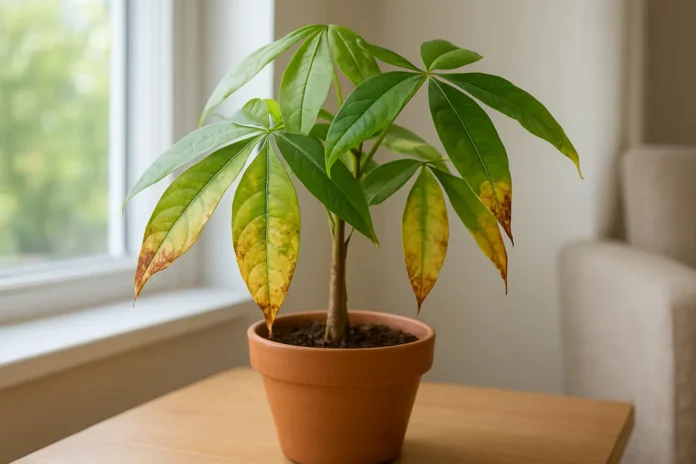
Money tree leaves usually become discolored because of watering stress, poor light, dry air, temperature shock, pests, or nutrient imbalance. The exact color pattern often points to which problem is most likely.
When a money tree starts showing yellow, brown, pale, or spotted leaves, it is usually reacting to stress in its environment rather than failing for no reason. I have found that leaf color changes are one of the earliest warning signs this plant gives, often before it starts dropping leaves or stalling out completely.
The tricky part is that discolored leaves can come from several different causes that overlap. Too much water, not enough water, harsh sun, chilly drafts, low humidity, root trouble, pests, and even fertilizer buildup can all leave similar marks. The best clue is not just the color itself, but where the damage starts, how fast it spreads, and what has changed recently in the plant's care.
What the Leaf Color Is Telling You
Money tree leaf discoloration is easier to diagnose when you match the color pattern to the likely kind of stress. A few older leaves yellowing near the base often suggest normal aging or watering issues. Crispy brown edges tend to point toward dry air, underwatering, salt buildup, or inconsistent moisture. Bleached or pale patches can come from too much direct sun. Soft yellow leaves that drop quickly often signal overwatering and root stress.
- Yellow leaves: overwatering, poor drainage, root stress, sudden environmental change, or occasional natural leaf aging
- Brown tips or edges: low humidity, missed watering, excess fertilizer salts, or tap water mineral buildup
- Pale or washed-out leaves: insufficient light, nutrient deficiency, or roots staying too wet and failing to feed the plant well
- Tan, white, or bleached patches: sun scorch from strong direct light
- Brown or black spots: fungal leaf spotting, cold injury, pest damage, or water sitting on leaves in stagnant conditions
When I diagnose a money tree, I look at several leaves from different parts of the plant before I decide on a cause. If the oldest inner leaves are affected first, I lean toward watering or normal turnover. If the newest growth comes in pale or distorted, I start thinking about roots, light, or pests.
Overwatering Is the Most Common Cause
In my experience, overwatering is the most common reason indoor money tree leaves turn yellow or develop dull, unhealthy color. This plant likes evenly moist soil, but it does not want to sit in a soggy pot. If roots stay wet too long, they lose access to oxygen. Once that happens, the plant cannot move water and nutrients properly, and the leaves begin to yellow, soften, curl, or fall.
Overwatering is not only about how often you water. It also happens when the pot has poor drainage, the soil holds too much moisture, the container is oversized, or the plant sits in a low-light spot where the mix dries very slowly. Many gardeners water on schedule without checking the soil first, and that is where the trouble starts.
- Leaves turn yellow evenly rather than just at the edges
- Foliage feels limp or soft instead of crisp
- Leaves drop soon after yellowing
- The soil stays damp for many days
- The pot feels unusually heavy
- There may be a sour smell from the soil if roots are beginning to rot
If this sounds familiar, let the upper portion of the soil dry before watering again, and make sure excess water drains away completely. If the mix is dense or the roots smell rotten, repotting into a loose indoor plant mix with added bark or perlite may be the best reset.
Underwatering and Dry Conditions Can Cause Browning
Underwatering often causes a different kind of discoloration. Instead of soft yellow leaves, you usually see dry brown tips, crispy edges, curling leaflets, or leaves that look dull and slightly gray-green before they brown. Money trees can tolerate a short dry spell better than soggy soil, but repeated drying to the point of wilt will show up in the foliage.
Indoor heating can make this worse. During winter, I often see money trees near vents or radiators develop brown margins even when the owner is watering reasonably well. The plant is losing moisture faster than the roots can replace it, especially in very dry rooms.
- Leaf tips brown first, then edges expand inward
- Damaged areas feel crisp or papery
- Soil pulls away from the sides of the pot
- The plant droops slightly between waterings
- Dry air from heaters, fireplaces, or forced-air vents is present
If the potting mix has become so dry that water runs down the sides and out the bottom, I like to water slowly in stages or bottom-water once to rehydrate the root ball evenly. A quick splash across bone-dry soil often leaves the center of the root mass dry.
Light Problems Can Bleach, Fade, or Weaken Leaves
Money tree does best in bright, indirect light. Too little light can leave the foliage pale, smaller than normal, and generally less vibrant. Growth may stretch, and leaves may yellow slowly because the plant is not photosynthesizing well enough to support all its foliage. On the other hand, harsh direct afternoon sun can scorch the leaves, leaving bleached tan patches or dry brown areas.
A plant that has been moved suddenly from a shaded corner to a bright south- or west-facing window may burn faster than you expect. The damage often looks patchy rather than uniform, especially on the side facing the glass. If the plant is too deep in a dim room, discoloration tends to be more gradual and widespread.
- Pale all-over color with weak new growth suggests too little light
- Bleached, beige, or papery patches on exposed leaves suggest sun scorch
- One-sided damage often means the problem is related to window exposure
- A money tree usually performs best a few feet from a bright window or behind a sheer curtain
Temperature Swings and Low Humidity Add Stress Fast
Money tree is sensitive to sudden environmental swings. Cold drafts, hot air blasts, and sharp day-to-night temperature changes can all trigger leaf discoloration. I see this most often when a plant sits near an exterior door, drafty window, air conditioner, or heating vent. Leaves may yellow, develop brown patches, or drop after a sudden stress event.
Humidity also matters more than many growers think. While money tree is fairly forgiving, very dry indoor air can lead to brown tips and edges, especially in winter. If your home drops very low in humidity, the foliage may never look fully lush even if watering is technically correct.
- Keep the plant away from heater vents, AC vents, and frequently opened cold doors
- Avoid pressing leaves against cold window glass
- Aim for stable indoor temperatures rather than dramatic swings
- If air is very dry, a pebble tray or humidifier can reduce tip browning
Soil, Drainage, and Root Health Often Sit at the Center of the Problem
A money tree with discolored leaves may be dealing with root trouble even if the top growth is the only part you can see. Roots need both moisture and air. Heavy potting mix, decorative cachepots that trap runoff, and pots without drainage holes all increase the odds of chronic stress. When roots struggle, the leaves may yellow, droop, brown at the edges, or emerge smaller than normal.
Root-bound plants can also discolor, though the pattern is usually tied to rapid drying and inconsistent moisture rather than sogginess. If the root ball is packed tight, water may either rush through too quickly or fail to penetrate evenly. That creates a cycle of stress where some roots stay too dry and others stay too wet.
- Use a pot with a real drainage hole
- Choose a loose mix that drains well but still holds some moisture
- Empty saucers or outer pots after watering
- Repot if roots are circling densely or if the soil has broken down into a compact mass
- Trim away mushy, black, or foul-smelling roots during repotting
Nutrient Problems and Fertilizer Buildup Can Discolor Leaves
Nutrient issues are less common than watering problems, but they do happen. A money tree that has gone a long time without fresh soil or light feeding may show pale foliage, weak growth, and reduced vigor. At the same time, too much fertilizer can burn roots and cause brown tips, yellowing, or crusty white buildup on the soil surface.
This is one of those problems that is easy to create with good intentions. Many indoor gardeners feed on schedule year-round, even when the plant is growing slowly in winter. Excess salts accumulate in the mix, and the leaves begin to show stress at the margins first.
- Pale older leaves may suggest the plant needs fresh nutrients
- Brown tips with a white crust on the soil often point to salt buildup
- Fertilizer burn is more likely if you feed dry soil or apply too often
- A diluted balanced fertilizer during active growth is usually enough for money tree
I do not rush to fertilize a discolored money tree unless I am confident the roots are healthy and the watering is under control. Feeding a stressed, overwatered plant usually makes the leaf problem look worse, not better.
Pests and Disease Can Leave Spots, Stippling, or Patchy Yellowing
If the discoloration looks speckled, sticky, or oddly patterned, inspect closely for pests. Spider mites, mealybugs, scale, and thrips can all affect indoor money tree leaves. Spider mites are especially common in dry homes and often cause tiny pale stippling before the leaves fade or bronze. Mealybugs and scale may lead to yellowing, sticky residue, and weakened growth.
Leaf spot diseases are less common indoors but can happen when foliage stays wet, airflow is poor, or the plant is already stressed. These spots are often brown or black with defined edges, sometimes surrounded by a yellow halo.
- Check leaf undersides, stems, and where leaflets join for insects or webbing
- Look for sticky honeydew, cottony clusters, or shell-like bumps
- Isolate the plant if you suspect pests
- Remove heavily damaged leaves and treat early before the problem spreads
How to Narrow Down the Real Cause
Because several problems can produce similar discoloration, I recommend stepping back and looking for the pattern rather than reacting to the color alone. Ask what changed in the last few weeks. Did you repot, move the plant, start fertilizing, forget to water, or switch on the heat for the season? Timing often solves the mystery faster than the leaf color itself.
- Check the soil moisture a few inches down instead of judging only the surface.
- Look at where the affected leaves are located, such as older inner leaves, outer sun-exposed leaves, or the newest growth.
- Inspect the roots if the soil stays wet too long or smells sour.
- Examine the leaves closely for pests, webbing, or sticky residue.
- Review light, drafts, humidity, and any recent care changes.
Once you identify the most likely stress, correct that one factor first and give the plant time to respond. Existing damage usually does not turn green again. What you are looking for is healthier new growth and a slowdown in fresh discoloration.
What to Do Next to Help Your Money Tree Recover
Recovery starts with creating a stable routine. Place the plant in bright, indirect light, water only when the upper soil has dried appropriately, and make sure the pot drains thoroughly. If humidity is very low, raise it modestly. If the soil is compacted or roots are compromised, repot into a better-draining mix.
Do not try to fix every possible issue at once. If you change watering, fertilizing, light, and soil on the same day, it becomes much harder to tell what helped and what added more stress. Prune off leaves that are mostly brown or badly spotted, but leave lightly damaged leaves in place until the plant is actively growing again.
- Stabilize watering before adding fertilizer
- Give the plant bright filtered light instead of harsh sun
- Remove standing water from saucers and outer pots
- Trim severely damaged leaves with clean shears
- Watch new growth over the next several weeks for improvement
FAQ
Should I Remove Yellow Leaves From My Money Tree?
Yes, if a leaf is fully yellow or mostly damaged, you can remove it with clean scissors or by pinching it off gently. If it still has a good amount of green tissue, I usually leave it until the plant is more stable so it can still contribute a little energy.
Can Discolored Money Tree Leaves Turn Green Again?
Usually no. Once a leaf has yellowed, browned, or developed bleached patches, that tissue does not recover. The real sign of success is healthy new growth and no new damage spreading.
How Often Should I Water a Money Tree with Yellow Leaves?
Water based on soil dryness, not a calendar. If the plant is yellowing from overwatering, wait until the top part of the soil dries before watering again, then water thoroughly and let excess drain away.
Why Are Only the Tips of My Money Tree Leaves Turning Brown?
Brown tips usually point to dry air, inconsistent watering, or fertilizer salt buildup rather than severe root rot. It can also happen from mineral-heavy tap water over time, especially in small pots.
Is Direct Sunlight Bad for Money Tree Leaves?
Strong direct afternoon sun can scorch them, especially if the plant was grown in lower light before. Bright indirect light is usually the safest and most attractive exposure for indoor money trees.
Do Braided Money Trees Have Different Leaf Discoloration Problems?
The leaf problems are mostly the same, but braided trunks can hide moisture issues if several stems are packed tightly together. That can make airflow poorer and slow drying around the base.
Could Tap Water Be Causing the Discoloration?
It can contribute, especially if your water is very hard or high in salts. Repeated use may cause brown tips or crusty residue on the soil, though it is usually a secondary issue rather than the main cause.
Need the right fix fast? Read our full money tree care guide and compare the best indoor plant soils, pots, and pest treatments before the problem spreads.
