

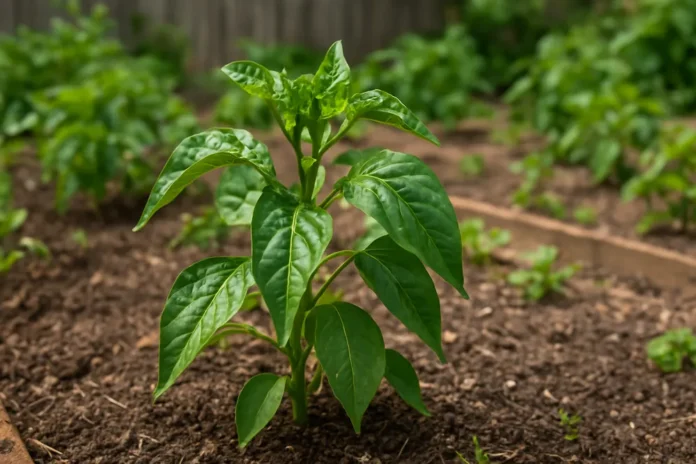
Pepper leaves usually curl because the plant is under stress from uneven watering, heat, pests, nutrient imbalance, or chemical exposure. In some cases, curling also points to viral disease.
Curled leaves on pepper plants can be unsettling, especially when the plants looked fine a few days earlier. In my experience, pepper leaves curling is often a stress signal rather than one single problem. Peppers react quickly to hot weather, inconsistent moisture, sap-sucking insects, and even drift from lawn or weed sprays.
The tricky part is that curled leaves do not all look the same. Some roll upward like a taco, some twist and pucker, and some curl downward while staying green. If you look closely at the pattern, where it started, and what the rest of the plant is doing, you can usually narrow the cause pretty fast.
This guide walks through the most likely reasons your pepper plants are curling, how to tell them apart, and which problems are fixable versus which ones are better handled by removing the plant.
What Curled Pepper Leaves Are Telling You
Leaf curl is a symptom, not a diagnosis. Pepper plants curl their leaves when growth is disrupted, water movement is uneven, or tissue is being damaged. Sometimes the plant is simply trying to conserve moisture by reducing the exposed leaf surface. Other times, the newest growth is being distorted by pests, chemical injury, or disease.
Before assuming the worst, look at the whole plant. Ask yourself whether the curling is mostly on the newest leaves, the oldest leaves, or all over. Notice whether leaves are still a healthy green, turning yellow, showing spots, or looking thickened and brittle. Also check whether flowers are dropping or fruit is misshapen, since that can point to more serious stress.
- Upward curling often points to heat, intense sun, or water stress.
- Twisted, cupped new growth often suggests pests, herbicide injury, or viral disease.
- Downward curl with limp foliage can happen with both underwatering and overwatering.
- Curling with stippling, sticky residue, or fine webbing strongly suggests insect problems.
- Curling without discoloration after a weather swing may be temporary environmental stress.
When I diagnose curled pepper leaves, I start with the newest growth. If the youngest leaves are deformed first, I think pests, spray damage, or virus before I think fertilizer. If older leaves curl first and the plant looks droopy by afternoon, water stress is usually higher on my list.
Water Stress Is One of the Most Common Causes
Underwatering and Dry Soil
Peppers dislike extremes, and dry soil often causes leaves to curl upward or inward. The plant is trying to slow moisture loss. In hot weather, this can happen quickly in containers, raised beds, or sandy soil. You may also notice drooping during the hottest part of the day, flower drop, and slower fruit development.
If the plant perks back up in the evening but curls again the next afternoon, heat and uneven moisture are likely working together. A single deep watering may help temporarily, but if the root zone repeatedly dries out, the curling returns.
Overwatering and Soggy Roots
Too much water can look surprisingly similar. When roots sit in waterlogged soil, they cannot take up oxygen properly, and the plant responds with curled, drooping, or limp leaves. The soil may stay wet for days, lower leaves may yellow, and growth can stall.
This is especially common in heavy clay, containers without enough drainage, or beds that are watered on a fixed schedule instead of by need. If the roots begin to rot, the plant may keep wilting even though the soil is damp.
- Dry, crumbly soil 2 to 3 inches down points toward underwatering.
- Wet, dense soil that stays cool and soggy points toward overwatering.
- Mulch helps both problems by moderating soil temperature and slowing moisture swings.
- Container peppers usually need more frequent watering than in-ground peppers.
I get the clearest results by watering deeply, then waiting until the top inch or two dries before watering again. Frequent shallow watering often creates the worst leaf curl pattern because the surface looks damp while the deeper root zone stays inconsistent.
Heat, Intense Sun, and Weather Swings Can Curl Leaves Fast
Peppers love warm weather, but even they can struggle during stretches of intense heat. When temperatures climb high, especially with dry wind or reflective heat from patios and walls, leaves may curl upward to reduce sun exposure and water loss. This kind of curling often happens without major spotting or yellowing at first.
Sudden weather changes can also trigger curling. A plant moved from a sheltered nursery area into full sun may react for a week or two. Strong wind, cold nights after transplanting, or abrupt jumps from mild spring weather to summer heat can all distort tender new growth temporarily.
- Leaves stay green but curl upward during hot afternoons.
- Plants in black plastic pots or small containers stress faster.
- Recently transplanted peppers are more sensitive than established plants.
- Sunscald on fruit or bleached leaf patches may show up if heat stress is severe.
If the plant otherwise looks healthy and new growth improves once weather settles, environmental stress is the likely culprit. This is one of the more forgiving causes, as long as roots stay healthy and the stress is not constant.
Pests That Cause Curling on Pepper Plants
Aphids
Aphids cluster on tender stems and the undersides of young leaves, sucking sap and causing curling, puckering, and distorted growth. You may also see sticky honeydew, ants crawling on the plant, or black sooty mold developing on the residue.
Broad Mites and Spider Mites
Mites are easy to miss because they are tiny, but the damage can be dramatic. Broad mites often cause twisted, hardened, or shrunken new leaves and stunted growing tips. Spider mites are more likely to cause stippling, bronzing, and fine webbing, especially in hot, dry weather.
Thrips and Whiteflies
Thrips scrape and suck plant tissue, leading to curled or scarred leaves and sometimes silvery streaking. Whiteflies can weaken peppers enough to cause curling and yellowing, especially when populations build up on the undersides of leaves.
- Check the undersides of the youngest leaves first.
- Look for sticky residue, stippling, silver patches, webbing, or tiny moving insects.
- Pests usually distort new growth before older leaves show much change.
- Heavy infestations often reduce flowering and fruit set.
If insects are the cause, treating early matters. A strong spray of water, insecticidal soap, neem, or horticultural oil can help with soft-bodied pests, but coverage has to be thorough. Mites can be stubborn, and badly distorted growth may not flatten out even after the pest is controlled. The goal is healthy new growth, not perfect old leaves.
Nutrient Problems and Root Stress Can Distort Leaves
Nutrient issues are not the first cause I suspect with curling alone, but they can contribute. Too much fertilizer, especially high nitrogen, can push fast, soft growth that curls or cups more easily under heat and pest pressure. Salt buildup in containers can also stress roots and lead to leaf edge curl or burn.
Deficiencies are more likely when curling comes with discoloration. Low calcium can contribute to weak new growth in some situations, though blossom end rot on fruit is usually a clearer clue than leaf curl alone. Magnesium deficiency may show as interveinal yellowing on older leaves. General nutrient imbalance can make peppers more sensitive to every other problem on this list.
Root Restriction and Transplant Shock
Peppers with crowded roots in small containers often curl because water and nutrient uptake become erratic. A recently transplanted pepper may also show temporary curling while the roots reestablish. If the plant was rootbound before planting, recovery can take longer than many gardeners expect.
- Leaf edge burn after feeding can point to fertilizer excess.
- White crust on potting soil or container rims suggests salt buildup.
- Rootbound plants dry out quickly and often curl between waterings.
- Balanced feeding usually works better for peppers than repeated heavy nitrogen applications.
Herbicide Drift and Chemical Injury Are Easy to Overlook
This is a big one in home gardens. Peppers are very sensitive to herbicide drift from lawn weed killers, fence-line sprays, driveway treatments, and even compost or mulch contaminated with persistent herbicides. When exposure happens, leaves may twist, narrow, cup, or grow in strange fern-like shapes. New growth is often affected most.
Damage can come from your own yard, a neighbor's spraying, or residue on tools and sprayers. It does not take much. Sometimes the plant survives and slowly grows out of minor exposure. In more severe cases, growth stays misshapen, flowering drops, and fruit production is poor.
- Distorted new leaves appear suddenly after nearby spraying.
- Leaves may look strap-like, twisted, or unnaturally narrow.
- Several sensitive plants in the area may show symptoms at the same time.
- Plants usually do not improve quickly if the exposure was significant.
When curling is dramatic but the leaves are not chewed, spotted, or insect-covered, I always ask whether anyone sprayed weeds recently. Herbicide injury often has a sharper, more bizarre distortion pattern than simple heat stress, especially when tomatoes and peppers are both affected.
Diseases That Can Cause Curled Pepper Leaves
Viral Diseases
Viruses are one of the more serious possibilities behind curled pepper leaves. Common examples include cucumber mosaic virus, tobacco mosaic virus, and other mosaic-type infections spread by insects, contaminated hands, tools, or plant material. Symptoms can include curling, mottling, puckering, stunting, and distorted fruit.
Unfortunately, viral problems do not have a cure. A pepper with severe mosaic patterning, persistent leaf distortion, and weak growth despite good care is often best removed to protect nearby plants.
Bacterial and Fungal Stress
Some bacterial and fungal diseases can contribute to curling, but they usually come with other obvious symptoms such as leaf spots, wilting, stem lesions, or overall decline. If curled leaves are also spotted, collapsing, or dropping, disease moves higher on the list.
- Mosaic-like light and dark green patterns suggest viral infection.
- Stunting plus distorted fruit is more concerning than leaf curl alone.
- Spots, lesions, or blackened tissue point away from simple environmental stress.
- Diseased plants often fail to produce normal healthy new growth even after conditions improve.
How to Tell Which Cause Is Most Likely
The fastest way to sort this out is by combining leaf pattern with recent conditions. Think like a gardener detective. Did a heat wave hit? Have you been watering lightly every day? Did you fertilize heavily? Do you see insects under the leaves? Was there weed spraying nearby? Those clues usually matter more than the curl itself.
- Check soil moisture a few inches down, not just at the surface.
- Inspect the youngest leaves and leaf undersides for pests.
- Look for discoloration, spots, webbing, sticky residue, or mosaic patterns.
- Think back over the last 7 to 10 days for spraying, transplanting, feeding, or major weather swings.
- Judge recovery by the appearance of new growth, since damaged leaves often stay curled.
A pepper plant with mild curl but good color and steady growth often recovers well once conditions stabilize. A plant with worsening distortion, mottling, severe stunting, or no healthy new growth needs closer attention and may not be worth saving if a virus or major chemical injury is involved.
What to Do to Help Curled Pepper Leaves Recover
Start by correcting the most likely stress, but avoid changing everything at once. If you overreact with extra water, fertilizer, sprays, and pruning all in the same week, it gets harder to tell what is helping and what is making things worse. Peppers often need a little time to respond.
- Water deeply and evenly instead of shallow daily splashes.
- Add mulch to reduce heat and moisture swings around the root zone.
- Provide temporary afternoon shade during extreme heat if plants are in a hot exposed spot.
- Wash off or treat sap-sucking pests early before new growth is badly deformed.
- Pause heavy fertilizing until the plant resumes normal growth.
- Remove severely diseased plants if viral symptoms are clear and persistent.
- Avoid herbicides anywhere near peppers, including on windy days.
Do not expect old curled leaves to flatten back out. What you want to see is healthier new growth coming in after the stress is corrected. If new leaves emerge normally over the next couple of weeks, you are on the right track.
If I am unsure between two likely causes, I fix the simplest environmental one first and watch the next flush of leaves. That usually means steady watering, mulch, and a careful pest check before I add fertilizer or reach for stronger sprays.
How to Prevent Pepper Leaf Curl in the Future
Prevention comes down to reducing stress and catching problems early. Healthy peppers tolerate minor weather swings much better than plants that are already rootbound, thirsty, overfed, or insect-ridden.
- Plant peppers in well-drained soil with consistent moisture.
- Use mulch to keep roots cooler and reduce evaporation.
- Space plants for airflow and easier inspection.
- Check the undersides of leaves weekly for aphids, mites, and whiteflies.
- Feed moderately with a balanced fertilizer instead of pushing lush growth.
- Harden off transplants before moving them into full sun and wind.
- Keep herbicides far away from vegetable beds and label sprayers clearly.
- Remove weak or obviously diseased plants before pests spread problems around the garden.
In my own garden, the biggest difference usually comes from steady watering and regular leaf checks. Most pepper curl problems are manageable when caught early, and the plants often bounce back better than gardeners expect.
FAQ
Can Curled Pepper Leaves Uncurl?
Usually, damaged leaves stay curled. The better sign is that new leaves begin growing normally once the underlying stress is fixed.
Should I Cut Off Curled Leaves From My Pepper Plant?
Only remove leaves that are badly damaged, diseased, or heavily infested. Mildly curled leaves can still photosynthesize and help the plant recover.
Can Too Much Sun Make Pepper Leaves Curl?
Yes. Extreme heat and intense afternoon sun can cause pepper leaves to curl upward, especially when moisture is inconsistent.
Do Aphids Cause Pepper Leaves to Curl?
Yes. Aphids feed on tender growth and often cause curling, puckering, sticky honeydew, and distorted new leaves.
Can Overwatering Make Pepper Leaves Curl?
Yes. Soggy soil stresses roots and can cause curled, drooping, or yellowing leaves along with slowed growth.
Is Leaf Curl on Peppers a Sign of Disease?
Sometimes. Viral diseases can cause persistent curling, mottling, stunting, and distorted fruit, but many cases are caused by water stress, heat, or pests instead.
Why Are Only the Top Leaves on My Pepper Plant Curling?
When only the newest top growth is curling, pests like aphids or mites, herbicide injury, or viral issues are more likely than simple watering problems.
Will Peppers Still Produce Fruit if the Leaves Are Curling?
Often yes, if the cause is temporary stress and the plant recovers quickly. Severe pest pressure, disease, or chemical damage can reduce flowering and fruit quality.
Want the right fix fast? Read our pepper plant care and treatment guides to choose the best pest controls, fertilizers, and watering tools for healthier harvests.
