

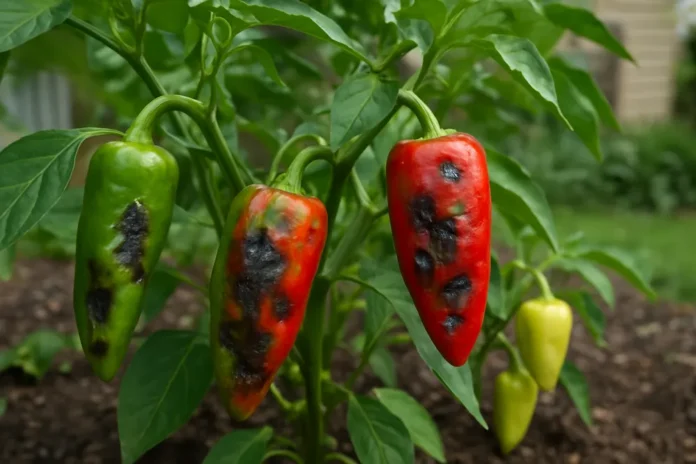
Peppers usually get black spots from disease, blossom end rot, sunscald that later darkens, pest injury, or physical bruising. The exact cause depends on whether the spots are sunken, soft, leathery, moldy, or limited to leaves, fruit, or stems.
Seeing pepper fruits with black spots can be alarming, especially when the plant looked healthy just a few days earlier. In my garden, this symptom is one of those problems that can mean several very different things, from a harmless bruise to a disease that spreads fast in warm, wet weather.
The good news is that black spotting usually leaves clues. Where the spots appear, how they feel, whether they are dry or soft, and whether leaves are affected too can tell you a lot. Once you know what you are looking at, it gets much easier to protect the rest of your pepper plants and salvage as much of the harvest as possible.
Most home gardeners run into a short list of likely causes: blossom end rot, bacterial or fungal disease, sunscald, insect damage, and physical injury. Below, I will walk through how to tell them apart and what to do next.
What Black Spots on Peppers Usually Mean
Black spots are not one single problem. They are a symptom, and the cause depends on the pattern. If the spot starts at the blossom end of the fruit and becomes dark, leathery, and sunken, blossom end rot is a top suspect. If you see small dark specks on fruit along with leaf spotting, bacterial or fungal disease moves higher on the list. If a pale patch formed first and later turned tan or black, sunscald may be the real issue.
- Sunken, dry, dark patch at the bottom of the fruit: often blossom end rot
- Small black or brown lesions on fruit plus spotted leaves: often bacterial or fungal disease
- Bleached or papery area that later darkens: often sunscald
- Tiny punctures, scabs, or irregular damaged spots: often insect feeding
- Single darkened area where fruit was bumped or pressed: often bruising or mechanical injury
When I diagnose pepper fruit problems, I look at several fruits from different parts of the plant before I decide anything. A single damaged pepper can fool you, but a repeated pattern across many fruits usually points to the real cause.
Blossom End Rot Is One of the Most Common Causes
Blossom end rot often begins as a water-soaked looking spot on the blossom end, which is the bottom of the pepper opposite the stem. That spot gradually enlarges, turns brown to black, and becomes sunken and leathery. It looks dramatic, but it is not an infectious disease spreading from fruit to fruit. It is a physiological disorder tied to poor calcium movement in the plant, usually triggered by inconsistent watering, root stress, or overly rapid growth.
Many gardeners assume the soil has no calcium, but that is not always true. More often, the plant cannot move calcium steadily into developing fruit because moisture levels swing too much. A dry spell followed by heavy watering is a classic setup. Container peppers are especially prone to this because they dry out so quickly in summer.
- Spots start on the blossom end, not randomly on the sides
- The affected area is usually flat to sunken rather than raised
- The tissue feels leathery or dry instead of fuzzy
- Young fruits are often affected first during hot weather
- Leaves may look mostly normal even while fruits develop damage
Remove badly affected fruits so the plant can focus on new production. Then even out watering, mulch the soil to reduce swings, and avoid heavy nitrogen feeding that pushes fast, soft growth. If your soil pH is very low or you know calcium is deficient, a soil test can confirm whether amendment is actually needed.
I do not rush to add calcium sprays the moment I see blossom end rot. In home gardens, steady soil moisture usually fixes more cases than foliar products do, and you can judge success by whether new fruits form cleanly.
Bacterial and Fungal Diseases Can Spot Both Fruit and Foliage
Bacterial Spot
Bacterial spot is a frequent culprit on peppers, especially in warm, humid weather or after overhead watering and splashing rain. On leaves, it often starts as small dark lesions that may have yellow halos. On fruit, spots begin as tiny raised specks that become rough, scabby, or darkened. The lesions can stay relatively small, but large numbers of them can ruin the appearance and weaken the plant.
This disease spreads through water splash, contaminated tools, infected transplants, and handling wet plants. It tends to show up more aggressively during periods of repeated rain, crowded spacing, and poor airflow.
Anthracnose and Other Fungal Fruit Rots
Some fungal diseases create dark, sunken lesions on ripening peppers. Anthracnose is one example. It can start as a small circular spot that enlarges, sinks, and may develop spore masses under humid conditions. Soft rot organisms can also move into damaged tissue, especially if fruits are already cracked, insect-bitten, or sunburned.
- Disease is more likely if both leaves and fruits show spotting
- Humid weather, splashing water, and crowded plants favor spread
- Raised, scabby fruit lesions suggest bacterial spot
- Sunken lesions that enlarge on ripening fruits suggest fungal infection
- Softening, ooze, or mold means decay organisms have moved in
Remove infected fruit promptly and discard it rather than composting if disease pressure is high. Avoid handling plants when wet, water at soil level, and improve spacing or prune lightly for airflow if the variety and planting style allow it. Copper-based products are sometimes used by home gardeners for bacterial and some fungal issues, but they work best preventively and are less effective once disease is well established.
Sunscald Can Start Pale and End Up Dark
Sunscald does not always look black at first. It usually starts as a pale, bleached, whitish, or tan patch on the side of the pepper that faces intense sun. As the damaged tissue ages, it can dry out, collapse, and darken. Secondary fungi or bacteria may then colonize that weakened area, making it look like the black spot was the original problem when the real cause was heat and direct exposure.
This often happens after heavy pruning, leaf drop from disease, or sudden heat waves that expose fruit that was previously shaded. Bell peppers and other blocky, larger-fruited types can be especially vulnerable because broad fruit shoulders catch direct afternoon sun.
- Damage appears on the side or shoulder of the fruit, not the blossom end
- A light or papery patch often comes before blackening
- Exposed fruits are affected more than shaded fruits
- Plants with sparse foliage are at greater risk
- Damaged areas may later become invaded by rot organisms
Preventing sunscald is mostly about preserving leaf cover and avoiding unnecessary pruning during hot weather. If your peppers are in a brutally sunny spot, temporary shade cloth during peak heat can help protect developing fruit.
Insect Damage and Physical Injury Can Look Worse than They Are
Not every black spot means disease. Stink bugs, leaf-footed bugs, thrips, and other piercing or rasping insects can scar pepper fruits. Their feeding may leave small dark pinpricks, corky patches, dimples, or irregular discolored spots. These injuries can also become entry points for rot organisms later on.
Bruising is another possibility, especially when fruits rub against cages, branches, or ties, or when they are knocked around during harvest. A bruise often darkens over time and stays limited to one localized area. If the rest of the plant is healthy and the marks are isolated, simple physical damage becomes more likely.
- Small punctures or dimples suggest insect feeding
- Scarring near shoulders or sides often points to external injury
- Random isolated marks on one or two fruits are less likely to be systemic
- Nearby chewing, pest presence, or sticky residue supports an insect diagnosis
- Clean, firm tissue around the spot often means the fruit is still usable if damage is minor
If I suspect insects, I check fruits early in the morning when pests are easier to catch in the act. Damage patterns make more sense once you actually see which insect is visiting the plant.
How to Tell Which Part of the Plant Is Giving You the Clue
The location of symptoms matters just as much as the color. Black spots on fruit alone point toward blossom end rot, sunscald, bruising, or fruit-specific disease. Black spotting on leaves and stems at the same time suggests a broader disease issue. When flowers drop, leaves spot, and fruits develop lesions together, I become much more suspicious of bacterial or fungal pressure than a simple nutrient or watering issue.
If the Spots Are Only on Fruit
Look first at where the spot started. Bottom-end lesions strongly suggest blossom end rot. Side patches that first looked bleached suggest sunscald. Small scabs, punctures, or random scars lean toward insects or handling damage.
If Leaves Are Spotted Too
Check for tiny dark leaf lesions, yellow halos, defoliation, and spotting that progresses after wet weather. That combination is much more typical of bacterial or fungal problems than of calcium imbalance.
If the Spot Is Soft or Spreading Fast
Soft, wet, or enlarging black areas often mean decay has set in. At that point, even if the original trigger was sunscald or insect injury, rotting organisms may be taking over, and the fruit should usually be removed.
What to Do Right Now to Save the Rest of the Crop
A calm first response helps more than a fast one. You do not need to strip every fruit or spray everything in sight. Start by separating what is damaged beyond use from what is still sound, then reduce the conditions that let the problem continue.
- Pick and discard fruits that are badly rotted, soft, or heavily diseased.
- Leave lightly scarred or bruised fruits only if the tissue is firm and the damage is not expanding.
- Water deeply and consistently rather than letting soil swing from dry to soaked.
- Mulch around plants to stabilize moisture and reduce soil splash.
- Water at the base instead of overhead to keep leaves and fruits drier.
- Improve airflow by spacing plants well and tying up crowded stems if needed.
- Inspect for insects on both fruit and leaf undersides.
- Sanitize pruners and wash hands after handling diseased plants.
If disease appears to be spreading quickly, remove the worst foliage and fruit, then consider a labeled garden treatment appropriate for edible peppers in your state. Always follow label directions and pre-harvest intervals.
How to Prevent Black Spots on Future Peppers
Prevention is mostly about keeping peppers growing evenly and reducing stress. Healthy pepper plants still encounter bad weather, but they handle it much better when roots are stable, foliage dries quickly, and fruits are not repeatedly damaged.
- Keep soil moisture even, especially once plants are flowering and setting fruit
- Use mulch to buffer heat and moisture swings
- Avoid overfertilizing with nitrogen, which can encourage uneven growth
- Plant resistant or tolerant varieties when bacterial spot is common in your area
- Space plants generously for airflow
- Rotate peppers and tomatoes away from the same bed when possible
- Do not save seed from diseased plants unless you are certain the problem was not seedborne
- Handle fruits gently during harvest and support heavily loaded branches
One habit that pays off every season is walking the pepper patch after storms and heat waves. Catching the first few damaged fruits early can keep a small problem from turning into a major cleanup later.
When Black-spotted Peppers Are Still Safe to Use
Safety depends on what caused the spot and how far it has progressed. Minor bruises or superficial insect scars on firm fruits can often be cut away, and the unaffected portion may still be usable. A small sunscald patch that stayed dry and never softened can sometimes be trimmed off too.
I would not use peppers that are soft, wet, moldy, oozing, foul-smelling, or deeply decayed. Fruits with advanced blossom end rot are also usually not worth saving because secondary rot commonly moves in. If the damage is extensive or the fruit texture has changed noticeably, composting or discarding is the safer choice.
- Usually usable after trimming: minor bruising, dry superficial scars, limited sunscald
- Usually not worth using: soft rot, mold, deep decay, foul odor
- Use caution with any fruit that has expanding lesions or internal breakdown
FAQ
Can I Eat Peppers with Black Spots?
Sometimes. If the spot is a small bruise, dry scar, or limited sunscald patch and the rest of the pepper is firm, you can often trim it away. Do not eat peppers that are soft, moldy, slimy, leaking, or smell off.
Is Blossom End Rot a Disease That Spreads to Other Peppers?
No. Blossom end rot is a physiological problem, not a contagious disease. It is usually tied to inconsistent moisture, root stress, and poor calcium movement into the fruit.
Why Do Only the Bottoms of My Peppers Turn Black?
That pattern strongly points to blossom end rot. The blossom end is the bottom of the fruit, and damage there usually starts as a pale or water-soaked area before turning dark and sunken.
Do Black Spots on Pepper Leaves and Fruit Mean Bacterial Spot?
They often can, especially in warm, wet weather. Bacterial spot commonly affects both leaves and fruits, causing small dark lesions on foliage and rough, dark, scabby spots on peppers.
Will Adding Calcium Stop Black Spots on Peppers?
Only if calcium deficiency is truly part of the problem. In many home gardens, blossom end rot is triggered more by uneven watering than by low soil calcium, so moisture management helps more than adding supplements blindly.
Can Too Much Sun Cause Black Spots on Peppers?
Yes. Sunscald often starts as a pale, bleached patch on exposed fruit, then darkens later as the damaged tissue ages or secondary rot develops.
Should I Remove Peppers with Black Spots From the Plant?
Remove fruits that are soft, rotting, heavily diseased, or badly damaged. If a fruit only has a small superficial scar and remains firm, you can leave it to finish maturing or harvest it and trim the spot later.
Want the fastest way to stop pepper problems before they spread? Read our guide to the best pepper disease treatments and moisture-control tools so you can protect this harvest and the next one.
