

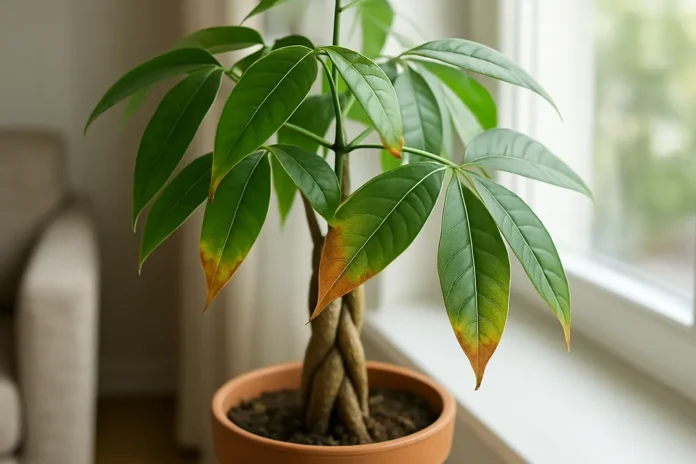
Money tree leaf tips usually turn brown from inconsistent watering, dry indoor air, mineral or fertilizer salt buildup, or root stress. The plant is reacting to moisture imbalance more often than to a serious disease.
When a money tree starts getting brown, crispy tips, I usually think of it as the plant's way of telling me something is off with moisture management. In most homes, that means the roots are getting too dry, too wet, or stuck in soil and air conditions that swing back and forth more than the plant likes.
The good news is that brown leaf tips are often fixable, especially if the rest of the leaf is still green. Money trees can be a little fussy about watering rhythm, humidity, and water quality, but once you match care to what the plant is actually experiencing, new growth usually comes back looking normal.
What matters most is reading the pattern. A little browning only on the oldest leaves means something different from widespread crispy edges on nearly every leaf. If you look at the plant as a whole instead of focusing on one damaged leaflet, the cause usually becomes much easier to spot.
What Brown Tips Usually Mean on a Money Tree
Brown tips form when the end of the leaf dries out and dies back. On a money tree, this usually happens because water is not moving through the plant evenly. The leaf tip is the furthest point from the roots, so it is often the first place to show trouble from dry soil, soggy roots, low humidity, or salt buildup.
This symptom is different from whole leaves turning yellow or black spots spreading across foliage. Brown tips are often a stress response, not a sign that the plant is beyond saving. Existing damage will not turn green again, but healthy new leaves can come in clean once the underlying issue is corrected.
- Dry, crispy tips with otherwise green leaves often point to underwatering, low humidity, or salts in the soil.
- Brown tips followed by yellowing lower leaves can suggest overwatering or root stress.
- Browning that starts at the tip and runs down the edge is commonly moisture related.
- Brown patches plus webbing or stippling may mean pests are involved too.
When I diagnose a money tree, I do not judge by the ugliest leaf. I compare the newest growth, middle leaves, and oldest leaves together, because the pattern across the plant tells me much more than one damaged tip ever will.
Inconsistent Watering Is the Most Common Cause
If I had to bet on one cause of brown tips, I would choose inconsistent watering. Money trees prefer evenly moist soil that is allowed to dry slightly between waterings, not repeated swings from bone dry to soaked. When the root ball gets too dry, the leaf tips often crisp first. When it stays too wet, the roots weaken and the leaves can still develop brown tips because damaged roots cannot move water properly.
Signs the Plant Is Getting Too Dry
- Leaf tips feel crisp or papery
- Leaves may curl slightly inward
- The potting mix pulls away from the sides of the pot
- The plant feels noticeably lighter when you lift it
Signs the Plant Is Staying Too Wet
- Brown tips appear along with yellow leaves
- Soil stays damp for many days after watering
- The pot feels heavy all the time
- Stems near the base may feel soft or the soil smells sour
A money tree in a bright, warm room may need water far more often than one in a dim corner, even if they are the same size. That is why fixed schedules cause so many problems. Instead of watering every certain number of days, water when the top inch or two of soil has dried and the pot is no longer heavily saturated below.
If the root ball has become very dry and is repelling water, I like to water slowly in two rounds a few minutes apart. One fast pour often runs down the sides and leaves the center of the soil dry.
Low Humidity Can Crisp the Leaf Tips
Money trees tolerate average indoor conditions better than some tropical houseplants, but they still appreciate moderate humidity. In many U.S. homes, winter heating drops humidity enough to dry out leaf tips, especially if the plant sits near a vent, radiator, fireplace, or frequently opened exterior door.
Humidity issues usually show up as small brown tips or edges while most of the leaf stays green. The problem can get worse if low humidity combines with missed waterings. The air dries the leaves faster, and the roots are already struggling to keep up.
- Damage is often worst in winter
- Tips dry out without widespread yellowing
- Leaves closest to heating or cooling vents often show it first
- New growth may emerge smaller if the air stays very dry
Grouping plants together, moving the money tree away from forced air, or using a humidifier usually helps more than occasional misting. Misting gives only a brief bump in moisture and can be inconsistent enough that it does not solve the underlying dryness.
Tap Water Minerals and Fertilizer Salts Can Burn the Tips
If your watering seems reasonable but the tips keep browning, the next thing to consider is salt buildup. Minerals from hard tap water and excess fertilizer collect in the soil over time. As those salts build up around the roots, the plant has a harder time taking up water, and leaf tips may burn even when the soil looks moist.
This is especially common in container plants that have lived in the same pot for a long time. It also shows up when gardeners fertilize year round, use a strong liquid feed too often, or never flush the pot thoroughly.
Clues That Salt Buildup Is Part of the Problem
- Brown tips keep appearing on otherwise healthy-looking leaves
- A white crust forms on the soil surface or pot rim
- The plant was recently fertilized often or at full strength
- Your household water is very hard or softened
Using filtered water, rainwater, or distilled water can help if your local tap water is mineral heavy. Fertilize only during active growth and use a diluted houseplant fertilizer rather than a strong dose. It also helps to occasionally flush the soil by watering deeply until extra water drains freely out the bottom.
Drainage and Root Problems Can Look Like Dryness Above the Soil
One of the trickiest things about money trees is that root stress from poor drainage can mimic underwatering. The leaves may develop brown tips because the roots are sitting in compacted, airless, overly wet soil and can no longer function well. From the top, the plant looks thirsty. Below the surface, the roots are suffocating.
This often happens when the plant is in a pot without a drainage hole, tucked into a decorative cachepot that holds runoff, or growing in old potting mix that has broken down into a dense mass. Braided money trees sold in stores are especially prone to this because they are often kept too wet before coming home.
- Soil remains wet for a week or longer
- Leaves brown at the tips, then drop
- Growth slows even during spring or summer
- Roots may smell rotten or look dark and mushy if inspected
If a money tree has brown tips and the soil is wet all the time, I resist the urge to add more water just because the leaves look dry. That mismatch between soggy soil and crispy foliage is a classic sign that the roots, not the leaves, are the real problem.
Light, Temperature Swings, and Placement Stress
Money trees do best in bright, indirect light. Too little light slows water use, which can keep the soil wet too long and contribute to root stress. Too much direct sun, especially hot afternoon sun through glass, can scorch leaf edges and tips. Placement near vents or drafty windows can also dry the foliage and create browning.
A plant that was recently moved may show tip browning simply from the sudden change. Houseplants react to shifts in light, airflow, and temperature more than many beginners expect. If the timing of the problem matches a move, a seasonal HVAC change, or a new window position, that clue matters.
- Hot direct sun can create tan or brown, dry patches
- Cold drafts can stress leaves and cause edge browning
- Very low light can indirectly cause tip burn by slowing soil drying
- Sudden location changes can trigger temporary leaf stress
Pests and Disease Are Less Common but Still Possible
Brown tips are usually not the first sign of disease on a money tree, but pests can contribute. Spider mites are a frequent hidden culprit indoors. They feed on leaf tissue, causing fine stippling, dull foliage, and gradual browning at the edges or tips. Mealybugs and scale can also weaken the plant and make water stress symptoms worse.
Fungal or bacterial disease is more likely when the plant is chronically overwatered and airflow is poor. In that case, you usually see more than tip browning. Spots spread, stems soften, or leaves yellow rapidly. Purely brown tips without other spotting usually point elsewhere first.
What to Look For
- Fine webbing under leaves or at leaf joints
- Tiny pale speckles across the foliage
- Sticky residue or cottony clusters on stems
- Soft stems, foul-smelling soil, or rapidly collapsing leaves
How to Fix Brown Tips and Help New Growth Recover
The best fix depends on what pattern you found, but the overall strategy is simple: stabilize moisture, improve the root environment, and reduce extra stress. A money tree does not need perfect conditions. It needs steady conditions.
- Check the soil before watering. Let the top inch or two dry, then water thoroughly until excess drains out.
- Empty saucers or cachepots so roots do not sit in runoff.
- Move the plant into bright, indirect light if it is in deep shade or hot direct sun.
- Keep it away from HVAC vents, heaters, and cold drafts.
- Use a lighter fertilizer routine, especially in fall and winter.
- Flush the pot occasionally to reduce mineral and fertilizer salts.
- If the mix stays wet too long, repot into a well-draining indoor potting mix and inspect the roots.
- Trim only the dead brown tips if you want a neater appearance, but do not remove too much green tissue.
After correction, judge progress by the condition of new leaves, not by the old damaged ones. Existing brown tips stay brown. What you want to see is that fresh growth emerges without crisp edges and the overall plant holds onto its leaves better.
Change one variable at a time when possible. If you repot, move the plant, switch water type, and change fertilizer all at once, it becomes much harder to tell what actually helped or what created new stress.
When to Trim, Repot, or Worry More
A few brown tips on older leaves are usually cosmetic and not an emergency. You can trim the dead part with clean scissors, following the leaf's natural shape. Leave a thin line of brown behind rather than cutting into healthy green tissue, which can create a fresh wound.
Repot if the soil stays soggy for too long, the roots are circling heavily, the mix has compacted, or you suspect rot. Use a pot only slightly larger than the current root ball and make sure it has a drainage hole. Oversized pots keep too much soil wet and often make the original problem worse.
Take the problem more seriously if browning spreads fast, leaves are dropping in large numbers, stems are soft, or the trunk area feels mushy. Those signs point beyond a minor humidity or watering issue and more toward root or stem decline that needs prompt attention.
FAQ
Should I Cut the Brown Tips Off My Money Tree Leaves?
Yes, if you want the plant to look neater. Use clean scissors and trim only the dead brown tissue, leaving a narrow margin so you do not cut into living green leaf tissue.
Will Brown Tips Turn Green Again?
No. Damaged leaf tissue does not recover, so the goal is to stop the cause and watch for healthy new growth.
How Often Should I Water a Money Tree with Brown Tips?
Water based on soil dryness, not the calendar. Most money trees do best when the top inch or two of soil dries before you water thoroughly.
Can Tap Water Cause Brown Tips on a Money Tree?
Yes. Hard water and fertilizer salts can build up in the soil and burn leaf tips over time, especially in plants that have not been flushed or repotted recently.
Do Money Trees Need Higher Humidity?
They do not need jungle-level humidity, but they usually look better with moderate indoor humidity. Very dry air, especially in winter, can crisp the tips.
Is Direct Sun Causing the Brown Tips?
It can. Hot direct sun can scorch money tree leaves, while bright indirect light is usually the safest placement indoors.
Can Overwatering Really Cause Crispy Brown Tips?
Yes. Overwatered roots cannot function properly, so the leaves may dry at the tips even though the soil is wet.
Want to stop indoor plant problems before they spread? Read our guide to the best houseplant watering tools and moisture meters so you can diagnose root-zone stress faster and water with confidence.
