

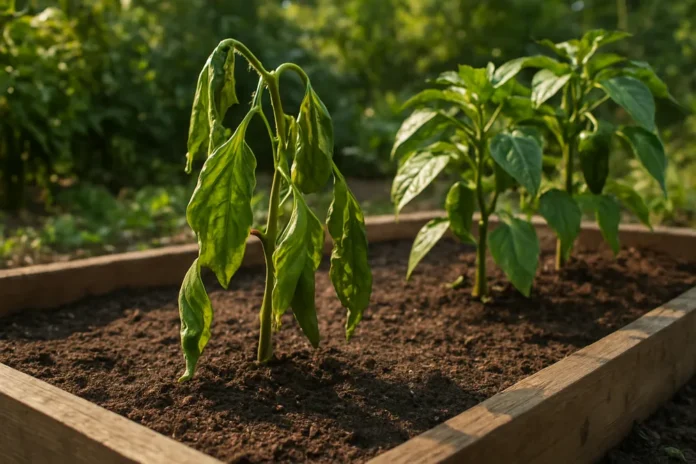
Pepper plants usually wilt because of water stress, heat, root damage, or disease. A droopy pepper plant is often reacting to stressed roots rather than a problem in the leaves themselves.
A wilted pepper plant can look dramatic fast. One day it is upright and full, and by afternoon the leaves are hanging limp and the whole plant looks exhausted. The tricky part is that pepper plant wilting is a symptom, not a diagnosis. Dry soil, soggy soil, extreme heat, transplant shock, root injury, and disease can all make a pepper collapse in a similar way.
When I troubleshoot wilting peppers, I try not to react to the droop alone. I look at when it happens, how quickly it appeared, what the soil feels like, and whether the plant perks back up by evening or stays limp overnight. Those clues usually tell you whether you are dealing with a temporary stress issue or a more serious root problem.
The good news is that many wilted pepper plants recover well once the real cause is fixed. The key is to avoid treating every wilted plant like it needs more water, because that is one of the easiest ways to make the problem worse.
What Wilting Is Really Telling You
Wilting happens when a pepper plant is losing water from its leaves faster than its roots can replace it. Sometimes that means the soil is too dry. Other times it means the roots are sitting in wet soil and cannot function properly, or they have been damaged by pests, disease, or rough transplanting.
This is why two pepper plants can both look droopy for completely different reasons. A thirsty plant often looks limp but improves soon after a deep watering. A plant with root rot may also look thirsty, but watering it again pushes it farther downhill. Timing and soil conditions matter just as much as the wilt itself.
When I see a wilted pepper, I look at the newest leaves and the oldest leaves together. If everything is drooping evenly in hot sun but the plant recovers at dusk, I usually suspect temporary heat stress. If the whole plant stays soft through the night, I start thinking about root trouble first.
Common Reasons Pepper Plants Wilt
Dry Soil and Inconsistent Watering
The most familiar cause is simple underwatering. Pepper plants have fairly fine root systems, and in containers they can dry out much faster than many gardeners expect, especially in wind, heat, or fabric pots. If the potting mix has pulled away from the sides of the container or the top few inches are dusty and dry, lack of water is a strong possibility.
Inconsistent watering can also trigger wilting even if you are not technically underwatering. Letting the soil swing from bone dry to soaking wet stresses the roots and can cause leaf droop, blossom drop, and slow growth.
Overwatering and Poor Drainage
Too much water is just as common as too little. Pepper roots need both moisture and air. In waterlogged soil, oxygen levels drop and roots begin to struggle. The leaves may wilt, curl slightly, or look heavy and dull green rather than crisp and dry.
This happens often in garden beds with compacted clay, containers without enough drainage holes, or saucers that stay full after watering. The plant looks limp, the gardener adds even more water, and the cycle gets worse.
Heat Stress and Afternoon Droop
Pepper plants love warmth, but they can still wilt in intense summer heat. On very hot afternoons, especially above about 90 degrees, leaves may droop because the plant is temporarily losing water faster than it can move it upward. If the soil is adequately moist and the plant firms back up in the evening, heat stress is the likely explanation.
This kind of wilting looks alarming, but it is not always a sign of damage. It becomes a problem when high heat is paired with dry soil, reflected heat from walls or patios, or recent transplant stress.
Transplant Shock and Root Disturbance
Recently transplanted peppers often wilt because their roots were disturbed or because they moved suddenly from sheltered conditions into full sun and wind. Even healthy transplants can droop for several days while they reestablish. If the stem still looks sound and the leaves have not yellowed heavily, patience and stable care usually solve this one.
Root Damage From Pests
Cutworms, root-knot nematodes, grubs, and other underground pests can weaken roots enough to cause wilting. Sometimes the clue is poor growth alongside wilting. In other cases, the plant may topple easily, look stunted, or fail to recover after watering even though the soil seems fine.
Bacterial Wilt, Fungal Wilt, and Root Rot
Disease becomes more likely when a pepper plant wilts suddenly and does not recover, especially if the soil is moist. Bacterial wilt can make a plant collapse while the leaves stay green at first. Fusarium and verticillium wilts can cause persistent drooping, yellowing, and decline. Root rot pathogens thrive in overly wet conditions and often bring on a wilted, miserable-looking plant.
Disease-related wilting is usually more serious than heat or watering stress because the roots or vascular system are compromised. Once those tissues are damaged, the plant cannot move water normally even when moisture is available.
How to Tell Which Cause Is Most Likely
A quick diagnosis starts with patterns. Ask yourself when the wilting began, whether it affects one plant or several, and whether it appears only during the hottest part of the day. One wilted pepper in an otherwise healthy bed often points to root damage, transplant stress, or disease in that individual plant. Several wilted peppers at the same time usually suggests heat, watering, or drainage issues.
- If the soil is dry several inches down and the plant improves within hours of watering, underwatering is likely.
- If the soil is wet, heavy, and sour-smelling and the plant stays limp, overwatering or root rot is more likely.
- If wilting shows up in afternoon sun but the plant recovers by evening, heat stress is the usual culprit.
- If a recently planted pepper droops for a few days after moving outdoors, transplant shock is common.
- If the plant wilts suddenly, stays wilted overnight, and the leaves remain green at first, bacterial wilt moves higher on the list.
- If older leaves yellow first and the whole plant slowly declines, fungal wilt or chronic root stress may be involved.
Check the Stem and Root Zone
Look closely at the base of the plant. A stem pinched, chewed, or darkened near soil level can explain rapid wilting. If the plant is in a container, slide it out carefully and inspect the root ball. Healthy roots are usually white or light tan and smell earthy. Dark, mushy, or foul-smelling roots point to rot.
Notice Whether Leaves Are Dry or Soft
Leaves on an underwatered pepper often feel thin and dry. Leaves on an overwatered pepper tend to feel soft, heavy, or swollen-looking. It is not a perfect test, but combined with soil moisture it helps separate two causes that gardeners often confuse.
If you are unsure whether the plant needs water, dig or probe down several inches instead of judging by the soil surface. Pepper roots care much more about what is happening below the crust than whether the top layer looks dry.
What to Do for a Wilted Pepper Plant
If the Soil Is Dry
Water deeply and slowly so moisture reaches the full root zone. In containers, water until excess drains from the bottom. In garden beds, soak the soil rather than sprinkling the foliage. Afterward, add mulch around the plant to slow evaporation and keep moisture levels steadier.
Do not follow a severe dry spell with constant daily watering unless the weather truly demands it. Let the top inch or two of soil dry slightly between waterings while keeping the lower root zone evenly moist.
If the Soil Is Too Wet
Hold off on watering until the soil begins to dry. Improve drainage if possible by opening blocked holes in containers, emptying saucers, or gently loosening compacted surface soil around the plant without tearing roots. If the pepper is in a badly draining potting mix, repotting into a lighter mix may be the best move.
For in-ground peppers, repeated saturation often means the site needs improvement more than the plant needs treatment. Raised beds, added compost, and careful irrigation scheduling help much more than extra fertilizer.
If Heat Is the Main Issue
Make sure the plant has adequate moisture in the morning so it goes into the hottest part of the day well hydrated. During extreme heat waves, temporary afternoon shade cloth can reduce stress without depriving peppers of the sun they need for fruiting. Mulch also helps moderate root temperatures.
Avoid fertilizing a heat-stressed plant right away. Pushing new growth when the roots are already struggling tends to add more stress instead of solving the problem.
If Transplant Shock Is Likely
Keep watering consistent, protect the plant from harsh afternoon sun for a few days, and resist the urge to fuss with it too much. Most peppers settle in if the stem stays healthy and new growth begins within a week or two. Removing flowers on a badly shocked young transplant can help it redirect energy into roots.
If Disease Is Suspected
A pepper that stays wilted in moist soil and continues declining may not be recoverable. Remove severely diseased plants promptly so the problem does not spread, especially if bacterial wilt is common in your area. Do not compost plants that show obvious vascular or rot symptoms unless your compost system gets reliably hot.
Clean tools, avoid splashing soil from plant to plant, and rotate peppers and other nightshades to a different bed in future seasons. If root rot is involved, focus on drainage and watering habits before replanting.
One of the biggest mistakes I see is treating a wilted pepper with water, fertilizer, and pesticide all at once. When a plant is stressed, piling on multiple fixes makes it harder to tell what helped and easier to injure roots further. I prefer changing one major factor first and watching the new growth.
Signs Your Pepper Plant Can Recover
Pepper plants are tougher than they look when the issue is temporary stress. Recovery is likely if the stem is still firm, the leaves regain some turgor after the weather cools or after proper watering, and fresh growth begins at the tips. Even if a few older leaves yellow or drop, the plant can still bounce back well.
Watch the new leaves more than the old damaged ones. Old leaves may stay scarred, curled, or limp even after the plant has started improving. What matters most is whether the next flush of growth looks normal.
- The plant stands up better in the morning than it did the day before.
- Leaf color remains reasonably green instead of turning blotchy or dull yellow.
- The stem base stays solid and free of dark, sunken spots.
- New growth appears within several days to two weeks after conditions improve.
- Flowers and small fruits stop aborting as the plant stabilizes.
Signs the Plant May Not Make It
Some wilted peppers do not recover, especially when disease or severe root failure is involved. A plant that remains collapsed overnight for several days despite proper moisture is in trouble. So is a pepper with a blackened stem base, foul-smelling roots, or internal browning when the stem is cut.
If the entire plant is rapidly declining while nearby plants are still healthy, it is often better to remove that pepper than to wait too long and risk spreading pathogens. Saving one plant is rarely worth infecting the whole bed.
How to Prevent Wilting in the Future
Prevention mostly comes down to steady root conditions. Pepper plants do best when the soil drains well but does not dry out completely, and when roots are not constantly stressed by swings in moisture or temperature.
- Water deeply and consistently instead of giving frequent shallow drinks.
- Use containers with adequate drainage and a quality potting mix.
- Mulch garden peppers to conserve moisture and cool the root zone.
- Harden off transplants gradually before exposing them to full sun and wind.
- Avoid planting peppers in low spots that stay wet after rain.
- Rotate crops and do not replant peppers in soil where wilt diseases were severe.
- Inspect roots and stems promptly when a plant starts drooping instead of waiting for collapse.
I have found that peppers reward consistency more than pampering. They handle summer better when they have a stable watering rhythm, loose soil, and a root zone that stays moist rather than soaked.
FAQ
Why Does My Pepper Plant Wilt During the Day but Look Better at Night?
That pattern usually points to heat stress or temporary water demand that peaks in the afternoon. If the soil is evenly moist and the plant fully recovers by evening, the roots are often functioning normally.
Can Overwatering Make Pepper Plants Wilt?
Yes. Overwatered peppers often wilt because saturated soil deprives roots of oxygen. The plant may look thirsty, but adding more water can make the root stress worse.
Should I Water a Wilted Pepper Plant Right Away?
Only if the root zone is actually dry. If the soil is already wet, immediate watering is more likely to harm the plant than help it.
Will a Wilted Pepper Plant Recover After Transplanting?
Many do. Mild transplant shock often improves within a few days if the plant gets consistent moisture, some protection from intense sun, and time to rebuild its roots.
How Do I Know if My Pepper Plant Has Bacterial Wilt?
Bacterial wilt often causes sudden, persistent collapse even when the soil is moist, and leaves may stay green at first. The plant usually does not perk back up at night or after watering.
Why Is Only One Pepper Plant Wilting and Not the Others?
A single wilted plant often suggests a localized issue such as root damage, stem injury, disease, or transplant stress. Broad environmental problems like heat or irrigation usually affect multiple plants.
Can Peppers Wilt From Too Much Sun?
Yes, especially during extreme heat or after a sudden move from shade to full sun. Peppers like sun, but intense afternoon heat can still overwhelm a stressed or recently planted pepper.
Need the right fix fast? Explore our pepper plant care guides and treatment picks to choose the best watering tools, mulch, shade options, and disease control products for stressed peppers.
