

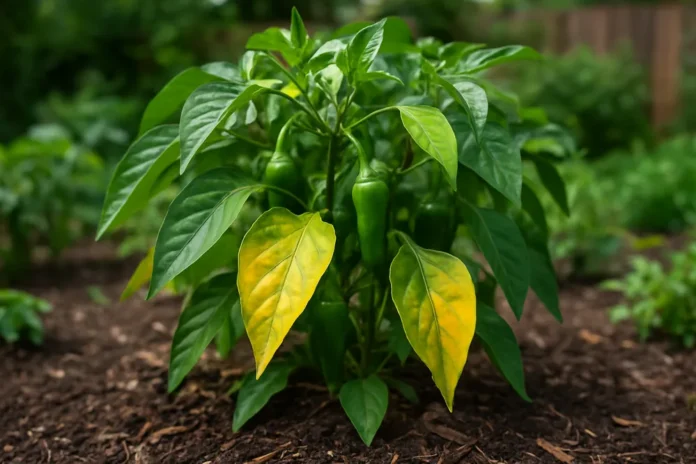
Pepper leaves usually turn yellow because the plant is stressed by watering problems, nutrient deficiencies, temperature swings, pests, disease, or root trouble. In many cases, yellowing starts when roots cannot take up water and nutrients normally.
Yellow pepper leaves can be frustrating because the problem often starts quietly. One day your plant looks lush, and a few days later the lower leaves are pale, blotchy, or fully yellow. On pepper plants, that color change is usually a sign of stress rather than a problem all by itself.
In my garden, the cause is most often tied to water, roots, or feeding, but peppers can also yellow when nights are too cool, when pests are feeding on the undersides of leaves, or when disease moves in. The useful clue is not just that the leaves are yellow, but how pepper leaves are turning yellow. Are only older leaves affected? Are veins staying green? Is the whole plant fading? Those patterns tell you a lot.
What Yellow Leaves Are Telling You
Yellowing is the plant's way of showing that chlorophyll production has slowed or that nutrients are being pulled out of older leaves to support newer growth. With peppers, that can happen from simple stress or from a more serious issue below the soil line.
Before you assume the worst, look at the pattern. A few older bottom leaves yellowing late in the season can be normal. A whole plant turning pale in early summer is different. If leaves are yellow between green veins, that points in one direction. If they are yellow and limp, or yellow with spots, that points somewhere else.
- Older lower leaves yellowing first often suggests nitrogen deficiency, overwatering, or natural aging.
- New leaves yellowing first can point to iron deficiency, severe root stress, or high soil pH.
- Yellow leaves with green veins often suggest chlorosis from nutrient unavailability.
- Yellowing plus wilting usually means roots are not moving water properly.
- Yellowing with stippling, speckling, or webbing often means pest feeding.
- Yellowing with dark lesions, mushy stems, or rapid collapse can signal disease.
When I diagnose peppers, I always compare the oldest leaves, newest leaves, and the stem color before I do anything else. That quick side-by-side check often separates a feeding problem from a root or disease problem faster than any single symptom.
Watering Problems Are the Most Common Cause
Overwatering and Soggy Roots
Peppers hate sitting in waterlogged soil. When roots stay too wet, they lose oxygen and begin to function poorly. The plant cannot absorb nutrients efficiently, so leaves start yellowing, often along with drooping or a tired, dull look. Container peppers are especially prone to this if the pot is too large, drainage holes are limited, or saucers stay full after watering.
In the ground, heavy clay soil can create the same problem after repeated rain or frequent irrigation. Leaves may yellow evenly, then soften and fall off. Growth slows, flowers drop, and fruit production stalls.
Underwatering and Drought Stress
Dry soil can also trigger yellow leaves, especially when a pepper plant repeatedly wilts and recovers. That cycle stresses roots and limits nutrient uptake. The plant may shed older leaves to conserve moisture, and those leaves often turn yellow first before dropping.
Underwatering is common in hot weather, raised beds, black plastic pots, and grow bags. A plant may need far more frequent watering during fruit set than it did earlier in the season.
- Overwatered peppers often look yellow, limp, and slow growing even when the soil is wet.
- Underwatered peppers often look yellow, thin, and wilted with dry or crispy edges.
- Inconsistent watering can cause both yellowing and blossom drop.
If a pepper is yellowing and you are not sure whether it is too wet or too dry, feel the soil deeper than the surface. I like to check 2 to 3 inches down because the top can look dry while the root zone is still soggy.
Nutrient Deficiencies and pH Issues
Nitrogen Deficiency
Nitrogen is one of the most common nutrients behind yellow pepper leaves. When nitrogen runs low, peppers usually pull it from older leaves first, so the bottom foliage turns pale green and then yellow. The whole plant may look weak, with smaller leaves and slower growth.
This is especially common in containers that have been watered often, in sandy soil where nutrients leach quickly, or in beds that were not amended before planting.
Magnesium and Iron Chlorosis
Magnesium deficiency often shows up as yellowing between veins on older leaves, while the veins remain greener. Iron deficiency tends to affect newer leaves first, making the young growth pale or yellow while older leaves stay greener. Both can happen even when nutrients are technically present in the soil, especially if pH is off or roots are stressed.
When Soil pH Blocks Nutrient Uptake
Peppers generally do best in slightly acidic soil, around pH 6.0 to 6.8. If pH creeps too high, iron and other micronutrients become harder for the plant to absorb. That leads to yellowing that looks like a deficiency even though fertilizer is already there.
- Older leaves yellowing first often points to nitrogen or magnesium problems.
- New growth yellowing first often points to iron deficiency or high pH.
- Pale plants in containers may simply need a balanced feeding schedule.
- Excess fertilizer salts can also damage roots and trigger yellowing.
It is worth remembering that yellow leaves do not always mean you should add more fertilizer immediately. If the roots are damaged from poor drainage or cold soil, the plant may not be able to use what you add. Fixing the root environment often helps more than another feeding.
Temperature Stress and Transplant Shock
Peppers are warm-season plants, and they react quickly when temperatures are too cool. Chilly nights, cold spring soil, or a sudden drop in weather can slow root activity enough to cause yellow leaves. The plant may sit still for days, looking pale and unhappy even though moisture seems fine.
Transplant shock can cause similar symptoms. After moving seedlings into the garden, it is common to see a few leaves yellow as the plant adjusts. If the roots were disturbed, if the sun was intense, or if temperatures swung sharply, the plant may temporarily stop growing and sacrifice some older foliage.
- Night temperatures below about 55 degrees Fahrenheit can stress peppers.
- Cold, wet spring soil often causes pale growth and stalled plants.
- Fresh transplants may yellow briefly, especially lower leaves, before recovering.
I see a lot of gardeners chase fertilizer when the real problem is simply cold roots. A pepper that went into the ground too early often stays yellowish until the soil truly warms, no matter how much plant food you give it.
Root Problems Below the Surface
Healthy roots are the engine behind healthy pepper foliage. When roots are damaged, compacted, circling in a pot, attacked by rot, or blocked by poor soil structure, yellow leaves are often one of the first visible signs. Because the trouble is hidden, gardeners sometimes keep treating the top growth while the real issue is underground.
Compaction and Poor Drainage
Compacted soil keeps air out and can hold excess moisture around roots. Peppers in dense beds may stay smaller than expected, yellow prematurely, and fail to set fruit well. Raised beds usually reduce this problem, but even they can compact over time if the soil mix is heavy.
Root-bound Container Peppers
In containers, roots can fill the pot quickly during warm weather. Once crowded, they dry out faster, absorb nutrients less evenly, and trigger yellowing or leaf drop. If water runs right through the pot, or if the plant wilts again soon after watering, root crowding may be involved.
Root Rot
Root rot is often tied to chronic overwatering and poor drainage. A pepper with root rot may look thirsty even when the soil is wet because damaged roots cannot pull up water. Leaves yellow, wilt, and sometimes drop rapidly. If you slide a plant out of a pot and the roots are brown, mushy, or smell sour, root rot is a strong possibility.
Pests That Cause Pepper Leaves to Yellow
Several common garden pests feed on pepper leaves by piercing plant tissue and sucking out sap. That damage reduces chlorophyll and leaves a stippled, faded, or yellow appearance. If the infestation gets worse, leaves curl, dry up, and drop.
Aphids
Aphids cluster on tender growth and the undersides of leaves. They can cause yellowing, curling, sticky residue, and distorted new growth. Heavy infestations also attract ants because of the honeydew they produce.
Spider Mites
Spider mites are a classic cause of pale, speckled pepper leaves in hot, dry weather. The leaves may look dusty or bronzed before they turn yellow. Fine webbing is often visible when the infestation is advanced.
Whiteflies and Thrips
Whiteflies can cause general yellowing and weakening, while thrips often leave silvery streaking or scarring along with discoloration. Both can spread disease, which makes early control important.
- Check leaf undersides first, especially on yellowing leaves near the middle and lower canopy.
- Sticky leaves, black sooty mold, or ants often point to sap-sucking insects.
- Fine speckling and webbing are classic signs of spider mites.
Diseases That Turn Pepper Leaves Yellow
Disease is not the most common reason for yellow leaves, but it becomes more likely when weather is warm and humid, plants are crowded, or the soil stays wet. Yellowing tied to disease is often uneven and usually comes with additional clues like spots, stem lesions, wilting, or sudden collapse.
Bacterial and Fungal Leaf Spots
Leaf spot diseases can start as small dark or water-soaked lesions surrounded by yellow halos. As the damage spreads, leaves yellow and drop. Wet foliage, splash-up from soil, and poor airflow make these problems worse.
Verticillium, Fusarium, and Other Wilts
Wilt diseases interfere with water movement inside the plant. You may see one side of the plant yellow first, or a few branches decline while others stay green. Over time, entire leaves yellow, wilt, and dry out even when the soil is moist.
Viral Issues
Some plant viruses cause yellow mottling, mosaic patterns, distorted leaves, and stunted growth. These symptoms rarely look like a clean, uniform deficiency. Viruses are often spread by insects such as aphids or thrips, or by handling infected plants and tools.
If a pepper has yellowing plus spots, deformation, or patchy mosaic coloring, think beyond watering and fertilizer. Disease symptoms often look irregular rather than uniform.
How to Narrow Down the Cause Quickly
A simple visual check can usually narrow yellow pepper leaves down to a few likely causes. You do not need to guess blindly. Start with the easiest factors to rule out before changing several things at once.
- Check whether old leaves or new leaves are yellowing first.
- Feel the soil a few inches deep to judge real moisture levels.
- Inspect leaf undersides for aphids, mites, whiteflies, and eggs.
- Look for spots, halos, mosaic patterns, or stem damage that suggest disease.
- Think about recent weather, especially cool nights, heat spikes, or heavy rain.
- Review your feeding routine and whether the plant is in a container or poor soil.
The combination of symptoms matters more than any single clue. For example, lower leaves turning plain yellow on a fast-growing pepper in a pot often points to feeding needs. Lower leaves turning yellow on a limp plant in soggy soil points more toward root stress.
What to Do About Yellow Pepper Leaves
Once you identify the likely cause, focus on correcting the growing conditions rather than trying to make yellow leaves turn green again. Most damaged leaves will not recover fully. The real goal is healthy new growth.
- Adjust watering so the soil stays evenly moist but never waterlogged.
- Improve drainage in containers and avoid leaving pots in standing water.
- Feed regularly with a balanced fertilizer if the plant is pale and undernourished.
- Test soil pH if chlorosis continues despite normal feeding.
- Protect peppers from cold snaps and wait for warm soil before transplanting.
- Treat pest outbreaks early with strong water sprays, insecticidal soap, or other appropriate controls.
- Remove heavily diseased leaves and avoid wetting foliage when watering.
- Replant or repot root-bound peppers if they are still early enough in the season to recover.
If only a few lower leaves are yellow and the rest of the plant looks vigorous, you may not need to panic. Peppers can outgrow minor stress quickly once the conditions improve. Watch the newest leaves closely. They tell you whether your fix is working.
I try not to change watering, fertilizer, and pest treatments all on the same day unless the problem is obvious. With peppers, the cleanest diagnosis often comes from making one sensible correction and judging success by the color of the next flush of growth.
When Yellow Leaves Are Mostly Normal
Not every yellow leaf means your pepper is in trouble. Older leaves near the bottom naturally age out over time, especially once the plant is tall, full, and carrying fruit. A little leaf turnover is common when the canopy thickens and lower leaves become shaded.
Late in the season, peppers also begin redirecting energy into ripening fruit instead of producing perfect foliage. If the plant is otherwise productive and the yellowing is limited to a small number of older leaves, normal aging may be all you are seeing.
FAQ
Should I Remove Yellow Leaves From My Pepper Plant?
Remove leaves that are fully yellow, badly damaged, or clearly diseased. If a leaf is only partly yellow and still helping the plant, I usually leave it until new growth is strong.
Can Yellow Pepper Leaves Turn Green Again?
Sometimes mildly pale leaves improve a little, but fully yellow leaves usually do not return to deep green. The better sign is healthy new foliage after the underlying problem is corrected.
Do Epsom Salts Fix Yellow Leaves on Peppers?
Only if the plant truly has a magnesium deficiency. Epsom salts are not a cure-all, and using them when the problem is overwatering, iron chlorosis, pests, or disease will not help.
Why Are Only the Bottom Leaves on My Pepper Plant Turning Yellow?
Bottom leaves yellow first most often from normal aging, nitrogen deficiency, inconsistent watering, or root stress. If the upper growth still looks healthy, the issue is often less serious than whole-plant yellowing.
Why Are My Pepper Leaves Yellow in a Container but Not in the Garden?
Container peppers dry out faster, leach nutrients faster, and can become root-bound or waterlogged more easily than plants in the ground. That makes yellowing much more common in pots.
Can Too Much Fertilizer Make Pepper Leaves Yellow?
Yes. Excess fertilizer can burn roots or create salt buildup that interferes with water uptake, which can lead to yellowing, browning at the edges, and stunted growth.
How Long Does It Take a Yellowing Pepper Plant to Recover?
Recovery depends on the cause, but peppers often show improvement in new growth within one to three weeks after conditions are corrected. Severe root damage or disease can take longer or may not fully reverse.
Need the right fix fast? Read our pepper plant care and treatment guides to choose the best fertilizer, pest control, and soil solutions for greener, more productive plants.
