

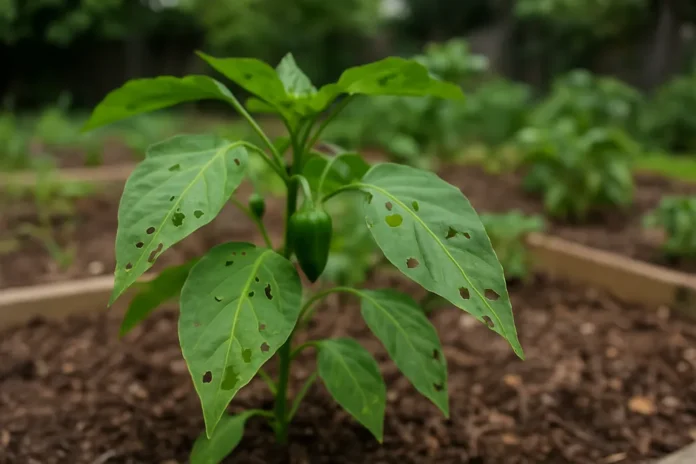
Pepper leaves usually get holes from chewing pests like flea beetles, caterpillars, slugs, snails, or earwigs. Less often, leaves tear from wind or develop dead spots that later fall out and look like insect damage.
Finding holes in pepper leaves can be frustrating, especially when the plant looked perfectly healthy a day or two earlier. In most home gardens, holes mean something is feeding on the foliage, but not every pest leaves the same kind of damage. Small pinholes, ragged edges, and large irregular bites all tell a slightly different story.
When I diagnose this on peppers, I start by looking at the pattern before I reach for any spray. Holes in pepper leaves are easier to solve when you know whether the damage is happening at night, on new growth, or only on the lowest leaves. Once you match the symptom to the culprit, treatment gets much simpler and you can avoid wasting time on the wrong fix.
The good news is that peppers can tolerate a fair amount of leaf chewing without losing the whole crop. The key is figuring out whether you are dealing with a minor nuisance or a pest problem that is about to spread fast.
What the Hole Pattern Can Tell You
Before blaming one specific insect, study the leaves closely. The shape, size, and location of the holes often narrow the problem down right away. Tiny scattered holes across many leaves usually suggest flea beetles. Larger ragged bites may point to caterpillars, earwigs, or beetles. Missing chunks along the leaf edge often come from slugs, snails, or chewing insects that feed at night.
Also look at which leaves are affected. Damage on the lowest leaves near mulch or damp soil often fits slugs, snails, or earwigs. Damage on fresh upper growth can come from caterpillars or beetles. If only a few leaves are hit and the rest of the plant looks vigorous, the problem may still be minor.
- Tiny shot holes scattered across leaf surfaces: often flea beetles
- Irregular holes with ragged edges: often caterpillars, earwigs, or beetles
- Large missing chunks from edges: often slugs or snails
- Holes that appear after brown or tan spots formed first: sometimes disease or physical damage, not direct feeding
- Damage mostly overnight: often night-feeding pests like slugs, snails, cutworms, or earwigs
When I am not sure, I compare the newest damaged leaf with an older one nearby. If the holes appear suddenly and look cleanly chewed, I suspect pests. If the leaf first turned papery or spotty and then tore open, I start considering weather or disease instead.
Common Pests That Chew Holes in Pepper Leaves
Flea Beetles
Flea beetles are one of the most common causes of tiny holes in pepper leaves, especially in spring or early summer. They create a peppered, shot-hole look across the leaf surface. The insects themselves are small, dark, and quick to jump when disturbed.
Young pepper plants are the most vulnerable. Heavy flea beetle feeding can slow growth, stunt transplants, and make seedlings struggle. Older plants usually outgrow moderate damage once the weather warms and growth speeds up.
Caterpillars and Hornworms
Caterpillars leave larger, more obvious holes than flea beetles. They may chew broad sections out of the leaf blade and sometimes leave dark droppings on leaves or stems below. On peppers, smaller green caterpillars can be surprisingly well hidden because they blend into the foliage.
If damage seems to increase fast over just a couple of days, check under leaves and along stems for feeding larvae. Caterpillars can do more harm than their size suggests.
Slugs and Snails
Slugs and snails usually create irregular holes or missing leaf margins, especially on lower foliage. They prefer damp conditions, dense mulch, and shaded garden beds. You may also notice a silvery slime trail on soil, containers, or foliage.
These pests feed mostly at night or during cool, wet weather. In dry sunny conditions, they often hide during the day, which makes them easy to miss.
Earwigs
Earwigs can nibble soft pepper foliage and leave ragged holes, especially on young plants. They hide in tight, dark spaces during the day and come out after sunset. In many gardens they are only occasional feeders, but their damage can add up when populations get high.
Beetles and Grasshoppers
Larger chewing insects like beetles and grasshoppers can also punch holes in pepper leaves. Grasshoppers often leave bigger bites and may feed on leaf edges as well as the center. Beetles vary by region, but many leave irregular chewing damage rather than tiny pinholes.
Cutworms on Young Plants
Cutworms are better known for cutting seedlings at the soil line, but they can also chew leaves on very young peppers. If a transplant has sudden overnight damage and you cannot find insects by day, inspect the soil surface around the stem.
Non-pest Problems That Can Look Like Leaf Holes
Not every hole starts with chewing. Sometimes pepper leaves develop dead tissue first, and that dry tissue later drops out. This can leave neat openings that look like something ate the leaf. Bacterial leaf spot and other leaf spot issues can occasionally create this effect, especially when spots dry and crack.
Wind can also tear tender pepper leaves, particularly right after transplanting or during storms. In that case, the openings may look more like splits or shredded patches than smooth bites. Physical rubbing against cages, stakes, or nearby plants can create similar damage.
Hail, sunscald on stressed foliage, and chemical burn from strong sprays are less common causes, but they can leave leaves with damaged patches that later crumble away. If you recently applied a foliar product in hot sun, keep that possibility in mind.
- Brown or tan spots before the hole formed: more likely disease or scorch
- Long splits or shredded areas after windy weather: more likely physical damage
- Damage near support ties, cages, or rubbing leaves: more likely friction injury
- Uniform damage after spraying: possibly spray burn rather than insects
How to Identify the Real Culprit in Your Garden
The fastest way to solve pepper leaf holes is to inspect the plant at the right time. Daytime checks are helpful, but many chewing pests feed after dark. A quick flashlight inspection in the evening or early morning can reveal slugs, earwigs, caterpillars, and other pests that stay hidden during the day.
Examine both the tops and undersides of leaves. Look for insects, frass, slime trails, eggs, and fresh chew marks. Pay attention to nearby weeds and mulch too, since pests often shelter there before moving onto pepper plants.
- Check whether the damage is mostly on lower leaves, upper leaves, or throughout the plant.
- Look for tiny jumping beetles when you tap the foliage.
- Inspect leaf undersides for small caterpillars, eggs, or droppings.
- Search at dusk or dawn for slugs, snails, and earwigs.
- Notice whether the holes started as spots, tears, or true chew marks.
- Compare damage on peppers with nearby tomatoes, eggplant, basil, or weeds.
If you want a quick answer, place a piece of cardboard or a flat board on the soil near the pepper plant overnight. By morning, earwigs, slugs, and other hiding pests often gather underneath, which makes identification much easier.
It also helps to ask how fast the problem is spreading. A few holes on older leaves may not justify aggressive treatment. Rapid damage on young plants, however, can reduce growth and delay flowering, so that is when I act sooner.
How to Stop Pepper Leaf Damage Safely and Effectively
Start with Hand Removal and Cleanup
If you only have a few plants, hand-picking is often the simplest first step. Remove visible caterpillars, slugs, snails, or beetles and drop them into soapy water. Clear away heavy weeds, plant debris, and overcrowded growth around the peppers so pests have fewer hiding places.
Use Row Covers Early in the Season
Floating row covers can protect young pepper plants from flea beetles and other chewing insects during the vulnerable early weeks. Just make sure the cover is secured well at the edges. Remove or open it when flowers need pollination if you are growing open-air peppers.
Apply Targeted Controls when Needed
For caterpillars, products containing Bt can work well when applied to actively feeding larvae. Spinosad is another option for certain chewing pests, though it should be used carefully and according to label directions to protect pollinators. For slugs and snails, iron phosphate baits are a practical home-garden choice.
Insecticidal soap is usually not the best answer for leaf holes because it works better on soft-bodied sucking pests like aphids than on chewing insects. Neem products may help in some situations, but they are often less effective than a targeted treatment matched to the actual pest.
Reduce Watering Conditions Pests Love
Water early in the day so the soil surface and lower foliage can dry by evening. Constant dampness encourages slug and snail activity. If mulch is packed too tightly around stems, pull it back slightly to improve airflow and make the area less inviting.
Avoid Overreacting to Light Damage
A healthy pepper plant can usually outgrow modest chewing once it is established. If the newest leaves look good and the plant is still flowering and setting fruit, you may only need monitoring and simple cleanup rather than repeated treatments.
I try not to judge success by whether the old damaged leaves ever look better, because they will not. What matters is whether new growth comes in cleaner after you intervene. That tells you the problem is actually slowing down.
How to Prevent Holes in Pepper Leaves Next Time
Prevention is mostly about making peppers less vulnerable when they are young and less attractive to pests over the season. Strong, steadily growing plants can handle minor feeding much better than stressed transplants.
- Inspect transplants before planting them in the garden or containers.
- Use lightweight row covers on young peppers if flea beetles are common in your area.
- Keep weeds under control, especially around the pepper bed.
- Water consistently so plants are not weakened by drought stress.
- Space plants well for airflow and easier inspection.
- Check leaves weekly, including undersides and lower foliage.
- Encourage beneficial insects by avoiding unnecessary broad-spectrum sprays.
- Rotate peppers and related crops when possible to reduce recurring pest pressure.
I have found that regular observation matters as much as any product. A two-minute check a few times a week catches most chewing problems before they become a major setback. With peppers, early action is usually easier than trying to rescue badly chewed plants later.
If your plants are otherwise healthy, do not panic over a few holes. Focus on the newest growth, the pace of damage, and whether you can actually spot the pest. That combination usually tells you whether the issue is cosmetic or worth treating right away.
FAQ
Will Peppers Recover From Holes in Their Leaves?
Yes. Established pepper plants usually recover well from light to moderate leaf chewing, especially if new growth stays healthy. Young seedlings and fresh transplants are more likely to be slowed down by heavy damage.
Can I Still Eat Peppers From a Plant with Chewed Leaves?
Yes, as long as the fruit itself is healthy and you have used any garden products according to label directions. Leaf damage alone does not make the peppers unsafe to eat.
Why Do I Only See Holes on the Lower Pepper Leaves?
Lower-leaf damage often points to slugs, snails, earwigs, or other pests that hide in mulch and feed close to the soil. It can also happen when leaves are splashed with disease spores from the ground.
Do Aphids Cause Holes in Pepper Leaves?
No, aphids are sucking insects, so they do not usually chew holes. They cause curling, sticky residue, and distorted growth instead.
Should I Remove Damaged Pepper Leaves?
Only remove badly damaged, diseased, or dead leaves. Leaves with a few holes can still help the plant photosynthesize, so it is usually better to leave them unless they are clearly declining.
What Is Making Holes in Pepper Leaves Overnight?
Nighttime damage is commonly caused by slugs, snails, earwigs, cutworms, or caterpillars. A flashlight inspection after dark often reveals the culprit quickly.
Are Flea Beetles Dangerous to Mature Pepper Plants?
They are usually most damaging to young plants. Mature peppers can often tolerate some flea beetle feeding, though severe infestations can still stress the plant and slow production.
Need the best products for chewing pests on peppers? Read our treatment guide and compare the most effective organic sprays, slug controls, and row covers before the damage spreads.
