

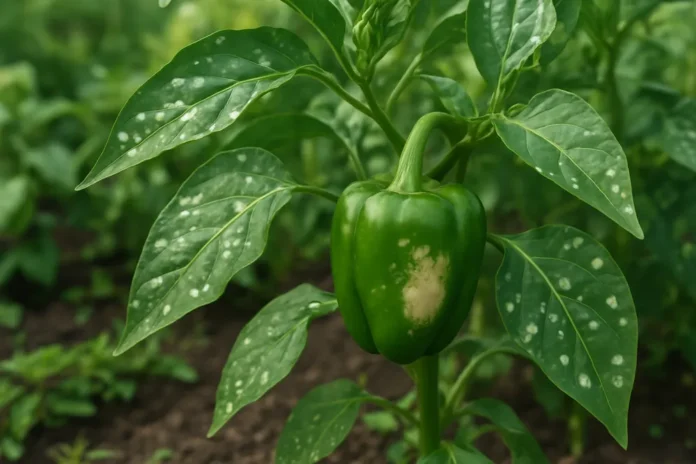
Peppers usually get white spots from sunscald, pest feeding, fungal growth, edema, or harmless mineral residue. The exact cause depends on whether the spots are on leaves, stems, or fruit and whether they look bleached, dusty, corky, or stippled.
White spots on pepper plants can mean several very different things, and that is what makes this symptom tricky. Sometimes the problem is minor, like dried water residue or a little edema after uneven watering. Other times it points to pests, disease, or sun damage on developing fruit.
When I diagnose pepper white spots, I start with two questions: where are the spots showing up, and what do they actually look like? A bright bleached patch on fruit suggests a different issue than tiny white speckles on leaves or a powdery coating that wipes off on your fingers. Once you match the pattern, the fix gets much easier.
The good news is that most cases of white spots on pepper plants are manageable if you catch them early. Below, I will walk through the most common causes, how to tell them apart, and what I would do first for each one.
Start by Identifying Where the White Spots Appear
Before treating anything, look at the whole plant instead of one damaged leaf or one odd pepper. White spotting on fruit often points to sunscald or surface injury, while white speckling on leaves more often comes from mites, thrips, edema, residue, or fungal issues. Stems can also show pale scarring from insect feeding or environmental stress.
- If the spots are mostly on fruit, think first about sunscald, bleaching, or physical injury.
- If the spots are on leaf surfaces, think about mites, thrips, powdery mildew, residue, or edema.
- If the spots are tiny and widespread with a dull, stippled look, insect feeding is more likely than nutrient deficiency.
- If the white area looks fuzzy or powdery, a fungal issue is more likely than sun damage.
- If the marks are corky or blister-like, the plant may be dealing with moisture imbalance rather than infection.
When I am unsure, I compare old leaves, new leaves, and fruit at the same time. A true systemic issue usually shows a pattern across the plant, while splash residue, sunburn, or accidental spray damage tends to be patchy and uneven.
Sunscald Is One of the Most Common Causes on Pepper Fruit
If your peppers themselves have large pale white or tan patches, especially on the side facing direct sun, sunscald is a strong possibility. This happens when fruit is suddenly exposed to intense light and heat, often after leaf drop, aggressive pruning, or a run of very hot weather. The damaged area may start as a light, bleached patch and later turn papery, thin, or slightly sunken.
Sunscald is especially common on peppers that were growing under a healthy leaf canopy and then lose cover because of stress, disease, or pruning. It can also happen after moving container peppers into stronger light too quickly. The fruit tissue is basically getting burned, and the pale area can later invite rot if weather stays humid.
- White or pale patch is usually broad, not tiny and speckled
- Damage is often on the most exposed side of the pepper
- Nearby leaves may look normal, or the plant may have lost some foliage recently
- Affected fruit may become thin-skinned, leathery, or soft over time
To reduce further damage, avoid heavy pruning during hot spells, keep watering steady, and use shade cloth during extreme heat if your peppers are in a very exposed site. Sun-damaged fruit can sometimes still be used if the tissue is firm and the damaged area is cut away, but badly affected peppers usually decline.
Spider Mites and Thrips Can Leave Tiny White Speckles on Leaves
Very small white dots or silvery speckling on pepper leaves often comes from sap-sucking pests. Spider mites and thrips are two of the most common culprits. They pierce plant tissue and feed, leaving behind pale stippling that can make leaves look dusty, faded, or peppered with tiny light marks.
Spider mites are especially common in hot, dry conditions. You may also see fine webbing, usually on leaf undersides or between stems and leaves. Thrips tend to leave a silvery or scratched-looking surface and can distort new growth. Both pests are easy to miss until damage becomes obvious.
How to Tell the Difference
- Spider mites: fine stippling, bronzing over time, possible webbing, worst in heat and dryness
- Thrips: silvery streaks or flecks, scarred tissue, possible twisted new growth, tiny slender insects may be visible
- Neither problem usually makes spots look fuzzy or powdery
Check the undersides of leaves with a hand lens if you have one. You can also tap a leaf over white paper to see if tiny moving pests fall off. Early infestations are much easier to control than heavy ones.
If I suspect mites or thrips, I rinse the plant first before reaching for stronger products. A firm spray under the leaves often reveals how widespread the problem is and buys time while I decide whether insecticidal soap, horticultural oil, or another control makes the most sense.
For treatment, remove the worst damaged leaves if the plant has plenty of healthy growth, improve airflow, and use labeled controls such as insecticidal soap, horticultural oil, or neem-based products if appropriate for your setup. Always spray in cooler parts of the day and follow label instructions carefully, since peppers can be sensitive when stressed.
Powdery Mildew Can Look Like White Spots That Spread Into Patches
Powdery mildew starts as small whitish spots or dusty patches on leaves and sometimes stems. As it develops, those spots can expand and merge into a more obvious powdery coating. Unlike insect stippling, this growth usually sits on the surface and may rub off lightly on your fingers.
This fungus is more likely when plants have poor airflow, crowded growth, and humid conditions with dry leaf surfaces. It can weaken the plant over time by reducing photosynthesis and causing leaves to yellow, curl, or drop.
- Spots look dusty, flour-like, or fuzzy rather than smooth and bleached
- Patches may enlarge and join together
- Older leaves are often affected first, but the disease can spread
- Leaves may eventually yellow or become dry and brittle
If powdery mildew is the issue, trim off heavily infected leaves, space plants well, water at the base rather than overhead, and improve air movement. Garden sulfur, potassium bicarbonate, or other labeled fungicides can help, especially when used early. Do not combine products casually, and avoid spraying stressed plants in harsh heat.
Edema Causes Corky White Blisters After Uneven Watering
Edema is not a disease or pest. It is a physiological problem that happens when roots take up water faster than leaves can release it, causing cells to swell and burst. On peppers, this can show up as tiny white, tan, or corky bumps, usually on the undersides of leaves but sometimes visible from above as pale spots.
This is common in containers, greenhouses, or periods of cloudy, humid weather followed by heavy watering. The damaged spots may harden into rough, scabby patches. Gardeners sometimes mistake edema for eggs, fungus, or pest injury.
Clues That Point to Edema
- Spots are raised, blistered, or corky rather than flat
- Damage often appears after overwatering or inconsistent watering
- There is no webbing, insect movement, or powdery coating
- Container peppers are affected more often than in-ground plants
You cannot reverse damaged tissue, but you can stop new edema by watering more consistently, improving drainage, increasing light, and spacing plants so foliage dries and transpires normally. Let the top layer of potting mix dry slightly before watering again, rather than keeping roots constantly saturated.
Mineral Residue, Spray Residue, and Hard Water Can Mimic a Disease
Sometimes white spots are not damage at all. If you see chalky dots or a thin white film on leaves, especially after overhead watering or foliar sprays, the culprit may be mineral residue. Hard water, dissolved salts, insecticidal soap residue, and some foliar fertilizers can all dry into pale marks.
This kind of spotting is usually superficial. It tends to appear where droplets dried, and it may wipe off with a damp cloth or become less noticeable after rain. The leaf tissue underneath usually stays green and healthy.
- Marks sit on the surface rather than inside the leaf tissue
- Pattern often matches droplet splashes or spray coverage
- New growth looks normal
- Leaves are not curling, bronzing, or becoming papery
If residue is the issue, switch to base watering when possible, avoid spraying in full sun, and use the correct concentration for any foliar product. In severe hard water areas, even a simple rinse with softer water for occasional foliar cleanup can help reduce buildup.
Bacterial and Fungal Leaf Spot Can Begin with Pale Lesions
Not every white spot is harmless. Some bacterial and fungal leaf spot diseases begin as small pale lesions that later turn brown, tan, or dark with defined edges. On peppers, bacterial leaf spot is one of the better-known problems, especially in warm, wet weather.
Early lesions may look water-soaked or light-colored before they darken. As the disease progresses, spots can become angular because the veins limit their spread. Severe infections can lead to yellowing, leaf drop, and blemished fruit.
Signs It May Be a True Leaf Spot Disease
- Spots are embedded in the leaf tissue, not dusty on top
- Lesions enlarge, darken, or develop borders over time
- Wet weather or overhead irrigation makes the problem worse
- Multiple plants may show similar spotting if the disease is spreading
Remove badly infected leaves, avoid handling plants when wet, sanitize tools, and water at soil level. Copper-based products are sometimes used for suppression, but they work best early and are not a cure for badly infected plants. Crop rotation and clean transplants matter a lot for preventing repeat problems.
I get more cautious when spots have a defined shape and keep changing color over several days. Pest damage usually stays as pale feeding scars, but disease lesions tend to evolve, enlarge, and create a more organized pattern.
Herbicide Drift and Spray Injury Can Bleach Pepper Leaves
Peppers are sensitive plants, and accidental exposure to herbicides or strong sprays can leave white or pale blotches on leaves. This can happen if weed killer drifts in from nearby use, if a homemade foliar mix is too strong, or if oils and soaps are applied in hot sun.
Spray injury often looks sudden. Damage may show up mostly on the side of the plant that faced the spray source, or on upper leaves that received the heaviest coating. New growth may emerge distorted if the exposure was significant.
- Symptoms appear quickly after spraying or nearby weed control
- Spots or blotches may be irregular and sharply bleached
- Damage may be heavier on exposed outer leaves
- There may be leaf curl, twisting, or stalled growth along with pale spotting
If you suspect spray injury, stop applying anything new until you see how the plant responds. Keep care steady, protect the plant from additional stress, and watch new growth. If only older leaves are marked and new growth looks healthy, recovery is often possible.
How to Narrow Down the Cause and Choose the Right Fix
Because several problems can create white spots, the best approach is to look at texture, location, and progression. You do not need a laboratory diagnosis for every backyard pepper plant, but you do need to avoid treating the wrong problem. Spraying fungicide on hard water residue or blaming fertilizer when mites are feeding will only waste time.
Ask These Simple Diagnostic Questions
- Are the spots on leaves, fruit, or both?
- Do they look flat, powdery, raised, corky, or bleached?
- Can the white material be wiped off?
- Are there pests, webbing, or distorted new leaves?
- Did the problem show up after intense sun, heavy watering, or spraying?
- Are the spots getting larger or changing color over time?
Once you have those answers, match them to the likely cause. Bleached fruit points toward sunscald. Tiny stippling and webbing point toward mites. Powdery growth suggests mildew. Corky blister-like bumps often mean edema. Surface chalkiness often means residue. Expanding lesions with darkening edges suggest disease.
Change one variable at a time whenever possible. If you spray, prune, fertilize, and change watering all at once, you lose the chance to learn what actually solved the problem and you increase the risk of stressing peppers even more.
How to Prevent White Spots on Peppers in the Future
Prevention comes down to reducing stress and improving observation. Healthy peppers can still get pests or disease, but they are much better able to tolerate minor damage and push fresh growth. Most recurring white spot problems come from a mix of plant stress, weather shifts, and delayed detection.
- Keep watering even and avoid repeated drought-to-soak cycles
- Water at the base to reduce leaf wetness and residue spotting
- Give plants enough spacing for airflow
- Inspect leaf undersides weekly for mites and thrips
- Avoid harsh midday spraying with soaps, oils, or foliar products
- Do not overprune pepper plants during hot weather
- Use clean transplants and sanitize tools if disease has been a problem
- Protect plants during extreme heat with temporary shade if needed
A few minutes of routine checking can save a crop. I like to look at the newest leaves, the undersides of middle leaves, and the most exposed fruit whenever I water. That quick habit catches most white spot problems before they spread.
FAQ
Can White Spots on Pepper Leaves Go Away on Their Own?
Existing spots usually stay, because damaged tissue does not turn green again. What matters is whether new growth comes in clean after you correct the cause.
Are White Spots on Peppers Safe to Eat?
It depends on the cause. Sunscalded fruit is often usable if the flesh is still firm and you trim off the damaged area, but fruit with rot, deep lesions, or soft breakdown should be discarded.
Do Nutrient Deficiencies Cause White Spots on Pepper Plants?
True white spots are less commonly caused by nutrient deficiency than by pests, sunscald, edema, or disease. Nutrient problems usually show as yellowing, interveinal chlorosis, purpling, or weak growth rather than distinct white speckles.
How Do I Know if the White Spots Are Spider Mites?
Spider mite damage usually looks like very fine pale stippling on leaves, often with bronzing later. Check leaf undersides for tiny moving dots and fine webbing, especially during hot, dry weather.
Should I Remove Leaves with White Spots?
Remove leaves if they are heavily diseased, badly infested, or mostly damaged, but avoid stripping the plant aggressively. Peppers need enough foliage to shade fruit and keep growing well.
Can Overwatering Cause White Spots on Peppers?
Yes. Overwatering or uneven watering can lead to edema, which creates pale blister-like or corky spots on leaves. Constantly soggy roots can also make plants more vulnerable to other problems.
Why Do the Spots Look White at First and Then Turn Brown?
That usually happens when tissue is first bleached or injured and then dies back. Sunscald, spray injury, and some leaf spot diseases often begin pale and darken as the damage ages.
Need help choosing the right treatment fast? Read our pepper pest and disease control guide to compare the best sprays, soaps, and organic fixes before the damage spreads.
