

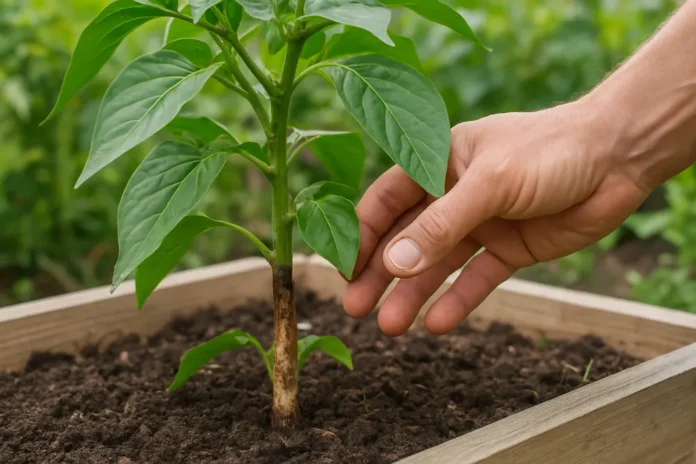
Pepper stems often turn brown because they are naturally maturing and becoming tougher, especially near the base. Brown stems can also point to stress, rot, sun damage, pests, or disease when the discoloration is sudden, spreading, soft, or paired with wilting.
Seeing pepper stems turning brown can be alarming, especially if the plant looked healthy just a few days earlier. The good news is that brown stems do not always mean your peppers are in trouble. In many cases, peppers simply develop woody, tan, or brown lower stems as they mature and support more leaves, flowers, and fruit.
What matters is how the browning looks and what else the plant is doing. A dry, firm, light-brown stem near the base is very different from a dark, sunken, mushy stem that spreads upward or makes the plant wilt. When I troubleshoot peppers, I look at the color, texture, location, and speed of change before I decide whether it is normal aging or a problem that needs quick action.
Below, I will walk through the most common reasons pepper stems turn brown, how to tell harmless corking from more serious issues, and what you can do to help your plant recover.
When Brown Pepper Stems Are Completely Normal
One of the most common and least serious explanations is normal stem aging. As pepper plants grow larger, the lower stem often becomes firmer, rougher, and more brown or tan than the green upper growth. This process is sometimes called corking or woodiness, and it helps the plant support branches and fruit.
Normal browning usually starts near the soil line or on the oldest part of the main stem. The tissue stays dry and solid, not wet or collapsing. Leaves still look healthy, new growth keeps coming, and the plant does not suddenly wilt.
- The brown area is mostly on the lower stem
- The stem feels firm, dry, and slightly rough
- Upper growth remains green and vigorous
- Flowers and fruit continue developing normally
- The discoloration appeared gradually, not overnight
If I can scrape the surface lightly with a fingernail and find healthy tissue underneath, I usually worry less. On mature peppers, a brown outer layer near the base is often just the plant toughening up rather than failing.
Signs the Browning Is a Real Problem
Brown stems deserve closer attention when the color shift comes with wilting, blackening, soft spots, cankers, or leaf drop. Trouble is more likely if the brown area looks water-soaked, sharply sunken, cracked in a damaging way, or ringed around the stem like a girdle.
Fast change is another warning sign. A pepper that was fully green and upright and then suddenly develops dark brown stem sections in a short window is not just aging normally. In that case, think about root problems, fungal disease, bacterial issues, insect feeding, or severe environmental stress.
- Dark brown or nearly black discoloration
- Soft, mushy, or wet stem tissue
- Sunken lesions or cracked cankers
- Whole branches wilting above the brown area
- Stem narrowing at the soil line
- Leaf yellowing, collapse, or sudden fruit drop
Overwatering, Poor Drainage, and Stem Rot
Too much water is one of the most common reasons pepper stems develop unhealthy brown areas. Peppers like evenly moist soil, but they dislike sitting in soggy ground. When roots stay wet for too long, oxygen drops, roots weaken, and fungi or water molds can attack the base of the stem.
This kind of problem often starts at the soil line. The lower stem may turn dark brown, look pinched, or feel soft. Leaves can wilt even though the soil is wet, which confuses many gardeners into watering even more. In containers, this is especially common when pots drain poorly or saucers stay full after rain.
What Overwatering Damage Looks Like
- Brown or black discoloration right where the stem meets the soil
- Stem tissue that feels soft instead of woody
- Wilting during cool parts of the day, not just afternoon heat
- Yellowing lower leaves
- A sour smell from saturated potting mix or garden soil
If this sounds like your plant, improve drainage fast. Let the top layer of soil dry slightly before watering again, empty standing water from trays, and make sure containers have enough drainage holes. In garden beds, loosen compacted soil in future plantings and consider raised beds if your site stays wet.
I judge pepper watering by the root zone, not the leaf droop alone. Peppers often sag a bit in hot afternoons, but if the soil is still damp a couple inches down, adding more water can turn mild stress into stem or root rot.
Fungal and Bacterial Diseases That Darken Stems
Several diseases can cause brown pepper stems, especially in warm, humid, or crowded conditions. The exact culprit varies by region, but common possibilities include damping off in seedlings, Phytophthora blight, southern blight, stem cankers, and bacterial infections. These problems are more serious than normal corking because they spread through living tissue and can kill part or all of the plant.
Seedlings with stem disease often collapse at the base. Larger plants may show dark lesions, rotting at the crown, white fungal growth near the soil line, or whole branches dying back from a damaged section. Infections often worsen after rainy weather, overhead irrigation, splashing soil, or long periods of leaf wetness.
Disease Clues to Watch For
- The brown area spreads noticeably over several days
- Lesions look water-soaked, dark, or sunken
- Wilting does not improve after watering
- White mold, fuzzy growth, or threadlike fungal material appears near the base
- Multiple pepper plants in the same bed show similar symptoms
Remove badly infected plants or stems if the disease appears advanced, and do not compost heavily diseased material unless you manage hot compost properly. Water at the base rather than overhead, improve airflow, and avoid working around plants when foliage is wet. If stem disease has been recurring in the same spot, rotate peppers and other nightshades to a different bed for a few years if possible.
Sunscald and Heat Stress on Pepper Stems
Pepper plants love warmth, but intense sun and sudden heat can still injure stems, especially on young transplants that were not hardened off well. Sunscald on stems can show up as bleached, tan, bronzed, or brown patches on the side facing the strongest sun. The tissue may later dry out and become papery or corky.
This is more likely after moving indoor-started peppers outside too quickly, pruning heavily and exposing shaded stems, or hitting a stretch of extreme summer heat. The damage can look scary, but mild cases are often cosmetic if the plant keeps growing.
- Browning appears on the sun-facing side of the stem
- The patch looks dry rather than wet
- Leaves may also show scorch or bleached areas
- The problem started after transplanting or a heat wave
Help the plant by keeping moisture consistent, mulching to cool the root zone, and giving temporary afternoon shade during extreme heat. In future, harden off transplants gradually over a week or more so stems and leaves can adapt.
Pest Damage That Causes Brown or Scarred Stems
Insects and other pests can also leave stems brown, corky, scarred, or weakened. Aphids, stink bugs, flea beetles, and mites usually do more obvious damage to leaves, but heavy feeding can stress the whole plant and contribute to discoloration. Borers and stem-chewing pests are less common but can be more destructive when they happen.
Look closely for tiny punctures, scabby areas, chewing marks, frass, or holes. Sometimes the stem turns brown because pests opened the door for disease, not because the feeding alone caused all the damage. A magnifying look often tells you more than a quick glance from standing height.
How to Tell if Pests Are Involved
- Visible insects clustered on stems, leaf undersides, or growing tips
- Sticky residue or sooty mold from sap-feeding pests
- Small scars, punctures, or rough corky patches
- Distorted new growth along with stem discoloration
- Holes or tunneling signs in severe cases
Wash off minor aphid infestations with water, prune out badly damaged sections, and use insecticidal soap only as labeled if needed. Encouraging beneficial insects and avoiding broad-spectrum sprays can help keep peppers balanced without disrupting pollinators and predators.
Nutrient Issues and Environmental Stress
Nutrient problems usually do not cause brown stems by themselves, but they can weaken peppers enough that stems discolor more easily under stress. Low calcium, low potassium, or uneven watering can affect cell strength and overall vigor. Cold nights, wind, transplant shock, and abrupt swings between dry and wet soil also contribute to stem stress.
When nutrition is part of the issue, you usually see broader symptoms too. Leaves may pale, edges may scorch, growth may stall, and fruit production may be poor. Peppers want fertile but not overloaded soil, steady watering, and warm temperatures to stay resilient.
- Slow growth and pale foliage
- Leaf edge browning along with stem discoloration
- Poor flowering or weak fruit set
- Stress after sudden cold snaps or windy weather
- Trouble soon after transplanting
When several mild stresses stack up, peppers often show vague symptoms that do not fit one perfect diagnosis. In my garden, a brown stem plus stalled growth often traces back to a combination of cool nights, uneven watering, and roots that never really settled in.
How to Diagnose Brown Stems on Pepper Plants
A simple inspection routine usually narrows the cause quickly. Start at the bottom of the plant, because the base of the stem often reveals whether you are dealing with normal corking, rot, or mechanical damage. Then work upward and outward to compare older growth, newer growth, leaves, flowers, and fruit.
Questions to Ask as You Inspect
- Is the brown area dry and firm or soft and wet?
- Is it near the base only or spreading onto multiple branches?
- Did it appear gradually over time or very suddenly?
- Are leaves healthy, yellowing, spotted, or wilting?
- Has the soil been staying soggy or drying out too hard between waterings?
- Have you had heavy rain, high humidity, or extreme heat recently?
- Do you see insects, holes, mold, or lesions?
If the stem is firm and the plant is otherwise thriving, it is probably normal maturation. If the stem is dark, soft, constricted, or paired with collapse, act quickly to reduce moisture stress and remove diseased tissue or the whole plant if needed.
What to Do Next Based on the Cause
Once you have a likely diagnosis, the fix becomes much more straightforward. Most pepper stem problems improve when you correct water management, reduce disease pressure, and avoid extra stress while the plant recovers.
If the Browning Is Normal Corking
- Do nothing beyond regular care
- Support heavy branches if fruit load is high
- Keep watering and feeding steady
If the Stem Is Rotting From Excess Moisture
- Cut back watering until the soil is only evenly moist
- Improve drainage or repot into a better-draining mix
- Remove mulch temporarily if it is trapping too much moisture against the stem
- Discard plants with severe crown rot if collapse has started
If Disease Appears Likely
- Prune out lightly affected parts with clean tools when practical
- Remove and dispose of badly infected plants
- Water at soil level and increase spacing or airflow
- Avoid replanting peppers in the same infected spot right away
If Heat or Sun Caused the Damage
- Keep soil moisture even, not soggy
- Use mulch to moderate root temperature
- Add temporary shade cloth during extreme afternoon heat
- Harden off future transplants more gradually
If Pests Are Involved
- Identify the pest before spraying
- Use the least disruptive control that fits the problem
- Remove heavily infested growth if manageable
- Monitor every few days so damage does not snowball
How to Prevent Brown Stem Problems in Future Pepper Crops
Prevention starts with growing conditions that keep pepper roots and stems steady instead of stressed. Healthy peppers tolerate a lot, but they are much less forgiving when wet soil, crowding, and extreme weather all hit at once.
- Plant in well-draining soil or quality container mix
- Water deeply but let the top layer dry slightly between waterings
- Keep mulch near the plant, but not piled against the stem
- Space plants for airflow and faster drying after rain
- Rotate planting areas when disease has been a problem
- Harden off indoor seedlings before transplanting
- Inspect stems and leaf undersides weekly so issues are caught early
I have found that peppers do best with consistency more than perfection. Steady moisture, warm soil, decent airflow, and quick response after storms prevent most serious stem issues before they become hard to reverse.
FAQ
Are Brown Stems on Pepper Plants Always Bad?
No. Pepper stems often turn tan or brown naturally as the plant matures, especially near the base. If the tissue is firm and the plant is otherwise healthy, it is usually normal corking rather than disease.
How Do I Tell Normal Corking From Stem Rot?
Normal corking is dry, firm, and gradual. Stem rot is usually darker, softer, and often starts at the soil line with wilting, yellowing, or collapse above the damaged area.
Can Overwatering Make Pepper Stems Brown?
Yes. Overwatering and poor drainage can lead to root stress and crown rot, which may turn the lower stem dark brown or black and make the plant wilt even in wet soil.
Should I Cut Off the Brown Part of a Pepper Stem?
Only if the area is clearly diseased and limited to a branch you can remove cleanly. Do not cut into the main stem just because it looks woody or corked, since normal aging does not need pruning.
Will a Pepper Plant Recover From Brown Stem Damage?
It can, depending on the cause. Plants with mild sunscald, minor pest damage, or early stress often recover well, but severe crown rot or advanced stem disease can kill the plant.
Can Sunburn Make Pepper Stems Turn Brown?
Yes. Strong sun and heat can bleach or brown exposed stems, especially on young transplants that were moved outdoors too fast. The damaged area is usually dry rather than mushy.
Why Are My Pepper Stems Brown but the Leaves Still Look Fine?
That pattern often points to normal stem maturation, especially if the browning is near the base and feels firm. It can also be early stress, so keep watching for changes in wilting, softness, or spreading lesions.
Want healthier peppers and faster diagnosis when problems show up? Read our full pepper care and treatment guides to choose the right watering routine, soil mix, and disease control before plants decline further.
