

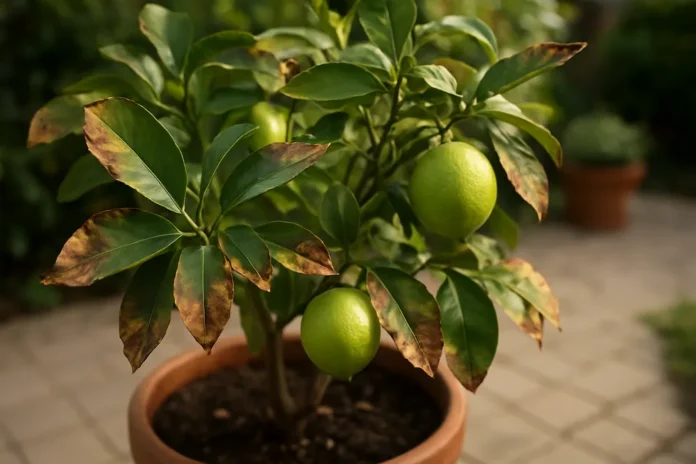
Lemon tree leaves usually turn brown because of watering stress, salt buildup, weather injury, pest damage, or root problems. Browning can show up as crispy tips, dry edges, brown spots, or whole leaves dying back.
When a lemon tree starts showing brown leaves, the plant is telling you something has gone off balance. In my experience, browning is less about one universal disease and more about stress showing up through the leaves. The exact pattern matters a lot, because crispy tips suggest a different problem than spotted leaves or whole branches going dull and brown.
A brown leaf symptom can come from simple issues like irregular watering, but it can also point to fertilizer salt buildup, wind burn, cold injury, pests, or roots that are struggling in a pot that stays too wet. Lemon trees are productive but a bit fussy, especially in containers, so small care problems often show up quickly on the foliage.
The good news is that many brown-leaf problems are fixable if you catch them early. Start by looking at where the browning begins, how fast it spreads, and whether new growth still looks healthy. That usually gives you the best clue about what your tree needs next.
What the Browning Pattern Is Telling You
Before you assume disease, look closely at the shape and location of the damage. Lemon leaves can turn brown in several different ways, and each pattern points toward a different cause. A dry brown tip is often different from a round brown spot, and a leaf with crisp edges tells a different story than one that turns yellow first and then browns.
- Brown, crispy tips often suggest underwatering, salt buildup, or low humidity stress.
- Brown edges can point to heat, wind exposure, inconsistent moisture, or excess fertilizer salts.
- Brown spots in the middle of leaves may come from fungal or bacterial issues, sunscald, or pest feeding damage.
- Whole leaves turning yellow and then brown often suggest root stress, overwatering, or natural aging of older leaves.
- New leaves browning or shriveling can mean cold injury, severe root trouble, or a major pest problem.
When I diagnose citrus, I compare old leaves and new leaves first. If only the oldest leaves are browning, I usually suspect watering or salt issues, but if tender new growth is burning too, I look harder at roots, cold damage, or a recent fertilizer mistake.
Watering Problems Are the Most Common Cause
Underwatering and Drought Stress
Lemon trees do not like to stay bone dry for long, especially in containers during hot weather. If the soil gets too dry, leaves often curl slightly, then develop crisp brown tips or margins. The pot may also feel very light, and fruit can drop early if the stress is severe.
This is especially common with potted lemon trees on patios, where warm wind and reflected heat from walls or concrete dry the soil faster than expected. A tree can go from fine to stressed in just a day or two during summer.
Overwatering and Soggy Roots
Too much water can also cause brown leaves, though the pattern is usually slower and messier. Roots need oxygen, and when soil stays saturated, they begin to weaken or rot. Leaves may first turn pale or yellow, then develop brown patches, and eventually drop.
Overwatering is not just about how often you irrigate. It also happens when a pot has poor drainage, a saucer stays full, or heavy soil holds too much moisture around the roots. In garden beds, it can happen where soil drains badly or where irrigation runs too often.
- Underwatered trees often have dry, brittle leaves and soil that pulls away from the pot edge.
- Overwatered trees often have limp, blotchy, or yellowing leaves and soil that stays wet for days.
- Both problems can cause leaf drop, so checking soil moisture is more useful than judging by leaves alone.
I like to water citrus deeply and then let the top couple inches of soil dry before watering again. Frequent light sips create weak surface roots and make moisture swings worse, especially in containers.
Salt Buildup and Fertilizer Burn Can Scorch Leaves
Lemon trees are sensitive to excess salts, whether they come from synthetic fertilizer, manure-heavy potting mixes, or mineral-rich tap water. When salts build up in the root zone, the tree struggles to take up water properly, and leaves often develop brown tips and edges that look dry and burned.
This problem is especially common in containers because salts have nowhere to go unless you flush the soil well. If you fertilized recently and browning showed up soon after, fertilizer burn climbs higher on the suspect list.
- Brown tips appearing shortly after feeding often suggest overfertilizing.
- A white crust on the soil surface or pot rim points to mineral or salt accumulation.
- Leaf edges may brown while the center of the leaf stays green at first.
- Container citrus is more vulnerable than in-ground trees.
If your water is naturally hard, the issue can build gradually even when fertilizer use is moderate. Over time, the root zone becomes less friendly to citrus, and the foliage starts to show stress.
Sun, Heat, Wind, and Cold Can All Damage Lemon Leaves
Heat and Sunscald
Lemon trees love sun, but leaves can still burn under intense conditions, especially if a plant was moved suddenly from shade into full afternoon sun. Sunscald often shows as tan to brown patches on the most exposed leaves. The damage can look papery rather than spotted.
Dry Wind and Low Humidity
Hot, dry wind pulls moisture from citrus leaves quickly. In exposed patios or open landscapes, this often shows up as browning along edges and tips, even when the soil is reasonably moist. Indoor lemon trees placed near heating vents can show a similar response.
Cold Injury
Lemon trees are less cold-tolerant than some other citrus. A chilly night, frost, or a sudden cold snap can injure leaves, causing them to darken, dry out, and turn brown over the following days. New growth is usually hit first, but older leaves can also be damaged if temperatures drop low enough.
Cold-damaged leaves do not always fall immediately. Sometimes they hang on for a while, making it look like the problem is spreading, when the real injury happened all at once during the weather event.
Pests That Can Lead to Brown Leaves
Several sap-feeding pests can weaken lemon trees and cause leaves to discolor, dry out, or develop brown patches. The pests themselves are often small, so the leaf damage is what gets noticed first.
- Spider mites cause stippling, dull foliage, and eventual bronzing or browning, especially in hot, dry conditions.
- Scale insects suck sap and stress the tree, which can lead to yellowing, brown patches, sticky honeydew, and leaf drop.
- Aphids distort tender new growth and can weaken leaves enough that damaged areas dry and brown later.
- Leaf miners tunnel through young citrus leaves, causing curling and scarring that can later look brown and crispy.
Pest damage often appears unevenly. One branch may look rough while another still looks healthy. Check the undersides of leaves, along stems, and around new growth, where many citrus pests prefer to feed.
Spider mites are easy to miss until the tree already looks tired. If I see a dusty, dull cast on the leaves and very fine webbing near the midrib or petiole, I treat mites as a top suspect even before I spot many individuals.
Disease and Root Problems to Watch For
Not every brown leaf means disease, but some pathogens can absolutely be involved. Leaf spots from fungal or bacterial issues may start as small lesions that enlarge and darken. In humid conditions, spotting can spread more quickly, especially if foliage stays wet for long periods.
Root rot is another major concern, particularly in containers or poorly drained soil. When roots decline, the canopy often shows generalized stress: yellowing, brown patches, leaf drop, weak new growth, and a lack of vigor overall. A sour smell from the potting mix or black, mushy roots are strong warning signs.
- Spotted lesions with yellow halos can suggest a leaf disease rather than simple watering stress.
- Repeated dieback despite careful watering often points below ground to root trouble.
- Poor drainage is one of the biggest risk factors for serious citrus root problems.
- Crowded canopies and overhead watering can make leaf diseases worse.
Container Lemon Trees Have a Few Extra Challenges
Most brown-leaf complaints I hear about lemon trees involve plants in pots. Container citrus is convenient, but it is much more dependent on you for moisture, nutrition, root space, and temperature protection. The same tree can swing from too dry to too wet in a short span, and both extremes can produce browning.
Root crowding can also contribute. A badly rootbound lemon tree dries out quickly, takes up nutrients unevenly, and may show brown tips or general leaf stress even when you are trying to water properly. Old potting mix that has compacted over time makes the problem worse by draining unevenly.
- Small pots dry out faster and overheat more easily.
- Decorative cachepots and saucers can trap water around roots.
- Old potting soil may repel water when dry, then stay soggy once finally soaked.
- Roots circling heavily inside the pot can limit steady growth and leaf health.
How to Fix Brown Leaves on a Lemon Tree
The fix depends on the cause, but most healthy lemon trees can recover well once the underlying stress is corrected. Brown tissue will not turn green again, so judge recovery by the condition of new growth rather than by old damaged leaves.
- Check the soil before watering. Water deeply only when the root zone has started to dry, not on a rigid calendar.
- Make sure the pot or planting area drains well. Empty saucers and avoid soil that stays waterlogged.
- If salt buildup is likely, flush the container thoroughly with clean water to wash excess salts through the drainage holes.
- Pause fertilizer if browning followed feeding. Resume later at a lighter rate with a citrus-specific product.
- Protect the tree from harsh afternoon exposure, strong drying wind, or unexpected cold snaps.
- Inspect leaves closely for mites, scale, aphids, and leaf miner damage.
- Prune off only fully dead leaves or twigs. Leave slightly damaged foliage in place until healthy new growth is established.
- Repot container trees if roots are crowded, the mix has broken down, or drainage is poor.
If disease is suspected, improve airflow, avoid wetting the foliage late in the day, and remove badly affected leaves that have fallen around the plant. If root rot seems likely, act quickly, because root issues are harder to reverse than simple watering mistakes.
Try not to change everything at once. If you repot, fertilize heavily, prune hard, and move the tree into stronger sun all in the same week, it becomes much harder to tell what helped and what added more stress.
When Brown Leaves Are Normal and when to Worry
A few older lemon leaves turning yellow and then brown before dropping is not automatically a crisis. Evergreen citrus still sheds some older foliage over time, especially after a seasonal shift, a move indoors, or a flush of new growth. If the rest of the tree looks strong, that kind of minor turnover is usually normal.
It becomes more serious when many leaves brown quickly, when new growth is affected, when branches begin dying back, or when the soil stays wet and the tree looks limp. Sudden widespread browning usually means the roots or environment have been stressed enough that the whole plant is reacting.
- Less concerning: a few older interior leaves browning and dropping over time.
- More concerning: rapid browning across the canopy, soft stems, or continued decline after watering adjustments.
- Urgent: foul-smelling soil, black roots, severe pest infestation, or branch dieback.
How to Prevent Brown Leaves in the Future
Prevention comes down to consistency. Lemon trees do best when moisture, feeding, light, and temperature stay reasonably steady. Big swings are what usually trigger leaf stress.
- Use a fast-draining citrus or container mix for potted trees.
- Water thoroughly, then wait until the soil begins to dry before watering again.
- Feed during active growth with a balanced citrus fertilizer, but avoid overdoing it.
- Flush containers occasionally if you use hard water or fertilize regularly.
- Acclimate the tree gradually when moving it between indoors and outdoors.
- Give the plant good air circulation and monitor for pests early.
- Protect lemon trees from frost and from intense reflected heat.
A simple habit that helps a lot is paying attention to new leaves. Healthy new growth tells you the tree is recovering, even if some older leaves still look rough. Once you see fresh green leaves coming in cleanly, you know your care adjustments are moving in the right direction.
FAQ
Should I Cut Off Brown Lemon Tree Leaves?
Remove leaves that are fully brown, dry, or clearly dead. If a leaf is only partly damaged, you can leave it for now so the tree keeps using the remaining green tissue while it recovers.
Can Overwatering Really Make Lemon Leaves Turn Brown?
Yes. Overwatering can suffocate roots, which leads to yellowing, brown patches, and leaf drop. The browning may look less crisp than drought damage and is often paired with persistently wet soil.
Why Are Only the Tips of My Lemon Leaves Brown?
Brown tips often point to drought stress, fertilizer burn, or salt buildup from hard water. It is a very common pattern in container lemon trees.
Will Brown Lemon Leaves Turn Green Again?
No. Brown tissue is dead and will not recover. The goal is to correct the cause so future growth comes in healthy and green.
Can Too Much Sun Burn Lemon Tree Leaves?
Yes, especially if the tree was recently moved into stronger light or is exposed to intense reflected heat. Sunburned leaves often develop tan or brown papery patches on the most exposed side.
How Often Should I Water a Potted Lemon Tree with Brown Leaves?
Water based on soil moisture rather than a fixed schedule. In warm weather, that may be several times a week, while in cooler conditions it may be much less often.
Do Pests Cause Brown Spots on Lemon Leaves?
They can. Spider mites, scale, aphids, and leaf miners all stress citrus foliage and may cause spotting, bronzing, curling, or brown patches as damage progresses.
Is It Normal for a Lemon Tree to Lose Some Older Leaves?
Yes. A small amount of older leaf drop is normal, especially after seasonal change or new growth. It is more concerning when many leaves brown at once or young leaves are affected too.
Want the right fix faster? Read our lemon tree care and citrus treatment guides to choose the best fertilizer, soil mix, pest control, and recovery steps for stressed trees.
