

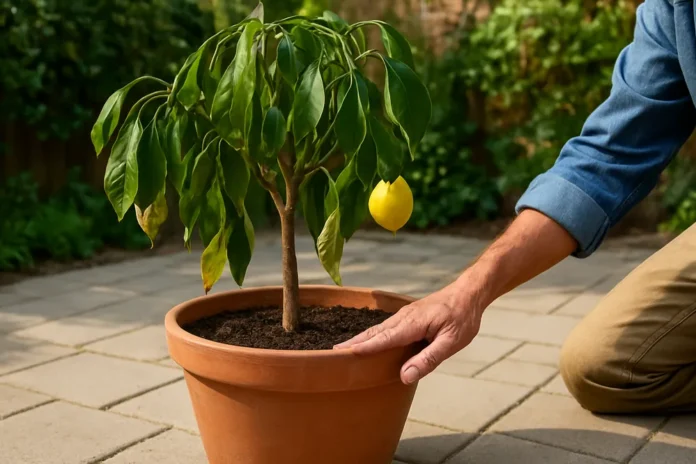
A lemon tree usually wilts because its roots are under stress, most often from watering problems, heat, or root damage. Pests, disease, cold, and a pot that is too tight can also cause drooping leaves and limp growth.
A lemon tree wilting is one of those symptoms that can look dramatic fast. Leaves droop, soft new growth hangs limp, and the whole tree can seem thirsty even when the soil is wet. That is why wilting makes gardeners second-guess themselves. The problem is not always lack of water, and adding more can sometimes make things worse.
When I troubleshoot a lemon tree that is wilting, I start with the roots and then work outward. Lemon trees react quickly to stress, especially in containers, hot patios, and spots with inconsistent watering. The good news is that the wilting pattern usually gives useful clues once you know what to look for.
What Wilting Usually Means on a Lemon Tree
Wilting means the leaves are losing firmness because the tree is not moving water through its tissues the way it should. Sometimes that is because the soil is too dry and the roots cannot take up enough moisture. Other times the soil is too wet, the roots are suffocating, and the tree still cannot deliver water to the leaves. In both cases, the top of the tree can look thirsty.
Lemon trees are especially prone to this because they like a fairly narrow comfort zone. They want moisture that is steady but not soggy, warmth without extreme heat stress, and roots with good airflow. If any of those conditions swings too far, wilting often shows up before you see major yellowing or leaf drop.
- Leaves drooping but still green often point to recent water stress or heat stress.
- Leaves drooping and yellowing together often suggest overwatering, root rot, or poor drainage.
- Wilt that appears during the hottest part of the day but improves by evening can be heat related.
- Wilt that stays constant day and night usually signals a more serious root or trunk problem.
I do not judge a citrus wilt by one leaf or one afternoon. I look at whether the whole canopy is limp, whether the newest leaves are the softest, and whether the tree perks back up overnight. That pattern usually tells me more than the color alone.
The Most Common Reasons Lemon Trees Wilt
Underwatering and Dry Root Zones
This is the cause most people think of first, and sometimes it is exactly right. If the soil has dried well below the root zone, the tree cannot replace the moisture it is losing through its leaves. Container lemons are especially vulnerable because pots dry out fast in warm, breezy weather. A tree in a black nursery pot can go from fine to wilted surprisingly quickly.
With underwatering, the soil will usually feel dry several inches down, the pot will feel light, and the leaves may look slightly curled or papery if the stress has lasted more than a day or two. Fruit may also start dropping if the drought stress is severe.
Overwatering and Poor Drainage
This is the other big cause, and it is easy to miss because an overwatered lemon tree also wilts. Roots need oxygen as much as water. In saturated soil, roots stop functioning well, fine feeder roots die back, and the top of the tree droops because water uptake is impaired. If this continues, root rot organisms can move in.
Overwatered trees often have soil that stays wet for days, a sour smell near the root zone, yellowing older leaves, and little bursts of leaf drop. In pots, a heavy mix with too much peat or a saucer that stays full of water can create this problem quickly.
Heat Stress and Intense Sun
Even a healthy lemon tree can droop in very hot weather, especially if it is in a container or growing against a reflective wall. High heat increases water loss faster than the roots can keep up, so leaves hang down to reduce stress. This kind of wilting is often most obvious in late afternoon and may look much better by morning.
Heat wilt is more likely when the tree was recently moved into stronger sun, when hot winds are blowing, or when the root ball is crowded and drying unevenly.
Root Damage After Transplanting
If your lemon tree started wilting soon after planting or repotting, transplant shock may be involved. Disturbed roots need time to reconnect with the surrounding soil. During that period, the canopy can droop even if you are watering correctly. This is more common if the root ball dried out before planting, if circling roots were severe, or if the tree was moved during hot weather.
Root Rot and Soilborne Disease
When roots stay wet too long, diseases such as Phytophthora become much more likely. Root rot cuts off the tree's ability to absorb water and nutrients, so the leaves wilt even though the ground is moist. Over time, you may also see leaf yellowing, twig dieback, poor fruit set, or dark, unhealthy roots if you inspect a potted tree.
Trees planted too deep, trees in low spots, and trees in heavy clay are at higher risk. Once root rot becomes advanced, the wilt tends to be persistent rather than temporary.
Pests That Drain or Damage the Tree
Wilting is less often caused by pests alone, but heavy infestations can contribute. Aphids, spider mites, scale, and citrus leafminers stress the tree by feeding on sap or weakening new growth. Root-feeding pests can be even more damaging because they interfere directly with water uptake.
If pests are involved, you usually see other clues too, such as sticky leaves, sooty mold, stippling, distorted new growth, or visible insects along stems and leaf undersides.
Cold Injury and Sudden Temperature Swings
Lemon trees are not very forgiving of cold snaps. Chilly nights, frost, or sudden moves from indoors to outdoor sun can shock the foliage and cause drooping. Cold-damaged leaves may wilt first, then develop dark patches or drop within several days. This is especially common in potted trees brought outside too quickly in spring.
Rootbound Containers
A lemon tree that has outgrown its pot can wilt because the roots fill nearly all the available soil. That leaves little room for moisture storage, and water may run around the root ball instead of soaking in evenly. The tree can seem dry and stressed again just a day or two after watering.
How to Tell Which Problem You Are Dealing With
The fastest way to diagnose a wilting lemon tree is to compare the leaves, the soil, and the recent weather or care changes. Do not rely on the surface of the soil alone. The top inch can be dry while the root zone below is still soggy, especially in containers.
- If the soil is dry several inches down and the pot feels light, underwatering is likely.
- If the soil is wet and the leaves are drooping anyway, suspect overwatering or root damage.
- If the wilt is worst in afternoon heat and improves overnight, heat stress is a strong possibility.
- If the tree was recently planted, repotted, or moved, transplant shock may be contributing.
- If leaves are yellowing, dropping, or the trunk base looks unhealthy, check for root rot or drainage problems.
- If you see insects, sticky residue, webbing, or distorted new leaves, look closer for pests.
For a potted lemon, slide the tree gently from its container if you can do so without tearing roots. Healthy roots are usually light colored and firm. Rotten roots are often dark, mushy, or have a sour smell. In the ground, inspect the planting depth and soil drainage instead. A trunk flare buried under soil or mulch is a red flag.
If you are unsure whether the issue is too much or too little water, check moisture before you water, not after. I like using a finger, a wooden chopstick, or a moisture meter in two or three spots because one reading can be misleading near the edge of a pot.
What to Do for a Wilting Lemon Tree Right Now
If the Tree Is Too Dry
Water slowly and thoroughly so the entire root ball is rewetted. For container trees, water until excess drains from the bottom, then let the pot drain fully. If the potting mix has become so dry that water runs straight through, water in stages or soak the root ball long enough for it to absorb moisture evenly.
Move a severely stressed potted tree out of harsh afternoon sun for a day or two while it recovers. Do not fertilize immediately. A dry, wilted tree needs stable moisture first, not a nutrient push.
If the Tree Is Too Wet
Stop watering until the root zone begins to dry to an appropriate level. Empty saucers under pots, improve drainage, and make sure the container has unobstructed drain holes. If the mix is dense and swampy, repot into a fast-draining citrus mix once the tree is stable enough to handle it.
For in-ground trees, pull mulch a few inches back from the trunk and avoid daily shallow irrigation. If the site stays wet after rain, the long-term fix may involve raising the planting area or improving drainage around the tree.
If Heat Is the Main Trigger
Water deeply when needed, preferably before the hottest part of the day arrives. Temporary afternoon shade for potted trees can help during heat waves, especially for trees that were recently moved outdoors. A layer of mulch on in-ground trees helps steady soil moisture, but keep mulch away from direct contact with the trunk.
If Transplant Shock Is Involved
Keep the soil evenly moist, not wet, and avoid extra stress while the roots reestablish. Do not prune heavily right away unless you are removing dead wood. Most lemon trees settle in better when left to rebuild roots first.
If Pests Are Adding Stress
Treat the specific pest rather than spraying at random. A strong rinse can reduce aphids and mites on smaller trees. Horticultural oil or insecticidal soap can help with soft-bodied pests when used correctly, but avoid spraying during extreme heat or on a tree already severely stressed by drought.
If Root Rot Is Likely
Your main goal is to dry the situation out and stop further root loss. Reduce watering frequency, improve drainage, and consider repotting a container tree into fresh, airy mix if the roots are still salvageable. In severe cases, recovery may be slow, and some branch dieback can continue even after conditions improve.
One of the most common mistakes I see is people reacting to wilt by watering more every single day. Citrus often looks thirsty when its roots are actually drowning. If the soil stays wet and the wilt never improves, adding more water usually pushes the tree the wrong way.
How Long Recovery Takes and What Improvement Looks Like
A mildly dry lemon tree can perk up within hours after a proper watering. Heat-related wilt often improves overnight or within a couple of days once temperatures ease and moisture is steadier. Transplant shock may take a few weeks to settle down.
If overwatering or root rot is involved, recovery is slower. Existing wilted leaves may not fully return to normal, and some may yellow and drop. What you want to watch for is healthier new growth, firmer leaves, and a more stable canopy over time. With citrus, new growth is often the clearest sign that your fix is working.
- Good signs include leaves holding themselves more upright, reduced leaf drop, and fresh green shoots.
- Bad signs include continued limp foliage, sour soil smell, blackening roots, branch dieback, or bark problems near the base.
- If a large portion of the canopy remains wilted for more than a couple of weeks after correcting care, inspect the roots and trunk more closely.
How to Prevent Wilting From Coming Back
Most repeat wilting problems come down to inconsistent moisture or root stress. Lemon trees do best when watering matches the season, the pot or soil drains well, and the roots are not being pushed from drought to saturation over and over.
- Water deeply, then wait until the top few inches begin drying before watering again.
- Use a fast-draining citrus potting mix for container trees.
- Choose a pot with enough drain holes and never let it sit in standing water.
- Repot rootbound trees before the root mass becomes solid.
- Give newly moved trees time to adjust to full sun gradually.
- Protect lemon trees from frost and harsh temperature swings.
- Keep mulch over the root zone for in-ground trees, but not piled against the trunk.
- Inspect regularly for pests so stress does not build unnoticed.
Once you get the watering rhythm right, many lemon trees become much easier to read. The leaves still respond quickly to heat and dry wind, but they stop cycling through the repeated stress that leads to chronic wilt, yellowing, and fruit drop.
FAQ
Can a Lemon Tree Wilt Even if the Soil Is Wet?
Yes. Wet soil can cause root stress, oxygen loss, and even root rot, which prevents the tree from moving water to the leaves. That is why overwatered lemon trees often look wilted just like underwatered ones.
Will a Wilted Lemon Tree Recover on Its Own?
It can if the cause was temporary heat or a brief dry spell, but it usually needs conditions corrected first. A tree suffering from soggy soil, root rot, or transplant stress is less likely to recover well without a change in care.
How Often Should I Water a Potted Lemon Tree That Is Wilting?
There is no fixed schedule that works in every season. Water when the root zone has started to dry, then water thoroughly. Hot weather, wind, pot size, and mix type all change how often that happens.
Should I Fertilize a Wilted Lemon Tree?
Usually not right away. If the tree is wilting from dry roots, wet roots, or transplant shock, fertilizer can add stress instead of helping. Stabilize watering and root health first.
Why Does My Lemon Tree Wilt During the Day but Look Better at Night?
That pattern often points to heat stress or temporary moisture demand that is higher than the roots can meet in afternoon conditions. It is common in hot weather, especially with container trees.
Can Root Rot Be Reversed in a Lemon Tree?
Mild cases can improve if you correct the wet conditions early and preserve enough healthy roots. Severe root rot is harder to overcome, and some branch dieback may continue even after drainage improves.
Need help choosing the right citrus care products? Check out our guide to the best citrus fertilizers, potting mixes, and pest treatments so you can get your lemon tree growing strongly again.
