

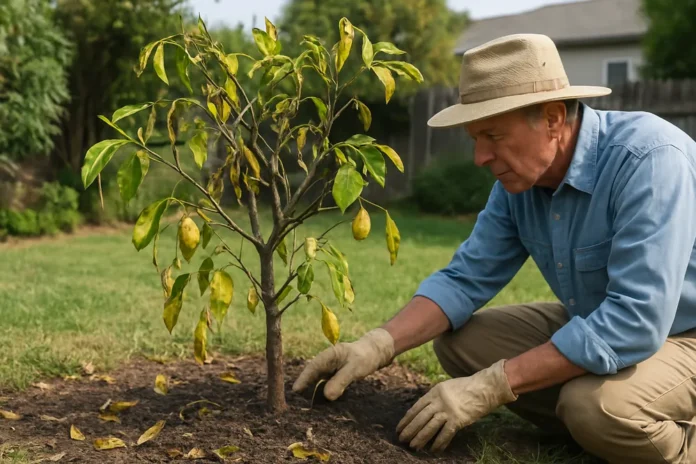
A lemon tree usually starts dying because its roots, leaves, or trunk are under stress from watering problems, cold injury, pests, disease, or poor drainage. Citrus declines fast when several of these problems happen at the same time.
A lemon tree can go from glossy green and productive to thin, yellow, and miserable faster than many home gardeners expect. When people say their tree is dying, I usually find that the plant has been under stress for a while and is only now showing the full damage. With lemon tree decline, the visible symptoms often appear weeks after the original problem started.
The most common causes are too much water, too little water, cold injury, root damage, pests, and fungal disease. Sometimes the tree is not truly dying, but it is shutting down growth to survive bad conditions. A dying lemon tree often gives clues in the leaves, soil, branch tips, trunk, and fruit drop pattern, so the goal is to read those signs before making a fix.
What a Dying Lemon Tree Usually Looks Like
Lemon trees rarely fail all at once. More often, they show a mix of stress signals that build over time. Leaves may yellow, curl, drop, or develop brown patches. Branch tips may dry out. Fruit may stay small or fall early. In more serious cases, the canopy thins, bark cracks, and whole limbs begin to die back.
One of the most helpful things you can do is notice whether the damage is spread evenly or concentrated in one area. Even yellowing across the tree often points to root or nutrient trouble. Sudden collapse on one side can suggest root injury, trunk damage, or a localized disease problem. That pattern matters because citrus symptoms can look similar even when the causes are very different.
- Yellow leaves that drop before new growth replaces them
- Brown, crispy leaf edges or fully dried branch tips
- Wilting even when the soil seems wet or dry
- Small, pale, stunted new leaves
- Flowers or baby lemons dropping early
- Dark, mushy, or sour-smelling soil near the root zone
- Cracked bark, gummy sap, or peeling tissue near the trunk
When I diagnose a struggling citrus tree, I look first at the newest leaves and the oldest leaves separately. If both look bad, I suspect root stress before I blame fertilizer alone.
Watering Problems Are the Most Common Cause
Overwatering and Poor Drainage
If I had to pick the single most common reason a lemon tree declines, it would be excess moisture around the roots. Lemon trees want consistent moisture, but they do not want to sit in soggy soil. When drainage is poor, roots lose oxygen, begin to rot, and stop supplying the canopy properly. The top of the tree then starts looking thirsty even though the soil is wet.
Overwatered citrus often shows yellow leaves, leaf drop, weak new growth, and a general dull look. The soil may stay wet for several days after watering. In containers, heavy potting mix or saucers that trap runoff make the problem worse. In the ground, clay soil or a low spot in the yard can create the same issue.
Underwatering and Heat Stress
A dry lemon tree can also look like it is dying, especially in hot, windy weather. Leaves may curl inward, droop, turn brittle, or drop to reduce water loss. Fruit can shrivel or fall. Young trees are especially vulnerable because their root systems are small and they cannot pull moisture from a wide area yet.
The tricky part is that underwatering and overwatering can both cause wilting and leaf drop. The difference usually shows up in the soil and roots. Bone-dry soil that pulls away from the sides of a pot points to drought stress. Wet, dense soil with yellow leaves and a stale smell points more toward root suffocation.
- Overwatering signs: yellow leaves, soft leaf drop, wet soil for days, sour smell, slow growth
- Underwatering signs: curled leaves, crisp edges, dry soil, fruit drop, brittle branch tips
- Container trees are more prone to both extremes because pots heat up and dry faster but can also trap water
I prefer deep, less frequent watering over light daily sprinkling. Citrus roots do better when moisture moves down through the root ball and the upper soil gets a little air between waterings.
Cold Damage Can Make a Healthy Tree Look Dead
Lemon trees are less cold-tolerant than many other citrus types. A hard freeze, a cold wind event, or even a sharp temperature swing can damage leaves, twigs, and bark. Sometimes the tree looks fine right after the cold night and then declines over the next week or two as damaged tissue dries out.
Freeze damage often shows up as limp leaves that later turn brown, blackened young shoots, split bark, or branch dieback. Fruit can also become pitted or drop. If the trunk or graft area was injured, the problem is more serious because the tree may struggle to move water and nutrients upward.
Newly planted trees, potted trees, and trees that were pushed with late fertilizer growth are more vulnerable. Tender growth is the first to suffer. In borderline climates, one rough winter can set a lemon tree back for a full season.
Root Damage and Planting Mistakes Can Quietly Kill Citrus
Planted Too Deep
A lemon tree planted too deeply often declines slowly. Citrus trees dislike having soil piled against the trunk. When the crown stays damp and buried, the bark can begin to rot and roots may struggle for oxygen. Many homeowners plant the root ball level with surrounding soil and then add mulch right up to the trunk, which makes the problem worse.
Circling Roots in Containers
Potted lemon trees can become root-bound, especially if they have been sitting in the same nursery pot too long. Circling roots eventually choke the root ball, reduce water uptake, and create a cycle where the tree dries too fast but still cannot grow well. A root-bound tree may wilt quickly after watering and stay stunted even during the growing season.
Mechanical Injury
Damage from string trimmers, lawn mowers, pets, or digging near the root zone can weaken a lemon tree more than people realize. Bark injury near the base interrupts the flow of water and sugars. Root cuts from nearby construction or trenching can also trigger sudden canopy decline months later.
If a lemon tree looks bad but the leaves are not showing a clean nutrient pattern, I check the trunk flare and graft union right away. Buried bark and trunk wounds are easy to miss and often explain a decline that fertilizer cannot fix.
Pests That Weaken Lemon Trees
Pests rarely kill a mature lemon tree overnight, but heavy infestations can weaken it enough that heat, drought, or disease finish the job. Citrus pests feed on sap, leaves, stems, and fruit. The result can be yellowing, distorted growth, sticky residue, black sooty mold, and reduced vigor.
- Scale insects: small bumps on stems or leaves, sticky honeydew, black mold growth
- Spider mites: fine stippling, dusty-looking leaves, webbing in severe cases
- Aphids: clustered soft-bodied insects on tender growth, curled new leaves
- Whiteflies: tiny white insects that flutter when disturbed, weakened foliage
- Citrus leafminer: silvery squiggles and twisted young leaves, especially on flush growth
A stressed tree tends to attract more pest pressure, so insects are often part of a larger problem rather than the only cause. Still, if the canopy is covered in sticky residue or distorted new growth, pest management needs to be part of the recovery plan. Repeated sap feeding can reduce photosynthesis and leave the tree too weak to support fruit or new shoots.
Diseases That Cause Decline, Dieback, and Leaf Drop
Root Rot
Root rot is one of the most serious problems for lemon trees. It usually follows chronically wet soil, poor drainage, or containers that never dry enough between waterings. The roots turn dark, soft, and ineffective, and the top growth begins to fail. Leaf yellowing, branch dieback, and persistent wilt despite wet soil are classic clues.
Gummosis and Collar Rot
If you see bark cracking, dark lesions, or gummy sap oozing from the trunk, citrus gummosis or collar rot may be involved. These issues often develop where moisture stays around the base of the tree. Once trunk tissue is damaged, the tree may not move water properly, and decline can accelerate quickly.
Fungal Leaf and Fruit Problems
Some fungal diseases mainly affect appearance, but repeated infections weaken the tree over time. Spots on leaves, premature defoliation, and damaged fruit reduce the tree's ability to build energy reserves. A healthy lemon tree can often outgrow minor disease pressure, but a stressed one may spiral downward.
Disease is more likely when a tree is crowded, watered poorly, or kept in conditions that never let foliage and soil surfaces dry properly. Good airflow and proper irrigation matter more than many gardeners think.
Nutrient Problems and Poor Growing Conditions
That said, fertilizer is not a cure for every struggling citrus tree. If the roots are damaged or the soil pH is off, the tree may be unable to use nutrients that are already present. I see this a lot in containers watered with hard water or in soils that stay too wet. Gardeners add more fertilizer, but the real issue is root function.
- Too little sun leads to sparse growth, poor flowering, and weak overall vigor
- Heavy shade makes pest and disease pressure harder to outgrow
- Wrong soil pH can lock up nutrients even when fertilizer has been applied
- Salt buildup from fertilizer or poor-quality irrigation water can burn roots and leaf edges
How to Tell Which Problem Is Most Likely
The fastest way to narrow it down is to match the symptom pattern with recent conditions. Ask yourself what changed in the last month or two. Did the weather swing cold? Has the pot been staying wet? Did the tree dry out during a hot spell? Was it recently planted, repotted, fertilized, or moved?
- Yellow leaves plus wet soil usually suggest overwatering, poor drainage, or root rot
- Curling, crispy leaves plus dry soil usually suggest underwatering or heat stress
- Browned leaves after a cold night point strongly to freeze injury
- Sticky leaves and black mold suggest scale, aphids, or whiteflies
- Gummy trunk lesions suggest collar rot or gummosis
- Pale leaves with no obvious watering issue may point to nutrient imbalance or pH trouble
Try not to change five things at once. If you respond to yellow leaves by watering more, fertilizing heavily, spraying for insects, and pruning hard in the same week, it becomes much harder to tell what helped or what made things worse. Citrus recovery is usually judged by the quality of new growth, not by whether damaged old leaves turn green again.
When a lemon tree is declining, I take photos from the same angle every week. Slow improvement is easy to miss in real time, but photos reveal whether leaf drop is slowing and whether new shoots are actually healthy.
What Helps a Struggling Lemon Tree Recover
Recovery starts with removing the main stress, not forcing new growth. If the tree is overwatered, improving drainage matters more than feeding it. If it is underwatered, consistent deep watering matters more than occasional soaking after severe drought. If pests are heavy, reducing that pressure gives the tree a chance to rebuild energy.
For container trees, make sure the pot has strong drainage and a fast-draining citrus-friendly mix. Empty any saucer that holds water. For in-ground trees, keep mulch a few inches back from the trunk and avoid burying the crown. If cold injury occurred, wait until new growth begins before pruning obviously dead wood, since some stems that look bad at first may still be alive lower down.
Use citrus fertilizer only when the tree is in active growth and the root system is capable of taking it up. Severe root stress plus strong fertilizer can push the tree in the wrong direction. If disease around the trunk or roots is suspected, reducing moisture around the base is often one of the most important immediate steps.
- Give lemon trees full sun whenever possible
- Water deeply, then let the top layer begin to dry before watering again
- Keep mulch away from direct contact with the trunk
- Inspect the undersides of leaves and tender shoots for insects
- Do not overprune a weak tree unless wood is clearly dead
- Judge progress by healthy new leaves and shoots, not by old damaged foliage
FAQ
Can a Lemon Tree Come Back After Losing All Its Leaves?
Yes, a lemon tree can recover after complete defoliation if the trunk, roots, and grafted portion are still alive. Recovery depends on how severe the original stress was and whether the tree can produce healthy new shoots.
How Do I Know if My Lemon Tree Has Root Rot?
Root rot is likely when the tree wilts or yellows even though the soil stays wet. You may also notice a sour smell, poor drainage, blackened roots, and branch dieback.
Should I Cut Off Dead Branches Right Away?
Remove clearly dead wood, but avoid aggressive pruning while the tree is under active stress. After cold damage especially, waiting for new growth helps reveal which branches are truly dead.
Why Is My Potted Lemon Tree Dying Faster than One in the Ground?
Container trees dry out faster, heat up more, and are more vulnerable to root crowding and drainage problems. A small mistake with watering shows up much faster in a pot than in the ground.
Will Fertilizer Save a Yellow Lemon Tree?
Only if nutrient deficiency is the real problem. Many yellow lemon trees are actually dealing with wet roots, poor drainage, cold stress, or pests, and fertilizer alone will not fix those issues.
Can Cold Weather Kill a Lemon Tree Overnight?
Yes, a hard freeze can severely injure or kill tender lemon trees, especially young or potted ones. Sometimes the full damage is not visible until several days later.
Why Are the Leaves Dropping but the Branches Are Still Green?
Leaf drop with green stems often means the tree is stressed but not dead. Watering swings, repotting shock, cold, pests, and root issues can all cause leaves to fall before stems die.
Need help bringing citrus back to life? Read our lemon tree care and citrus fertilizer guides to choose the right recovery steps and products before the damage gets worse.
