

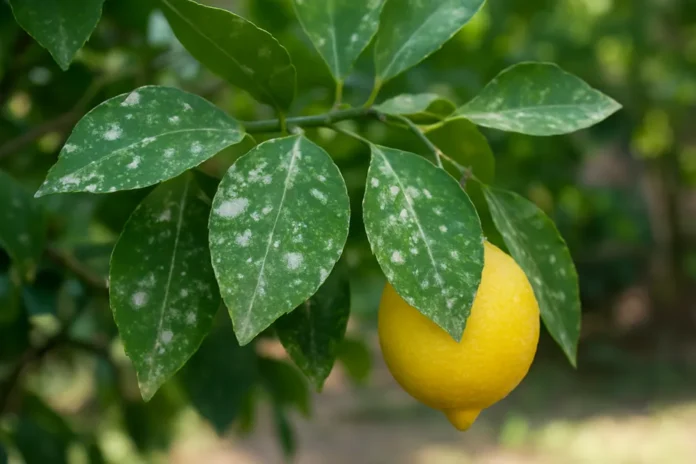
White spots on lemon tree leaves are most often caused by powdery mildew, pest activity, or residue left behind by hard water or sprays. In some cases, sun stress or leaf damage can also leave pale or whitish patches.
White spotting on a lemon tree can look alarming, especially when the leaves were deep green just a week or two earlier. In my experience, lemon tree leaves with white spots usually fall into a few predictable categories: fungal growth, pest damage, dried residue, or bleaching from environmental stress.
The good news is that the pattern matters. A dusty coating points in a different direction than tiny stippled specks, cottony clumps, or flat chalky marks that wipe off. If you slow down and look at both the top and underside of the leaf, you can usually get much closer to the real cause before treating anything.
This is one of those problems where the right diagnosis saves time. White spots on citrus leaves are not always a disease, and spraying the wrong product can make a stressed lemon tree even less happy.
What the White Spots Usually Mean
When I inspect a lemon tree with white marks, I first ask whether the spots are sitting on the surface or whether the leaf tissue itself has turned pale. Surface material often suggests powdery mildew, mealybugs, scale residue, hard water spotting, or leftover foliar spray. Pale tissue inside the leaf points more toward sunscald, pest feeding damage, or general leaf injury.
- Dusty or powder-like white coating often means powdery mildew.
- Tiny white or yellow stippling can mean spider mites or other sap-sucking pests.
- Cottony white clusters usually point to mealybugs.
- Flat white crusty spots or rings may be hard water residue or spray residue.
- Large bleached patches can come from sunburn, heat stress, or sudden exposure after moving the plant.
I do not rely on one damaged leaf. I compare several older and newer leaves, because mildew, mites, and residue each create a repeating pattern across the plant, while random mechanical damage usually does not.
Powdery Mildew on Lemon Leaves
Powdery mildew is one of the most recognizable causes of white spotting on citrus. It looks like a pale dusting or flour-like film on the leaf surface, and it may spread to tender shoots as well. On lemon trees, it is more common when air circulation is poor, growth is crowded, and humidity stays high around the foliage.
Unlike many fungal issues, powdery mildew does not need soaking wet leaves to get going. It often shows up when days are mild, nights are cool, and the canopy stays dense. Indoor or patio lemons can also develop it when they are tucked into a corner with limited airflow.
How to Recognize It
- White or grayish powder on the upper leaf surface
- Spots that can spread and merge into larger patches
- Tender new leaves that twist, curl, or grow poorly
- A coating that rubs lightly onto your fingers
What Helps
Remove the worst affected leaves if the outbreak is light and the tree has enough healthy foliage to spare. Thin crowded growth where possible, keep the tree in full sun appropriate for citrus, and avoid wetting the leaves late in the day. If the problem is spreading, a citrus-safe fungicidal treatment such as sulfur or neem-based products may help, but always follow the label because lemons can be sensitive in hot weather.
Spider Mites, Mealybugs, and Scale Can Leave White Marks
Several common citrus pests create white-looking spots, either from their bodies, shed skins, waxy coverings, or feeding damage. This is where close inspection matters most. The top of the leaf may show pale speckles, but the real clue is often underneath.
Spider Mites
Spider mites are tiny, but their feeding leaves a fine stippled pattern that can look silvery, pale, or whitish from a distance. In dry conditions, especially on container lemons, they can multiply fast. You may also see delicate webbing near leaf stems or on the undersides.
- Very small pale dots scattered across the leaf
- Leaves that lose shine and look dusty or dull
- Fine webbing in heavier infestations
- Worse problems during hot, dry weather
Mealybugs
Mealybugs look like little bits of white cotton attached to leaves, stems, or where the leaf meets the branch. They suck sap and weaken the tree over time. Their honeydew can also attract ants and lead to sooty mold later.
Scale Insects
Some scale insects leave pale cast skins or waxy deposits that read as white specks. Scale usually sticks tightly to stems and leaf veins. The leaves may also yellow, feel sticky, or drop early if the infestation is heavy.
If I suspect pests, I wipe one leaf with a damp cloth before spraying anything. Residue stays on the cloth, but stippling from mite feeding does not, and that quick test helps avoid treating the wrong problem.
What Helps
For light infestations, wash the foliage with a steady stream of water, especially undersides. For mealybugs, dab clusters with rubbing alcohol on a cotton swab if the tree is small. Insecticidal soap or horticultural oil can help with mites, mealybugs, and some scale, but apply during cooler parts of the day and never when the tree is drought-stressed or temperatures are extreme.
Residue From Hard Water, Fertilizer, or Foliar Sprays
Not every white spot is a living problem. Citrus leaves often collect mineral residue, especially if you mist with hard tap water, overhead water regularly, or use foliar feeds and pest sprays that dry on the surface. This kind of spotting usually looks chalky, crusty, or ring-shaped rather than fuzzy or insect-like.
I see this often on patio lemons that are sprayed frequently for pests or cleaned with homemade mixtures. If the spotting is mostly on upper surfaces and exposed leaves, and the leaf tissue underneath still looks healthy green, dried residue becomes much more likely.
- White rings or splatter marks after watering or spraying
- Spots that wipe away with a damp cloth
- No visible webbing, insects, or leaf distortion
- Marks concentrated on the most exposed leaves
In this case, simply wiping the leaves and changing how products are applied may solve the problem. Use diluted products exactly as directed, avoid spraying in strong sun, and if hard water is the issue, use filtered or rainwater for foliar applications when practical.
Sunburn, Heat Stress, and Sudden Light Changes
Lemon trees love bright light, but leaves can still bleach when the plant moves too quickly from lower light to intense sun. This happens a lot when indoor overwintered citrus is set outside without gradual hardening off. The damage can show as pale white or tan blotches, usually on the sunniest side of the plant.
These marks are part of the leaf tissue, so they do not rub off. The affected areas may later dry out and turn brown. Heat reflected from walls, patios, or windows can intensify the problem, especially on container trees that dry out quickly.
Clues That Point to Sun Stress
- Larger pale patches instead of tiny specks
- Damage mostly on the side facing strong afternoon sun
- Leaves feel dry or papery in the damaged area
- The issue started after moving the tree outdoors or changing its location
Damaged leaves usually do not turn green again, but the goal is to protect new growth. Acclimate lemon trees gradually to direct sun, keep watering even, and avoid pruning heavily right before a heat wave, since sudden exposure can leave inner leaves vulnerable.
Less Common Causes Worth Considering
A few other issues can create white or pale spotting, although they are less common than mildew, pests, residue, or sun stress. If the main suspects do not fit, broaden the diagnosis.
Leaf Injury From Sprays
Some products can burn citrus leaves if applied too strongly or in high heat. Oils, soaps, and homemade treatments are common culprits. The result may look like whitish scarring, especially where droplets sat on the leaf.
Physical Abrasion or Dust
Windblown dust, construction debris, or rubbing against nearby surfaces can leave leaves looking spotted or dulled. This tends to be irregular and often affects leaves on one side of the tree more than the other.
Nutrient Issues
Nutrient deficiencies in citrus more often cause yellowing between veins than true white spots. Severe chlorosis can make leaves look pale overall, but sharply defined white spotting usually points somewhere else first.
How to Tell Which Cause You Have
If you are unsure, a short visual check can usually sort this out. Start with a clean finger and a magnifying glass or phone camera if you have one. Look at both leaf surfaces, then compare old leaves with tender new ones.
- Rub one white spot gently. If it smears or wipes off, think mildew or residue.
- Check the leaf underside for mites, webbing, mealybugs, or scale.
- Notice whether the spots are tiny and scattered, or broad and bleached.
- Ask whether the tree was recently moved, sprayed, or overhead watered.
- Look for sticky honeydew, curled new growth, or leaves dropping early.
When white spotting is worst on tender new leaves, I lean toward mildew or active pests. When older outer leaves are the main problem, residue and sun exposure move higher on my list.
What to Do Right Now for a Healthier Lemon Tree
Once you have a likely cause, keep the response simple. Lemon trees recover best when you correct the source of stress without piling on too many treatments at once. Overhandling a citrus tree can create as many problems as it solves.
- Remove badly damaged or heavily infested leaves if the tree has enough healthy foliage left.
- Improve airflow around the canopy and avoid crowding the plant against walls or other containers.
- Water deeply but let the top layer of soil begin to dry before watering again, especially in pots.
- Pause unnecessary foliar sprays until you know whether residue is part of the problem.
- Treat confirmed pests or fungal issues with a citrus-safe product used according to label directions.
- Protect recently moved trees from harsh afternoon sun until they adjust.
Watch the new growth more than the old damaged leaves. Existing white scars may stay visible, but if the next flush of leaves comes in clean and green, you are moving in the right direction.
When the Problem Is Serious Enough to Escalate
Most white spotting issues on home lemon trees are manageable, but there are times to act more aggressively. If more than a third of the canopy is affected, leaves are dropping fast, or the tree is weak and not pushing new growth, the problem has likely been building for a while.
For container lemons, repotting stress, root problems, and inconsistent watering can make pest and fungal issues worse. For in-ground trees, look at irrigation coverage, reflected heat, and whether the canopy has become too dense. If you still cannot match the symptoms, your local cooperative extension office or a reputable garden center with citrus experience can help identify the issue from close photos or a sample.
FAQ
Can White Spots on Lemon Tree Leaves Go Away on Their Own?
Sometimes residue can be wiped off and a minor issue stops spreading, but damaged leaf tissue usually does not turn green again. The real sign of recovery is healthy new growth.
Are White Spots on Lemon Leaves a Fungus Every Time?
No. Powdery mildew is one common cause, but pests, mineral residue, spray burn, and sunscald can all create white-looking marks.
Should I Remove Leaves with White Spots?
Remove leaves that are heavily damaged, badly infected, or crowded with pests, but do not strip the tree bare. Lemon trees still need enough healthy foliage to support recovery.
Can I Use Neem Oil on a Lemon Tree with White Spots?
Neem products can help with some fungal and pest issues, but they are not right for every situation. Always use a citrus-safe product as labeled and avoid applying oils in high heat or direct harsh sun.
Why Do the Spots Show Up More on My Potted Lemon Tree?
Container lemons often face drier air, faster soil drying, reflected heat, and less stable growing conditions. Those stresses make mites, mildew, and leaf burn more likely.
Do Hard Water Spots Hurt the Tree?
Usually they are more cosmetic than harmful, though repeated residue can reduce leaf appearance and make diagnosis harder. If buildup is heavy, switch how you water or spray the foliage.
Can Overwatering Cause White Spots on Lemon Leaves?
Overwatering does not usually create white spots by itself, but it can weaken the tree and encourage disease problems. It can also lead gardeners to spray or mist more often, which sometimes leaves residue behind.
Need help choosing the right citrus treatment? Read our guide to the best sprays, oils, and care products for lemon trees so you can fix white spots without guessing.
