

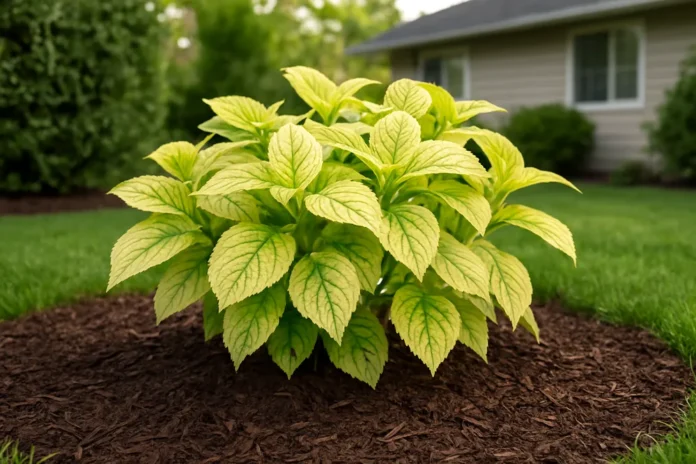
Chlorosis in hydrangeas is usually caused by iron becoming unavailable to the plant, most often because soil pH is too high. It can also be triggered by poor drainage, root stress, compacted soil, or nutrient imbalances.
If your hydrangea leaves are turning yellow while the veins stay green, you are probably looking at chlorosis rather than normal aging. This is a common problem in home landscapes, especially when hydrangeas are planted in soils that are more alkaline than they prefer.
In my experience, chlorosis is often less about a total lack of nutrients in the soil and more about the plant being unable to use what is already there. Hydrangea chlorosis usually traces back to pH, drainage, root trouble, or a growing environment that keeps the roots from functioning well. Once you know what is blocking nutrient uptake, the fix becomes much clearer.
What Chlorosis Looks Like on Hydrangeas
Chlorosis is a yellowing of leaf tissue caused by reduced chlorophyll production. On hydrangeas, it often shows up first on newer leaves near the tips of stems. The classic sign is a leaf that turns pale yellow while the veins remain noticeably green. In milder cases, the plant may still bloom, but growth can slow and the shrub starts to look tired or washed out.
Severe chlorosis can progress from light yellowing to nearly white leaves, brown leaf edges, weak stems, and fewer flowers. It is easy to mistake this for simple nutrient deficiency across the board, but the pattern matters. Uniform yellowing on old leaves suggests a different issue than bright yellow new leaves with green veins.
When I diagnose hydrangea chlorosis, I compare several leaves from different parts of the plant before I do anything else. If the newest leaves are the most affected and the veins stay green, I immediately start thinking about iron availability rather than general fertilizer shortage.
The Most Common Causes of Chlorosis in Hydrangeas
High Soil pH That Locks Up Iron
This is the leading cause of chlorosis in hydrangeas. Even when iron is present in the soil, hydrangeas struggle to absorb it if the pH is too high. Many hydrangeas prefer slightly acidic soil, and once the soil drifts toward neutral or alkaline, iron becomes less available to the roots. The plant responds with yellow leaves because chlorophyll production suffers.
This is especially common in regions with naturally alkaline soil, areas with limestone, or beds that receive regular applications of lime, wood ash, or alkaline irrigation water. Bigleaf hydrangeas and oakleaf hydrangeas tend to show stress quickly when the soil is not in their preferred range.
Poor Drainage and Waterlogged Roots
Hydrangeas like consistent moisture, but they do not like soggy roots. When soil stays saturated, roots cannot take up oxygen well, and nutrient absorption drops. Iron, manganese, and other micronutrients may be present, but the plant still cannot use them efficiently. Yellowing can follow, often alongside wilting, leaf drop, or stunted growth.
This kind of chlorosis is common in heavy clay soil, low spots in the yard, or beds where downspouts empty nearby. It is also common when hydrangeas are watered too frequently in soils that drain slowly.
Compacted Soil and Root Stress
Roots need loose, aerated soil to spread and function well. If the ground is compacted from foot traffic, construction, or repeated wet-dry cycles, the root zone can become tight and oxygen-poor. A stressed root system often shows itself above ground as chlorosis because the plant cannot access nutrients and moisture normally.
Transplant shock can create a similar effect. Newly planted hydrangeas sometimes show yellow leaves because their roots are still adjusting, especially if they were planted too deep, planted into poor backfill, or allowed to dry out after transplanting.
Actual Iron Deficiency
True iron deficiency is less common than iron lockout from high pH, but it does happen. Sandy soils with low organic matter can lose micronutrients more quickly. Repeated heavy rainfall, frequent irrigation, or years without soil improvement can also leave the planting area genuinely short on available iron.
In that case, a hydrangea may benefit from an iron product, but applying iron without addressing soil conditions is often only a short-term patch. If pH or drainage is the real problem, the yellowing usually returns.
Other Nutrient Imbalances
Chlorosis is not always about iron alone. Manganese deficiency can look similar, and an excess of phosphorus can interfere with iron uptake. Overfertilizing with the wrong product can also push a hydrangea out of balance. This is one reason yellow leaves sometimes appear after gardeners try to fix a struggling shrub by feeding it more.
- High-phosphorus bloom boosters can reduce iron availability
- Excess salts from fertilizer can stress roots and worsen yellowing
- Low organic matter can limit micronutrient buffering in the root zone
- Repeated use of one fertilizer without a soil test can create imbalances over time
Environmental Conditions That Make Chlorosis Worse
Heat, drought, and reflected sun can intensify chlorosis symptoms because stressed roots become less efficient. A hydrangea planted near a foundation, driveway, or south-facing wall may dry out faster and struggle more than the same variety planted in a cooler spot with morning sun and afternoon shade.
Cold, wet spring weather can also bring out chlorosis. In cool soil, root activity slows down. I often see hydrangeas look pale early in the season, then green up once the soil warms and root growth catches up. If the plant stays yellow well into active growth, though, it is usually a sign of an ongoing soil or root problem.
If a hydrangea is chlorotic in a harsh site, I do not rush straight to fertilizer. Improving mulch, watering more deeply but less often, and reducing root-zone stress can make micronutrient treatments work much better.
How to Tell Which Cause Is Affecting Your Hydrangea
The fastest way to narrow down the cause is to look at the pattern, the planting site, and the recent care history. Chlorosis caused by high pH usually affects new growth first. Root-related chlorosis often comes with wilting, slowed growth, or a shrub that never seems to perk up even when watered.
- New leaves yellow with green veins: iron availability problem is likely
- Whole plant looks pale and weak after heavy rain or soggy conditions: drainage or root stress is likely
- Yellowing started after fertilizing: salt stress or nutrient imbalance may be involved
- Only one hydrangea is affected while others nearby are healthy: planting depth, root damage, or a localized soil issue is likely
- Symptoms appeared after moving or planting: transplant stress may be contributing
A soil test is the best way to confirm pH and major nutrient levels. If you suspect alkaline conditions, a simple pH test can save time and guesswork. For long-established shrubs with recurring yellow leaves, I strongly prefer testing over repeated trial-and-error treatments.
One pattern I trust is whether the chlorosis improves on its own after weather changes. If the plant greens up after the soil dries slightly or after temperatures warm, roots were likely stressed. If the yellowing stays sharp and vein-centered, high pH is usually still in the picture.
How to Fix Chlorosis in Hydrangeas
Lower Soil pH when Needed
If testing shows your soil is too alkaline, gradually acidifying the root zone is often the most effective long-term fix. Elemental sulfur is commonly used for this, but it works slowly and should be applied according to soil test guidance and label directions. Acid-loving plant fertilizers may help maintain a better range, but they do not always move pH enough by themselves.
Adding compost, leaf mold, or other organic matter can also improve micronutrient availability over time while helping soil structure. This is a slower, steadier approach that supports root health along with chemistry.
Use Iron Products Wisely
Chelated iron can green up chlorotic hydrangeas more quickly than soil amendments alone, especially when leaves are clearly yellow with green veins. However, it works best as a support tool rather than a standalone cure. If soil pH remains too high, the effect may be temporary.
Foliar iron sprays can provide a quick cosmetic improvement, but they do not solve the root-zone issue. Soil-applied chelated iron tends to be more useful when the goal is longer-lasting improvement.
Improve Drainage and Root Conditions
If poor drainage is part of the problem, focus on the root zone. Reduce watering frequency, redirect downspouts, and top-dress with compost to gradually improve soil structure. In severe sites, it may be better to replant the hydrangea on a slight mound or in a raised bed where water moves through more reliably.
Avoid cultivating deeply around the shrub, since hydrangea roots are fairly shallow. A two- to three-inch mulch layer can help moderate moisture swings, reduce heat stress, and support healthier feeder roots.
Correct Fertilizer Habits
If you have been using high-phosphorus or heavy synthetic fertilizers, back off and let the plant recover. Choose a balanced fertilizer suited to shrubs or one labeled for acid-loving plants if your soil conditions support that approach. More fertilizer is rarely the answer when chlorosis is caused by poor uptake.
- Test the soil if you can, especially for pH
- Address drainage and watering issues first
- Add organic matter around the root zone
- Apply iron or acidifying amendments only as needed
- Watch the new leaves for improvement rather than expecting old leaves to turn fully green again
How Long Recovery Takes
Hydrangeas do not recover from chlorosis overnight. Once a leaf has yellowed badly, it may never look perfect again. The better sign is healthy new growth. If you correct the underlying issue, you may see greener new leaves within a few weeks during active growing weather, though soil pH changes take longer.
I usually judge success by the next flush of growth, not by the oldest damaged leaves. If the plant continues putting out pale, vein-marked foliage after treatment, there is still a problem in the root zone or the pH has not moved enough.
How to Prevent Chlorosis From Coming Back
Prevention comes down to growing hydrangeas in the kind of soil and site they actually like. Choose a location with good drainage, steady moisture, and some protection from harsh afternoon stress. Keep the root zone mulched, avoid overfertilizing, and do not assume all yellowing needs more plant food.
- Test soil pH before planting hydrangeas in difficult sites
- Incorporate compost regularly to support structure and nutrient availability
- Water deeply when needed rather than keeping soil constantly soggy
- Avoid lime near hydrangeas unless a soil test clearly calls for it
- Use fertilizers sparingly and based on plant need, not on schedule alone
- Monitor new growth each spring so you catch chlorosis early
When hydrangeas are matched to the right soil conditions, chlorosis becomes much less common. Most recurring cases I see trace back to the same few issues: alkaline soil, stressed roots, and well-meaning but unhelpful fertilizer habits.
FAQ
Can Hydrangea Chlorosis Go Away on Its Own?
Mild chlorosis caused by temporary cold or wet soil can improve as conditions normalize. If high pH, poor drainage, or root stress is the cause, it usually keeps returning until the underlying problem is corrected.
What Does Iron Chlorosis Look Like on Hydrangeas?
Iron chlorosis usually appears as yellow leaves with distinctly green veins, especially on newer growth. In severe cases, leaves can turn very pale and develop brown edges.
Will Epsom Salt Fix Chlorosis in Hydrangeas?
Usually no. Epsom salt provides magnesium, not iron, and it will not fix chlorosis caused by alkaline soil or iron lockout. Using it without a real magnesium deficiency can complicate nutrient balance.
Is Coffee Grounds Good for Chlorotic Hydrangeas?
Coffee grounds can add organic matter in small amounts, but they are not a reliable fast fix for chlorosis. They also do not lower soil pH enough to solve serious alkaline soil problems on their own.
Should I Remove Yellow Hydrangea Leaves?
If the leaves are only yellow and still functional, leave them in place while the plant recovers. Remove them only if they are mostly dead, diseased, or making the shrub overly crowded.
Can Too Much Water Cause Chlorosis in Hydrangeas?
Yes. Overly wet soil can suffocate roots and reduce nutrient uptake, which often leads to yellowing leaves. This is especially common in heavy clay or poorly drained beds.
What Soil pH Do Hydrangeas Prefer to Avoid Chlorosis?
Most hydrangeas do best in slightly acidic soil, generally around pH 5.5 to 6.5. Once soil moves too far toward neutral or alkaline, iron becomes less available and chlorosis is more likely.
Need the right product to green up stressed hydrangeas fast? See our guide to the best iron supplements, soil acidifiers, and hydrangea fertilizers so you can choose the fix that actually matches your soil.
