

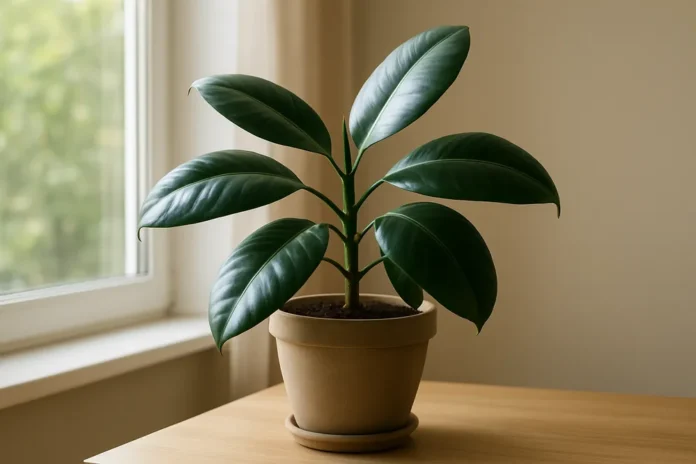
Rubber plant leaves usually droop because the plant is stressed by watering problems, root issues, low light, temperature changes, or a sudden change in conditions. Drooping is often reversible once the underlying stress is corrected.
A rubber plant with drooping leaves can look dramatic fast. One week it seems upright and glossy, and the next the leaves hang lower, feel softer, or lose that firm, tidy shape that makes this plant so attractive indoors.
In my experience, drooping on a rubber plant is usually a stress signal rather than a mystery disease. The tricky part is that several different problems can cause the same symptom, including too much water, too little water, poor drainage, dim light, cold drafts, and even the shock of being moved. The good news is that rubber plant leaves drooping often improves once you match the fix to the real cause.
The fastest way to diagnose it is to stop looking at the droop alone and start looking at the pattern. Check the soil, the pot, the light, the room temperature, and whether the plant recently changed locations. Those clues usually point you in the right direction.
What Drooping Usually Means on a Rubber Plant
Drooping means the leaves are not holding their normal pressure and posture. That can happen when roots are not taking up water properly, when the plant is losing moisture faster than it can replace it, or when stress interferes with normal growth. Rubber plants, also called Ficus elastica, tend to react visibly when something in their environment is off.
Sometimes drooping is mild and temporary. A plant may sag a little after repotting, after a move from the store, or during a sudden temperature shift. In other cases, the droop is a sign of a more serious root problem, especially if it is paired with yellowing, leaf drop, or soil that stays wet too long.
- Mild, even drooping with dry soil often points to underwatering.
- Heavy drooping with wet soil often points to overwatering or root stress.
- Drooping plus leaf drop after a move often points to environmental shock.
- Drooping plus slow growth and long gaps between leaves can suggest low light.
- Drooping with blackened patches or sudden collapse can happen after cold exposure.
When I inspect a droopy rubber plant, I look at the newest leaves first. If the newest growth still feels fairly firm while older leaves hang, I usually suspect watering inconsistency. If the entire plant looks limp and the soil is soggy, I start thinking about roots before anything else.
Watering Problems Are the Most Common Cause
Underwatering Can Make Leaves Go Limp
A thirsty rubber plant often has leaves that droop downward but still look fairly green. The potting mix may feel dry several inches down, and the pot may feel noticeably lighter than usual. In a dry house, especially with air conditioning or heat running, this can happen faster than many people expect.
If underwatering is the issue, the leaves may perk up within a day or two after a thorough watering. Severely stressed leaves might not return completely to their original posture, but new growth should improve once the plant gets back on a steady schedule.
Overwatering Can Look Surprisingly Similar
Overwatering also causes drooping, but for a different reason. When roots sit in overly wet soil, they struggle to access oxygen. That weakens the root system and reduces water uptake, which means the leaves droop even though the soil is wet. This is why many droopy houseplants get watered again when they actually need less.
With overwatering, you may also see yellowing leaves, a sour smell from the potting mix, fungus gnats, or soil that stays damp for a week or more. A decorative cachepot without drainage can make this problem worse very quickly.
- Signs that point more toward underwatering: dry mix, lighter pot, crisp edges, faster recovery after watering.
- Signs that point more toward overwatering: wet mix, yellowing leaves, mushy lower leaves, stale-smelling soil, slow recovery after watering.
- A plant on an irregular cycle can swing between both problems if the soil alternates between bone dry and constantly soggy.
I do not water rubber plants by the calendar. I water when the top part of the mix has dried and the pot feels lighter, because the timing changes a lot between summer growth, winter slowdown, and different rooms in the house.
Poor Drainage and Root Trouble Can Keep Leaves Droopy
If you are watering reasonably but the plant stays droopy, the problem may be deeper in the pot. Rubber plants need air around their roots as much as they need moisture. Dense soil, a pot without drainage holes, or roots packed too tightly into a small container can all interfere with normal uptake.
Compacted or Soggy Soil
Old potting mix can break down and hold too much water. Instead of draining evenly, it stays dense and heavy. Roots in that environment can weaken or rot, and drooping often follows. If water runs slowly through the pot, the surface stays wet for days, or the mix feels muddy rather than airy, the structure of the soil may be part of the problem.
Rootbound Plants
A rootbound rubber plant can also droop because the roots fill the pot so tightly that water rushes through without soaking in well. The plant may dry out faster than expected, and you may find roots circling the inside of the pot or poking from the drainage holes.
Root Rot
Root rot is the serious version of overwatering stress. Affected roots turn brown or black and feel mushy instead of firm. When enough roots are damaged, the plant cannot support its leaves properly, so drooping becomes persistent and recovery slows. If the plant is declining despite moist soil, root rot is high on the list.
- Use a pot with drainage holes, not just a decorative outer pot.
- Choose a potting mix that drains well and does not stay swampy.
- Repot if the soil is compacted, sour-smelling, or broken down.
- Trim clearly rotten roots with clean pruners if root rot is present.
- Move up only one pot size if the plant is rootbound.
Low Light Can Weaken Leaf Posture Over Time
Rubber plants tolerate moderate indoor light, but they do best in bright, indirect light. In a dim room, they often lose vigor slowly rather than all at once. Leaves may start to hang more, growth slows, and the plant may lean toward the nearest window.
Low light matters because it reduces the plant's energy supply. With less energy, the plant uses water more slowly, the soil stays wet longer, and the chance of overwatering increases. That is why drooping in low light often comes with secondary watering problems.
- Healthy rubber plants usually prefer several hours of bright, filtered light.
- A spot a few feet from a bright east or south window often works well.
- Very dark corners can lead to weaker stems, slower growth, and leaves that never look quite firm.
- Variegated rubber plants need even more light than solid green types.
I often see drooping blamed on watering when the real issue is that the plant lives too far from the window. In lower light, the same amount of water that worked in summer can become excessive by fall, so the symptom looks like a watering issue even though the light change started it.
Temperature Stress and Dry Indoor Air Can Trigger Drooping
Rubber plants like stable indoor conditions. Cold drafts from doors, blasts from air conditioners, and sudden dips near chilly windows can all cause leaves to droop. They are tropical plants, so they respond poorly when temperatures fall too low or swing quickly.
Dry air by itself is less likely to cause dramatic drooping than watering or root issues, but it can add stress, especially if the plant is already dry. Leaves may feel thinner, edges can crisp, and the plant may lose moisture faster than expected.
- Keep the plant away from heater vents and AC vents.
- Avoid placing it where leaves touch cold glass in winter.
- Try to keep temperatures generally above 60 degrees Fahrenheit.
- Expect faster drying and more stress during winter heating season.
Transplant Shock and Sudden Changes Can Make a Healthy Plant Droop
Rubber plants are not always thrilled about change. A recently purchased plant may droop after coming home from a greenhouse or store. A plant that was repotted, rotated into a brighter room, moved outdoors for summer, or brought back inside can also react with drooping leaves.
This kind of drooping usually happens because the plant is adjusting to a new balance of light, temperature, humidity, and watering needs. If the roots were disturbed during repotting, the temporary droop can last longer. The key clue is timing. If the symptom started right after a move or repot, shock is a reasonable explanation.
Most mildly shocked rubber plants recover with steady care and no extra fussing. Overcorrecting by watering too often or moving the plant again usually makes recovery slower.
Pests and Disease Are Less Common, but Still Possible
Drooping is not the classic first sign of pests on a rubber plant, but severe infestations can weaken the plant enough to affect leaf posture. Spider mites, scale, and mealybugs are the most likely culprits indoors. They feed on plant sap, which stresses the leaves and can cause dullness, yellowing, or leaf drop alongside drooping.
Check the undersides of leaves, the stems, and the points where leaves join the branch. Fine webbing, sticky residue, tiny bumps, or white cottony clusters all deserve attention. If the soil and light seem fine but the plant still looks off, pests are worth ruling out.
- Spider mites often leave fine webbing and speckled leaves.
- Scale looks like small brown or tan bumps attached to stems and leaves.
- Mealybugs appear as white cottony clusters in leaf joints.
- Isolate infested plants so the problem does not spread.
How to Figure Out the Real Cause
The best diagnosis comes from combining symptoms instead of guessing from drooping alone. Start with the simplest clues before making major changes. A quick inspection often tells you whether the plant is too dry, too wet, too dark, or recently stressed.
- Feel the soil 2 to 3 inches down. Note whether it is dry, evenly moist, or soggy.
- Lift the pot if possible. A very light pot suggests dryness, while a heavy pot that stays heavy suggests excess moisture.
- Check drainage. Make sure water can leave the container fully.
- Look at the leaves. Yellowing often goes with overwatering, while crispy edges often go with dryness or very dry air.
- Think about recent changes. Moving, repotting, or seasonal light shifts matter.
- Inspect for pests on leaf undersides and stems.
- If nothing above explains it, inspect the roots during repotting.
One of the biggest mistakes I see is changing everything at once. If you move the plant, repot it, fertilize it, and change the watering schedule all in the same weekend, it becomes much harder to tell what helped and what hurt.
Judge recovery by new growth and improved firmness over time, not by whether every older leaf snaps back immediately. A stressed rubber plant often keeps a few imperfect leaves even after the main problem has been fixed.
What to Do to Help a Drooping Rubber Plant Recover
If the Plant Is Too Dry
Water thoroughly until excess drains out the bottom, then let the pot drain completely. If the mix has become so dry that water runs straight through, you may need to water slowly in stages or bottom-water briefly so the root ball can rehydrate evenly.
If the Plant Is Too Wet
Stop watering until the top part of the mix dries appropriately. Empty any standing water from saucers or outer pots. If the soil is dense and stays wet too long, repot into a fresh, airy mix and cut away rotten roots if necessary.
If the Plant Needs More Light
Move it gradually to a brighter location with strong indirect light. Avoid an abrupt jump from a dark corner to harsh midday sun, which can scorch leaves.
If Stress Came From a Recent Move or Repot
Keep conditions stable. Water carefully, avoid fertilizing until you see signs of renewed growth, and give the plant time to settle in.
If Pests Are Present
Isolate the plant and begin treatment with methods appropriate for the pest, such as wiping leaves, insecticidal soap, or horticultural oil. Repeat treatments as directed because one application rarely solves the problem completely.
Once the underlying issue is corrected, improvement is usually gradual. Some leaves may remain slightly droopy or blemished, but the plant should stop declining and new growth should look stronger.
How to Prevent Drooping in the Future
Prevention mostly comes down to consistency. Rubber plants do best when light, watering, drainage, and temperature stay within a comfortable range instead of swinging back and forth.
- Water based on soil dryness, not a fixed calendar date.
- Use a container with drainage holes every time.
- Repot when the mix breaks down or the roots outgrow the pot.
- Keep the plant in bright, indirect light.
- Protect it from cold drafts and heating vents.
- Inspect leaves regularly so you catch pests early.
- Adjust watering downward in winter when growth slows.
If you build those habits, drooping becomes much less common. And when it does happen, you will usually recognize the cause much faster.
FAQ
Will Drooping Rubber Plant Leaves Stand Back Up?
Often, yes. If the problem is caught early and corrected, the leaves can regain some or most of their firmness. Older leaves that were stressed for a long time may not return perfectly, but new growth should look healthier.
How Often Should I Water a Drooping Rubber Plant?
There is no single schedule that works in every home. Water when the upper portion of the potting mix has dried and the pot feels lighter, then water thoroughly and let excess drain away.
Can a Rubber Plant Droop From Too Much Sun?
Yes, especially if it is moved suddenly into strong direct sun. Heat and intense light can stress the plant, increase moisture loss, and leave leaves looking limp or scorched.
Should I Mist My Rubber Plant if the Leaves Are Drooping?
Misting is not a real fix for drooping caused by watering, roots, light, or temperature stress. It may raise humidity only briefly, so it should not replace proper watering and better growing conditions.
Do Drooping Leaves Mean My Rubber Plant Has Root Rot?
Not always. Root rot is one possible cause, especially if the soil stays wet, smells sour, and the leaves are yellowing. Dry soil, low light, transplant shock, and temperature stress can also make leaves droop.
Should I Cut Off Drooping Rubber Plant Leaves?
Leave them on if they are still mostly green and functional. Remove leaves that are badly yellowed, damaged, or clearly declining, but avoid heavy pruning while the plant is already stressed.
Why Are Only the Lower Leaves on My Rubber Plant Drooping?
Lower leaves often show stress first because they are older. Inconsistent watering, lower light, or the plant adjusting to a new environment can all cause older leaves to droop before newer ones do.
Want the exact tools and soil setup that keep rubber plants upright and glossy? Read our guide to the best houseplant potting mixes and indoor plant watering tools before your plant declines further.
