

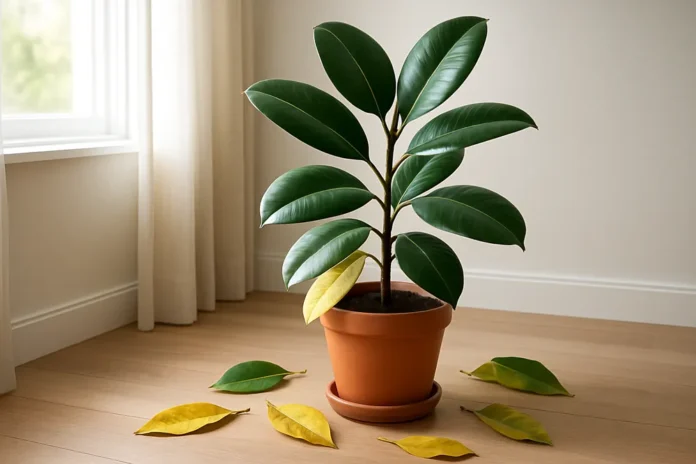
A rubber tree usually loses leaves because it is stressed by watering problems, low light, temperature swings, drafts, or a sudden change in conditions. It can also drop a few older lower leaves naturally as it grows.
A rubber tree losing leaves can look dramatic fast. One week the plant seems sturdy and glossy, and the next you are finding dropped leaves around the pot and wondering if the whole thing is on its way out.
In my experience, rubber trees are not usually fragile, but they are very honest about stress. When something in their care or environment changes, they often respond with leaf drop before they show much else. The good news is that the pattern of leaf loss usually tells you a lot about what is going wrong.
Most cases come down to a handful of common issues: overwatering, underwatering, low light, cold exposure, dry indoor air, pests, or shock after being moved. A few falling leaves can also be completely normal, especially older ones near the bottom of a healthy rubber tree.
When Leaf Drop Is Normal and when It Is a Warning Sign
Not every dropped leaf means your plant is in trouble. Rubber trees naturally shed some of their oldest lower leaves as they mature, especially if the plant is putting energy into new top growth. If only one or two bottom leaves yellow and fall every so often while the rest of the plant looks firm, glossy, and upright, that is usually normal aging.
Leaf drop becomes a warning sign when it happens repeatedly, affects multiple leaves at once, or includes leaves from the middle or top of the plant. It is also a red flag if the leaves are dropping while still green, if stems feel soft, or if you see other symptoms like browning edges, yellowing, drooping, or sticky residue.
- Usually normal: an occasional older bottom leaf drops while new leaves continue forming
- Usually stress-related: several leaves fall within days or weeks
- More serious: green leaves dropping suddenly, soft stems, or a sour smell from the soil
- Likely environmental shock: leaf drop soon after moving, repotting, or seasonal indoor heating changes
When I troubleshoot a rubber tree, I pay attention to which leaves fell first. Bottom leaves point me toward age, watering, or low light. Upper or middle leaves dropping makes me look harder at sudden stress, root trouble, or cold exposure.
Overwatering Is the Most Common Cause
If I had to guess one cause first, it would be overwatering. Rubber trees like evenly moist soil during active growth, but they do not like sitting in soggy mix for long stretches. When roots stay too wet, oxygen levels drop, roots begin to struggle, and the plant starts sacrificing leaves.
What Overwatering Leaf Drop Looks Like
Leaves may turn yellow before falling, or they may drop while still somewhat green. The soil often stays wet for many days, the pot feels heavy, and the plant may look limp even though the mix is damp. In more advanced cases, the base of the stems can soften and the soil may smell musty or sour.
- Soil stays wet longer than about a week indoors
- Leaves yellow from the lower half upward
- Pot has poor drainage or a saucer that stays full
- Roots may be brown, soft, or sparse if you inspect them
Why It Happens
Overwatering is not just about how often you pour water in. It can also come from a pot that is too large, dense soil that dries very slowly, low light that reduces water use, or cool indoor temperatures. A plant can be watered only once a week and still be overwatered if the root zone never gets enough air.
How to Correct It
Let the upper portion of the potting mix dry before watering again. Make sure the pot has drainage holes, empty any saucer after watering, and consider repotting into a chunky indoor plant mix if the soil stays swampy. If root rot is advanced, trim dead roots and move the plant into fresh mix.
Underwatering Can Cause Sudden Leaf Drop Too
Rubber trees tolerate slight drying better than constant sogginess, but they still need consistent moisture. If the soil goes bone dry for too long, the plant may drop leaves to reduce stress. This often happens in bright windows, warm rooms, or homes with dry winter heat.
Signs the Plant Is Too Dry
The leaves may droop first, then develop crispy edges or curl slightly before falling. The soil may pull away from the sides of the pot, and the pot will feel noticeably light. Sometimes the top of the mix looks dry while the root ball has become so dry it repels water instead of absorbing it evenly.
- Leaves feel thinner or less firm than usual
- Brown, dry edges appear before leaf drop
- Soil is hard, dusty, or shrunk from the pot edge
- Water runs straight through without soaking in well
If a root ball has gone very dry, I prefer to rehydrate it slowly instead of giving a quick splash. Water thoroughly, wait a few minutes, then water again so the mix can absorb moisture evenly.
Once watering becomes more consistent, the plant usually stabilizes. Damaged leaves will not recover, but healthy new growth is a good sign that the roots are functioning again.
Low Light Weakens the Plant Over Time
Rubber trees are often sold as easy indoor plants, which is true, but they still want bright conditions. In a dim room, they may survive for a while and then slowly decline. One common result is leaf drop, especially from the lower part of the plant where light levels are weakest.
A rubber tree in low light usually grows more slowly, leans toward the nearest window, and develops longer spacing between leaves. Older leaves may yellow and fall because the plant cannot support as much foliage with limited energy.
Best Indoor Light for Rubber Trees
They do best in bright indirect light, and many can also handle some gentle direct morning or late afternoon sun. A spot a few feet from a large south- or west-facing window often works well if the light is filtered or not scorching. Dark corners and rooms far from windows are usually not enough for long-term health.
- Good: bright room with strong ambient light most of the day
- Better: near an east, south, or west window with protection from harsh midday burn
- Poor: several feet into a dim room or near a small north window
- Helpful: rotate the plant every couple of weeks for even growth
Temperature Swings and Drafts Can Trigger Leaf Loss
Rubber trees like stable indoor temperatures. Cold drafts from windows, blasts from heating vents, air conditioning, or sudden changes during transport can all stress the plant enough to make it drop leaves. This is especially common in fall and winter when indoor conditions change fast.
A cold-stressed rubber tree may drop otherwise healthy green leaves fairly quickly. You may also notice dark patches, curling, or a generally dull appearance after exposure to chilly air. Temperatures below about 55 degrees Fahrenheit can cause trouble, especially if the plant is also wet.
Where This Problem Often Starts
- Right next to a drafty window in winter
- Near an exterior door that opens often
- Directly under a heating or AC vent
- In a car during cold weather without protection
- Moved outdoors and then back inside abruptly
If you suspect temperature stress, move the plant to a bright location away from direct airflow and keep care steady. Rubber trees usually recover best when the environment becomes predictable again.
Environmental Shock After Moving or Repotting
Rubber trees are creatures of habit. If your plant started dropping leaves right after you brought it home, rearranged the room, repotted it, or shifted it from indoors to outdoors, stress from change may be the main cause. Even beneficial changes can trigger a short-lived reaction while the plant adjusts.
This type of leaf drop often happens without severe yellowing or stem damage. The timing is your biggest clue. A plant that looked fine, then began dropping leaves within a week or two of a move, is likely reacting to the sudden change in light, humidity, watering rhythm, or root disturbance.
I see this a lot after repotting into a much larger container. Gardeners think they are giving the plant room to grow, but the extra soil holds more moisture than the root system can use, so simple transplant shock turns into watering stress.
The best response is patience paired with stable care. Avoid the temptation to keep changing things. Give the plant bright light, moderate watering, and a steady temperature, then watch the next few weeks of new growth before making more adjustments.
Pests and Disease Problems That Make Leaves Fall
Rubber trees are not the most pest-prone houseplants, but infestations do happen. Spider mites, scale, mealybugs, and sometimes thrips can weaken the plant enough to cause yellowing and leaf drop. If the plant is already stressed from dry air or inconsistent watering, pests tend to gain ground faster.
Symptoms That Suggest Pests
- Tiny webs, especially under leaves or near stem joints
- Sticky residue on leaves or nearby surfaces
- Small brown bumps that do not wipe off easily
- White cottony clusters in leaf axils
- Speckled, faded, or stippled leaf surfaces
Check the undersides of leaves and along the stems. Early infestations are easier to control. Many home gardeners do well with repeated wiping, insecticidal soap, or neem-based treatments, but the key is consistency because one treatment rarely fixes everything.
Root and Fungal Issues
When leaf drop comes with persistently wet soil, mushy roots, or stem softening, root rot is more likely than a leaf disease. Fungal leaf spots can happen, but root trouble is a far more common reason for serious leaf loss indoors. That is why the potting mix and drainage deserve as much attention as the foliage.
How to Diagnose the Real Cause Before You Fix Anything
The fastest way to help a rubber tree is to avoid guessing. Leaf drop is a shared symptom, so the right fix depends on the full pattern. Before you water, feed, spray, or repot, pause and look at the plant as a whole.
- Check which leaves are falling: older bottom leaves, random leaves, or top growth.
- Feel the soil a couple of inches down instead of judging only the surface.
- Look at the light level and distance from the nearest bright window.
- Think about recent changes such as moving, repotting, travel, or seasonal heating.
- Inspect leaves and stems for pests, stickiness, webbing, or bumps.
- Smell the potting mix and check whether the container drains freely.
This quick review usually narrows the cause substantially. A soggy plant in a dim corner needs a different response than a dry plant near a heater, even if both are dropping leaves.
How to Help Your Rubber Tree Recover
Recovery is usually about correcting the stress and then staying consistent long enough for the plant to respond. Fallen leaves will not reattach, so focus on stopping further drop and encouraging healthy new growth.
Best Recovery Steps
- Place the plant in bright indirect light
- Water only when the upper layer of soil has dried appropriately
- Use a pot with drainage holes and a well-aerated potting mix
- Keep temperatures steady and avoid drafts
- Inspect weekly for pests until the plant stabilizes
- Hold off on fertilizer if the plant is severely stressed or root-damaged
Do not expect instant results. A recovering rubber tree often looks sparse for a while, then slowly resumes growth once the roots and environment are back in balance. New leaves at the top and firm stems are better signs of recovery than the appearance of older damaged foliage.
Pruning can help after the plant stabilizes, especially if lower leaf loss left it leggy. Wait until active growth resumes, then trim selectively to shape the plant and encourage branching.
How to Prevent Future Leaf Drop
Once you get a rubber tree happy, prevention is mostly about routine. These plants reward steady care more than frequent tinkering. Most recurring leaf drop comes from swings in moisture, light, or temperature rather than from a lack of attention.
- Keep the plant in one bright spot instead of moving it often
- Water deeply, then let the proper amount of soil dry before watering again
- Refresh heavy or compacted soil before it causes root stress
- Wipe leaves and inspect for pests regularly
- Avoid oversized pots that hold too much moisture
- Protect the plant from winter drafts and hot dry vents
If you build your care around the plant's actual growing conditions instead of a rigid calendar, leaf drop becomes much less likely. A rubber tree in summer sun and active growth will use water very differently than the same plant in a cooler winter room.
FAQ
Will My Rubber Tree Grow Leaves Back After Dropping Them?
Dropped leaves do not grow back on the same bare section, but the plant can produce new leaves from the tips and sometimes branch after pruning. If the stem is healthy and the cause of stress is corrected, new growth usually returns.
Should I Cut Off Yellow Leaves From My Rubber Tree?
If a leaf is mostly yellow or damaged, you can remove it with clean pruners. If it is only partly affected, I usually leave it until the plant has a few more healthy leaves supporting recovery.
How Often Should I Water a Rubber Tree Indoors?
There is no perfect weekly schedule. Water when the upper portion of the potting mix has dried, then water thoroughly and let excess drain away. Frequency changes with light, temperature, pot size, and season.
Can Low Humidity Make a Rubber Tree Lose Leaves?
Yes, very dry air can contribute to stress, especially in winter, though it is often not the only cause. Dry air can worsen pest issues and make the plant more sensitive to underwatering.
Why Is My Rubber Tree Dropping Green Leaves?
Green leaf drop often points to sudden stress such as overwatering, cold exposure, drafts, or shock from being moved. It can also happen when roots are damaged and the plant sheds leaves before they have time to yellow.
Does a Rubber Tree Need Fertilizer if It Is Losing Leaves?
Usually not right away. If the plant is stressed from watering, low light, or root problems, fertilizer can add pressure instead of helping. Correct the main issue first, then feed lightly during active growth if needed.
Is It Normal for a New Rubber Tree to Lose Leaves After I Bring It Home?
Yes, a newly purchased plant can drop some leaves while adjusting to different light, humidity, and watering conditions. Mild leaf loss after a move is common, but it should slow once the plant settles into a stable spot.
Want the right fix faster? Read our rubber tree care guide and treatment recommendations so you can stop leaf drop and get healthy new growth sooner.
