

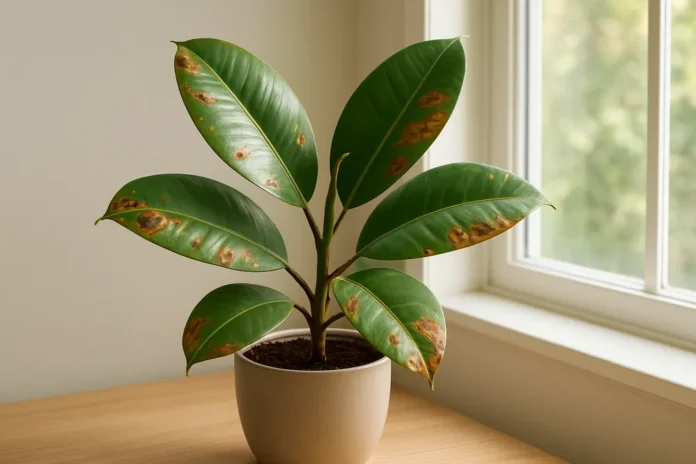
Brown spots on a rubber plant are usually caused by watering stress, harsh direct sun, dry air, temperature shock, pests, or leaf disease. The exact cause often depends on whether the spots look dry, soft, crispy, speckled, or surrounded by yellowing.
A rubber plant with brown spots can look alarming fast, especially because those big glossy leaves tend to show damage clearly. In my experience, the spots themselves are only part of the story. Where they appear, how they feel, and whether they spread quickly usually tells you much more than the color alone.
Most of the time, brown spotting on rubber plant leaves comes from a mismatch between moisture, light, and environment. Sometimes the problem is simple, like a plant sitting too close to a hot sunny window or staying wet too long after watering. Other times, pests or a leaf spot disease are involved, especially if the pattern looks speckled or keeps moving from leaf to leaf.
The good news is that rubber plants are fairly forgiving once you identify the trigger. Older damaged tissue will not turn green again, but healthy new growth is a good sign that your fix is working.
What the Brown Spots Are Telling You
Before changing your care routine, look closely at the spots themselves. Brown damage caused by overwatering often looks dark, soft, or blotchy and may show up alongside yellowing leaves. Underwatering and dry air usually create crisp, papery brown patches, often along edges or tips. Sunburn tends to appear as tan, bleached, or dry scorched areas on the side facing the window.
If the spots are tiny, numerous, and slowly increasing, pests or disease move higher on the suspect list. Spider mites can leave fine stippling that later turns bronze or brown. Fungal or bacterial leaf spots often look circular or irregular and may have a yellow halo around them. If a leaf feels mushy, smells off, or blackens at the base before browning, root trouble may be developing below the soil line.
- Dry, crisp, edge-based brown spots usually suggest underwatering, low humidity, or salt buildup.
- Dark, soft, spreading spots often suggest overwatering or root stress.
- Pale tan or scorched patches on exposed leaves often point to too much direct sun.
- Small spotted patterns with stippling, webbing, or sticky residue can mean pests.
- Circular spots with yellow halos or rapid spread can indicate leaf spot disease.
When I diagnose a rubber plant, I do not start with the ugliest leaf. I compare the newest leaf, a middle leaf, and the oldest leaf, because the age pattern often reveals the cause. Damage mostly on older leaves leans toward watering or root issues, while sudden injury on exposed upper leaves often points to sun or temperature stress.
Watering Problems Are the Most Common Cause
Overwatering and Soggy Soil
Rubber plants like evenly moist soil, but they do not want to sit in a wet pot for long. If the mix stays saturated, roots cannot breathe well and begin to weaken. That stress often shows up as brown or blackish spots, yellowing leaves, leaf drop, or a general dull appearance. If the soil smells sour, the pot feels heavy for days, or roots look brown and mushy, overwatering is a strong possibility.
Overwatering does not always mean you water too often on the calendar. It can also mean the pot drains poorly, the soil is too dense, the room is cool and dim, or the container is too large for the root ball. All of those keep moisture around the roots longer than the plant can use it.
Underwatering and Inconsistent Moisture
A rubber plant that gets too dry between waterings may develop crispy brown edges, dry patches, curling leaves, or drooping that does not fully recover. Repeated cycles of bone-dry soil followed by heavy soaking can also create spotting because the plant swings between stress states. This is especially common in homes with heat or air conditioning running hard.
- Water when the top 1 to 2 inches of soil feel dry, not on a rigid schedule.
- Empty saucers or cachepots so roots are not left standing in runoff.
- Use a pot with drainage holes and a chunky indoor potting mix.
- Adjust watering by season, with less frequent watering in winter.
If you are unsure whether your plant is too wet or too dry, lift the pot right after watering and again when it is ready for water. That weight difference teaches you more quickly than any calendar ever will.
Light, Temperature, and Humidity Can Damage Leaves
Too Much Direct Sun
Rubber plants like bright light, but intense direct afternoon sun can scorch the leaves, especially if a plant was moved suddenly from a lower-light spot. Sunburn usually looks tan, rust-colored, or dry brown on the side of the leaf facing the window. The tissue often feels thin and papery rather than soft.
A few hours of gentle morning sun is often fine indoors, but harsh west- or south-facing exposure through hot glass can be too much. If the spotting appeared soon after moving the plant closer to a window or outdoors for summer, leaf scorch is very likely.
Cold Drafts and Temperature Swings
Rubber plants dislike sudden chills. A leaf that touches a cold windowpane in winter or sits near an air conditioner vent can develop brown patches from temperature shock. Drafts from exterior doors, heating vents, and fluctuating indoor temperatures can also stress foliage enough to cause spotting and drop.
Dry Air and Low Humidity
While rubber plants tolerate average household humidity better than some tropicals, very dry indoor air can still show up as crispy margins or scattered dry patches. This tends to be more noticeable in winter, when indoor heat dries the air and the plant may already be under low-light stress.
- Move the plant to bright, indirect light if leaves are scorching.
- Keep foliage away from cold windows, heater blasts, and AC vents.
- Aim for stable room temperatures, ideally above 60 degrees Fahrenheit.
- If air is very dry, group plants together or use a humidifier rather than misting constantly.
Pests and Disease Can Leave Spotted Damage
Spider Mites, Scale, and Other Sap-sucking Pests
Pests are easy to miss at first on a rubber plant because the leaves are thick and dark. Spider mites often start as pale stippling, then the leaf takes on a dull bronze or brown cast. Fine webbing may show up along leaf veins or where leaves meet stems. Scale insects can look like small brown bumps stuck to stems and leaves, while thrips leave silvery scarring that later browns.
Pest damage is more likely if the plant sits in dry air, has been stressed recently, or came home from a store or greenhouse not long ago. Inspect both leaf surfaces, stems, and the points where leaves join branches.
Fungal and Bacterial Leaf Spot
Leaf spot diseases usually create repeated spot patterns rather than one-off damage. The spots may be circular, dark brown, or black with a yellow border, and they often enlarge slowly over time. Splashing water on leaves, poor airflow, crowded plants, and consistently wet soil create the kind of conditions these pathogens like.
If only one or two older leaves are affected, disease is less likely than simple environmental stress. But if fresh spots keep appearing on multiple leaves despite stable care, isolate the plant and treat it as a possible disease case until you know more.
- Check under leaves for webbing, tiny moving specks, or crusty bumps.
- Wipe leaves clean so you can tell whether new damage is still appearing.
- Prune badly spotted leaves if disease seems active and spreading.
- Avoid wetting the foliage late in the day when airflow is poor.
I get more accurate pest diagnoses after wiping the leaves first. Dust, mineral spots, and old dried sap can make harmless marks look serious, and a clean leaf lets you see whether the pattern is truly progressing.
Less Obvious Causes Home Gardeners Overlook
Fertilizer Burn and Salt Buildup
If your rubber plant has been fed heavily or watered for months with hard tap water, excess salts can build up in the soil. That can burn root tips and lead to brown edges, scattered patches, or a tired-looking plant that does not perk up after watering. You may also see a whitish crust on the soil surface or pot rim.
This is especially common when gardeners fertilize in winter, use more than the label rate, or feed a stressed plant hoping it will recover faster. Fertilizer cannot fix root stress, low light, or cold damage, and it sometimes makes the spotting worse.
Mechanical Injury and Old Leaf Damage
Not every brown mark signals an active problem. Rubber plant leaves bruise when bent, rubbed against walls, pinched during moving, or bumped while unfurling. That damage later dries into brown scars. If the spot is stable, isolated, and not spreading, it may just be cosmetic.
Rootbound Stress or Poor Soil Structure
A severely rootbound rubber plant can dry too fast and develop stress spotting even if your watering habits are reasonable. On the flip side, a dense peat-heavy mix that has broken down over time may stay too wet and starve roots of oxygen. Both situations create brown spotting for opposite reasons, which is why checking the roots and soil texture matters.
- Flush the pot thoroughly once in a while to reduce salt buildup if drainage is good.
- Fertilize only during active growth and at a moderate rate.
- Repot if roots circle heavily or the mix has become compacted and soggy.
- Do not worry about one or two old scars if new leaves look clean and healthy.
How to Fix Brown Spots on a Rubber Plant
Start by figuring out whether the problem is active or old. Existing brown tissue will stay damaged, so success is measured by stopping new spots and getting healthy new leaves. If the plant is in wet soil, let it dry appropriately and correct drainage issues. If it is getting too much direct sun, shift it back to bright, indirect light. If pests are present, treat thoroughly and repeat as needed.
Trim off the worst leaves only if they are heavily damaged or you need to improve airflow. If more than a few leaves are affected, avoid pruning everything at once, because the plant still needs foliage to recover. Also resist the urge to change five things in one weekend. One clear adjustment, followed by observation, usually gets better results.
- Inspect the plant in bright light, including leaf undersides and stems.
- Feel the soil 1 to 2 inches down and note whether it is soggy, evenly moist, or bone dry.
- Review the plant's location for recent changes in sun, drafts, heating, or AC exposure.
- Remove any dead or badly infected leaves with clean pruners.
- Correct the likely cause, such as adjusting watering, moving the plant, or treating pests.
- Watch new growth over the next several weeks instead of judging progress by old spots.
If root rot is even slightly on your radar, slide the root ball out and look. I have seen too many gardeners keep tweaking light and humidity when the real issue was a sour, airless potting mix hiding below the surface.
When the Plant Should Recover and when to Worry
A rubber plant recovering from minor stress can stabilize within a couple of weeks, but visible improvement often takes longer. Because damaged leaves do not heal, what you are really waiting for is cleaner new growth and the absence of fresh spots. If the plant holds its leaves, maintains firmness, and starts producing healthy new foliage, your correction is likely working.
You should be more concerned if brown spots are spreading rapidly, stems are soft, leaves are dropping in large numbers, or the soil smells rotten. Those signs suggest root or disease problems that need prompt attention. A plant with severe root rot may need repotting into fresh mix after dead roots are trimmed away.
- Good signs: no new spots, firmer leaves, healthy new growth, soil drying at a normal pace.
- Concerning signs: soft black tissue, foul-smelling soil, widespread leaf drop, recurring spots on new leaves.
- Slow recovery is normal in winter or low light, even after the main problem is corrected.
FAQ
Should I Cut Off Rubber Plant Leaves with Brown Spots?
Remove leaves only if they are badly damaged, diseased, or making the plant look crowded. If the spotting is minor, leave the leaf in place so it can keep helping the plant recover.
Can Brown Spots on a Rubber Plant Turn Green Again?
No. Brown tissue is dead and will not recover. Judge improvement by whether new leaves stay healthy and existing spots stop spreading.
Do Rubber Plants Get Brown Spots From Tap Water?
They can, indirectly. Hard water and repeated fertilizer use may cause salt buildup in the soil, which can contribute to brown edges or patches over time.
Can Too Much Sun Cause Brown Spots on a Rubber Plant?
Yes. Strong direct sun, especially through a hot window or after a sudden move into brighter light, can scorch leaves and leave tan to brown dry patches.
How Often Should I Water a Rubber Plant with Brown Spots?
Water based on soil dryness rather than a fixed schedule. In most homes, waiting until the top 1 to 2 inches of soil are dry works better than watering on the same day every week.
Are Brown Spots on Older Leaves Always a Problem?
Not always. Older leaves may show scars from past stress, handling damage, or normal aging. If the pattern is not spreading and new leaves look healthy, the issue may already be resolved.
Can Pests Really Cause Brown Spots on Thick Rubber Plant Leaves?
Yes. Spider mites, scale, and thrips can all damage rubber plant leaves, though the early signs are often subtle. Look for stippling, webbing, sticky residue, or brown bumps attached to stems and leaves.
Need help choosing the right fix fast? Read our indoor plant pest and watering guides to compare treatments, tools, and care products that actually solve leaf-spot problems.
