

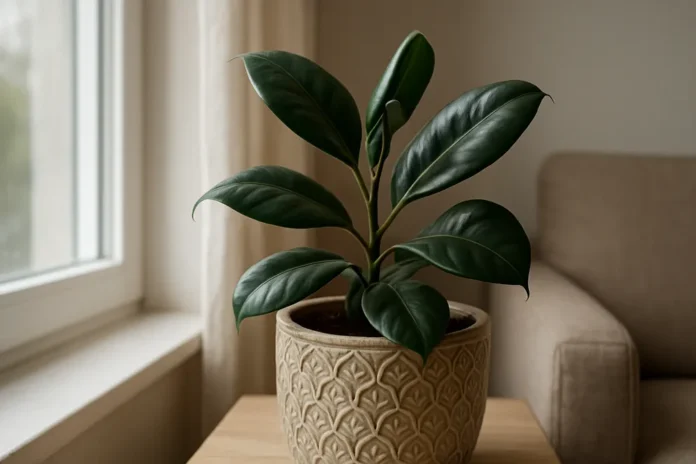
Rubber plant leaves usually curl because the plant is stressed by watering problems, dry air, temperature extremes, pests, or root issues. In many cases, the leaves are reacting to moisture imbalance rather than a disease.
A rubber plant with curling leaves is usually telling you that something in its environment has drifted out of balance. These plants are tough once settled in, but they do react pretty quickly to inconsistent watering, dry indoor air, cold drafts, and cramped roots. The good news is that curled leaves are often an early warning sign, which means you can usually correct the problem before the plant declines further.
When I troubleshoot curling leaves on a rubber plant, I do not start by assuming disease. I look at the potting mix, recent watering habits, room conditions, and whether the newest leaves or oldest leaves are reacting first. That pattern matters. A plant that curled after a missed watering behaves differently from one sitting in soggy soil for two weeks, and pest damage leaves its own clues as well.
If your plant still has firm stems and mostly healthy color, there is a good chance it will recover nicely. Rubber plants do not always uncurl old leaves completely, but once the cause is fixed, new growth usually comes in flatter and stronger.
What Curling Leaves Usually Mean on a Rubber Plant
Leaf curling is a stress response. Rubber plants curl to reduce water loss, protect tender tissue, or cope with roots that are not delivering moisture properly. Sometimes the edges roll inward. Other times the whole leaf cups, twists slightly, or looks puckered. That shape change does not come from one single problem, so the surrounding symptoms are what help narrow it down.
- Curling with dry, crispy edges often points to underwatering, dry air, or heat stress.
- Curling with yellowing, drooping, or a heavy wet pot often suggests overwatering or root stress.
- Curling on fresh new leaves can be linked to low humidity, inconsistent moisture, or pests feeding on tender growth.
- Curling with speckles, sticky residue, or distorted leaf surfaces can indicate insects such as spider mites, thrips, or scale.
When I inspect a rubber plant, I pay close attention to whether the oldest leaves or the newest leaves are curling first. Older leaves usually reflect root-zone problems like watering errors, while newer leaves often reveal humidity issues or pests before anything else.
Watering Problems Are the Most Common Cause
Underwatering and Inconsistent Moisture
If the potting mix gets too dry for too long, rubber plant leaves may curl inward to conserve moisture. You might also notice limp leaves, a lighter pot, dry soil pulling away from the sides of the container, and lower leaves dropping sooner than expected. This often happens when the plant is watered on a fixed schedule instead of according to how fast the soil actually dries in that season.
Inconsistent watering can cause curling even if you are not truly underwatering every time. A cycle of bone dry soil followed by a heavy soaking stresses the roots and makes foliage react unevenly. That is especially common in bright summer windows, heated winter rooms, or small nursery pots that dry faster than people expect.
Overwatering and Oxygen-starved Roots
Too much water can also lead to curled leaves because roots need oxygen as much as they need moisture. When soil stays wet for long stretches, roots weaken and stop moving water efficiently. The leaves may curl, droop, yellow, or feel softer than normal. Many gardeners are surprised by this because the plant looks thirsty even though the soil is wet.
- Waterlogged soil that stays damp for a week or more
- A pot without drainage holes
- Dense potting mix that compacts easily
- A decorative cachepot holding standing water
- Reduced light in winter while watering stays the same
I get better results by judging when to water from the top few inches of soil and the weight of the pot, not from the calendar. Rubber plants like a clear wet-to-damp cycle, but they do not like sitting soggy or being allowed to turn dust dry over and over.
Low Humidity and Dry Indoor Air Can Curl Leaf Edges
Rubber plants tolerate average household humidity fairly well, but they can still react when the air turns especially dry. This shows up most often in winter when heating systems run constantly, or in summer if the plant sits near strong air conditioning. Leaves may curl at the edges, especially newer ones, and the plant can look a bit dull rather than glossy.
Dry air becomes more of a problem when it combines with another stressor, such as missed watering or too much direct hot sun. On its own, low humidity may not seriously damage a mature rubber plant, but it can contribute to distorted new leaves and make recovery slower.
- Leaf margins rolling inward without major yellowing
- Brown tips or edges on otherwise green leaves
- New leaves emerging smaller or slightly misshapen
- A plant placed near vents, radiators, or drafty windows
Temperature Stress and Sudden Environmental Changes
Rubber plants prefer steady warmth. Cold drafts, chilly windows, heat blasts, and abrupt location changes can all trigger curling. If your plant was recently moved outdoors, brought home from a store, shifted into stronger sun, or placed near an exterior door, the leaves may respond by curling before any major discoloration appears.
Cold stress is especially common when leaves touch a windowpane in winter or when the plant sits in the path of repeated drafts. Heat stress from intense afternoon sun can cause leaf edges to curl along with pale or scorched patches. In both cases, the issue is not just temperature itself but the speed of the change.
- Leaves curling after a recent move
- Damage concentrated on the side facing a hot window or cold draft
- Scorched, bleached, or papery areas after direct harsh sun
- A healthy plant declining shortly after seasonal HVAC changes
Pests That Distort Rubber Plant Leaves
Pests are another important cause of curling, especially when the newest leaves look twisted, puckered, or undersized. Spider mites, thrips, scale, and mealybugs feed on plant sap and can distort tender developing foliage. Because rubber plants have thick, shiny leaves, early pest symptoms can be easy to miss unless you inspect the undersides and the midrib carefully.
Spider Mites
Spider mites are common in warm, dry rooms. They often cause slight curling, fine stippling, a dusty look, and delicate webbing on leaf undersides or where leaves meet stems. Damage tends to build gradually and may be worse on plants that are already stressed by dry air.
Thrips and Other Sap Feeders
Thrips can cause new leaves to emerge deformed or curled, sometimes with silvery streaks or rough patches. Scale and mealybugs are easier to spot once established. They may leave sticky honeydew, attract sooty mold, and weaken the plant enough that leaves curl or lose their normal shape.
If a rubber plant is curling only on fresh growth while older leaves still look mostly normal, I always check for pests before I blame fertilizer or humidity. Insect feeding often shows up first where tissue is softest, and that can save you from making unnecessary soil changes.
Rootbound Plants and Potting Mix Problems
A rubber plant that has outgrown its pot may start curling leaves because the roots are packed so tightly that watering becomes erratic. In a rootbound pot, water can race down the sides without fully soaking the root ball, or the plant may dry out far too fast between waterings. You may feel like you are watering correctly, but the root zone is not staying evenly moist.
Old potting mix can cause similar trouble. As mix ages, it can compact, lose structure, and either stay too wet or become hard to rewet once dry. Both conditions stress the roots. If your rubber plant has been in the same soil for years, curling can be one sign that the potting environment needs attention.
- Roots circling densely at the bottom or surface
- Water running straight through without wetting the root ball evenly
- The plant wilting or curling again soon after watering
- Little room left in the pot for fresh mix
- Soil that smells stale, sour, or remains compacted
Can Fertilizer or Water Quality Cause Curling?
Yes, though these are usually secondary causes rather than the first thing to suspect. Excess fertilizer can damage roots and pull moisture away from leaf tissue, which may lead to curled edges, browning tips, or salt crust on the soil surface. This is more likely if you fertilize heavily in low light or apply plant food to very dry soil.
Water quality can matter too, especially in homes with very hard water or softened water high in salts. Over time, mineral buildup can stress sensitive roots. Rubber plants are not the fussiest houseplants in this regard, but if you have ruled out watering, pests, and pot size, a periodic flush with plain water or switching to filtered water may help reduce ongoing stress.
How to Tell Which Cause Is Affecting Your Plant
Start with the simplest clues. Feel the soil several inches down. Lift the pot if possible. Look under the leaves. Think about what changed recently. Curling that appeared after a move, a missed watering, a cold snap, or a repot often has a very different explanation from gradual curling on a neglected plant.
- Check soil moisture below the surface, not just the top crust.
- Look for yellowing, mushiness, crisp edges, spots, or pest residue.
- Inspect leaf undersides and new growth for mites, thrips, scale, or mealybugs.
- Review recent changes in light, temperature, placement, or watering frequency.
- Slide the root ball out only if the plant seems chronically wet, chronically dry, or obviously rootbound.
One of the biggest mistakes is trying to fix every possible cause at once. If you water more, move the plant, fertilize, spray leaves, and repot all in the same weekend, it becomes much harder to know what actually helped or what made things worse. Rubber plants respond best to steady, deliberate corrections.
If the plant is still overall healthy, I prefer to correct the most likely environmental issue first and then watch the next new leaf. New growth tells the truth faster than old damaged leaves, which may stay curled even after the problem is solved.
What to Do to Fix Curling Leaves
If the Soil Is Too Dry
Water thoroughly until excess drains out, making sure the full root ball is moistened. If the mix has become very dry and water is racing through, soak the pot longer so the root ball can rehydrate evenly. Then return to watering when the top portion of the mix dries, rather than letting the plant swing from extreme dry to extreme wet.
If the Soil Is Staying Too Wet
Reduce watering frequency and make sure the container drains freely. Empty any standing water from saucers or cachepots. If the mix is dense and sour or roots are declining, repot into a chunky, well-draining indoor plant mix. Do not fertilize until the plant is actively recovering.
If Humidity or Air Flow Is the Issue
Move the plant away from heating vents, air conditioners, and direct blasts of dry air. Grouping plants together can help raise local humidity. A small humidifier nearby is often more useful than occasional misting, which gives only brief results.
If Pests Are Present
Isolate the plant, wipe leaves, and treat based on the pest involved. Insecticidal soap, horticultural oil, or neem-based treatments can help, but coverage matters. You need to reach undersides, stems, and developing leaves, and repeated applications are usually necessary.
If the Plant Is Rootbound
Repot into a container just one size larger with fresh, airy mix. Avoid jumping to a much larger pot, since extra unused soil can stay wet too long. After repotting, give the plant bright indirect light and a little time to settle before expecting old foliage to improve.
When Curled Leaves Will Recover and when They Will Not
A common question is whether curled leaves will flatten back out. Sometimes they do partly, especially if the problem was brief and the leaf is still young. But many older leaves remain somewhat misshapen even after conditions improve. That does not mean the treatment failed.
The best sign of recovery is healthy new growth. If fresh leaves emerge broad, glossy, and relatively flat, your corrections are working. Remove badly damaged leaves only if they are mostly yellow, brown, or no longer contributing much to the plant. Otherwise, keeping them in place can still help the plant photosynthesize while it rebounds.
How to Prevent Curling in the Future
Rubber plants stay happiest with consistent care rather than perfect care. Bright indirect light, a pot with drainage, moderate watering, and stable indoor temperatures solve most of the curling issues I see. Prevention really comes down to reducing sudden swings.
- Water based on soil dryness and pot weight, not a rigid schedule.
- Use a well-draining potting mix and a container with drainage holes.
- Keep the plant out of harsh afternoon sun, cold drafts, and heat vents.
- Check leaves regularly for pests, especially the undersides and new growth.
- Repot before the plant becomes severely rootbound.
- Fertilize lightly during active growth instead of feeding year-round.
If you build a habit of checking the plant once a week, small problems are much easier to correct than major ones. A quick look at the leaves, soil, and pot condition often catches the cause before curling turns into yellowing, leaf drop, or root damage.
FAQ
Should I Cut Off Curled Rubber Plant Leaves?
Only remove leaves that are badly damaged, mostly yellow, or brown and no longer useful. Slightly curled leaves can still support the plant, and keeping them is fine while you wait for healthy new growth.
Can Too Much Sun Make Rubber Plant Leaves Curl?
Yes. Hot direct sun, especially through a strong afternoon window, can curl leaf edges and sometimes cause pale or scorched patches. Rubber plants usually do best in bright light with protection from the harshest sun.
Do Rubber Plant Leaves Uncurl After I Fix the Problem?
Sometimes younger leaves improve, but older leaves may stay somewhat curled. The better sign is that new leaves grow in flatter and healthier after conditions are corrected.
How Often Should I Water a Rubber Plant with Curling Leaves?
There is no single schedule that fits every home. Water when the upper part of the potting mix has dried and the pot feels lighter, then let excess drain away fully.
Can Low Humidity Alone Cause Curling?
It can, especially on new leaves or in heated winter rooms, but it often works together with another stress like missed watering or hot air flow. Dry air by itself is usually a contributing factor rather than the only issue.
What Pests Cause Rubber Plant Leaves to Curl?
Spider mites, thrips, scale, and mealybugs can all distort or curl leaves. The newest growth is often the first place to show twisting, puckering, stippling, or sticky residue.
Is Curling a Sign of Root Rot?
It can be if the plant is also yellowing, drooping, and sitting in wet soil for long periods. Curling by itself does not confirm root rot, but paired with soggy conditions it is worth checking the roots.
Need help choosing the right fix fast? Read our detailed rubber plant care and treatment guides to compare the best potting mixes, pest controls, and watering tools for healthier new growth.
