

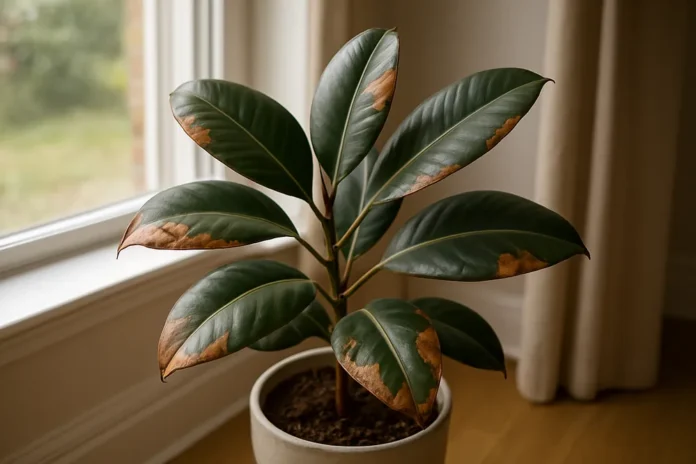
Rubber plant leaves usually turn brown because of watering stress, dry air, too much direct sun, salt buildup, or temperature shock. Brown spots can also come from root trouble, pests, or leaf age.
A rubber plant is usually a pretty steady houseplant, so when the leaves start browning, it tends to get your attention fast. In my experience, rubber plant leaves turning brown is rarely random. The plant is usually reacting to something in its environment, and the pattern of the damage often tells you what changed.
Sometimes the browning shows up as crispy tips, sometimes as large dry patches, and sometimes as soft dark spots that spread. Those details matter. A leaf that is browning from underwatering does not look the same as a leaf that was scorched by afternoon sun or stressed by soggy soil.
The good news is that most brown-leaf problems on rubber plant are fixable if you catch them early. Once you know what kind of browning you are seeing, it gets much easier to correct the real cause instead of guessing.
What Brown Leaves Are Telling You
Brown tissue on a rubber plant is dead tissue, so the damaged part will not turn green again. What you are really trying to do is stop the problem from continuing onto newer leaves. That is why it helps to focus less on the single ugly leaf and more on the overall pattern across the plant.
- Brown, crispy edges usually point to dryness, low humidity, inconsistent watering, or salt buildup.
- Large tan or brown patches can suggest sun scorch, especially if the plant recently moved into brighter direct light.
- Dark brown or nearly black soft spots often suggest overwatering, root stress, or a disease issue.
- A single older bottom leaf turning brown and dropping can simply be normal aging.
- Brown spots with yellow halos may indicate a moisture-related fungal or bacterial problem.
When I diagnose browning on a rubber plant, I always compare an old lower leaf with the newest fully opened leaf. If only older leaves are declining, I think about roots, watering rhythm, or natural aging first. If tender new growth is browning, I pay much closer attention to dry air, fertilizer salts, or direct sun.
Watering Problems Are the Most Common Cause
Overwatering and Soggy Roots
Rubber plants like evenly moist soil, but they do not like sitting in wet potting mix for long stretches. If the roots stay waterlogged, they lose access to oxygen and begin to weaken. That stress can show up as brown spots, dark leaf margins, leaf drop, and a general dull, unhappy look.
Overwatering is not just about how often you water. It can also come from a heavy soil mix, a pot without proper drainage, a decorative cachepot that traps runoff, or winter conditions that slow the plant's water use. If the soil smells sour, stays wet for many days, or the leaves feel soft before they brown, excess moisture is a strong suspect.
Underwatering and Prolonged Dryness
When a rubber plant gets too dry for too long, the leaves often develop crispy brown tips or edges. The potting mix may pull away from the sides of the pot, and the leaves can droop slightly before the browning becomes obvious. Severe dryness can also cause leaves to curl or fall.
This often happens when watering is too light. A quick splash on the surface may dampen the top inch while leaving the root ball dry underneath. It can also happen after a plant becomes root-bound, because dense roots make it harder for the potting mix to rehydrate evenly.
- If the leaves are soft, blotchy, and the soil stays wet, think overwatering.
- If the leaves are dry, crisp, and the soil dries hard between waterings, think underwatering.
- If the plant swings between bone dry and soaked, inconsistent watering may be the real problem.
I have better results watering rubber plants deeply and then waiting until the top 1 to 2 inches of soil dry out, rather than giving frequent small sips. That keeps the root zone more even and makes symptoms easier to read.
Dry Indoor Air Can Brown the Tips and Edges
Rubber plants tolerate average home humidity fairly well, but very dry indoor air can still show up as brown tips, thin crispy margins, or a generally tired appearance. This is especially common in winter when forced-air heat runs constantly, or when the plant sits near a vent, radiator, or fireplace.
Low humidity tends to damage the outer parts of the leaf first because that is where moisture loss shows up quickly. You may notice the center of the leaf remains green while the tip or edge turns dry and papery.
- Keep the plant away from heating and cooling vents.
- Group it near other houseplants to raise the local humidity slightly.
- Use a small humidifier if your indoor air is consistently very dry.
- Avoid placing the plant in the path of frequent blasts of hot or cold air.
Misting is often overused as a humidity fix. It may give a brief boost, but it usually does not change room humidity enough to solve persistent browning. A better approach is improving the environment around the plant more consistently.
Too Much Direct Sun Can Scorch the Leaves
Rubber plants like bright light, but harsh direct sun, especially hot afternoon sun through glass, can burn the leaves. Sun scorch usually appears as tan, bleached, or brown patches on the side of the plant facing the window. The damaged area often looks dry and flat rather than soft.
This problem often follows a sudden move. A plant that was comfortable in medium light may not handle a south- or west-facing window right away. Even healthy leaves can burn if they are not acclimated gradually.
- Scorch usually affects the most exposed leaves first.
- The pattern is often strongest on the window-facing side.
- Damage appears after intense light, not after a watering event.
- Newer damage stops once the plant is moved to bright indirect light.
If you want to move your rubber plant into brighter conditions, do it slowly over a week or two. A little gentle morning sun is often fine, but strong midday or late-day sun can be too much indoors.
Mineral Buildup and Fertilizer Burn Can Mimic Drought Stress
Brown tips are not always from lack of water. Sometimes the roots are dealing with too many dissolved salts from fertilizer or hard tap water. This can pull moisture away from root tissues and lead to tip burn, edge browning, and slowed growth even when the soil does not seem especially dry.
This is especially likely if you fertilize heavily, fertilize during winter, or water in a way that never flushes the pot thoroughly. White crust on the soil surface or around the drainage holes is another clue that salts may be building up.
- Pause fertilizer if the plant is stressed or not actively growing.
- Flush the pot with clean water occasionally to wash out excess salts.
- Use a balanced houseplant fertilizer at a modest rate during active growth.
- If your tap water is very hard, filtered or rainwater may reduce recurring tip burn.
I get suspicious of fertilizer burn when the newest leaves stay smaller than normal and the browning sits mostly at the tips, while the soil moisture seems otherwise reasonable. It is one of those problems that looks like underwatering until you notice the pot has been fed a little too enthusiastically.
Cold Drafts and Temperature Swings Can Damage Foliage
Rubber plants dislike sudden temperature drops. If a leaf gets hit by a cold draft from a window, door, or air conditioner, it may develop brown patches or droop and then decline. Chilling injury can also happen after bringing a plant home in cold weather without protection.
These plants generally prefer stable indoor temperatures. If the room swings sharply between warm days and chilly nights, the plant may show stress even if it is technically still alive and growing.
- Keep rubber plants away from drafty exterior doors.
- Do not let leaves press against cold glass in winter.
- Avoid placing the pot directly under air conditioning vents.
- Protect the plant during transport if outdoor temperatures are low.
Root Problems, Tight Pots, and Poor Soil Structure
Sometimes the browning is less about a single care mistake and more about a root system that is no longer functioning well. A root-bound rubber plant may dry out too fast, resist absorbing water evenly, or show brown edges from repeated stress. On the other end of the spectrum, a dense compacted mix can stay wet too long and suffocate roots.
If your plant needs water constantly, dries out within a day or two, or water runs straight through the pot without soaking in, check whether the roots have filled the container. If the soil is old, heavy, and slow to drain, repotting into a fresh airy mix can help a lot.
For most home growers, a well-draining indoor potting mix amended with ingredients like perlite or pine bark works better than a dense moisture-retentive blend. The goal is moisture retention with enough air space around the roots.
Pests and Disease Are Less Common but Still Possible
Sap-sucking Pests
Spider mites, scale, mealybugs, and thrips can all stress a rubber plant enough to cause browning or leaf decline. The damage may start as stippling, dullness, or distorted growth before turning into brown spots or dead patches. Dry conditions often make spider mites more likely.
Check the undersides of leaves, the midrib, and where the leaf meets the stem. Fine webbing, sticky residue, tiny moving specks, or cottony clusters are all warning signs.
Leaf Spot and Related Disease Issues
Fungal or bacterial leaf spots are more likely when foliage stays wet, air circulation is poor, or the plant is already weakened by overwatering. These spots are often dark brown with defined edges, and they may spread or merge over time.
- Isolate the plant if you suspect pests or disease.
- Remove badly affected leaves with clean scissors.
- Avoid wetting the foliage repeatedly if leaf spot is present.
- Treat confirmed pests with an appropriate houseplant method such as insecticidal soap, horticultural oil, or manual removal.
How to Fix Brown Leaves on a Rubber Plant
Once you identify the likely cause, focus on making one or two meaningful corrections instead of changing everything at once. Rubber plants respond best to steady care. If you overhaul the light, watering, fertilizer, and pot all on the same day, it becomes much harder to tell what actually helped.
- Check the soil moisture several inches down, not just on the surface.
- Make sure the pot has drainage and that excess water can escape fully.
- Move the plant into bright indirect light if it is getting harsh direct sun.
- Keep it away from vents, cold drafts, and heater blasts.
- Pause fertilizer until you see healthy new growth.
- Inspect leaves and stems closely for pests.
- Repot only if the soil is compacted, sour, or badly root-bound.
You can trim off brown tips for appearance if you like, but do not cut into healthy green tissue more than necessary. If a leaf is mostly damaged, it is usually better to remove it cleanly so the plant can put its energy into healthy growth.
Judge recovery by new growth, not by the damaged leaves you already have. If the next leaf emerges healthy and the browning stops spreading, your correction is probably working even if the old leaves still look rough.
When Brown Leaves Are Normal
Not every brown leaf means your plant is in trouble. A mature rubber plant will occasionally drop an older lower leaf as it grows upward. That leaf may yellow first, or it may simply develop a dull brown decline and fall off.
If the rest of the plant looks healthy, the newer leaves are glossy and firm, and only one old leaf is fading now and then, that is usually normal. Trouble is more likely when multiple leaves brown at once, the damage keeps spreading, or new growth starts showing symptoms too.
How to Prevent Future Browning
Prevention mostly comes down to consistency. Rubber plants are forgiving, but they do best when light, watering, and temperature stay fairly stable. A plant that is repeatedly stressed and then corrected tends to keep showing leaf damage in cycles.
- Water thoroughly, then let the top layer of soil dry before watering again.
- Use a pot with drainage and a loose, well-aerated mix.
- Give bright indirect light and acclimate slowly to stronger sun.
- Keep the plant in a room with steady, comfortable indoor temperatures.
- Fertilize lightly during active growth instead of feeding heavily year-round.
- Inspect leaves regularly so pests or spotting are caught early.
I also like to rotate rubber plants every week or two if they are growing toward a window. It helps them develop evenly and makes it easier to notice fresh damage before it becomes a bigger problem.
FAQ
Should I Cut Off Brown Rubber Plant Leaves?
If a leaf is mostly brown or badly damaged, you can remove it with clean scissors or pruners. If only the tip is brown, you can trim just the dead portion for appearance, leaving a small margin so you do not cut into healthy tissue.
Can Brown Leaves Turn Green Again?
No. Brown parts of the leaf are dead and will not recover. The goal is to stop new damage and encourage healthy future growth.
How Often Should I Water a Rubber Plant with Brown Leaves?
There is no perfect schedule because light, pot size, season, and soil all change how fast the plant dries. Water when the top 1 to 2 inches of soil feel dry, then water deeply enough that excess drains out.
Why Are Only the Tips of My Rubber Plant Leaves Brown?
Brown tips usually point to dry air, underwatering, inconsistent watering, or salt buildup from fertilizer or hard water. It is less often a disease issue when the damage is limited mostly to the tips.
Why Does My Rubber Plant Have Brown Spots in the Middle of the Leaves?
Brown spots in the middle of the leaf can come from sun scorch, overwatering-related stress, or leaf spot disease. The texture helps narrow it down, because dry flat patches often suggest scorch while soft dark spots suggest excess moisture or disease.
Is Tap Water Causing My Rubber Plant Leaves to Turn Brown?
It can contribute, especially if your tap water is very hard or high in dissolved minerals. Over time that can lead to salt buildup in the pot and show up as brown tips or edges.
Do Rubber Plants Need Higher Humidity to Stop Brown Leaves?
They do not need jungle-level humidity, but very dry indoor air can cause browning around the edges and tips. Keeping the plant away from vents and using a humidifier during dry periods can help.
When Should I Repot a Rubber Plant with Brown Leaves?
Repot if the roots are packed tightly, the soil has become dense and compacted, or the mix stays soggy for too long. If the browning started from sun, drafts, or fertilizer, repotting may not be necessary.
Want to stop the guesswork? Read our guide to the best indoor plant soils, moisture meters, and houseplant fertilizers so you can fix brown rubber plant leaves faster and keep new growth healthy.
