

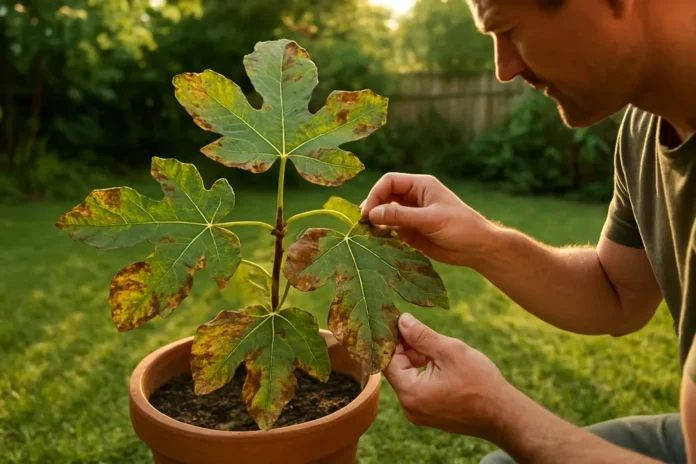
Fig tree leaves usually turn brown because of watering stress, heat or sun scorch, root trouble, pests, disease, or seasonal leaf aging. The exact cause often shows up in where the browning starts and how fast it spreads.
Brown leaves on a fig tree can be alarming, especially when the plant looked vigorous just a week earlier. In my experience, fig tree leaves turning brown is usually not one mystery problem but a short list of common issues that show up in different ways. The pattern matters. Crispy brown edges suggest something different from dark blotches, and a few older leaves browning low on the plant mean something different from sudden browning all over.
Figs are tough plants, but they do have a few weak spots. They dislike inconsistent watering, they can scorch in extreme heat, and container-grown plants are especially quick to show stress. If your fig tree is browning, the fastest way to get to the right answer is to look at the leaves, the soil, the weather, and the roots together instead of guessing from color alone.
Below, I will walk through the most likely causes, what each one usually looks like, and how to respond without overcorrecting. That matters with figs, because fixing the wrong problem often creates a second one.
What the Browning Pattern Usually Means
Before you reach for fertilizer or a spray bottle, look closely at how the damage appears. Browning that starts at the leaf edges and tips often points to water stress, salt buildup, or heat. Large tan patches on the sunniest side of the tree often indicate sun scorch. Dark brown or blackish spots with yellow halos lean more toward fungal or bacterial leaf disease. If whole leaves yellow first and then turn brown, roots or watering are usually involved.
- Crispy brown edges or tips: underwatering, irregular watering, hot dry wind, or excess fertilizer salts
- Soft brown patches on leaves that later dry out: overwatering or root stress
- Round or irregular dark spots: leaf spot diseases
- Bleached tan areas on upper exposed leaves: sunburn or heat scorch
- Lower older leaves browning late in the season: normal aging or seasonal drop
When I diagnose figs, I always compare new leaves with old leaves. If the newest growth still looks decent but older leaves are browning, I think stress rather than a fast-moving disease. If fresh growth is immediately damaged, I pay closer attention to roots, watering, and heat exposure.
Watering Problems Are the Most Common Cause
Underwatering and Drought Stress
Figs can handle some dryness once established in the ground, but they still respond badly to long gaps followed by heavy soaking. Leaves may droop, then develop brown, crispy margins or entire dry patches. Fruit may also drop early. In containers, this happens especially fast because potting mix can go from moist to bone dry in a day or two during summer.
If the soil is dry several inches down and the pot feels unusually light, drought stress is a strong possibility. Trees planted near walls, driveways, or reflected heat often show this first because the root zone heats up and dries out more quickly.
Overwatering and Soggy Roots
Too much water can look surprisingly similar at first. Leaves may wilt even though the soil is wet, then develop brown sections as roots struggle to take up oxygen. Over time, leaves may yellow, brown, and drop. In a pot, constantly wet mix can lead to root rot, which makes the top growth look thirsty even when the roots are sitting in moisture.
- Underwatered figs often have dry, crisp tissue and dry soil
- Overwatered figs often have limp leaves, yellowing, and soil that stays wet too long
- A sour smell from the potting mix suggests root problems
- Water pooling around in-ground figs points to poor drainage
If you are unsure whether the problem is too little water or too much, dig or probe before watering again. I would much rather confirm soil moisture than chase wilt with more water, because overwatering a stressed fig is one of the easiest ways to make browning worse.
Heat, Sun Scorch, and Environmental Stress
Fig trees love warmth, but extreme heat can still burn foliage, especially on potted plants and recently moved trees. Browning from heat stress often shows up on leaves facing the hottest afternoon sun. The damaged areas may start pale, tan, or papery before turning brown. During heat waves, dry wind can intensify the effect and crisp the edges.
This is especially common when a fig has been grown in partial shade and then moved suddenly into full sun. Indoor-overwintered figs placed outside too quickly can scorch badly. The same thing can happen after hard pruning, when previously shaded inner leaves are suddenly exposed.
- Damage is often worst on the sunniest or wind-exposed side
- Leaf tissue may look bleached before it turns brown
- Newly moved container figs are more vulnerable than established in-ground trees
- Hot patios, brick walls, and black nursery pots intensify root and leaf stress
If heat or scorch is the cause, damaged leaves usually do not recover, but the tree can still push healthy new growth once conditions improve. The goal is to prevent more injury rather than trying to reverse the burned tissue.
Nutrient Issues and Salt Buildup
A fig that is underfed usually looks pale and grows slowly before it develops much browning. Browning alone is less often caused by a simple nutrient deficiency, but potassium shortages and general nutrient imbalance can contribute to scorched-looking leaf edges or weak foliage that collapses under heat stress.
More often, I see browning caused by too much fertilizer rather than too little. Excess fertilizer leaves salts in the root zone, and those salts can burn roots and leaf edges. This is especially common in containers where nutrients accumulate because there is less natural flushing from rainfall.
- Brown tips or margins after feeding can suggest fertilizer burn
- White crust on the soil surface or pot rim points to salt buildup
- Fast, weak, lush growth with later browning can happen after overfeeding with high nitrogen products
- Very poor soil can contribute to stress, but figs usually need moderate feeding rather than constant fertilizer
If you suspect fertilizer burn, stop feeding for a while and let the tree stabilize. For potted figs, occasional deep watering that drains freely can help rinse excess salts from the mix, as long as the container has good drainage.
Pests and Diseases That Cause Brown Leaves
Common Pest Damage
Spider mites, scale, and sap-sucking insects can weaken fig leaves and lead to browning, especially during hot dry weather. Spider mites are tiny, but the clues are fine webbing, stippled leaves, and a dull, dusty look before the leaves bronze or brown. Scale insects may appear as small bumps along stems and leaf undersides.
Leaf Spot and Fungal Problems
Fungal leaf spots can begin as small brown, rust-colored, or dark lesions and spread during warm, humid weather. In severe cases, leaves yellow around the spots and drop early. Poor airflow, overhead watering, and crowded growth make this worse.
Root Disease
When roots stay wet too long, root disease becomes more likely. The top growth may look scorched, droopy, or patchy brown because the roots are no longer functioning properly. This is often mistaken for drought until the gardener notices the soil never actually dries.
- Check leaf undersides for mites, eggs, webbing, or scale
- Remove and discard heavily spotted fallen leaves
- Avoid wetting foliage late in the day if disease pressure is high
- Improve spacing and airflow around dense potted or in-ground figs
A few ugly leaves do not always mean you need a spray. If spotting is limited and new growth looks clean, I usually focus first on airflow, watering habits, and sanitation. Figs often outgrow mild leaf issues once the weather shifts.
Seasonal Leaf Browning Can Be Normal
Not every brown fig leaf is a problem. In late summer or fall, older leaves often yellow, brown, and drop as the tree shifts toward dormancy. This is especially noticeable in climates with cooling nights, shorter days, or after a productive fruiting cycle.
Normal seasonal browning usually starts gradually on older leaves and does not race through the entire canopy overnight. The tree otherwise looks stable, stems remain firm, and there are no obvious signs of rot, pests, or widespread spotting.
If your fig is entering its natural dormant period, the best response is usually to let that process happen. Trying to push tender new growth with extra water or fertilizer late in the season often does more harm than good.
How to Fix Brown Leaves on a Fig Tree
Once a fig leaf has turned fully brown, that tissue will not green up again. The real fix is to stop further damage and judge recovery by healthy new growth. Start with the simplest corrections first rather than changing everything at once.
- Check soil moisture several inches deep before watering.
- Make sure containers drain freely and are not sitting in water.
- Water deeply and consistently instead of shallow daily sprinkles.
- Protect stressed potted figs from extreme afternoon heat for a week or two if needed.
- Pause fertilizer if you recently fed heavily or see salt crusts.
- Inspect the undersides of leaves and stems for mites or scale.
- Remove badly damaged or diseased fallen leaves from around the tree.
- Watch the next flush of growth before making additional changes.
For container figs, repotting may help if the mix has become compacted, sour-smelling, or hydrophobic. Use a chunky, well-draining potting mix rather than dense garden soil. For in-ground figs, improving drainage and adjusting irrigation are usually more important than adding amendments at random.
I try to measure progress on figs by the newest leaves, not the damaged ones already hanging on. If the next set of leaves comes out full-sized and green, your correction is probably working even if the old foliage still looks rough.
When Brown Fig Leaves Mean a Bigger Problem
Sometimes brown leaves are a warning that the whole tree is in decline. If browning is paired with stem dieback, mushy roots, severe defoliation, foul-smelling soil, or no healthy new growth during the growing season, the issue may be more serious than ordinary stress.
A fig that stays wilted despite proper moisture, or one that declines quickly after repeated watering adjustments, deserves a closer look at the root system. In a pot, gently slide the root ball out if possible. Healthy roots are generally firm and light colored. Dark, mushy, or foul-smelling roots suggest rot.
If disease is spreading rapidly through many leaves, if the tree is valuable or mature, or if you are seeing repeated collapse year after year, local extension guidance or a professional diagnosis can save time and prevent unnecessary treatments.
How to Prevent Brown Leaves in the Future
Prevention is mostly about consistency. Fig trees handle a lot better than many fruit plants when their roots are healthy and moisture swings are not extreme. Most recurring brown-leaf problems come from a cycle of stress, recovery, and stress again.
- Keep watering even and adjust for heat, wind, and container size
- Use pots with generous drainage holes and a fast-draining mix
- Acclimate figs gradually when moving them into stronger sun
- Feed moderately rather than frequently
- Clean up diseased fallen leaves and improve airflow
- Mulch in-ground figs to buffer soil temperature and moisture swings
- Monitor plants after heat waves, repotting, pruning, or relocation
When figs are given the right balance of sun, drainage, and steady moisture, they usually rebound well. Even a plant that looks rough now can recover nicely once the underlying stress is corrected.
FAQ
Should I Cut Off Brown Fig Leaves?
You can remove fully brown, dead leaves if they are unsightly, but there is no need to strip the tree aggressively. Leave partly green leaves in place unless they are clearly diseased, because they can still help the plant photosynthesize.
Can Too Much Sun Make Fig Leaves Turn Brown?
Yes. Intense afternoon sun, especially after a sudden move from shade to full sun, can scorch fig leaves and leave tan or brown papery patches.
How Often Should I Water a Fig Tree with Brown Leaves?
Water based on soil moisture, not a fixed calendar. Figs do best when the root zone is allowed to dry slightly between deep waterings, but not to the point of repeated drought stress.
Why Are My Potted Fig Tree Leaves Browning Faster than an In-ground Fig?
Container figs heat up and dry out faster, and they are more vulnerable to salt buildup and root crowding. Small pots and dense potting mix make the problem worse.
Do Brown Spots on Fig Leaves Mean Disease?
Sometimes, but not always. Distinct dark spots can indicate fungal leaf spot, while broader crispy browning is more often linked to watering stress, heat, or fertilizer burn.
Will Brown Fig Leaves Turn Green Again?
No. Brown tissue is dead and will not recover. Look for healthy new leaves as the sign that your tree is improving.
Is It Normal for Fig Leaves to Turn Brown Before Winter?
Yes. Older fig leaves often yellow, brown, and drop as the tree heads into dormancy, especially in fall or after cool nights begin.
Need help choosing the right fix for a stressed fig? Read our in-depth fig tree care and treatment guides to compare watering tools, fertilizers, and pest controls that actually match the problem.
