

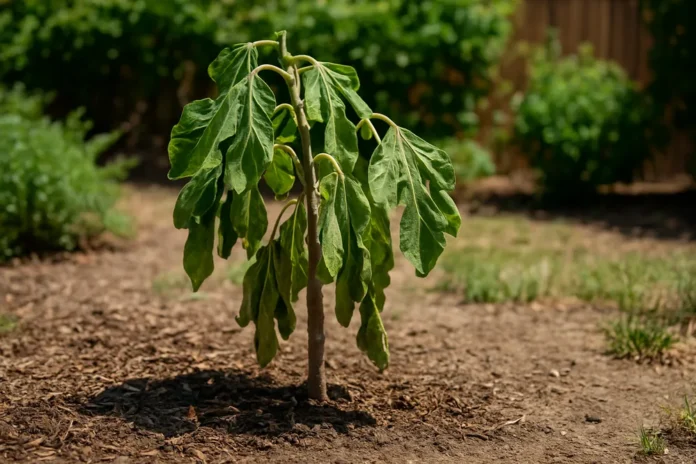
A fig tree usually wilts because its roots are not supplying water properly, most often from watering problems, heat stress, root damage, or disease. Wilting can happen from soil that is too dry or too wet.
A wilting fig tree can look dramatic fast. One day the leaves seem fine, and the next the whole plant looks limp, tired, and stressed. In my experience, fig tree wilting is usually tied to water moving poorly through the plant, but that does not always mean the tree simply needs more water.
Figs are fairly tough once established, but they react quickly when roots are disturbed, soil stays soggy, or hot weather outpaces what the roots can deliver. The key is to look at the full pattern: whether the leaves are dry or soft, whether the soil is bone dry or wet, and whether the wilt shows up only in afternoon heat or lasts all day. A fig tree can recover well if you catch the real cause early.
What Wilting Usually Means on a Fig Tree
Wilting happens when leaves lose turgor pressure, which is the internal water pressure that keeps them firm. When a fig cannot move enough moisture from the roots to the leaves, the foliage droops. That can happen because the soil is too dry, because roots are sitting in water and suffocating, because roots were damaged, or because the top growth is losing water faster than the roots can replace it.
This is why wilting can be confusing. Underwatering and overwatering can both cause nearly the same droopy look. Heat can make a healthy fig sag in late afternoon and then perk back up by evening. Disease can also block water flow inside the plant. Before you treat anything, it helps to separate temporary wilt from a more serious all-day collapse.
- Temporary wilt often appears during the hottest part of the day and improves when temperatures drop.
- Persistent wilt stays all day and often continues into the next morning.
- Dry, crispy leaf edges usually point more toward drought or heat stress.
- Soft yellowing leaves and soggy soil often point more toward overwatering or root trouble.
- Wilting limited to one branch can suggest physical injury, canker, or localized root damage.
When I diagnose a wilting fig, I look at the newest leaves and the oldest leaves separately. If everything is drooping evenly, I suspect a root-zone problem first. If only one section of the canopy is affected, I start thinking about branch damage, borers, or a localized disease issue.
Watering Problems Are the Most Common Cause
Soil That Gets Too Dry
A fig in dry soil wilts because the roots cannot pull enough moisture to support the leaves. This is especially common with container figs, newly planted trees, and mature trees during long hot spells. If the soil has pulled away from the sides of the pot, feels dusty several inches down, or sheds water instead of absorbing it, drought stress is a likely culprit.
Drought-stressed figs may also show curled leaves, dry brown margins, slowed growth, and fruit drop. The wilting often gets worse as the day heats up. If the tree has been allowed to get extremely dry, one watering may not fully fix the limp appearance right away because fine feeder roots may already be stressed.
Soil That Stays Too Wet
Overwatering is just as common, and many gardeners miss it because they see wilt and assume the tree is thirsty. In waterlogged soil, roots are deprived of oxygen. Once roots start declining, they cannot take up water properly, so the leaves wilt even though the soil is wet. This often happens in heavy clay, poorly drained planting holes, or containers without enough drainage.
Signs that point toward excess moisture include yellowing leaves, mushy dropped foliage, sour-smelling soil, and a trunk area that stays damp for long periods. If your fig is in a saucer that holds runoff, that is another red flag. Root rot often begins quietly and then shows up as sudden wilt.
- Underwatering is more likely if the soil is dry several inches deep and leaves feel papery.
- Overwatering is more likely if the soil is wet, dense, and slow to drain after irrigation or rain.
- Container figs need closer monitoring because they can swing from too dry to too wet quickly.
- Newly planted figs need consistent moisture, but not constantly soggy soil.
I rarely judge a wilted fig by the soil surface alone. I check moisture down in the root zone because the top inch can look dry while the lower soil is still saturated, especially in large pots or clay ground.
Heat Stress, Sun Exposure, and Transplant Shock
Afternoon Wilt in Hot Weather
Figs love warmth, but intense summer heat can still make them wilt temporarily. In very hot, windy, or low-humidity weather, leaves lose moisture faster than the roots can keep up. This is especially common on patio figs in black nursery pots, against hot walls, or in spots that reflect heat from concrete.
If the tree looks better by sunset or the next morning, the issue may be heat stress rather than a major root problem. The plant is basically pausing and conserving moisture. Even so, repeated severe heat wilt can lead to leaf scorch, fruit drop, and overall decline if the roots are not adequately supported with deep watering and mulching.
Stress After Planting or Repotting
A fig often wilts after transplanting because roots were disturbed or because the root ball and surrounding soil are not drying at the same rate. This is common when a tree moves from a sheltered nursery to full sun and wind. The top of the plant keeps transpiring, but the roots are still trying to reestablish.
Transplant shock usually shows up within days to a couple of weeks after planting. Leaves may droop, curl, or yellow, and some may drop. If the trunk and buds still look sound, the tree often recovers once roots settle in. What hurts most is a cycle of overcorrecting with too much water.
- Temporary heat wilt tends to match the hottest hours of the day.
- Transplant shock is more likely if the tree was recently planted, moved, or repotted.
- Dark containers and root-bound nursery pots heat up faster than in-ground soil.
- Windy sites increase water loss and can make wilting look worse.
Root Damage and Poor Soil Conditions
Anything that injures the roots can cause wilting. Figs rely on a healthy network of fine feeder roots near the soil surface and farther down in the root zone. If those roots are cut during digging, chewed by pests, compacted by foot traffic, or rotted in heavy soil, the canopy may droop because the supply line has been disrupted.
Compacted or Poorly Drained Soil
Compacted soil limits both water movement and oxygen. In some yards, a planting hole acts like a bathtub, holding moisture around the roots long after rain. In others, hard soil sheds water and leaves the root zone dry underneath. Either way, the fig struggles to maintain steady moisture uptake.
Root-bound Container Figs
Container figs can wilt when the roots have circled tightly and there is very little soil left to hold moisture. A root-bound pot may dry out in a day during hot weather, yet watering may run straight through without soaking the root mass well. Growth often stalls, leaves get smaller, and wilting becomes frequent.
Cold Injury to Roots
In colder regions, late cold snaps or winter damage can weaken roots and stems enough that spring growth wilts later on. This is more common with figs grown near the edge of their hardiness range or in containers left exposed to freezing conditions. Damaged tissues may leaf out weakly and then collapse when temperatures rise.
If a potted fig keeps wilting no matter how carefully you water, I often suspect the root system before anything above ground. I have seen figs that looked thirsty every afternoon simply because the pot was packed with roots and there was almost no usable soil left.
Pests and Diseases That Can Make a Fig Wilt
Although watering issues are more common, pests and diseases can absolutely cause wilting. The main reason is that they either damage the roots, block water-conducting tissue, or weaken part of the canopy so badly that the branch collapses.
Root Rot and Fungal Problems
Root rots caused by excess moisture are among the most serious problems behind wilt. Once roots begin decaying, the tree may show yellowing, leaf drop, branch dieback, and chronic wilt even when soil is wet. Fungal issues are more likely in poorly drained areas and in trees that are watered too frequently.
Cankers and Branch Dieback
If only one limb or one side of the tree is wilting, inspect the wood closely. Cracked bark, sunken lesions, oozing, or dead twigs can point to canker or physical injury. Pruning wounds, winter damage, and weak wood can open the door to these problems.
Nematodes and Root-feeding Pests
In some warm regions, root-knot nematodes can stress figs by damaging their roots. The tree may wilt, grow poorly, and stay generally off-color even when care seems correct. Other root-feeding pests can create similar symptoms, though they are less common in home landscapes than simple moisture problems.
Borers and Sap-feeding Insects
Borers can weaken stems and disrupt water flow, while severe infestations of sap-feeding pests such as scale can reduce vigor enough that a tree appears limp and stressed. These are not the first causes I suspect, but they are worth checking if watering looks right and the wilt is localized or persistent.
- Whole-tree wilt with wet soil often points toward root disease.
- Single-branch wilt is more suggestive of canker, breakage, or borer activity.
- Weak growth, poor vigor, and recurring wilt despite normal watering can point toward root pests or chronic root decline.
How to Tell Which Cause Is Affecting Your Fig
The fastest way to narrow down wilt is to match the leaf symptoms with the soil condition and timing. A fig that droops every afternoon but recovers overnight is different from one that is wilted in cool morning weather. A fig in dry sandy soil needs a different response than one sitting in heavy wet ground.
- Check the soil several inches down, not just at the surface.
- Notice whether the wilt is worst only during afternoon heat or stays constant.
- Look for yellowing, browning, crisping, leaf drop, or soft mushy leaves.
- Inspect the trunk and branches for cracks, lesions, dead twigs, or physical damage.
- Think back to recent changes such as planting, repotting, heat waves, storms, or altered watering habits.
Pattern matters a lot. Dry soil plus crispy edges leans toward underwatering or heat stress. Wet soil plus yellow leaves leans toward overwatering or root rot. A recently transplanted fig with drooping leaves but healthy buds may simply be adjusting. A single wilted limb should push you to inspect the wood itself.
Do not change three things at once. If you prune heavily, fertilize, and alter watering all in the same week, it becomes much harder to tell whether the fig is recovering or being stressed further.
How to Help a Wilting Fig Tree Recover
If the Tree Is Too Dry
Water deeply so moisture reaches the full root zone, then let the upper soil begin to dry slightly before watering again. For container figs, water until excess drains out, then empty any saucer so the roots are not left standing in water. A layer of mulch on in-ground trees helps keep moisture more even.
If the Soil Is Too Wet
Back off frequent irrigation and let the soil breathe. Improve drainage if possible by correcting low spots, reducing watering frequency, or repotting container figs into a fast-draining mix. If root rot is advanced, recovery can be slow, and some branches may die back before the tree stabilizes.
If Heat Is the Main Trigger
Give the roots more buffering. Mulch the soil, avoid shallow daily sprinkling, and consider moving container figs out of the harshest reflected heat. During extreme heat, morning watering is often more effective than waiting until the plant is badly wilted in late afternoon.
If Transplant Shock Is Involved
Keep moisture steady but not soggy, and resist the urge to overfertilize. A stressed fig does not need a big feeding push while roots are still trying to establish. Give it time, shelter from extreme exposure if possible, and focus on helping new growth emerge healthy.
If Disease or Branch Damage Is Suspected
Prune out dead or clearly diseased wood with clean tools, but avoid aggressive cutting unless you are sure what is dead. If the trunk shows serious cankers or the root system is failing from rot, cultural correction may matter more than pruning alone. Sanitation and better drainage are often the most useful first steps.
- Water based on root-zone moisture, not a fixed calendar.
- Use mulch to reduce moisture swings, but keep it a few inches away from the trunk.
- Make sure containers have strong drainage and are not sitting in water.
- Delay fertilizer if the tree is wilted from root stress or transplant shock.
- Judge recovery by healthy new growth more than by whether old damaged leaves fully rebound.
FAQ
Can a Fig Tree Wilt Even if the Soil Is Wet?
Yes. That often happens when roots are waterlogged or starting to rot. Wet soil can prevent roots from taking up oxygen, and once roots decline, the leaves wilt because water is no longer moving properly through the tree.
Should I Water My Wilted Fig Tree Right Away?
Only if the root zone is actually dry. If the soil is still wet, adding more water can make the problem worse. Check several inches down before deciding.
Why Does My Fig Wilt During the Day but Recover at Night?
That pattern usually points to heat stress or temporary moisture demand that exceeds what the roots can supply in hot weather. It is often less serious than constant wilt, though repeated episodes still stress the tree.
Will Leaves Perk Back Up After a Fig Tree Is Watered?
Sometimes they do within hours, especially after mild drought stress. If roots were badly stressed, damaged, or rotting, recovery can take longer and some leaves may still yellow or drop.
Can Transplanting Make a Fig Tree Wilt?
Yes. Fig trees often wilt after planting or repotting because roots were disturbed and the tree is adjusting to new soil, sun, wind, and moisture conditions. Keeping moisture steady usually helps more than heavy feeding.
How Do I Know if My Potted Fig Is Root-bound?
Common signs include rapid drying, frequent wilting, slowed growth, roots circling inside the pot, and water running through too quickly. If you slide the root ball out and see dense roots with very little soil, it is likely root-bound.
Can Too Much Fertilizer Cause Wilting?
Yes, especially in containers. Excess fertilizer can burn roots and interfere with water uptake, which can lead to drooping leaves. It is more likely if wilting started soon after feeding.
Need the right fix fast? Read our fig tree care and treatment guides to choose the best watering tools, soil mixes, mulches, and disease-control options for a healthier tree.
