

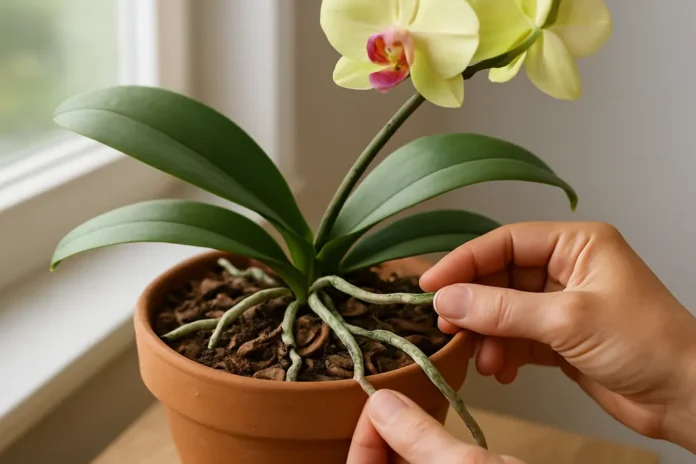
White spots on orchid roots are often caused by harmless mineral buildup, dried fertilizer salts, or the natural velamen on healthy roots. They can also come from mold, mealybugs, or root stress when moisture and airflow are off.
Seeing white spots on orchid roots can be alarming, especially if you are used to judging root health by color and firmness. The tricky part is that not every white mark means trouble. Some orchids naturally have pale, silvery root surfaces, and water minerals or fertilizer salts can dry into chalky-looking spots that are more cosmetic than dangerous.
At the same time, white spots on orchid roots can point to real problems such as fungal growth, mealybugs, or roots that are staying too wet and starting to decline. In my experience, the key is not just the color. It is the texture, pattern, and where those spots show up. A dry crust wipes off differently than mold, and healthy velamen looks very different from cottony insects or mushy root damage.
Once you know what you are looking at, orchids become much easier to read. Below, I will walk through the most common causes, how to tell them apart, and what usually helps your plant recover without overreacting.
What Healthy Orchid Roots Are Supposed to Look Like
Before you assume something is wrong, it helps to know that orchid roots do not always look smooth and green. Many common orchids, especially Phalaenopsis, have a spongy outer layer called velamen. When dry, it often looks white, silver, or pale gray. When wet, it usually turns green if the root underneath is alive.
That means some white on the root surface is completely normal. Healthy roots are usually firm, plump, and evenly colored. The white or silvery coating should look like part of the root itself, not like fuzzy growth, sticky residue, or raised bumps.
- Healthy dry roots often appear silver-white or light gray.
- Healthy wet roots often turn green because the velamen becomes transparent.
- Firmness matters more than color alone.
- Papery, hollow, mushy, or collapsing roots usually signal stress or rot.
When I inspect an orchid, I always compare several roots instead of focusing on one suspicious spot. If most roots are firm and behave normally when watered, I worry much less about isolated white patches.
Common Harmless Causes of White Spots
Natural Velamen and Dry Root Color
The most common harmless explanation is simply the orchid's natural root covering. Dry aerial roots can look dusty white or silvery, especially under bright indoor light. This is part of how the plant stores and absorbs moisture.
Mineral Residue From Tap Water
If you water with hard tap water, minerals like calcium and magnesium can leave pale spots or a chalky film on roots, bark, and the inside of the pot. These marks are usually flat, dry, and crusty rather than fuzzy. They often show up after water evaporates.
Fertilizer Salt Buildup
Fertilizer can do the same thing. When orchids are fed regularly and the pot is not flushed well, salts collect on root surfaces and potting media. White spotting from salts may be patchy or grainy, and you may notice a whitish crust on bark pieces too.
- Harmless residue is usually dry and not soft or slimy.
- It often appears on the pot, media, or rim as well as the roots.
- It may lighten after watering and reappear when everything dries.
- The root underneath usually stays firm.
Problem Causes That Need Attention
Fungal or Mold Growth
White fungal growth can appear as fuzzy patches, webby threads, or soft mold on roots and potting mix. This tends to happen when air circulation is poor, media is breaking down, or the orchid stays damp for too long. Mold is more likely on old bark, sphagnum moss, and dead root tissue than on strong, active roots.
Mealybugs and Root Mealybugs
Mealybugs are another possibility, especially if the white spots look cottony or clumped into tiny tufts. Root mealybugs are less obvious than the ones on leaves and flower spikes, but they leave a white waxy coating that can resemble mold at first glance. Infested orchids may show weak growth, yellowing leaves, or a sticky residue above the potting mix.
Root Damage From Staying Too Wet
Roots that sit in soggy media can start to rot, and damaged velamen sometimes peels or dries into irregular pale patches. In these cases, the white areas are not the main problem. They are a symptom of root decline caused by poor drainage, overwatering, or old compacted media.
Residue From Foliar Sprays or Household Products
If you mist orchids with tap water, use leaf shine nearby, or spray diluted treatments without rinsing, dried residue can collect on exposed roots. This is usually less serious than pests or disease, but repeated buildup can irritate root surfaces over time.
How to Tell Which Cause You Are Dealing With
The fastest way to narrow it down is to look at texture, location, and how the root responds to water. Orchid problems often reveal themselves through patterns, not just color.
- If the white area is smooth and part of a firm dry root, it is probably normal velamen.
- If it looks chalky or crusty and also appears on the pot or bark, mineral or fertilizer residue is likely.
- If it is fuzzy, webby, or spreading through the media, suspect mold or fungus.
- If it looks like tiny cotton clumps or waxy insects clustered in crevices, suspect mealybugs.
- If the root is mushy, hollow, brown underneath, or the outer layer slips off, the root is declining from excess moisture or rot.
Try wetting one questionable root with plain water. A healthy dry root often shifts from silver-white to green. A salt crust may stay pale but feel superficial. Mold or pests will not behave like normal velamen, and damaged roots may stay dull, brown, or soft.
I like to use a damp cotton swab on one spot before repotting the whole plant. If the white material smears, lifts off, or reveals insects, that tells you far more than color alone.
Signs the Orchid Is Healthy Despite the White Spots
Many orchids continue to grow well even when their roots show some harmless spotting. If the plant is otherwise vigorous, there is a good chance you are seeing a cosmetic issue rather than a serious one.
- Leaves are firm, not limp or heavily yellowing.
- Roots are plump and mostly firm, not mushy or collapsing.
- The orchid produces new roots, leaves, or flower spikes in season.
- There is no sour smell from the potting mix.
- White spotting is limited and does not seem to spread rapidly.
A healthy orchid can tolerate some mineral deposits or surface residue. You do not need to chase a perfectly spotless root system. Your goal is good function, not cosmetic perfection.
What to Do for Each Likely Cause
If It Is Natural Velamen
Leave it alone. Continue watering on a schedule that lets the roots dry slightly between waterings. Healthy velamen is protective and should not be scrubbed off.
If It Is Mineral or Fertilizer Residue
Flush the pot thoroughly with room-temperature water to wash out accumulated salts. If your tap water is very hard, switching to rainwater, distilled water, or filtered water often reduces future spotting. Also cut back on fertilizer strength if you feed frequently.
- Run plenty of water through the pot to rinse salts away.
- Fertilize lightly rather than heavily.
- Avoid letting fertilizer concentrate in old bark or moss.
- Repot if the medium is stale or heavily crusted.
If It Is Mold or Fungus
Improve airflow, reduce excess moisture, and remove obviously dead roots if needed during repotting. Replace decomposed media with fresh orchid bark or another suitable mix. Mild surface mold often clears once conditions are drier and better ventilated.
If It Is Mealybugs
Isolate the orchid from other houseplants right away. Remove visible pests and consider repotting so you can inspect the root system closely. Root mealybugs are stubborn because they hide in the potting mix, so treatment usually requires more than wiping the leaves.
If Roots Are Declining From Overwatering
Take the orchid out of the pot and inspect the roots. Trim dead, mushy, or hollow roots with sterilized scissors, then repot into fresh airy media. After that, adjust watering so the mix approaches dryness before the next soak.
When orchids have both white spotting and root loss, I usually find the real issue is the condition of the potting mix. Old, sour, compacted media causes more trouble than most growers realize, especially with orchids kept in decorative cachepots that trap moisture.
When Repotting Makes Sense
Repotting is not always necessary for white spots alone, but it becomes the right move when the media is old, roots are soft, mold keeps returning, or pests may be hiding below the surface. Most orchids benefit from periodic repotting anyway because bark breaks down and holds too much moisture over time.
- Repot if the bark smells sour or looks decomposed.
- Repot if many roots are brown, mushy, or hollow.
- Repot if white fuzz keeps reappearing after the surface dries.
- Repot if you suspect root mealybugs or salt crust throughout the mix.
Use a pot with excellent drainage and a fresh orchid mix matched to the type of orchid you are growing. For most home-grown Phalaenopsis orchids, medium-grade bark works well, sometimes blended with a little sphagnum in dry indoor conditions.
How to Prevent White Spots From Coming Back
Prevention mostly comes down to moisture control, clean water habits, and fresh media. Orchids are much less fussy when their roots get the balance of air and moisture they evolved to expect.
- Water thoroughly, then let excess drain completely.
- Do not leave the inner pot sitting in trapped water.
- Flush the pot occasionally to remove fertilizer salts.
- Use lower-mineral water if your tap water leaves heavy deposits.
- Repot every year or two, depending on media breakdown.
- Keep good airflow around the plant.
- Inspect roots and leaf bases regularly for pests.
I also recommend resisting the urge to mist roots constantly. In many homes, misting adds residue and surface dampness without truly hydrating the root zone. A thorough soak followed by drying is usually far better than frequent light spritzing.
When White Spots Mean You Should Act Quickly
Some root changes can wait for the next regular care session, but others deserve prompt attention. If the orchid is losing roots fast, developing a bad smell, or showing widespread white cottony growth, do not wait too long.
- The roots are turning mushy or sloughing off.
- The potting mix smells rotten or sour.
- White fuzz spreads quickly through the medium.
- You see obvious insects, sticky residue, or repeated pest signs.
- Leaves are wilting even though the mix seems wet.
- The plant has very few healthy roots left.
In those situations, the white spots are usually part of a bigger root health problem. Fast correction gives the orchid a much better chance of regrowing strong roots.
FAQ
Are White Orchid Roots Healthy?
Often, yes. Dry healthy orchid roots commonly look silver-white because of the velamen. If they are firm and turn green when wet, that is usually normal.
How Do I Know if White Spots Are Mineral Buildup or Fungus?
Mineral buildup tends to look chalky or crusty and often appears on the pot and bark too. Fungus is more likely to look fuzzy, webby, or soft, especially in constantly damp media.
Can Hard Tap Water Cause White Spots on Orchid Roots?
Yes. Hard water often leaves mineral deposits on roots, media, and pots after evaporation. These spots are usually superficial unless buildup becomes heavy over time.
Should I Wipe White Spots Off Orchid Roots?
Only if you are sure it is residue or pests. Do not scrub normal velamen, because it protects the root. If you test a spot, do it gently with water or a cotton swab.
Do White Spots Mean My Orchid Has Root Rot?
Not by themselves. Root rot is more strongly indicated by mushy, brown, hollow, or foul-smelling roots. White spots can happen with rot, but they are not a reliable diagnosis alone.
Can Mealybugs Live on Orchid Roots?
Yes. Root mealybugs can hide in potting media and around roots, leaving a white waxy or cottony appearance. They often require isolation and repotting to manage effectively.
Will Repotting Fix White Spots on Orchid Roots?
It can help if the cause is decomposed media, salt buildup, mold, or root pests. It is not necessary for normal velamen or minor cosmetic residue on otherwise healthy roots.
Want to save a struggling orchid faster? Read our orchid repotting and root care guide to choose the best bark mix, pots, and treatment steps for healthier roots.
