

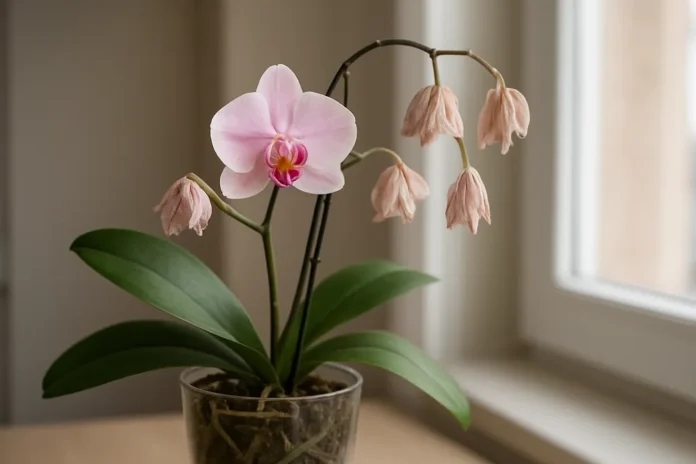
Orchid flowers usually wilt because the blooms are naturally aging or the plant is stressed by watering problems, root damage, temperature swings, or dry indoor air. Sudden changes in light, drafts, or moving the plant can also make flowers droop early.
Seeing orchid flowers wilting can be frustrating, especially when the leaves still look healthy and you thought the plant was finally happy. In most homes, wilting blooms do not mean the whole orchid is dying. They usually mean the flowers are reaching the end of their natural cycle or the plant has run into a stress that it cannot hide anymore.
When I troubleshoot a wilting orchid, I try to separate bloom problems from plant problems. Flowers are delicate and react quickly to heat, dry air, drafts, and watering mistakes. Roots and leaves tell the bigger story. If the flowers are drooping but the roots are firm and the leaves look solid, the issue may be temporary or simply normal bloom aging. If flowers wilt along with limp leaves or mushy roots, the plant needs more attention.
Normal Bloom Aging Is Often the Simplest Answer
Before assuming something is wrong, remember that orchid flowers do not last forever. Many common moth orchids, or Phalaenopsis, hold blooms for several weeks or even a few months, but each flower eventually softens, droops, and fades. This can happen one bloom at a time or across the whole spike, depending on the plant and the conditions in your home.
Aging flowers often look thin, papery, or slightly wrinkled before they drop. The leaves may still be green and firm, and the roots may still look healthy. If that is what you are seeing, the wilting is likely part of the orchid's normal cycle rather than a crisis.
- Older blooms wilt gradually rather than collapsing overnight.
- The flower color may dull before the petals start to droop.
- Healthy leaves and roots alongside fading flowers usually point to normal aging.
- The bloom spike may stay green for a while even after flowers fall.
If only the oldest flowers are fading first, I usually relax. That pattern often tells me the orchid is simply finishing its show. When every flower suddenly droops at once, I start looking for stress instead of age.
Watering Problems Can Make Blooms Collapse Fast
Too Little Water
Underwatered orchids may produce wilted flowers because the plant cannot keep enough moisture moving up to the blooms. Petals can look limp, thin, or slightly shriveled. The potting mix may feel bone dry, roots may look silvery for too long, and the leaves may begin to lose firmness if the problem continues.
Too Much Water
Overwatering is even more common. Orchid roots need air as much as moisture, and constantly wet mix can suffocate them or lead to rot. Once roots are damaged, the plant cannot support flowers properly, so blooms wilt even though the pot looks moist. This confuses many growers because the orchid appears watered, but it is actually dehydrated from root failure.
- Underwatering often comes with dry bark, light pots, and wrinkling that starts slowly.
- Overwatering often comes with soggy media, dark mushy roots, and yellowing leaves over time.
- Either extreme can cause buds to blast or open flowers to droop early.
- Clear nursery pots make it much easier to spot healthy green roots versus rotting brown ones.
I never judge orchid watering by the calendar alone. I lift the pot, look at the roots, and check how quickly the mix dries in that specific room. The same orchid may need water at very different intervals in summer and winter.
Root Trouble Is One of the Biggest Hidden Causes
If orchid flowers are wilting and you cannot explain it from the room conditions, inspect the roots. Healthy orchid roots are usually firm and plump, with green or silvery outer layers depending on moisture level. Unhealthy roots may be brown, hollow, mushy, blackened, or stringy. When the root system declines, flowers are often the first thing to show it.
Root problems commonly come from compacted old bark, poor drainage, overwatering, or a decorative outer pot that traps water around the inner pot. Salt buildup from fertilizer can also stress roots over time. Even if the leaves still look decent, the flowers may wilt because the plant is no longer taking up moisture efficiently.
- Mushy roots suggest rot from excess moisture and lack of airflow.
- Dry, brittle roots can mean chronic underwatering or old mix that repels water.
- A sour smell from the pot often points to decaying media.
- Roots packed into decomposed bark may stay wet too long after watering.
If the orchid has not been repotted in a couple of years, old potting media is worth considering. Orchid bark breaks down over time, holds more water, and creates less air space. That quiet shift can lead to wilting blooms long before the entire plant visibly crashes.
Temperature Swings and Drafts Stress Blooming Orchids
Orchid flowers are sensitive to sudden temperature changes. A plant that sits near a heating vent, air conditioner, drafty window, or frequently opened exterior door may respond with drooping blooms. Warm blasts of dry air can age flowers fast, while cold drafts can shock them and shorten bloom life.
This often shows up after the orchid looked perfect at the store or nursery but starts wilting a few days after coming home. The plant was moved from stable greenhouse conditions into a room with lower humidity, shifting temperatures, and less predictable airflow. Blooms can react before the plant has time to adjust.
- Daytime temperatures that are too hot can cause petals to soften and sag.
- Cold windowsills at night may chill blooms even if the room feels fine.
- Heating vents can dry flowers quickly and cause buds to drop.
- Repeated swings matter more than one brief mild change.
Low Humidity and Dry Indoor Air Can Shorten Flower Life
Many orchids sold as houseplants tolerate average indoor conditions, but blooms still last longer when the air is not extremely dry. In winter, indoor heating can pull humidity down enough to stress flowers, especially if the orchid sits near moving air. Petals may wilt, edges may dry, and buds may fail to open properly.
Low humidity alone does not always kill flowers overnight, but it can combine with other stress factors like bright sun, missed watering, or poor roots. That is why a flowering orchid may seem fine for weeks and then fade quickly once your indoor air gets drier.
I see this a lot in winter living rooms. The orchid is technically getting enough light and water, but the combination of furnace heat and dry air makes flowers age much faster than the owner expects.
Light Stress Can Make Flowers Droop or Fade Early
Most common indoor orchids want bright, indirect light. If the plant is suddenly placed in hot direct sun, especially through a west or south window, flowers may wilt faster and petals can look bleached or scorched. Strong direct light heats the blooms and dries them out more quickly than the roots can compensate.
On the other hand, very low light usually does not cause immediate wilting in open flowers, but it can weaken the plant over time and reduce future blooming. For a current wilt problem, too much harsh light is a more likely flower-level trigger than too little light.
- Direct midday sun can overheat blooms quickly.
- A sheer curtain often provides enough protection in bright windows.
- Leaves that are yellowing or showing sunburn patches support a light stress diagnosis.
- A plant moved abruptly from shaded conditions to strong sun often reacts within days.
Repotting, Moving, and Other Sudden Changes Can Trigger Wilting
Orchids can be surprisingly dramatic about change while in bloom. Repotting, rotating the pot repeatedly, moving the plant across rooms, or transporting it in hot or cold weather may stress flowers enough to make them wilt early. This is especially common with orchids that were already near the end of their bloom cycle.
Even a healthy orchid may react to the shift from a humid greenhouse to a dry box store, then to your car, then to your house. Flowers are temporary tissues, so the plant often sacrifices them first while it adjusts to the new environment.
- Repotting during bloom can disturb roots and shorten the display.
- Frequent moving changes light, airflow, and temperature all at once.
- Transport shock can show up a few days after purchase.
- Freshly purchased orchids sometimes lose flowers simply from adjustment stress.
Ethylene Gas From Fruit and Smoke Can Age Flowers Fast
This cause gets overlooked, but orchids are sensitive to ethylene gas, which is released by ripening fruit and can also be present around cigarette smoke or engine exhaust. Ethylene speeds aging in flowers, which means petals may wilt or drop sooner than expected even when the plant is otherwise well cared for.
If your orchid sits near a fruit bowl, especially bananas or apples, or in a kitchen where produce ripens on the counter, that placement can shorten flower life. The effect is subtle at first, but on a blooming orchid it matters.
Pests and Disease Are Less Common but Still Possible
Most wilting orchid flowers are caused by environment or care issues, not disease. Still, pests like thrips, mealybugs, or spider mites can damage blooms and buds. Thrips are especially known for scarring petals and causing distorted or tired-looking flowers. Fungal or bacterial issues may also affect blooms if water sits on them too long in poor airflow.
Look closely for tiny insects, sticky residue, webbing, cottony patches, speckling, or brown spots on petals. If the blooms show blotches or streaking rather than simple soft drooping, pests or disease move higher on the suspect list.
- Thrips can damage petals and cause premature fading.
- Mealybugs often hide where leaves meet the stem or around roots.
- Water left sitting on flowers can encourage spotting and decay.
- Poor airflow increases disease risk around crowded indoor plants.
How to Tell Which Cause Is Most Likely
The fastest way to diagnose wilting orchid flowers is to look at the whole pattern, not just the blooms. Ask yourself whether the flowers are fading gradually or collapsing quickly, whether buds are also dropping, and whether the roots and leaves still look healthy. The combination usually points in the right direction.
- Flowers wilting slowly while leaves stay firm often means normal bloom aging.
- Flowers drooping with wrinkled leaves often means a water uptake problem.
- Flowers wilting after repotting or moving often means stress from change.
- Flowers fading near vents, heaters, or cold windows often means temperature or humidity stress.
- Flowers showing spots, scarring, or distorted petals may indicate pests or disease.
If you are unsure, start with the roots. In my experience, root health settles the question more often than anything else. Healthy roots can support recovery and future blooms. Bad roots mean the current flowers may not last, no matter how carefully you adjust the room.
What Helps Orchids Keep Flowers Longer
Once flowers start wilting, you usually cannot reverse the aging of that individual bloom, but you can improve how long the remaining flowers last and help the orchid recover well for its next cycle. Stability matters more than constant tinkering. Orchids bloom longest when light, moisture, temperature, and airflow stay fairly consistent.
- Keep the orchid in bright, indirect light rather than hot direct sun.
- Water thoroughly, then let the mix approach dryness before watering again.
- Empty decorative cachepots so roots never sit in standing water.
- Keep the plant away from heating vents, cold drafts, and exterior doors.
- Avoid placing blooming orchids near ripening fruit.
- Repot only when needed, and ideally not while the plant is putting energy into flowers.
- Use a well-draining orchid mix that still gives roots plenty of air.
If all flowers finish and drop, do not assume the plant is done for good. Many orchids need a rest period before blooming again. As long as the leaves and roots remain healthy, your orchid can often rebound and flower beautifully in the future.
FAQ
Do Wilted Orchid Flowers Mean My Orchid Is Dying?
Not usually. Wilted flowers often mean the blooms are aging naturally or reacting to short-term stress. If the leaves are firm and the roots are healthy, the plant itself is often still in decent shape.
Can I Revive Orchid Flowers Once They Start Wilting?
Usually no. Individual orchid blooms rarely regain their original firmness once wilting begins. The best goal is to correct the stress so the remaining blooms last longer and the plant stays healthy for future flowering.
Why Are My Orchid Flowers Wilting but the Leaves Look Fine?
That pattern often points to normal bloom aging, dry air, temperature stress, transport shock, or sudden environmental change. Flowers react faster than leaves, so blooms may wilt before the rest of the plant shows stress.
Should I Cut Off Wilted Orchid Flowers Right Away?
You can remove individual spent flowers if you want a tidier look. If the spike is still green, many gardeners leave it until more blooms finish or until the entire spike begins to yellow or brown.
Can Overwatering Cause Orchid Flowers to Wilt?
Yes. Overwatering can rot roots, and damaged roots cannot move water to the flowers properly. That leads to wilting blooms even though the potting mix seems wet.
Why Did My Orchid Flowers Wilt After I Brought It Home?
A newly purchased orchid may be reacting to transport shock, lower humidity, different temperatures, or a change in light. Blooms are often the first part of the plant to show that adjustment stress.
Does Misting Help Wilted Orchid Flowers?
Not much, and frequent misting can sometimes create spotting or disease issues on blooms. A more reliable approach is improving overall humidity and keeping watering and room conditions steady.
Want your orchid to bloom longer and recover faster? Read our orchid care and reblooming guides to choose the best watering routine, potting mix, and indoor setup for healthy flowers.
