

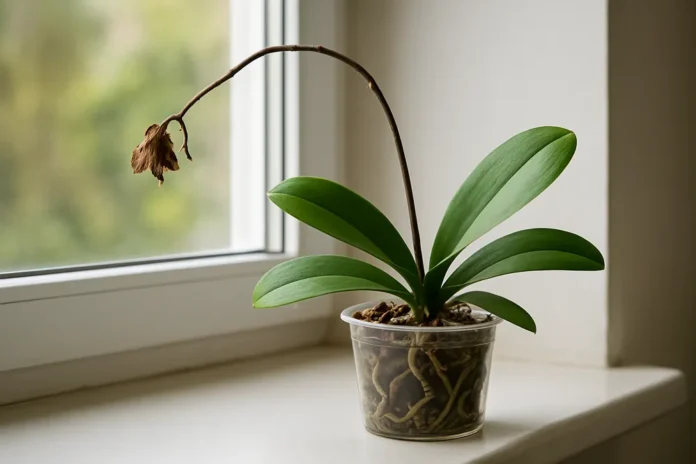
Orchid stems often turn brown because an old flower spike is naturally dying back after blooming. Brown stems can also come from watering problems, rot, sun stress, cold injury, or disease.
Seeing orchid stems turning brown can be unnerving, especially if the plant looked fine a week ago. In many cases, though, a brown orchid stem does not mean the whole plant is dying. Orchids often let old flower spikes dry up and brown naturally after a bloom cycle, and that is completely normal.
The tricky part is telling normal aging apart from real trouble. When I look at a brown stem on an orchid, I do not judge the stem alone. I also check the leaves, roots, crown, potting mix, and where the browning started. That full picture usually tells you whether you are looking at a spent spike or a plant health problem that needs attention.
This guide will help you sort out the most likely causes, figure out what kind of stem is affected, and decide whether to trim it, change care, or leave it alone.
Start by Identifying Which Part of the Orchid Is Brown
Orchid owners often call several different parts a stem. On a common Phalaenopsis orchid, the long arching structure that holds flowers is the flower spike. The short central structure where the leaves stack is the main stem or crown area. Thick silvery structures coming out of the pot are roots, not stems. Knowing which part is brown matters because each points to a different issue.
- If the flower spike is browning after blooms faded, that is often part of the normal life cycle.
- If the main stem or crown is turning brown, that is much more serious and may suggest crown rot or stem rot.
- If what looks brown is actually a root, the cause may be overwatering, dehydration, or old root tissue dying off.
- If only the tip of the spike is browning while lower nodes stay green, the plant may still send side spikes from lower nodes.
When I am unsure, I trace the brown part back to where it begins. A spent flower spike usually dries from the tip downward, while rot near the crown often starts low and feels soft or discolored close to the plant’s center.
A Brown Flower Spike Is Often Normal After Blooming
The most common reason an orchid stem turns brown is simple aging. Many orchids, especially Phalaenopsis, finish blooming and then redirect energy away from that flower spike. The spike may first turn yellow, tan, or reddish brown, then become dry and brittle. If the leaves are still firm and green and the roots look healthy, the orchid itself is usually fine.
A fully brown, dry flower spike is not going to green back up. Once it has completely dried, you can trim it off with clean scissors or pruners. Cut near the base, but do not nick the leaves or crown. This tidies the plant and lets it focus on root and leaf growth before the next bloom cycle.
- Normal spike aging usually happens after flowering.
- The spike feels dry, papery, or woody, not wet or mushy.
- Leaves stay mostly green and firm.
- Roots remain plump, silvery, or green when watered.
Watering Problems Can Lead to Browning and Dieback
Overwatering and Root Rot
If an orchid stays too wet for too long, the roots can suffocate and rot. Once roots fail, the plant struggles to support leaves and flower spikes. A spike may yellow, brown, or dry up early because the orchid no longer has enough healthy roots to keep it going. In severe cases, browning can spread closer to the base of the plant.
Overwatered orchids often sit in soggy bark or moss, or in decorative pots without enough drainage. You may also notice limp leaves, blackened roots, a sour smell, or soft tissue near the crown. When the browning is tied to root loss, trimming the spike alone will not solve the problem.
Underwatering and Drought Stress
Underwatering can also cause a spike to brown, especially if the plant was blooming heavily and could not sustain the flowers. In this case the spike may shrivel instead of rotting. Roots may look thin, wrinkled, or crisp, and leaves may feel floppy or pleated.
- Overwatering signs include mushy roots, stale potting media, yellowing leaves, and soft brown tissue.
- Underwatering signs include shriveled roots, wrinkled leaves, dry bark that sheds water, and brittle spike dieback.
- Either extreme can cause the orchid to abort buds or shorten the life of a flower spike.
I like to judge watering by the root zone, not the calendar. In a clear orchid pot, healthy roots and media dryness tell you much more than a once-a-week routine ever will.
Crown Rot and Stem Rot Are More Serious Causes
If the browning is happening at the center of the plant rather than just on an old flower spike, pay close attention. Crown rot and stem rot can kill an orchid quickly. These problems usually start when water sits in the crown, especially in cool indoor conditions with limited airflow.
Affected tissue may look dark brown or black, feel soft, or collapse inward. Leaves can yellow from the base, loosen, or fall off. You may see moisture trapped where leaves meet the stem. This is very different from a dry old spike and should be treated as urgent.
- Brown or black tissue at the crown or stem base
- Soft, mushy, or wet-feeling plant tissue
- Leaves dropping from the center or base
- Foul odor or obvious rot in the pot
If you suspect rot, remove the orchid from its pot, inspect the roots, trim away dead roots with sterile tools, and repot in fresh orchid mix. Keep water out of the crown going forward. In mild cases, quick action can save the plant. In severe cases where the crown is badly destroyed, recovery is less likely.
Too Much Sun or Heat Can Scorch Orchid Tissue
Orchids need bright light, but many popular indoor orchids do best in filtered or indirect light. Direct hot sun through a south or west window can scorch spikes, buds, and leaves. Browning from sun stress may show up as tan or brown patches on the exposed side of the flower spike, often along with faded or yellowed areas on leaves.
Heat stress can do something similar, especially when an orchid sits near a radiator, heating vent, or hot glass. Spikes may dry prematurely, buds may blast, and the whole plant may look stressed even if the roots are healthy.
- Browning is worse on the side facing the window
- Leaves show pale, bleached, yellow, or scorched patches
- The potting mix dries much faster than usual
- Flowers wilt or drop sooner than expected
Cold Drafts and Sudden Temperature Swings Can Damage Spikes
Orchids are sensitive to sudden cold, especially tropical types sold as houseplants. A cold draft from an exterior door, an open winter window, or an air conditioning vent can damage spikes and buds. Sometimes the spike turns brown in sections a few days after exposure, even though the damage happened earlier.
Cold injury tends to be more likely when the orchid was already under stress from poor roots, recent repotting, or low humidity. You may also see transparent, water-soaked spots on leaves that later turn tan or brown.
Most Phalaenopsis orchids prefer stable indoor temperatures and do not like abrupt dips. While a modest nighttime drop can help trigger blooming, chilling injury is a separate issue and can damage tissue fast.
Disease and Pests Are Less Common but Possible
Fungal and bacterial infections can cause orchid stems or spikes to brown, especially when plants stay wet and crowded. The tissue may look spotty, sunken, or water-soaked before it dries. Infections usually come with additional clues such as leaf spotting, ooze, odor, or rapidly spreading damage.
Pests are not usually the direct cause of an entire brown spike, but sap-sucking insects can weaken orchids and create openings for disease. Mealybugs, scale, and spider mites may stress the plant enough that buds fail and spikes decline earlier than normal.
- Bacterial issues often look wet, soft, and fast-moving.
- Fungal issues may create darker lesions with defined edges.
- Scale and mealybugs cluster on stems, leaf joints, and undersides of leaves.
- Spider mites can cause stippling, dull foliage, and fine webbing in dry rooms.
If a spike browns while the rest of the orchid also develops spots or sticky residue, I stop assuming it is normal aging. A single brown spike can be ordinary, but multiple symptoms appearing together usually point to stress or infection.
How to Tell if the Orchid Is Still Healthy
The easiest way to judge the orchid's condition is to look beyond the brown stem. A healthy orchid can lose a flower spike and still be doing exactly what it should. What matters most is the condition of the leaves, crown, and roots.
- Healthy leaves are firm, reasonably smooth, and evenly colored for the variety.
- Healthy roots are plump, not hollow. They are often silvery when dry and green after watering.
- The crown should be solid and dry, not soft or blackened.
- New root tips or a fresh leaf are great signs that the orchid is still actively growing.
If the only problem is one aging spike, your orchid will likely rest for a while and then grow new leaves, roots, or another spike later. If several leaves are yellowing, roots are collapsing, and the center is turning brown, then you are dealing with a broader health issue.
What to Do About a Brown Orchid Stem
If the Flower Spike Is Fully Brown and Dry
Trim it back near the base with sterilized scissors or pruners. Do not tear it off by hand. Once a spike has gone completely brown, leaving it on the plant does not help.
If Only Part of the Spike Is Brown
You can cut just above a healthy lower node if the lower section is still green and firm. Some Phalaenopsis orchids may branch from a lower node, though not every plant will. If the spike keeps browning downward, remove it completely later.
If the Browning Is Near the Crown or Base
Treat it as possible rot. Unpot the orchid, inspect the roots, remove dead material, and repot into fresh orchid bark or another suitable airy mix. Keep the crown dry and improve air circulation.
If Light or Temperature Is the Issue
Move the orchid to bright indirect light and protect it from harsh afternoon sun, heaters, and cold drafts. Stable conditions help future spikes last longer.
If Roots Are Failing
Correct the watering pattern, replace broken-down potting media, and repot if needed. Root recovery matters more than trying to save an old spike.
How to Prevent Orchid Stems From Turning Brown Too Soon
You cannot prevent normal post-bloom browning forever, but you can prevent a lot of stress-related spike loss. Orchids do best when their roots get moisture, air, and consistent conditions.
- Use a pot with good drainage and an orchid-specific potting mix.
- Water thoroughly, then let the medium approach dryness before watering again.
- Avoid letting water sit in the crown overnight.
- Give bright, filtered light instead of prolonged direct sun.
- Keep orchids away from vents, radiators, and cold drafts.
- Repot when bark breaks down or roots outgrow the pot.
- Inspect regularly for mealybugs, scale, and early signs of rot.
One of the best habits is simple observation. A weekly look at roots, leaves, and potting mix catches problems much earlier than waiting for a spike to brown.
FAQ
Should I Cut Off a Brown Orchid Stem?
If it is a flower spike that has turned fully brown and dry, yes, you can cut it off near the base with clean tools. If the brown area is in the main stem or crown, do not assume it is safe to prune without checking for rot.
Can a Brown Orchid Stem Turn Green Again?
A fully brown, dry flower spike usually will not turn green again. If only the tip is discolored and the lower part is still green, the orchid may still keep the lower section alive for a while.
Is a Brown Orchid Stem a Sign My Orchid Is Dying?
Not always. A brown flower spike after blooming is often normal. It is more concerning if the crown, main stem, or roots are also brown, soft, or collapsing.
Why Is My Orchid Stem Brown but the Leaves Are Still Green?
That pattern often means the flower spike is simply aging after bloom. If the leaves and roots still look healthy, the plant is probably resting rather than declining.
What Does Overwatered Orchid Stem Browning Look Like?
Overwatering usually comes with other signs such as mushy roots, yellowing leaves, stale or soggy potting mix, and soft brown tissue near the base. The browning is often linked to rot rather than a dry, papery old spike.
Can I Save an Orchid with Brown Stem Rot?
Sometimes, yes, if you catch it early and the crown is not too far gone. Remove the plant from the pot, trim dead roots, repot in fresh mix, and keep water out of the crown.
Why Did My Orchid Spike Turn Brown Before the Flowers Opened?
Premature browning can happen from root stress, underwatering, overwatering, sudden cold, heat, low humidity, or abrupt environmental changes. Bud blast and spike decline often happen together when the plant is stressed.
Want healthier roots and longer-lasting orchid spikes? Check out our orchid care guide and best orchid potting mixes so you can fix the real cause and keep your plant blooming stronger.
