

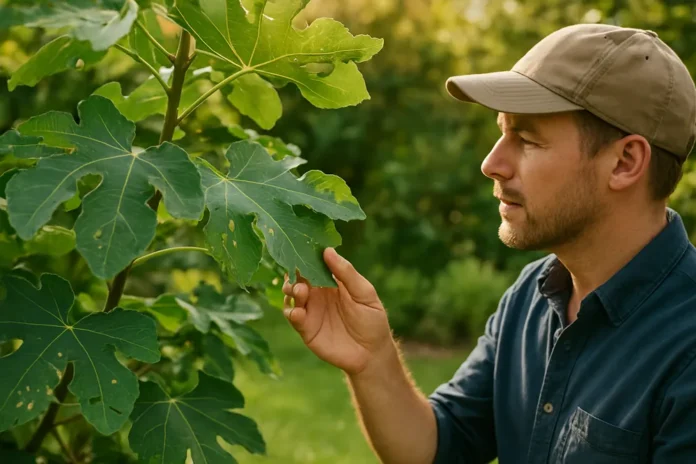
Fig tree leaves usually get holes from chewing insects like beetles, caterpillars, earwigs, or slugs. Holes can also appear after disease spots dry out and fall away, or when wind and handling tear tender leaves.
Seeing holes appear in fig tree leaves can be unsettling, especially when the rest of the tree seemed fine just days earlier. In most home gardens, this kind of damage comes from something fairly ordinary: insects feeding at night, a leaf spot that caused dead tissue to drop out, or physical tearing on tender new growth.
What matters most is how the holes look and where they show up. Clean round holes, ragged edges, missing margins, and holes surrounded by brown or yellow tissue all point in different directions. When I troubleshoot a fig, I start by looking at the newest leaves, the undersides of older leaves, and the ground around the tree before I assume the problem is serious.
The good news is that an established fig can tolerate a fair amount of leaf damage without lasting harm. If you identify the pattern early, you can usually stop the cause and let the tree grow out of it.
What the Hole Pattern Tells You
Before treating anything, take a close look at the shape and placement of the damage. The pattern is often more useful than the hole itself. A single torn leaf after a windy week means something very different from many leaves that look like they were eaten overnight.
- Holes with smooth or fairly neat edges often point to beetles or other chewing insects.
- Ragged holes with shredded edges are more common with caterpillars, earwigs, grasshoppers, or physical tearing.
- Small holes that start as brown, purple, or tan spots may be caused by leaf spot diseases where dead tissue dries and drops out.
- Damage concentrated on leaf edges often suggests chewing pests feeding from the outside inward.
- Holes mostly in tender new leaves can come from insects feeding while the leaf was still folded, so the damage looks bigger once the leaf opens.
- Random splits or tears without discoloration are more likely from wind, rubbing branches, hail, or rough handling.
When I inspect figs, I compare both old and new leaves instead of focusing on the ugliest one. If only the oldest leaves are affected, the problem may already be passing. If brand-new leaves are emerging damaged, the cause is still active.
Chewing Insects Are the Most Common Cause
In most backyards, holes in fig leaves come from pests that chew leaf tissue. Some feed in daylight, but plenty of them work at dusk or overnight, which is why gardeners often see fresh damage before they ever spot the culprit.
Japanese Beetles and Other Beetles
Beetles often leave irregular holes between leaf veins or chew from the outer edges inward. Japanese beetles can skeletonize leaves, leaving a lacy look where much of the soft tissue is gone. Other beetles may leave fewer but larger holes.
Caterpillars
Caterpillars usually create ragged chewing damage and may leave frass, which looks like small dark pellets, on leaves or beneath the plant. If the holes seem to expand quickly over a couple of days, caterpillars are high on the suspect list.
Earwigs, Slugs, and Snails
These pests often feed at night and hide during the day in mulch, under pots, or in damp debris. Earwigs and slugs tend to leave uneven holes and edge chewing. Slugs and snails may also leave a silvery slime trail.
Grasshoppers and Larger Chewing Pests
Grasshoppers can remove surprisingly large chunks from fig leaves, especially during hot, dry weather when nearby vegetation is limited. The damage is often obvious and coarse rather than neatly perforated.
- Look on the undersides of leaves for small insects, eggs, or frass.
- Check the tree at dusk or early morning if daytime inspections show nothing.
- Inspect mulch, fallen leaves, and nearby weeds where pests may hide.
- Note whether the damage is getting worse on new leaves, old leaves, or both.
Disease Can Cause Holes After Spots Die and Drop Out
Not every hole started as chewing damage. Fungal and bacterial leaf spots can kill small sections of leaf tissue. As that dead tissue dries, it may crack or fall away, leaving a hole that looks like something ate it.
This is especially likely if each hole is surrounded by a brown, tan, reddish, or yellow border. Instead of a clean bite mark, you may see a papery edge or a halo of discolored tissue around the missing section.
Signs That Suggest Leaf Spot Instead of Insects
- Spots appeared before holes did.
- The leaf has multiple small lesions with colored margins.
- Holes are scattered but not obviously eaten from the edge inward.
- Damage becomes worse during humid, wet weather.
- Lower or inner leaves are affected first where airflow is poorest.
Leaf spot problems are often encouraged by overhead watering, crowded growth, and leaves staying wet for long periods. A mature fig usually handles a minor outbreak, but heavy spotting can weaken the tree by reducing the amount of healthy leaf area.
Weather and Physical Damage Can Mimic Pest Feeding
Fig leaves are broad and soft, so they tear more easily than many gardeners expect. Wind can whip a young leaf against a branch or support stake. Hail can punch or bruise leaf tissue. Even rough handling during pruning, tying, or moving a potted fig can leave holes once the leaf expands.
Physical damage usually looks more random than pest feeding. You may see slits, splits, or holes that line up with creases in the leaf. There is often no frass, no chewing pattern, and no ongoing spread to new leaves unless the weather event continues.
If the tree recently went through strong wind, a storm, or a move to a new spot, I wait to judge the problem by the next flush of leaves. Old torn leaves never heal, so the best clue is whether fresh growth comes in clean.
How to Inspect Your Fig Tree Step by Step
A short inspection usually tells you whether you are dealing with pests, disease, or simple physical damage. You do not need a lab test for most backyard fig problems.
- Check several leaves from different parts of the tree, not just one badly damaged leaf.
- Look for discoloration around the holes. Brown or yellow borders suggest tissue death before the hole formed.
- Flip leaves over and inspect the undersides for insects, eggs, webbing, or frass.
- Examine the leaf edges. Edge chewing usually points to active feeding pests.
- Look at the newest leaves. If they are emerging damaged, the cause is current and not just old weather injury.
- Inspect the mulch and soil surface for slugs, earwigs, or beetles hiding during daylight.
- Think back to recent weather, watering habits, and any sprays or fertilizers that could have stressed tender growth.
If you still are not sure, take close photos in daylight and compare damaged leaves over the next few days. Rapid change usually indicates active pests. Stable damage that does not spread can point to older injury.
What to Do for Insect Damage
The right fix depends on how much damage you are seeing and whether the pest is still present. A healthy fig can usually tolerate a modest amount of chewing, so aim for control, not perfection.
Hand Removal and Cleanup
For light infestations, hand-picking pests is often enough. Remove beetles, caterpillars, and egg clusters when you find them. Clear away fallen leaves and thick debris where insects hide. Keep weeds down around the base so the tree is less inviting to pests.
Barriers and Traps
Slugs and snails can be reduced with traps or barriers, especially around container figs. Earwigs can be trapped in rolled newspaper or other simple shelters set out overnight and emptied in the morning.
Targeted Treatments
If caterpillars are the main issue, products labeled for caterpillar control can work well when used early. For broader chewing pests, insecticidal products should be chosen carefully and only if damage is continuing and meaningful. Always follow the label for edible plants, application timing, and harvest intervals.
- Treat in the evening when beneficial insects are less active.
- Avoid spraying during extreme heat.
- Focus on affected foliage instead of blanket-treating the whole yard.
- Recheck the tree after a few days to see whether new leaves stay clean.
I do not rush to spray a fig just because a few leaves have holes. If the newest leaves look mostly healthy and the tree is still vigorous, simple monitoring and hand removal often solve the problem with less disruption to pollinators and beneficial insects.
What to Do if Disease Is Causing the Holes
When holes are really the aftermath of leaf spots, improving growing conditions matters more than trying to make damaged leaves look better. Existing holes will stay, but you can protect new growth.
- Remove badly infected fallen leaves from under the tree.
- Prune lightly if needed to improve airflow through a dense canopy.
- Water at the soil level rather than wetting foliage overhead.
- Space nearby plants so leaves dry faster after rain or irrigation.
- Avoid excess nitrogen that pushes lush, disease-prone growth.
Fungicide may help in repeat problem situations, but it works best as a preventive tool rather than a cure for leaves that are already damaged. If spotting is severe every year, it may be worth checking local extension guidance for common fig leaf diseases in your region.
When Holes Are Mostly Cosmetic and when They Are a Problem
A few holes on a mature fig are usually cosmetic. Figs are resilient, and one of the most common mistakes is overreacting to minor leaf damage with heavy treatments. The tree can still photosynthesize well if most leaves remain green and intact.
The situation becomes more serious when damage is widespread, repeated, or combined with other stress symptoms such as yellowing, leaf drop, stunted growth, or poor fruit development. Young trees and recently planted figs are less able to shrug off repeated leaf loss than large, established plants.
- Monitor rather than panic if only a small share of leaves are affected.
- Act more quickly if new leaves are being heavily chewed as they emerge.
- Be more cautious with small container figs, which can decline faster under repeated stress.
- Watch for multiple symptoms together, not just holes alone.
How to Prevent Future Holes in Fig Leaves
Prevention is mostly about keeping the tree vigorous and making the area less favorable for pests and disease. A healthy fig grows fast enough to replace occasional damaged leaves without much trouble.
- Inspect leaves regularly during warm weather so you catch chewing pests early.
- Keep mulch neat and avoid thick piles pressed against the trunk.
- Remove weeds and debris that shelter nighttime feeders.
- Water deeply but avoid keeping foliage wet late in the day.
- Prune for airflow when the canopy becomes crowded.
- Protect potted figs from strong wind that can shred tender leaves.
- Feed moderately so the plant grows steadily without excessive soft growth.
If your fig has a recurring seasonal pest, timing matters. Once you learn whether damage usually starts in late spring, midsummer, or after rainy periods, you can monitor much more effectively and intervene sooner.
When to Get More Help
Most cases of holes in fig leaves can be managed at home, but some situations call for outside help. If the tree is losing a large portion of its foliage, the damage is spreading rapidly, or you also see cankers, severe spotting, dieback, or distorted growth, a local extension office or certified arborist can help narrow it down.
It is also smart to seek identification help before using stronger pesticides on an edible plant. A clear diagnosis saves money and avoids treating the wrong problem.
FAQ
Will Holes in Fig Leaves Kill My Tree?
Usually not. A healthy established fig can tolerate some leaf damage, especially if only a small number of leaves are affected. The main concern is heavy or repeated damage that reduces the tree's ability to support new growth and fruit.
Should I Remove Leaves with Holes?
Leave lightly damaged leaves in place if they are still mostly green. They are still feeding the tree. Remove leaves only if they are badly diseased, mostly dead, or have dropped to the ground and could spread leaf spot.
What Insects Commonly Eat Fig Leaves?
Common culprits include Japanese beetles, other leaf-chewing beetles, caterpillars, earwigs, slugs, snails, and sometimes grasshoppers. The exact pest depends on your region and the time of year.
Why Do the Holes Have Brown Edges?
Brown edges often mean the leaf tissue died before it fell out. That pattern is common with fungal or bacterial leaf spots, sun injury, or bruised tissue rather than fresh chewing alone.
Can I Spray Neem Oil for Holes in Fig Leaves?
Neem products may help with some soft-bodied pests and can play a role in disease management, but they are not a cure-all for every hole. They also work best when the actual cause matches the product label and when applied under the right conditions for edible plants.
Do Slugs Eat Fig Leaves?
Yes, especially on young figs or container plants in damp areas. They usually feed at night and leave irregular holes or edge damage, sometimes along with a shiny slime trail.
Can Wind Cause Holes in Fig Leaves?
Yes. Tender fig leaves can tear when whipped by wind, rubbed against supports, or damaged during storms. This kind of injury usually looks random and is not surrounded by the classic feeding signs of active pests.
Need the right product for chewing pests or leaf spot prevention on edible plants? Check our recommended fig tree treatments and garden-safe control options to stop damage before your next flush of leaves.
