

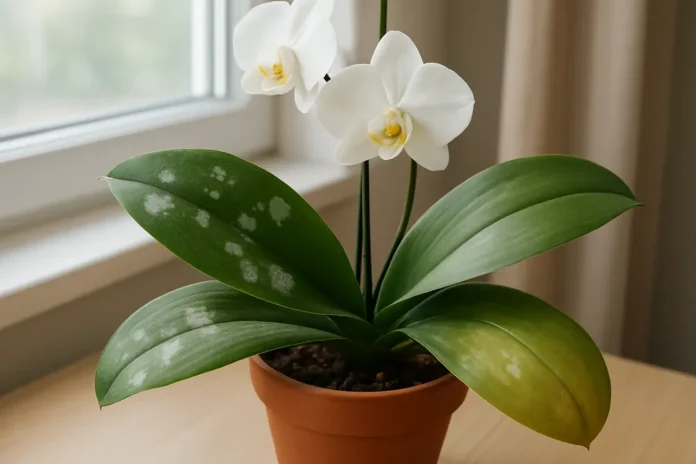
Orchid leaves get white patches most often from sunburn, mineral residue, pest damage, or fungal problems. Sometimes the patch is only cosmetic scarring, but sometimes it signals stress that needs attention.
When I see orchid leaves with white patches, I do not assume disease right away. Orchids mark their leaves for several different reasons, and the look of the patch matters a lot. A chalky film, a bleached sunken spot, and a fuzzy white cluster may all look "white" at first glance, but they usually come from very different problems.
The good news is that many white patches are manageable once you know what you are looking at. On indoor orchids, the most common causes are too much direct sun, dried mineral deposits from water, sap-sucking pests, or a fungal issue that took hold after leaves stayed damp too long. A few patches are simply old scars that will never turn green again.
If you slow down and examine the size, texture, and pattern, white orchid leaf spots become much easier to diagnose. I like to start by asking whether the patch wipes off, whether it feels dry or fuzzy, and whether it sits only on the side facing the window.
What White Patches on Orchid Leaves Usually Mean
White patches are a symptom, not a diagnosis. On orchids, that symptom usually falls into one of two categories: something sitting on the leaf surface, or damage inside the leaf tissue itself. Surface problems include hard water residue, fertilizer crust, mildew, and pests like mealybugs. Tissue damage includes sunscald, cold injury that later dries pale, fungal spotting, and old physical scars.
A healthy orchid leaf is typically smooth, firm, and evenly colored. When the white area is flat and bleached, the tissue has often been damaged and lost chlorophyll. When it is powdery, cottony, crusty, or easy to smear, the issue is often external. That distinction helps narrow your next step fast.
- Flat, pale, papery white patches often suggest sunburn or old scarring.
- Chalky residue that wipes away usually points to hard water or fertilizer salts.
- Cottony clusters in leaf joints usually mean mealybugs.
- Powdery coating on the leaf surface can indicate powdery mildew.
- Small pale stippling with webbing may be caused by spider mites.
When I diagnose orchids, I look at more than one leaf before deciding. If every patch appears on the same side of the plant, I lean toward light exposure. If the newest leaves and leaf axils are involved, I start thinking about pests or a watering issue.
Sunburn Is One of the Most Common Causes
How Sun Damage Looks
Orchids need bright light, but many common house orchids, especially Phalaenopsis, can scorch in hot direct sun. A sunburned patch often starts as a yellowish area and then fades to white, tan, or light brown. The damaged area is usually broad, dry, and flat rather than fuzzy. It commonly appears on the upper leaf surface or on the side facing a south or west window.
Severe sunburn can look almost bleached, as if someone removed the green pigment with a brush. The tissue may later become thin, papery, or slightly sunken. That damaged area will not turn green again, even after you move the orchid.
What to Do About It
Move the orchid to bright, indirect light or filter the sun with a sheer curtain. Avoid cutting the leaf unless the burned area becomes mushy or starts to rot. The plant can still photosynthesize with the remaining healthy green tissue. Watch the newer leaves rather than the old patch to judge whether you fixed the problem.
I would rather grow a Phalaenopsis a touch dimmer than let it roast for two sunny afternoons in a row. Sun damage shows up fast, and once that leaf tissue bleaches out, there is no reversing it.
Mineral Residue and Fertilizer Buildup Can Mimic Disease
If your orchid leaves have a dull white film or scattered crusty spots, especially after misting or overhead watering, hard water residue is a strong possibility. Tap water with a high mineral content leaves behind calcium and other salts as droplets dry. Fertilizer spray residue can do the same thing.
This kind of white patch often sits on top of the leaf rather than inside it. It may look chalky, cloudy, or ring-shaped where droplets dried. Unlike sunburn, it often wipes or dissolves away with gentle cleaning.
How to Tell if It Is Residue
- The patch appears after watering, misting, or foliar feeding.
- It feels rough or dusty on the surface.
- A damp microfiber cloth removes part or all of it.
- The leaf underneath still looks green and firm.
To clean the leaves, use lukewarm water and a soft cloth. For stubborn mineral spotting, a very diluted vinegar solution on a cloth can help, but use it lightly and wipe again with plain water so you do not irritate the leaf surface. Going forward, avoid spraying foliage late in the day and consider using rainwater, distilled water, or filtered water if your tap water is very hard.
Pests Often Leave White Marks, Fuzz, or Stippling
Mealybugs
Mealybugs are among the easiest orchid pests to mistake for harmless white patches. They look like tiny bits of cotton and usually collect where leaves join the stem, under leaf folds, and around roots or flower spikes. They suck plant juices and can weaken the orchid over time.
If the white material looks fluffy or clustered rather than flat, inspect closely. Mealybugs often hide in crevices, and you may also see sticky honeydew nearby.
Spider Mites
Spider mites do not usually create one solid white blotch. Instead, they cause fine pale stippling that can make leaves look silvery, dusty, or washed out. In dry indoor conditions, severe feeding can create larger faded areas that some gardeners interpret as white patches. Fine webbing is a major clue.
Scale Insects
Some scale insects leave pale feeding spots on orchid leaves, while the insects themselves may appear tan, brown, or whitish depending on species and age. Their shells are usually more fixed and bump-like than mealybugs.
- Isolate the orchid from your other plants.
- Wipe off visible pests carefully with cotton swabs or a soft cloth.
- Use insecticidal soap or a houseplant-safe treatment labeled for the pest.
- Repeat treatment because eggs and hidden insects often survive the first round.
- Check leaf axils, undersides, stake clips, and the pot rim.
A white patch that looks alive usually is. If it seems to spread from the leaf joints outward, or if you find sticky residue, I treat it as a pest issue before I assume a nutrient problem.
Fungal and Mildew Problems Can Also Show Up Pale
Although orchids are not the most common houseplant for powdery mildew, fungal issues can create pale or white-looking patches under the right conditions. Poor air movement, cool wet leaves, overcrowding, and splashing water all raise the risk. Some fungal spots begin pale and later darken at the edges. Others create a powdery surface coating.
Signs It May Be Fungal
- The patch spreads gradually over days or weeks.
- You see fuzzy, powdery, or irregular growth on the surface.
- The area may have a yellow halo or darker border.
- Leaves stay wet for long periods, especially overnight.
- Several plants in the same area show similar symptoms.
If you suspect a fungal problem, remove badly infected tissue only if the damage is advancing and you can make a clean cut with sterile tools. Improve airflow, water earlier in the day, and keep water out of the crown on monopodial orchids like Phalaenopsis. A fungicide labeled for orchids or ornamental houseplants may be appropriate if the problem continues, but cultural changes matter most.
Do not confuse old dried splash marks or residue with active disease. True fungal issues usually change over time. Static spots that have looked the same for a month are often scarring or deposits rather than an active infection.
Physical Damage, Cold Stress, and Old Scars Can Leave Permanent Pale Areas
Not every white patch means something is currently wrong. Orchids hold onto damaged leaves for a long time, so an old bruise, crease, scrape, or cold draft injury may linger as a pale scar for months. If a leaf was bent during repotting or rubbed against a stake, the injured cells can dry out and turn silvery white.
Cold injury can be sneaky too. A leaf pressed against a cold window in winter may first look water-soaked or dull, then later dry into a pale patch. Unlike residue, this kind of mark does not wipe away. Unlike active fungal disease, it usually stops expanding once the original injury is over.
If the rest of the plant looks healthy, the roots are sound, and new growth is normal, an isolated old scar is mostly cosmetic. Leave it alone and monitor the plant rather than trimming off usable leaf area.
How to Tell Which Cause Fits Your Orchid
The fastest way to identify white patches is to match the pattern with the plant's recent conditions. Think about light, watering style, humidity, and whether the patch changed quickly or slowly.
Questions That Help Narrow It Down
- Does the white area wipe off with a damp cloth? If yes, think residue, mildew, or pests on the surface.
- Is the patch on the sun-facing side only? That strongly suggests sunburn.
- Are there fuzzy bits in creases or around the crown? Suspect mealybugs.
- Do you see fine speckling and webbing? Suspect spider mites.
- Did the leaf touch a cold window or get bent recently? Consider physical or cold injury.
- Is the spot slowly expanding or developing a border? Disease becomes more likely.
This is also where the orchid type matters. Phalaenopsis commonly burn in strong direct sun. Cattleyas and some other orchids tolerate brighter light, but even they can scorch if moved too suddenly. If you recently shifted a plant from a dim shelf to a bright window, a bleached patch often follows.
How to Help Your Orchid Recover
Recovery depends on the cause, but the general goal is the same: stop the damage and support healthy new growth. Most white patches already present on the leaf will not disappear. Success shows up in the next leaf, the roots, and the plant's overall vigor.
- Adjust light if sunburn is likely. Use bright, indirect light for most indoor orchids.
- Clean leaves gently if minerals or spray residue are present.
- Treat pests thoroughly and isolate the plant until you are sure the infestation is gone.
- Improve airflow and avoid wet leaves overnight if mildew or fungus is involved.
- Water consistently and keep the root system healthy, because stressed orchids recover more slowly.
- Do not cut off partly healthy leaves unless rot is spreading.
One mistake I see often is changing everything at once. A gardener notices white patches, then moves the plant, repots it, changes fertilizer, and sprays three treatments in the same week. That makes it hard to tell what worked and can stress the orchid further. Correct the most likely cause first, then observe new growth.
Judge progress by the leaf that grows after the problem, not by the damaged leaf you already have. Orchids are slow to erase mistakes, but they are very honest in their new growth.
How to Prevent White Patches in the Future
Prevention is mostly about stable care. Orchids do best when light, water, airflow, and cleanliness stay within a comfortable range. Sudden exposure, poor circulation, and residue buildup create many of the white-patch problems home growers see.
- Acclimate orchids gradually to brighter light instead of moving them into direct sun all at once.
- Use low-mineral water when possible if your tap water leaves heavy spotting.
- Water early so leaves and crowns dry before evening.
- Keep plants spaced enough for airflow.
- Inspect leaf joints and undersides regularly for early pest signs.
- Wipe leaves occasionally so you can spot changes before they become severe.
A simple weekly glance is often enough to catch trouble early. I like to look at orchids while watering, especially where the leaves meet the stem. That is where mealybugs hide, water lingers, and a lot of clues show up first.
FAQ
Can White Patches on Orchid Leaves Turn Green Again?
Usually no. If the white area is true tissue damage from sunburn, cold, or scarring, that part stays pale. If the white patch is only residue or mildew on the surface, cleaning or treatment can restore the normal appearance.
Should I Cut Off an Orchid Leaf with White Patches?
Not unless the leaf is actively rotting, badly infected, or mostly dead. A partly damaged leaf still helps the plant, and removing it too soon can slow recovery.
How Do I Know if the White Patch Is Mealybugs?
Mealybugs look cottony and often gather in leaf joints, around roots, or near flower spikes. They are raised and fluffy rather than flat, and you may notice sticky honeydew nearby.
Do Hard Water Spots Hurt Orchids?
Light spotting is usually cosmetic, but repeated mineral buildup can dull the leaves and leave crusty deposits. It is worth cleaning the leaves and switching to lower-mineral water if buildup is heavy.
Can Too Much Fertilizer Cause White Marks on Orchid Leaves?
Yes. Foliar spray residue or salt buildup can leave white crusty patches or spotting on the surface. Overfertilizing can also stress roots, which makes the plant more vulnerable to other problems.
Is Powdery Mildew Common on Indoor Orchids?
It is less common than pests or sunburn, but it can happen in cool, stagnant, humid conditions. A powdery white coating that spreads over time is more suspicious for mildew than a static pale scar.
Why Does Only One Orchid Leaf Have a White Patch?
A single affected leaf often points to a localized issue such as sun exposure, a physical scrape, a cold spot near a window, or a patch of residue from dried droplets. Whole-plant patterns are more typical of broad care problems.
Want to keep your orchid healthy and blooming? Read our orchid care and treatment guides to choose the right light setup, pest controls, and watering tools before small leaf problems spread.
