

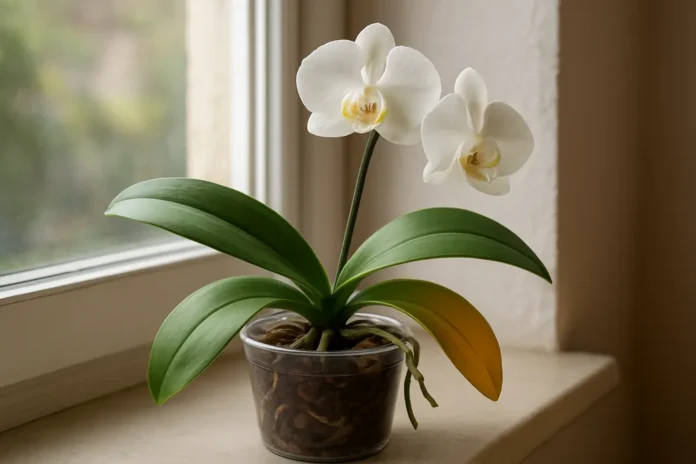
Orchid leaves usually turn yellow because of overwatering, root stress, too much direct sun, temperature swings, or simple old age. In some cases, yellow leaves are normal, especially when a lower leaf fades as the plant grows new ones.
Seeing orchid leaves turning yellow can make even confident gardeners nervous. Orchids have a reputation for being fussy, but yellow leaves do not always mean your plant is in serious trouble. Sometimes it is a harmless sign that an older bottom leaf is finishing its life cycle. Other times it is your orchid's early warning that the roots, light, or watering routine need attention.
When I troubleshoot a yellowing orchid, I look at the whole plant instead of focusing on one leaf. Which leaf is yellowing? Is it the oldest lower leaf or several leaves at once? Is the yellow color even, patchy, soft, sunburned, or paired with limp roots? Those details matter, because orchids tend to show different stresses in different ways.
The good news is that many yellow leaf problems are fixable if you catch them early. Once you know what pattern you are seeing, it becomes much easier to tell normal aging from overwatering, sun scorch, root loss, nutrient issues, pests, or temperature damage.
When Yellow Orchid Leaves Are Normal
Not every yellow orchid leaf means something is wrong. Most common houseplant orchids, especially Phalaenopsis, naturally shed their oldest lower leaves over time. If one bottom leaf slowly turns pale yellow, then deeper yellow, and eventually drops while the rest of the plant looks firm and healthy, that is usually normal aging.
This kind of leaf loss is gradual and isolated. The leaf often stays attached for a while, and the crown remains solid, the roots look healthy, and newer leaves stay green. A mature orchid may do this after blooming, during a seasonal adjustment, or simply as it redirects energy into fresh growth.
- Usually just one lower leaf is affected at a time
- Yellowing happens slowly rather than overnight
- Upper leaves remain green, firm, and upright
- Roots still look plump, silvery, or green rather than mushy
- There are no dark wet spots or signs of rot at the crown
I get more concerned when the yellowing starts in the middle of the plant or affects several leaves at once. One old bottom leaf fading is common. A stack of yellow leaves usually means the orchid is reacting to stress, not just age.
Overwatering and Root Problems Are the Most Common Cause
If I had to name the most common reason orchid leaves turn yellow indoors, it would be overwatering. Orchids are not potted in regular soil because their roots need air as much as moisture. When bark mix stays soggy too long, roots can suffocate and rot. Once the roots stop functioning, the leaves begin to yellow because the plant can no longer regulate water and nutrients properly.
The tricky part is that overwatered orchids and underwatered orchids can both look limp. The difference is usually in the root condition and potting media. Overwatered roots become brown, soft, hollow, or mushy. The pot may smell stale or sour, and the bark may stay wet for many days. Yellow leaves caused by root rot often feel soft rather than crisp.
Signs Your Orchid Is Staying Too Wet
- Several leaves yellowing at once, especially lower and middle leaves
- Leaves feel limp, floppy, or slightly puffy rather than firm
- Roots are brown, black, mushy, or papery with no firm center
- Potting mix smells musty or decomposed
- Water sits in the outer pot, cachepot, or saucer after watering
- The potting medium looks compacted instead of airy
Poor drainage can cause the same symptoms even if you do not water very often. A decorative pot without drainage, a dense moss plug around the roots, or old broken-down bark can all keep the root zone too wet. Many orchids sold in stores look tidy on top but hide a soggy plug around the center roots, which becomes a quiet source of long-term stress.
What to Do if Root Rot Is Causing Yellow Leaves
- Remove the orchid from its pot and inspect the roots in bright light.
- Trim off mushy, black, or hollow roots with clean scissors.
- Keep any roots that are firm, even if they are not perfect.
- Repot in fresh orchid bark or a suitable airy orchid mix.
- Use a pot with drainage and never let the pot sit in standing water.
- Water only when the mix approaches dryness instead of on a rigid calendar.
After repotting a stressed orchid, I judge recovery by the next leaf and next root tips, not by the damaged yellow leaf. Old leaves rarely turn green again. Healthy new growth is the real sign that the plant is back on track.
Underwatering and Dehydration Can Also Lead to Yellowing
Although overwatering gets most of the blame, orchids can also yellow when they stay too dry for too long. This is especially common in homes with forced air heat, low humidity, bright windows, or very chunky bark that dries fast. If the roots repeatedly shrivel, the plant may start sacrificing older leaves to conserve resources.
Dehydration-related yellowing often appears alongside wrinkled or floppy leaves, dry gray roots that do not plump up well after watering, and potting mix that seems to dry almost immediately. In severe cases, lower leaves yellow and thin out while the whole plant looks tired and deflated.
How Underwatering Looks Different From Overwatering
- Roots look dry, wiry, or shriveled rather than mushy
- Leaves may wrinkle or fold along the center vein
- The pot feels very light for long stretches
- Bark mix dries out quickly and may repel water when watered
- Yellowing tends to happen with an overall dehydrated look
Sometimes the problem is not frequency but poor absorption. Very dry bark or moss can shed water instead of soaking it in. In that case, water may rush through the pot while the roots remain thirsty. A thorough soak, followed by complete drainage, is usually more effective than a quick splash at the sink.
Too Much Sunlight Can Bleach or Burn Orchid Leaves
Orchids need bright light, but most common indoor orchids do not want intense direct afternoon sun. Too much sun can fade leaves from healthy green to yellow-green, then create bleached patches or tan, scorched areas. This often happens after moving a plant from a dim room to a south or west window without a gradual adjustment.
Sun-related yellowing usually shows up on the side facing the window. The leaves may feel warm, look washed out, or develop dry patches that later turn brown. Unlike overwatering, this kind of yellowing is often more localized and tied to light exposure rather than general plant collapse.
Clues That Light Is the Issue
- Yellowing is strongest on the window-facing side
- Leaves look pale or bleached before they turn brown
- Damage appears after a move to a brighter location
- There are crisp patches instead of soft, wet-looking decline
- Roots and crown still look healthy overall
Most Phalaenopsis orchids do best in bright, indirect light. An east window is often ideal. South or west windows can work too, but sheer curtains or some distance from the glass usually prevent scorch. If your orchid is getting too much sun, move it to filtered light rather than a deep shade corner. Too little light can weaken growth and reduce flowering.
I like leaf color as a rough light gauge. Deep dark green often means the orchid is getting less light than it could use, while yellow-green with fading or hot spots suggests it is getting more than it wants. The sweet spot for many indoor orchids is a medium grassy green.
Temperature Stress, Drafts, and Sudden Changes
Orchids respond quickly to temperature problems. Cold drafts from winter windows, hot blasts from heating vents, and sudden temperature swings can all lead to yellowing leaves. In some cases, damage appears as yellow patches that later become translucent, sunken, or brown.
Phalaenopsis orchids are especially sensitive to cold exposure. Even one chilly night against a cold windowpane can injure leaf tissue. Heat stress can also push leaves toward yellow if the plant loses moisture faster than the roots can replace it. Unlike chronic watering issues, temperature damage may appear fairly suddenly after a cold snap, move, or equipment issue.
- Yellow patches appear after exposure to a draft or heat vent
- Leaf tissue looks water-soaked, translucent, or collapsed
- The problem starts after moving the plant outdoors or near glass
- Buds may also drop if the plant is stressed by temperature shifts
- The crown and roots may be fine, with damage limited to exposed leaves
Try to keep orchids away from AC vents, radiators, fireplaces, and doors that open frequently in winter. Stable conditions help much more than chasing exact numbers. Many household orchids are happiest when days are mild, nights are slightly cooler, and rapid swings are avoided.
Nutrient Imbalances, Potting Mix Breakdown, and Water Quality
Orchids are light feeders, but that does not mean nutrition never matters. If an orchid stays in the same potting mix for too long, the bark can break down, hold excess moisture, and interfere with normal root function. At the same time, a plant that never gets fertilizer during active growth may gradually show pale or yellow leaves from weak overall vigor.
Overfertilizing can cause trouble too. Fertilizer salts may build up around roots and lead to burn, especially when plants are fertilized in dry media or too frequently. This can show up as yellowing, brown root tips, crusty residue on the pot, or leaf tip damage.
Possible Nutrition and Media-related Causes
- Old potting mix that has broken down into fine, soggy particles
- No feeding at all during active growth for a long period
- Too much fertilizer or overly strong fertilizer solutions
- Salt buildup from hard water or frequent feeding
- Roots stressed by poor media before leaves start yellowing
A simple routine usually works best. Use a balanced orchid fertilizer at a mild strength during active growth, flush the pot with plain water now and then, and repot before the mix turns sour and dense. If your tap water is very hard, mineral buildup may slowly stress roots. In that case, occasional use of rainwater, distilled water, or filtered water can help reduce salt accumulation.
Pests, Disease, and Crown Problems
Yellow orchid leaves are less often caused by pests or disease than by cultural problems, but it does happen. Sap-sucking pests such as scale, mealybugs, and spider mites can weaken leaves and create yellow stippling, general fading, or sticky residue. Heavy infestations may cause broad decline if left untreated.
Disease is more concerning when yellowing comes with dark spots, soft lesions, foul smells, or blackening near the crown. Crown rot is especially serious in monopodial orchids like Phalaenopsis. It often starts when water sits in the leaf crown and allows rot to set in. If the center of the plant yellows, softens, or pulls away, act quickly.
Watch for These Warning Signs
- Sticky leaves or cottony clusters that suggest mealybugs
- Tiny bumps on stems or leaf undersides that suggest scale
- Fine stippling and webbing that can point to spider mites
- Black, spreading, or mushy spots on leaves
- A soft or dark crown at the center of the plant
- Bad odor coming from the pot or plant tissue
Isolate affected orchids from your other houseplants while you inspect them. Clean minor pest problems promptly and improve air flow around the plant. If crown or bacterial rot is suspected, remove affected tissue if possible, keep water out of the crown, and monitor closely. Severe disease can progress fast, so early action matters.
How to Diagnose the Real Cause on Your Orchid
The fastest way to solve yellow leaves is to match the symptom pattern to the plant's growing conditions. Start with the leaf position, then move to root health, light exposure, and recent changes. Orchids usually leave a trail of clues if you look at the plant as a whole.
Questions to Ask Yourself
- Is it only one old bottom leaf, or are several leaves yellowing?
- Are the roots firm and green or silver, or are they mushy and brown?
- Does the potting mix stay wet too long or dry too fast?
- Has the orchid been moved into stronger sun recently?
- Did it experience a cold draft, hot vent, or sudden location change?
- Is the crown firm, or is there any black or soft tissue?
- Do you see pests, sticky residue, webbing, or spotting?
If the answer points to one likely cause, fix that cause first and give the orchid time to respond. Avoid changing five things at once. When gardeners panic, they often repot, fertilize, move the plant, water heavily, and trim leaves all in the same afternoon. That can make diagnosis harder and add more stress.
What Recovery Should Look Like
Yellow tissue usually does not turn green again. The goal is not to rescue the damaged leaf but to stabilize the plant so new roots and leaves emerge healthy. If the yellowing stops spreading, the roots improve, and the newest leaf stays firm and green, you are moving in the right direction.
How to Prevent Orchid Leaves From Turning Yellow Again
Prevention comes down to consistency more than perfection. Orchids like an airy root zone, bright filtered light, moderate feeding, and stable temperatures. Once you dial in those basics, yellow leaves become much less common.
- Grow orchids in a pot with good drainage
- Repot before bark breaks down badly, usually every year or two
- Water thoroughly, then let excess drain completely
- Do not let water sit in the crown or decorative outer pot
- Keep light bright but filtered for most indoor orchids
- Protect plants from harsh midday sun and cold drafts
- Feed lightly during active growth instead of heavily all at once
- Inspect roots and leaves regularly so stress is caught early
One of the best habits is simply lifting the pot before you water. Over time, you learn the difference between a freshly watered orchid and one that is truly ready for another drink. That small habit prevents a surprising number of yellow leaf problems.
FAQ
Should I Cut Off a Yellow Orchid Leaf?
Usually no, not right away. If the leaf is naturally aging, let the plant reabsorb what it can and allow the leaf to detach on its own. Remove it only if it is fully dead, mushy, diseased, or comes away easily without tearing healthy tissue.
Can a Yellow Orchid Leaf Turn Green Again?
In most cases, no. Once a leaf has turned truly yellow, that tissue does not usually recover to full green. Focus on stopping the cause and watching for healthy new growth.
Is One Yellow Bottom Leaf on an Orchid Normal?
Yes, often it is. A single lower leaf yellowing slowly while the rest of the orchid looks healthy is commonly just normal aging, especially on a mature Phalaenopsis.
Do Yellow Orchid Leaves Always Mean Overwatering?
No. Overwatering is very common, but yellow leaves can also come from underwatering, too much direct sun, root damage, temperature stress, pests, disease, or natural leaf loss.
How Often Should I Water an Orchid with Yellow Leaves?
There is no fixed schedule that works for every home. Water based on the condition of the roots and potting mix, not the calendar. If the problem is overwatering, wait longer between waterings. If the orchid is dehydrated, water more thoroughly when the mix approaches dryness.
Can Too Much Fertilizer Make Orchid Leaves Yellow?
Yes. Excess fertilizer can burn roots and create salt buildup, which may lead to pale or yellow leaves, brown root tips, and crusty residue on the pot or media.
Why Did My Orchid Leaf Turn Yellow After Moving It?
A move can change light, temperature, humidity, and airflow all at once. Orchids often react to sudden brighter sun, cold drafts, or heat exposure by yellowing leaves or dropping buds.
Need help choosing the right orchid setup? Read our guide to the best orchid pots, bark mixes, and fertilizers so you can fix root stress fast and keep future yellowing from coming back.
