

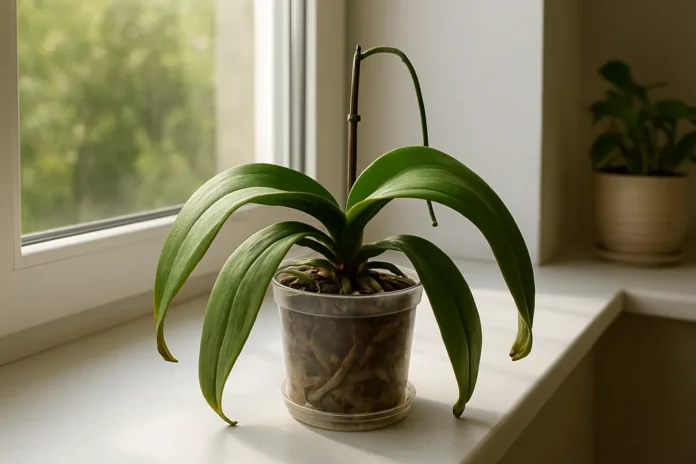
Orchid leaves usually droop because the plant is stressed, most often from watering problems, damaged roots, poor light, or temperature shock. In some cases, older lower leaves also droop and die as part of the plant's normal growth cycle.
A healthy orchid should have leaves that feel firm, look balanced, and hold themselves with some natural arch. When orchid leaves are drooping, the plant is telling you something is off, but that does not always mean it is dying. In my experience, drooping leaves are most often tied to root problems, watering habits, or a recent change in growing conditions.
The tricky part is that orchids can droop from both too little water and too much water. Add in low light, heat stress, cold drafts, and normal leaf aging, and it is easy to misread the symptom. The good news is that once you match the droop pattern with the plant's roots, potting mix, and environment, the real cause is usually pretty clear.
If your orchid leaves look limp or softer than usual, start by looking at the whole plant rather than the leaves alone. The roots, crown, potting media, and placement in your home tell the fuller story.
What Drooping Leaves Usually Mean in Orchids
Drooping leaves are a general stress signal. In orchids, especially common moth orchids or Phalaenopsis, the leaves store moisture and should stay relatively thick and sturdy. When they begin to hang lower, wrinkle, or lose their firm texture, the plant is often struggling to move enough water from the roots to the leaves.
That breakdown can happen because the orchid is too dry, because roots have rotted and cannot absorb moisture, or because environmental stress is forcing the plant to lose water faster than it can replace it. Sometimes the leaf droop is mild and cosmetic. Other times it is an early warning before leaf yellowing, bud drop, or crown decline.
When I diagnose a droopy orchid, I pay more attention to leaf texture than leaf angle. Some orchids naturally arch a bit, but leaves that feel floppy, leathery, or accordion-like usually point to a water uptake problem rather than normal growth habit.
Overwatering and Root Rot Are the Most Common Causes
Many home gardeners assume a drooping orchid needs more water, but overwatering is often the bigger problem. Orchids need air around their roots. When they sit in soggy bark, packed moss, or water trapped in an outer cachepot, roots can suffocate and rot. Once that happens, the leaves droop because the plant no longer has a healthy root system to take up moisture.
This is why an overwatered orchid can look thirsty. The pot is wet, but the roots are too damaged to function. The leaves may look limp, slightly wrinkled, or dull green. In more advanced cases, lower leaves may yellow, and the base of the plant can begin to soften.
- Roots look brown, mushy, hollow, or papery instead of plump and green or silvery
- Potting mix smells sour, swampy, or stale
- The pot stays wet for many days after watering
- Leaves droop even though the media feels damp
- The orchid may wobble in the pot because the roots are failing
If this sounds like your plant, root rot is a much more likely cause than simple thirst. Orchids in decorative pots without drainage are especially prone to this. So are plants watered on a strict schedule instead of by checking the potting mix first.
Underwatering Can Also Leave Leaves Limp and Floppy
Underwatering is the other classic reason orchid leaves droop. When the potting media becomes too dry for too long, the plant uses stored moisture from the leaves. Over time the leaves lose firmness, wrinkle, and may fold slightly along the center vein.
This is especially common in orchids growing in coarse bark, plants kept in very dry indoor air, or orchids displayed near heat vents and sunny windows. Bark-based mixes dry faster than many beginners expect, especially in warm homes.
- Roots look silvery, dry, and shriveled rather than mushy
- The pot feels very light
- Bark mix dries quickly and pulls away from the pot sides
- Leaves may wrinkle but the crown stays firm, not soft
- The plant may perk up somewhat after a deep watering
If you are deciding between overwatering and underwatering, unpotting once is often faster than guessing for weeks. Healthy orchid roots settle the question quickly, and that one look can save the plant.
Damaged or Crowded Roots Can Cause Drooping Even with Correct Watering
Sometimes watering is not the real problem. The issue is that the roots are too damaged, too old, or too crowded in broken-down media to absorb water efficiently. Orchids that have been in the same pot for several years often decline this way. The bark decomposes, compacts, and holds moisture differently than it used to.
An orchid with a cramped or failing root system may have drooping leaves even if you water carefully. You may also notice fewer new roots, slower growth, or a plant that seems unstable in its container. Repotting into fresh orchid bark can make a major difference if the root system is still salvageable.
This is also common after a plant has been imported, shipped, or kept in dense sphagnum moss for retail display. The orchid can look fine at purchase and then begin drooping weeks later once hidden root damage catches up with it.
Light Problems Can Weaken Leaf Posture
Orchids need enough light to maintain strong growth. In very low light, leaves may become darker green, softer, and less sturdy over time. The plant can look stretched or weak, and the leaves may droop because overall growth is sluggish.
On the other hand, too much direct sun can scorch leaves and increase water stress. A hot west-facing window can cause leaves to droop during the day, especially if the roots are already under strain. Sun-stressed leaves may feel warm, look yellow-green, or develop bleached patches.
- Low light signs include dark green leaves, slow growth, and no blooming
- Excess light signs include yellowing, scorch marks, and heat buildup near the window
- Most common indoor orchids do best in bright, indirect light
Temperature Stress and Dry Air Can Make Drooping Worse
Orchids dislike sharp swings in temperature. Cold drafts from winter windows, blasts from air conditioning, and hot air from vents can all trigger limp foliage. Even if these conditions are not the only cause, they often worsen a plant that is already stressed.
Very dry indoor air can also contribute. Orchids lose moisture through their leaves, and in a heated or air-conditioned home, that moisture loss can outpace what the roots can replace. The leaves may droop more noticeably between waterings, even when the plant is not severely unhealthy.
This matters most when dry air is combined with root weakness, tight moss, or too much direct sun. On its own, low humidity rarely causes major collapse, but it can push a borderline plant into visible decline.
Normal Aging Can Affect Older Orchid Leaves
Not every drooping leaf is a crisis. Orchids naturally shed older leaves, usually the lowest ones first. An aging leaf may droop, soften a bit, then turn yellow before dropping off. If the rest of the plant looks healthy, the roots are sound, and new leaves are emerging normally, this is usually just part of the growth cycle.
The key is whether the problem is isolated. One lower leaf declining slowly is very different from several leaves going limp at once. Widespread drooping almost always points to a care issue rather than normal aging.
How to Tell Which Cause Is Affecting Your Orchid
The fastest way to figure out why your orchid leaves are drooping is to compare the leaves, roots, and potting mix together. Looking at only one piece can be misleading. A wet pot does not guarantee a hydrated plant, and wrinkled leaves do not automatically mean you should water more.
- Check leaf texture. Firm but arching leaves may be normal, while floppy, wrinkled, or folding leaves point to stress.
- Look through the pot if it is clear. Healthy roots are usually green after watering and silvery when dry. Rotted roots are brown or mushy.
- Feel the potting mix. If it is constantly wet, suspect overwatering or decayed media. If it is bone dry and lightweight, suspect underwatering.
- Inspect the crown and stem base. Softness there can signal serious rot.
- Think about recent changes such as repotting, moving the plant, heat waves, cold windows, or a missed watering pattern.
A plant with droopy leaves and firm green roots usually has a simpler fix than one with droopy leaves and collapsing roots. I try not to judge orchids by foliage alone because root condition tells me whether recovery will be quick or slow.
What to Do Based on the Cause
If the Orchid Is Overwatered
Remove the plant from its pot and inspect the roots. Trim away mushy or dead roots with clean scissors, then repot into fresh orchid media in a pot with drainage. Water only after the media approaches dryness, not on a rigid calendar.
If the Orchid Is Underwatered
Soak the bark thoroughly so the roots can rehydrate, then let excess water drain completely. Resume a more consistent watering rhythm based on how fast the media dries in your home. Severely dehydrated leaves may improve somewhat, but badly wrinkled leaves do not always return to perfect shape.
If the Roots Are Crowded or the Mix Is Old
Repot into fresh bark or an orchid blend suited to your environment. If your home is very dry, a mix with some moss may help hold moisture longer. If your home is humid or you tend to overwater, use a chunkier, airier mix.
If Light Is the Issue
Move the orchid to bright, indirect light. An east window or a spot a few feet back from a brighter window often works well. Avoid hard afternoon sun unless you know your orchid variety can handle it.
If Temperature or Humidity Stress Is Contributing
Keep the orchid away from heater vents, exterior door drafts, and cold glass. Moderate humidity helps, but good root care matters more than misting. A pebble tray or humidifier is more useful than frequent leaf spraying.
How Long Recovery Takes
Orchids do not bounce back overnight. Once leaves have lost turgor, they may not fully stand the way they once did, especially if the plant was stressed for a long time. What you want to watch for is healthier new growth, better root development, and leaves that stop getting worse.
A mildly dehydrated orchid may look better within days of proper watering. An orchid recovering from root rot may need several weeks or months before it truly stabilizes. Patience matters, but so does restraint. Repeatedly changing watering, light, fertilizer, and potting mix all at once can make recovery harder to read.
After correcting the main issue, judge progress by the next leaf and next roots, not by expecting damaged leaves to become perfect again. Orchids often show recovery in new growth before the older leaves look much better.
How to Prevent Orchid Leaves From Drooping Again
- Use a pot with good drainage, ideally one that lets you monitor root condition
- Water based on media dryness and root color, not just the day of the week
- Repot every year or two before the media breaks down badly
- Give bright, indirect light instead of deep shade or harsh direct sun
- Protect orchids from vents, cold drafts, and sudden placement changes
- Fertilize lightly during active growth, but do not try to fix drooping with heavy feeding
- Check roots before assuming the leaves need more water
If there is one habit that prevents most drooping problems, it is learning to read the roots. Once you get comfortable checking root color, media texture, and pot weight, orchid care becomes much less mysterious.
FAQ
Can Droopy Orchid Leaves Become Firm Again?
Sometimes. If the cause is caught early, mildly droopy leaves can regain some firmness after roots and watering are corrected. Leaves that have been severely wrinkled or stressed for a long time may improve only partially.
Should I Cut Off Drooping Orchid Leaves?
Usually no. Keep the leaf unless it turns fully yellow, brown, or mushy. Even a droopy green leaf can still help the plant store energy and moisture.
Why Are My Orchid Leaves Drooping Even Though I Water Regularly?
Regular watering does not help if the roots are rotted, crowded, or stuck in broken-down media. A plant can sit in wet mix and still act dehydrated because damaged roots cannot absorb water properly.
Do Orchid Leaves Droop After Repotting?
They can. Repotting disturbs the roots, and orchids often need a short adjustment period. Mild droop after repotting is not unusual, but worsening limpness can mean root damage or improper watering afterward.
Can Too Much Sun Make Orchid Leaves Droop?
Yes. Excess direct sun and heat can increase moisture loss and stress the leaves. If the plant is close to a hot window, drooping may come with yellowing or scorched patches.
Is One Drooping Lower Orchid Leaf Normal?
Often yes. A single older bottom leaf may droop, yellow, and drop as part of normal aging. It is more concerning when several leaves soften or droop at the same time.
Should I Mist a Droopy Orchid?
Misting is not the main fix for drooping leaves. It adds only brief surface moisture and does not solve root or watering problems. Focus on root health, proper watering, and stable growing conditions.
Need the right setup to revive a struggling orchid? See our guide to the best orchid pots, bark mixes, and watering tools so you can fix drooping leaves with confidence.
