

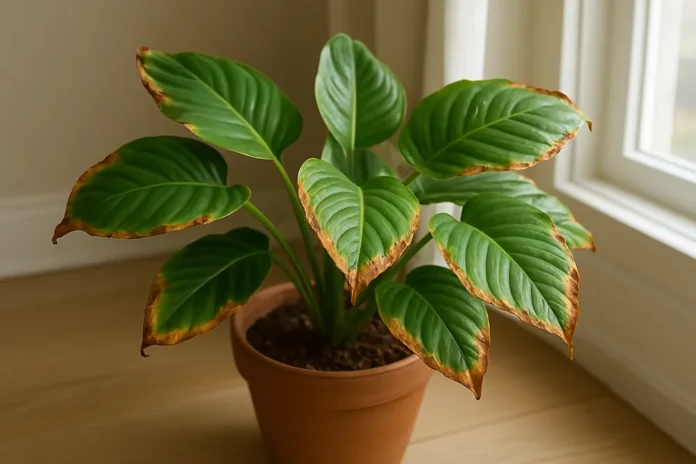
Philodendron leaves usually turn brown because of watering stress, dry air, too much direct sun, fertilizer buildup, or root trouble. Brown leaves can also come from normal aging, especially on older lower foliage.
Brown leaves on a philodendron can look alarming, especially when a plant that was lush and glossy suddenly develops crispy edges, tan patches, or dark brown tips. The good news is that philodendron brown leaves are usually a symptom with a clear cause, not a mystery disease that appears out of nowhere.
When I troubleshoot this problem, I pay close attention to the exact pattern. A whole leaf turning brown points me in a different direction than brown margins, random sunburned patches, or a single older leaf fading at the base of the plant. That pattern, along with your watering habits and where the plant sits in the room, usually tells the story pretty quickly.
Most philodendrons are forgiving houseplants, but they still react when moisture, light, roots, or salts get out of balance. Once you match the symptom to the cause, brown philodendron leaves are often manageable and new growth can return to normal.
What the Brown Pattern Is Telling You
Before changing anything, look closely at where the browning starts and how it spreads. Philodendrons do not all brown in the same way. Crispy tips usually suggest dry conditions, inconsistent watering, or fertilizer salts. Large pale brown patches often come from direct sun. Soft, dark brown areas can point to overwatering or root stress. A single older leaf at the bottom turning yellow, then brown, is often just normal aging.
- Brown tips with otherwise green leaves often suggest low humidity, missed waterings, or salt buildup.
- Brown edges all around the leaf often mean the plant got too dry for too long.
- Bleached tan or brown patches on exposed leaves often indicate sun scorch.
- Dark brown, mushy, or collapsing tissue is more concerning for overwatering or root rot.
- Only lower, oldest leaves turning brown usually points to normal leaf replacement.
When I am unsure, I compare the newest leaf, a middle leaf, and the oldest leaf. If the newest growth looks clean but the oldest leaves are browning, I worry less about disease and more about normal aging or a past care hiccup that the plant is already moving past.
Watering Problems Are the Most Common Cause
Underwatering and Drought Stress
Philodendrons like evenly moist soil, but not constantly wet soil. If the potting mix gets bone dry too often, roots struggle to deliver enough moisture to the leaves. The first signs are often brown tips, curling, drooping, and crisp edges. Leaves may feel papery rather than soft. This is especially common in small pots, fast-draining mixes, warm rooms, and homes with winter heating.
A plant that dries out hard can also shed older leaves faster. Even if you water again, the damaged tissue does not turn green. What matters is whether the next leaves stay healthy after you return to a steadier rhythm.
Overwatering and Oxygen-starved Roots
Too much water can also lead to brown leaves, but the look is different. Instead of crisp margins, overwatered philodendrons often develop limp foliage, yellowing followed by dark brown patches, or leaves that feel soft and weak. Constantly soggy soil pushes air out of the root zone, and roots need oxygen as much as they need moisture. Once roots decline, leaves start showing stress above the soil.
Overwatering is not just about frequency. It can also happen when a pot is too large, drainage is poor, the mix holds too much moisture, or the plant is sitting in a dim room where it uses water slowly. In those cases, even a schedule that seems reasonable can keep the root ball wet too long.
I do better with philodendrons when I stop watering by the calendar and water by soil feel. If the top inch or two is still damp, I wait. If it is drying out and the pot feels lighter, that is usually the right moment.
Low Humidity and Dry Indoor Air Can Crisp the Foliage
Many philodendrons tolerate average household humidity, but they can still react when the air gets especially dry. Brown tips and edges are common in winter, near heating vents, or in rooms with strong air conditioning. Thin-leaved varieties usually show this stress faster than thicker, more leathery types.
Dry air damage tends to look crisp and gradual rather than wet or blotchy. You may notice the soil moisture seems fine, yet the leaf tips still brown. That mismatch often points toward humidity rather than watering alone. If the plant is pushing out new leaves that unfurl slowly or get slightly stuck, dry air may be part of the problem too.
- Keep philodendrons away from heating vents, radiators, and strong AC drafts.
- Group plants together to create a slightly more humid pocket of air.
- Use a small humidifier if your home runs very dry for long stretches.
- Avoid relying on misting alone, since it gives only brief humidity changes.
Too Much Direct Sun Causes Brown Scorch Marks
Philodendrons generally prefer bright, indirect light. If they are placed in strong afternoon sun or suddenly moved into a brighter window, leaves can scorch. Sun damage usually appears as dry tan, beige, or brown patches, often on the side facing the light source. The damaged areas may look bleached first, then darken over time.
This is common when a plant is moved outdoors without acclimating, or when winter light changes and a formerly safe spot gets harsher in summer. Variegated philodendrons are often even more sensitive because lighter leaf tissue burns faster.
The fix is simple: move the plant a little farther from the window, filter the light with a sheer curtain, or place it where it gets bright ambient light instead of direct midday rays. Existing scorch will not heal, but new leaves should come in clean if light levels are corrected.
Fertilizer Buildup and Water Quality Can Burn Leaf Tips
Philodendrons are not heavy feeders, and too much fertilizer often shows up as brown tips or margins. When excess salts build up in the potting mix, roots struggle to take up water properly. The plant can look thirsty even when the soil is moist. This is one of the most overlooked reasons for chronic tip burn.
Tap water can contribute too, especially if it is very hard or softened. Over time, dissolved minerals collect in the soil and irritate roots. You might notice a white crust on the soil surface or around the drainage holes. If the plant has been fertilized often and the browning seems to linger despite decent watering, salts are worth considering.
- Feed lightly during active growth, not at every watering unless using a very diluted routine.
- Flush the pot occasionally by watering thoroughly until excess drains out.
- Empty saucers so the plant is not reabsorbing concentrated salts.
- If your water is very mineral-heavy, try filtered or rainwater for a while.
I see fertilizer burn most often on otherwise healthy, fast-growing houseplants owned by attentive gardeners. It usually comes from good intentions, not neglect. If a philodendron is growing steadily, it rarely needs more than modest feeding.
Root Problems Hide Below the Soil Line
If your philodendron keeps producing brown leaves despite adjusting light and watering, check the roots. Root-bound plants dry out too fast and become hard to rewet evenly. On the other hand, roots damaged by constant wetness can rot and stop supporting the top growth. Both situations can produce browning, drooping, and poor new growth.
Healthy roots are usually firm and light colored. Rotting roots are dark, mushy, and may smell sour. If the plant slides out of the pot as a dense circling mass with very little soil left, it may simply need a larger container and fresh mix. If the root ball is heavy, wet, and smelly, you are dealing with excess moisture and root decline.
Repot into a container with drainage using a chunky mix that holds moisture but also breathes well. A good philodendron blend often includes potting soil plus bark, perlite, coco coir, or similar ingredients that keep the root zone airy.
Pests and Disease Are Possible but Less Common
Brown leaves are not always caused by pests, but sap-sucking insects can weaken philodendrons enough to create browning, yellow speckling, or dry-looking patches. Spider mites are a frequent culprit in dry homes. Thrips can leave scars and distorted new leaves. Mealybugs and scale may also contribute to decline if left unchecked.
Check the undersides of leaves, where the leaf meets the stem, and any tightly furled new growth. Fine webbing, tiny moving dots, sticky residue, or cottony clusters all suggest pest activity. Disease is less common indoors, but fungal or bacterial issues may show up when foliage stays wet, air circulation is poor, or damaged leaves remain crowded together.
- Spider mites often cause stippling and dry bronzed patches.
- Thrips can leave silvery scars that later turn brown.
- Mealybugs appear as white cottony clumps along stems and nodes.
- Leaf spot diseases usually create distinct lesions rather than general tip burn.
Sometimes Brown Leaves Are Just Normal Aging
Not every brown leaf means something is wrong. Philodendrons naturally shed older foliage as they grow, especially lower leaves that no longer receive much light. An aging leaf often turns pale green or yellow first, then brown, while the rest of the plant looks healthy and continues producing new growth.
This is especially common after a growth spurt, after a move to a new environment, or when seasonal light shifts. If you are seeing one occasional lower leaf decline while the crown stays vigorous, that is usually part of the plant's normal cycle.
How to Fix Brown Philodendron Leaves
Once brown tissue appears, it does not recover, so focus on preventing the next leaves from browning. Start by correcting the most likely stress rather than changing everything at once. Sudden swings in care can create a second problem while you are trying to solve the first one.
- Check soil moisture with your finger or a wooden skewer before watering.
- Move the plant into bright, indirect light if it gets harsh direct sun or sits in a very dim spot.
- Inspect roots if the plant stays wet too long, wilts despite moisture, or seems badly root-bound.
- Reduce fertilizer strength and flush the soil if salts may be building up.
- Improve humidity if leaf tips crisp up in dry seasons.
- Inspect for pests and treat promptly if you see signs of infestation.
- Trim away fully brown leaves or snip just the dead tips for appearance.
Change one variable, then watch the next round of growth. I have seen many houseplants decline further because the owner repotted, fertilized, moved it, and changed watering all in the same weekend, which made the original cause harder to identify.
When to Worry and when to Be Patient
A philodendron with a few brown tips is usually not in serious trouble. I get more concerned when browning spreads quickly, affects many leaves at once, or appears alongside a soft stem, sour-smelling soil, pests, or collapsing growth. Those signs suggest a root or infestation problem that needs attention sooner rather than later.
If the issue was a missed watering, a burst of hot sun, or a temporary drop in humidity, the plant may recover nicely once conditions stabilize. Judge recovery by the health of new leaves, not by old damaged ones. If fresh growth comes in clean and firm, you are moving in the right direction.
FAQ
Should I Cut Off Brown Philodendron Leaves?
Yes, you can remove fully brown leaves because they will not turn green again. If only the tips are brown, you can trim the dead portion with clean scissors while following the natural leaf shape.
Can Brown Philodendron Leaves Turn Green Again?
No, brown tissue is dead and will not recover. Your goal is to correct the cause so future growth stays healthy.
How Often Should I Water a Philodendron to Prevent Brown Leaves?
There is no perfect schedule because watering depends on pot size, soil mix, light, temperature, and season. Water when the top inch or two of soil has dried rather than on a fixed calendar.
Do Philodendrons Need High Humidity?
Most philodendrons do fine in average indoor humidity, but very dry air can still cause brown tips and edges. They appreciate moderate humidity, especially during winter or in air-conditioned rooms.
Can Too Much Sun Make Philodendron Leaves Brown?
Yes. Direct sun, especially hot afternoon sun, can scorch philodendron leaves and leave tan or brown patches on exposed areas.
Why Are Only the Tips of My Philodendron Leaves Turning Brown?
Brown tips usually point to dry air, inconsistent watering, or salt buildup from fertilizer or mineral-heavy water. If the rest of the leaf stays green, root rot is less likely than with broad soft brown patches.
Is One Brown Lower Leaf Normal on a Philodendron?
Yes, one older lower leaf turning yellow or brown from time to time is often normal aging. It is more concerning when several leaves decline at once or new growth is also affected.
Can Tap Water Cause Brown Philodendron Leaves?
It can, especially if your water is very hard or chemically treated. Over time, mineral and salt buildup may contribute to brown tips and stressed roots.
Want to stop the guessing and get your houseplants back on track faster? Read our guide to the best philodendron soils, watering tools, and humidity helpers for healthier growth and cleaner leaves.
