

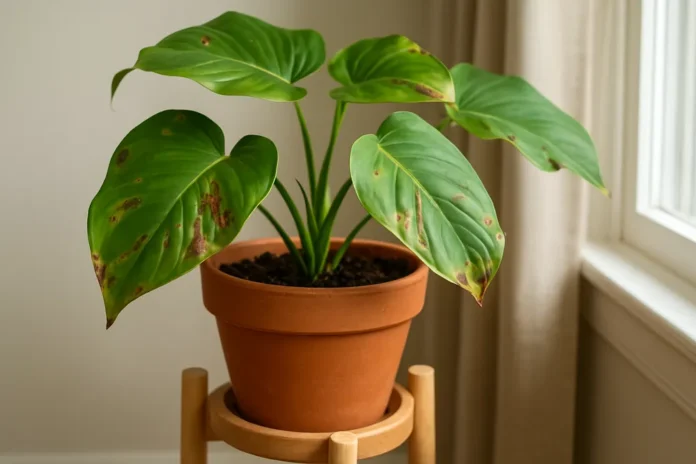
Philodendron leaves usually get brown spots from watering stress, direct sun, dry air, fertilizer buildup, pests, or leaf diseases. The pattern and location of the spots often point to the real cause.
Seeing philodendron leaves with brown spots can be frustrating because the damage often seems to appear overnight. In my experience, though, brown spotting is usually a plant's way of showing stress that has been building for a while, whether that stress comes from watering habits, harsh light, low humidity, pests, or roots that are not happy in the pot.
The good news is that a philodendron with spotted leaves is often very fixable once you narrow down the cause. Some spots are cosmetic and stay put, while others spread quickly and signal an active problem. The key is learning how to read the pattern instead of treating every brown mark the same way.
What Brown Spots on Philodendron Leaves Usually Mean
Brown spots are not a diagnosis by themselves. They are a symptom. On philodendrons, I usually sort them into a few broad categories: dry crispy patches from sunburn or underwatering, soft dark lesions from overwatering or disease, edge browning from low humidity or salt buildup, and tiny stippled or irregular spots from pests. Once you look at the color, texture, size, and location of the damage, the likely cause becomes much easier to identify.
- Crispy tan or light brown patches often suggest sun scorch, dry air, or missed watering.
- Dark brown or blackish spots with yellow halos often point toward bacterial or fungal leaf spot.
- Brown tips and margins are commonly linked to low humidity, inconsistent watering, or fertilizer salts.
- Random spotting plus curling, sticky residue, or webbing may indicate pests.
- Spots appearing along with drooping, yellowing, and slow growth often connect to root stress or rot.
When I inspect a philodendron, I always compare old leaves to new ones. If only the oldest leaves are spotting, I think cultural stress first. If fresh leaves are emerging damaged, I look harder at roots, pests, or disease because the problem is still active.
Watering Problems Are the Most Common Cause
Overwatering and Soggy Soil
Philodendrons like evenly moist soil, but they do not want to sit wet for long periods. If the potting mix stays soggy, roots lose access to oxygen and begin to decline. That often shows up above the soil as brown or black spotting, yellowing leaves, limp stems, and a general dull look. The spots may feel soft rather than crisp, especially if root problems are advanced.
Overwatering is not just about frequency. A plant can be watered only once a week and still stay too wet if the pot is oversized, the mix is dense, drainage is poor, or the room is cool and dim. Many philodendrons decline in winter because the soil dries much more slowly than it did in summer.
Underwatering and Repeated Dry-outs
Letting the plant go bone dry over and over can also create brown spots. In that case, the damage is more likely to look dry, papery, and crispy, often starting at tips, edges, or thinner parts of the leaf. New growth may emerge smaller, and the plant may wilt between waterings. A single hard dry-out can leave permanent brown patches even after the plant recovers.
- If soil is wet for days and leaves are yellowing, think too much moisture.
- If soil pulls away from the pot and leaves feel dry and brittle, think too little moisture.
- If the plant alternates between soggy and bone dry, expect stress spotting from inconsistency.
I get the best results by watering philodendrons when the top inch or two of soil has dried, not by following a fixed calendar. A schedule written for summer can quietly become overwatering by fall.
Too Much Direct Sun Can Scorch the Leaves
Most philodendrons prefer bright, indirect light. If they are suddenly exposed to hot afternoon sun or even strong midday sun through glass, the leaves can develop pale bleached areas that later turn tan or brown. These scorched patches often appear on the side facing the window and may have a dry, crisp texture.
Sunburn is especially common after moving a plant outdoors, shifting it closer to a south or west window, or pruning nearby plants that used to filter the light. Variegated philodendrons are often even more sensitive because the lighter tissue burns faster.
- Spots tend to be larger irregular patches rather than tiny speckles.
- Damage is usually worse on the most exposed leaves.
- The browned areas do not heal, but new growth should stay clean once light is corrected.
Low Humidity and Dry Indoor Air Can Leave Crisp Spotting
Philodendrons tolerate average indoor humidity better than some tropicals, but very dry air can still leave its mark. Brown tips, margins, and small crisp spots can develop when humidity stays low, especially during winter heating season. This is more likely if the plant sits near a vent, radiator, space heater, or drafty window.
Dry air alone does not usually cause large wet-looking lesions. It tends to create edge damage and a generally dehydrated look, especially if watering is also inconsistent. Thin-leaved varieties often show this sooner than thicker, tougher ones.
- Browning concentrates at tips and edges.
- Spots feel crisp, not mushy.
- Damage may worsen during winter or air-conditioning season.
Fertilizer Burn and Tap Water Buildup Can Damage Leaf Tissue
Philodendrons do not need heavy feeding. If fertilizer is applied too strongly or too often, salts can build up in the potting mix and damage the roots. Once roots are stressed, leaves may develop brown tips, scattered spots, or edge burn. In some homes, mineral-heavy tap water can contribute to that same buildup over time.
This kind of damage often develops gradually. You may notice white crust on the soil surface or around the drainage hole, especially if the plant has been in the same mix for a long time. The spotting usually does not look like distinct disease lesions. It is more like general tissue burn and decline.
- Cut back to a diluted fertilizer during active growth only.
- Flush the pot thoroughly once in a while to wash excess salts out.
- Repot into fresh mix if the soil is compacted or heavily crusted.
Pests Can Cause Stippling, Scarring, and Brown Flecks
Several common houseplant pests feed on philodendron leaves and leave behind damaged tissue that looks brown or rusty. Spider mites, thrips, scale, and sometimes mealybugs are the usual culprits. Their feeding punctures cells, so the leaf may first look silvery, pale, or speckled before turning brown.
Thrips often create irregular tan or brown scars and can distort new leaves. Spider mites usually cause fine stippling and may leave faint webbing. Scale tends to cluster along stems and veins, where they suck sap and weaken the plant over time. Pest damage often appears alongside curling, dull foliage, or sticky residue.
Signs That Point to Pests
- Tiny specks, streaks, or silvery scars rather than round lesions
- Damaged new leaves that unfurl misshapen or marked
- Sticky honeydew, webbing, or visible insects under the leaves
- Spots spreading even though watering and light seem fine
If the spotting seems random and you cannot make sense of it, I check the underside of leaves with a flashlight before I change any care routine. Pests are easy to miss in normal room light, especially on darker green philodendron leaves.
Bacterial and Fungal Leaf Spot Are More Serious Possibilities
Leaf spot diseases are less common than watering mistakes, but they do happen, especially when leaves stay wet, air circulation is poor, and the plant is crowded with others. Bacterial and fungal spots often start as small dark lesions that expand over time. Some develop yellow halos, water-soaked edges, or concentric rings depending on the pathogen.
These spots usually do not stay neatly confined to leaf edges. They can appear in the middle of the leaf blade and spread irregularly, especially after overhead watering or splashing. If multiple leaves begin showing similar dark lesions quickly, disease becomes more likely.
How Disease Spotting Tends to Look
- Dark brown to black spots that may look wet or sunken
- Yellow halos around the dead tissue
- Spots enlarging over several days
- Damage on several leaves at once, especially after high humidity or leaf wetness
If you suspect disease, remove the worst affected leaves with clean scissors, keep foliage dry, improve airflow, and isolate the plant from nearby houseplants until you know the spotting has stopped spreading.
Root Problems Often Show Up as Leaf Spotting
When philodendron roots are crowded, damaged, rotting, or trapped in exhausted potting mix, the leaves often respond with brown spots because the plant cannot move water and nutrients properly. This is one reason spotting can be confusing. The problem looks like a leaf issue, but the real trouble is below the soil line.
A rootbound plant may dry out too fast and develop crispy spots. A plant in broken-down, dense mix may stay wet too long and develop soft dark spots. If growth has stalled, the plant wilts quickly after watering, or roots circle tightly around the pot, it may be time to inspect and repot.
- Sour-smelling soil can suggest root rot.
- Roots packed tightly around the pot can cause water stress in either direction.
- Old compacted mix can lead to poor drainage and oxygen loss.
How to Tell Which Cause Is Most Likely in Your Plant
The fastest way to narrow this down is to look for patterns rather than staring at one damaged leaf. Ask where the spots are forming, whether they are dry or soft, and what else changed recently. A philodendron sitting in a sunny west window gives different clues than one tucked in a dark bathroom corner with constantly damp soil.
- Check the texture of the spots. Crispy suggests dryness or scorch. Soft suggests excess moisture or disease.
- Look at the location. Edge browning leans toward humidity, salts, or watering inconsistency. Mid-leaf lesions may suggest sunburn, pests, or disease.
- Inspect the undersides of leaves and stems for insects, webbing, or scale bumps.
- Feel the soil moisture several inches down instead of only touching the surface.
- Think about recent changes such as repotting, moving the plant, fertilizing, or seasonal shifts in light and heat.
Most of the time, one or two clues stand out quickly. A crispy patch on the window side of the leaf points very differently than black spots on several wet leaves in a crowded plant shelf.
How to Fix Brown Spots on Philodendron Leaves
Brown tissue will not turn green again, so the goal is to stop new spotting. Once you identify the likely cause, make one or two targeted corrections rather than changing everything at once. Philodendrons usually respond best to steady conditions.
- Adjust watering so the soil is moist but not constantly saturated or repeatedly bone dry.
- Move the plant out of harsh direct sun and into bright, indirect light.
- Keep it away from heating vents, AC blasts, and cold drafts.
- Trim heavily damaged leaves if they bother you or if disease is suspected.
- Treat pests promptly with appropriate houseplant-safe controls and repeat treatments as needed.
- Flush or replace soil if fertilizer salts have built up.
- Repot if roots are rotting, circling heavily, or trapped in stale compacted mix.
I judge progress by the next leaves, not the old ones. If new growth comes in clean and firm, the fix is working even if the damaged leaves still look rough.
When to Remove Spotted Leaves and when to Leave Them Alone
Not every spotted leaf needs to come off. If a leaf is mostly green and the spots are old, it can still photosynthesize and help the plant recover. I usually leave mildly damaged leaves in place unless they are very unsightly.
Remove leaves that are mostly brown, mushy, actively spreading with disease, or heavily infested with pests. Always use clean scissors or pruners and avoid tearing tissue by hand. If you are dealing with suspected bacterial or fungal spotting, disinfect your tool between cuts.
How to Prevent Brown Spots From Coming Back
Prevention comes down to consistency. Philodendrons are forgiving, but they really do better when light, watering, and airflow stay fairly stable. Once a plant has gone through a stress cycle, it often becomes more sensitive to the next one.
- Use a chunky, well-draining potting mix.
- Water based on soil dryness, not the calendar alone.
- Provide bright, indirect light instead of direct afternoon sun.
- Keep foliage dry when possible.
- Inspect for pests regularly, especially on new growth and leaf undersides.
- Feed lightly during spring and summer rather than heavily year-round.
- Repot before the mix becomes badly compacted or the roots become severely crowded.
FAQ
Should I Cut Off Philodendron Leaves with Brown Spots?
Cut them off if they are mostly damaged, mushy, diseased, or pest-ridden. If the leaf is still mostly green, you can leave it on because it still helps the plant produce energy.
Can Brown Spots on Philodendron Leaves Go Away?
No, damaged tissue does not heal or turn green again. What you want to see is healthy new growth with no fresh spotting.
Do Brown Spots Mean My Philodendron Has Root Rot?
Not always. Root rot is one possible cause, especially if the soil stays wet, the plant wilts despite moisture, and the spots are soft or dark, but sunburn, low humidity, pests, and salts can cause spotting too.
Can Tap Water Cause Brown Spots on Philodendron?
Sometimes. Mineral-heavy water can contribute to salt buildup over time, which may lead to brown tips, edges, and scattered burn-like damage, especially in soil that is rarely flushed.
Are Brown Spots From Too Much Sun or Too Little Light?
Too much direct sun is far more likely to cause brown patches. Too little light usually causes slower growth, smaller leaves, and lingering wet soil rather than crisp scorch marks.
What Pests Cause Brown Spots on Philodendron Leaves?
Spider mites, thrips, and scale are the most common culprits. They damage leaf tissue as they feed, which can leave rusty flecks, tan scars, stippling, or irregular brown marks.
How Often Should I Water a Philodendron with Brown Spots?
There is no single schedule that fits every home. Water when the top inch or two of soil has dried, then let excess water drain away so the roots are not left sitting wet.
Need the right fix fast? Read our philodendron care troubleshooting guide or compare the best houseplant pest treatments and soil mixes to stop new leaf damage.
