

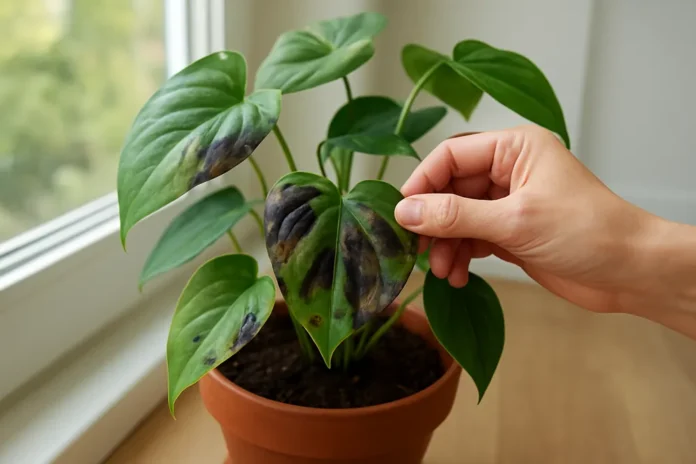
Philodendron leaves usually turn black because leaf tissue has been damaged by overwatering, cold, rot, disease, or severe sun stress. Black areas mean that part of the leaf has died, not just faded.
When a philodendron leaf turns black, the plant is telling you that something more serious than mild stress is going on. Yellowing can come from all kinds of minor issues, but black tissue usually means cells have been damaged enough that they are no longer functioning.
In my experience, the most common causes are soggy soil, cold drafts, root rot, bacterial or fungal leaf problems, and sudden environmental shock. Sometimes the blackening starts at the tip or edge, and other times it shows up as soft patches, round spots, or entire leaves collapsing at once. The pattern matters a lot.
The good news is that black philodendron leaves do not always mean the whole plant is doomed. If you can tell whether the problem started in the roots, on the leaf surface, or from temperature or light stress, you can usually stop the spread and protect the next flush of growth.
What Black Leaves Usually Mean on a Philodendron
Black leaves are different from pale, faded, or slightly browned leaves. Blackened areas usually indicate dead tissue. On philodendrons, that often happens when roots stay too wet, leaves are chilled, pathogens infect damaged tissue, or the leaf is physically burned by harsh sun or chemicals.
The texture gives you your first clue. Soft, mushy black areas often point to rot, overwatering, or cold injury. Dry, crisp blackened edges are more often related to scorch, fertilizer burn, or older tissue dying back after stress. Black spots with yellow halos can suggest a leaf disease. An entire leaf turning black quickly often means severe root trouble or temperature shock.
When I diagnose philodendrons, I do not start by staring at the worst leaf. I compare several leaves at different ages and check whether the newest growth, oldest leaves, and stems are all affected the same way. That pattern usually narrows the cause faster than the color alone.
Overwatering and Root Rot Are the Most Common Causes
If I had to bet on one reason for black philodendron leaves, it would be overwatering or poor drainage. Philodendrons like moisture, but they do not like sitting in heavy, airless soil. When the pot stays wet too long, roots begin to suffocate, then decay. Once the roots fail, the leaves often yellow first and then develop black patches or collapse outright.
Root rot is especially likely if the pot has no drainage hole, the mix contains too much peat and not enough chunky material, or the plant is watered on a fixed schedule instead of by feel. A philodendron in low light also dries much more slowly than many people expect.
- Leaves turning yellow before blackening
- Blackening starting on lower or older leaves first
- Soft stems near the soil line
- A sour or swampy smell from the potting mix
- Soil that stays wet for many days
- Wilting even though the soil is still damp
To confirm root trouble, slide the plant out of its pot and inspect the roots. Healthy roots are firm and pale tan, cream, or light brown depending on age. Rotted roots are dark, mushy, hollow, or slough off when touched. If you find that, trim away the rotted roots, repot into a fresh airy mix, and hold off on heavy watering until the plant starts to recover.
After a repot for rot, I water just enough to settle the mix and then let the top layer dry noticeably before watering again. Many gardeners lose the plant by treating a stressed philodendron with even more water.
Cold Drafts and Low Temperatures Can Blacken Leaves Fast
Philodendrons are tropical plants, and they can show cold damage surprisingly fast. A leaf pressed against a cold window, a blast from an air conditioner, or a chilly night near an exterior door can cause black, water-soaked patches within a short time. The damage may start as translucent dark areas and then turn fully black as the tissue dies.
This kind of blackening often appears suddenly rather than gradually. If your plant looked fine a day or two ago and now several leaves have dark limp areas, think about the room conditions before you assume a fertilizer or watering issue. Temperatures below about 55 degrees Fahrenheit can stress philodendrons, and colder exposure can kill leaf tissue outright.
- Black patches on leaves closest to a window or vent
- Damage appearing after a cold night or a move outdoors
- Watery, limp tissue rather than dry crisp edges
- No obvious foul smell from the soil or roots
Once cold damage happens, the black areas will not turn green again. Move the plant to a warmer, stable spot and trim off badly damaged leaves if they become mushy or unsightly. Focus on preventing another cold event, because repeated chilling weakens the whole plant and makes root and disease problems more likely.
Leaf Spot Diseases and Bacterial Infections
If the blackening shows up as distinct spots rather than a general collapse, disease may be involved. Philodendrons can get fungal leaf spot and bacterial leaf spot, especially when leaves stay wet for long periods, airflow is poor, and the plant is crowded with others.
Bacterial spots often look dark and water-soaked at first, then expand quickly and may have a yellow border. Fungal spots can be brown to black, circular or irregular, and sometimes dry in the center as they age. Both problems spread more easily when water splashes from leaf to leaf.
- Small black or dark brown spots scattered across leaves
- Yellow halos around dark lesions
- Spots starting where leaves stay wet or rub together
- Faster spread in humid, stagnant indoor conditions
- New damage appearing on multiple leaves, not just one old leaf
Remove the worst affected leaves with clean pruners, improve airflow, and stop misting the plant. Water the soil directly instead of wetting the foliage. If the spotting keeps spreading, a houseplant-safe copper-based product or fungicidal treatment may help, but sanitation and drier leaf surfaces are usually the first big improvements.
Too Much Direct Sun or Heat Scorch
Philodendrons like bright light, but most common indoor types do best in bright indirect light rather than hard afternoon sun. If a shade-grown plant is suddenly moved into intense direct sun, the leaf tissue can scorch. At first it may look bleached, tan, or bronzed, then the damaged sections can turn dark brown to black.
Sun damage usually appears on the side of the plant facing the window or strongest light source. The pattern is often broad and patchy, not small dotted spots. A dark windowsill, reflected heat from glass, or outdoor summer exposure can make this problem worse.
- Blackened areas mostly on exposed upper leaves
- Damage after moving the plant to a brighter spot
- Tan, bleached, or papery tissue around the blackened section
- Soil and roots otherwise looking normal
Move the plant a bit farther from the window or filter the light with a sheer curtain. The damaged leaf tissue will not recover, but new growth should come in normally if the light level is corrected.
Fertilizer Burn and Mineral Buildup
Overfertilizing usually shows up first as brown or black tips and margins, especially on otherwise green leaves. Excess salts in the soil pull moisture away from roots and can damage both root tissue and leaf edges. If this goes on long enough, larger black sections can form.
This is more likely when liquid fertilizer is used too often, mixed too strong, or applied to a very dry pot. Hard water and leftover salts from old potting soil can also contribute to root stress and leaf blackening.
- Black or dark brown tips and edges rather than middle-of-leaf spots
- White crust on the soil surface or pot rim
- Recent heavy feeding or fertilizer spikes
- Roots looking stressed even though they are not mushy from rot
Flush the potting mix thoroughly with room-temperature water if the pot drains well, or repot into fresh mix if salt buildup is severe. Then resume feeding lightly only during active growth. Philodendrons generally prefer modest, steady fertilizing rather than frequent strong doses.
Water Quality, Physical Injury, and Normal Leaf Aging
Not every blackened leaf points to a major emergency. Some philodendrons react to poor water quality, especially if your tap water is heavily treated or mineral-rich. This usually causes tip and edge damage first, though it is often brown before it becomes very dark.
Leaves can also blacken where they were bent, bruised, or rubbed during moving. Damaged tissue may darken days later, making it seem like a disease when it is really mechanical injury. And occasionally, an old lower leaf simply ages out after the plant redirects energy into newer growth. A single aging leaf is not alarming if the rest of the plant looks strong.
One isolated damaged leaf does not worry me much. What gets my attention is repeated blackening on new growth or on several leaves at once, because that almost always points to an ongoing cultural problem rather than simple age.
How to Tell Which Cause Fits Your Plant
If you are not sure what is causing the black leaves, use the pattern to narrow it down. Philodendrons are actually pretty readable once you stop looking for one universal answer.
- If leaves are yellowing, wilting, and then blackening while the soil stays wet, suspect overwatering or root rot.
- If black patches appeared suddenly after exposure to a cold window, draft, or outdoor chill, suspect cold injury.
- If you see small dark spots with halos that spread across multiple leaves, suspect bacterial or fungal leaf spot.
- If exposed leaves facing bright sun develop scorched areas that darken later, suspect sunburn or heat stress.
- If only tips and margins are turning dark after feeding, suspect fertilizer burn or salt buildup.
- If one leaf darkened where it was bent or damaged, suspect physical injury.
It is also worth checking whether the stem is still firm and whether new leaves are emerging normally. A plant with black leaves but healthy new growth may just be recovering from a past stress. A plant with black leaves, limp stems, and a sour pot almost always needs root attention right away.
What to Do Right Now to Stop the Spread
Once leaf tissue has turned black, that part will not heal. The goal is to remove what is deteriorating, correct the cause, and protect the roots and new growth.
- Isolate the plant from others if you suspect disease.
- Trim off badly blackened or mushy leaves with clean scissors or pruners.
- Check the soil moisture and inspect the roots if overwatering is possible.
- Move the plant away from cold drafts, AC vents, or direct harsh sun.
- Pause fertilizer until the plant is actively growing again and the cause is under control.
- Improve airflow and avoid wetting the leaves if spotting looks infectious.
- Repot into a chunky, well-draining aroid mix if the current soil stays soggy too long.
After you make changes, judge success by the condition of new growth, not by expecting old damaged leaves to improve. Stable conditions matter more than dramatic rescue measures. Most philodendrons recover best when you correct the environment and then leave them alone long enough to respond.
How to Prevent Black Leaves in the Future
Prevention comes down to giving philodendrons the mix, moisture, temperature, and light they actually want. These are forgiving plants, but black leaves tend to show up when several small stresses stack together.
- Use a pot with drainage and an airy aroid mix with bark, perlite, and potting soil
- Water when the top inch or two of mix has dried, not on a rigid calendar
- Keep the plant in bright indirect light
- Protect it from temperatures below about 55 degrees Fahrenheit
- Do not let leaves sit wet for hours in stagnant air
- Feed lightly during active growth instead of using strong fertilizer often
- Inspect roots and foliage early when something looks off
I find that philodendrons stay healthiest when they dry at a steady, predictable pace. If the potting mix is still wet a week after watering under normal indoor conditions, that is usually a sign the mix is too dense, the pot is too large, or the light is too low for the plant's current setup.
FAQ
Should I Cut Off Black Philodendron Leaves?
Yes, remove leaves that are mostly black, mushy, or clearly declining. They will not turn green again, and trimming them improves appearance and can reduce disease spread.
Can Black Philodendron Leaves Turn Green Again?
No. Blackened tissue is dead tissue. Recovery shows up as healthy new growth, not by old damaged areas reversing.
Is a Black Leaf on One Old Philodendron Leaf Normal?
Sometimes. If it is only one older lower leaf and the rest of the plant looks healthy, it may just be aging out. Repeated blackening or damage on new leaves is more concerning.
How Often Should I Water a Philodendron to Avoid Black Leaves?
There is no fixed schedule that works in every home. Water when the top part of the mix has dried enough for the plant's size and conditions, and always let excess water drain away.
Can Low Humidity Make Philodendron Leaves Turn Black?
Low humidity usually causes browning at the tips or edges before true blackening. If leaves are turning black, overwatering, cold injury, scorch, or disease are more likely primary causes.
Why Did My Philodendron Leaf Turn Black After Touching the Window?
That often happens from cold damage or heat buildup against the glass. Window contact can injure tropical leaves quickly, especially during winter nights or intense summer sun.
Do I Need Fungicide for Black Spots on Philodendron Leaves?
Not always. First remove affected leaves, improve airflow, and keep foliage dry. If spotting continues to spread, a houseplant-safe treatment may help, especially when a fungal or bacterial problem is likely.
Need the right potting mix, fungicide, or watering tools to save a stressed philodendron? Check our recommended houseplant care products and philodendron recovery guides to choose the best fix fast.
