

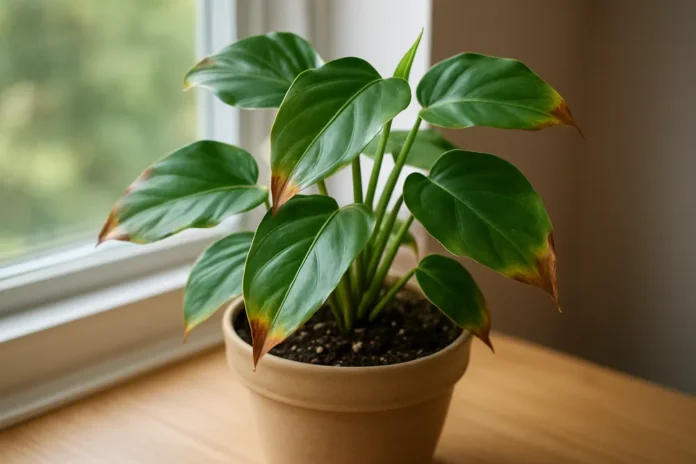
Philodendron leaf tips usually turn brown when the plant is dealing with dry soil, dry air, salt buildup, or root stress. The damaged tips will not turn green again, but the underlying problem is often easy to correct.
Brown tips on a philodendron are frustrating because the plant can still look mostly healthy while the leaf edges slowly get crisp and unattractive. In my experience, philodendron brown leaf tips are often an early warning sign rather than a full-blown emergency. The plant is telling you that something in its routine is just a little off, usually moisture, humidity, fertilizer, or root health.
The good news is that philodendrons are forgiving. If you catch the pattern early, you can usually stop new leaves from developing the same damage. The old brown tissue will stay brown, but healthy new growth is what tells you the fix is working.
What matters most is not just seeing brown tips, but noticing the whole pattern. Are only the oldest leaves affected, or are new leaves browning too? Is the tip dry and papery, or dark and mushy? Those details point you toward the real cause much faster.
What Brown Leaf Tips Usually Mean on a Philodendron
When only the very ends of the leaves turn brown, the problem is usually tied to moisture imbalance rather than a major disease outbreak. The plant has struggled to move water evenly to the leaf tips, which are the farthest points from the roots. That can happen if the soil gets too dry between waterings, if the air is very dry, or if the roots are stressed and cannot absorb water normally.
Brown tips can also come from fertilizer salts or minerals from tap water collecting in the potting mix. Over time, those salts draw moisture away from root tissue and make it harder for the plant to take up water efficiently. The result looks a lot like dryness, even when the soil seems damp.
- Dry, crispy tips usually point to underwatering, low humidity, or salt buildup.
- Soft brown tips with yellowing nearby can suggest overwatering or root damage.
- Damage mostly on older leaves often means a long-term care issue rather than a sudden shock.
- Browning on brand-new leaves can signal a more active root, watering, or environmental problem.
When I diagnose this on my own philodendrons, I look at several leaves before I touch the watering can. If every leaf has the same dry little triangle at the tip, I usually suspect routine stress like dry air or salts. If the pattern is random and worsening fast, I start thinking about roots.
Underwatering and Inconsistent Watering
The most common cause of brown tips is inconsistent watering. Philodendrons like lightly moist soil that dries a bit between waterings, but they do not like repeated cycles of bone-dry soil followed by a heavy soak. When that rhythm happens over and over, the finest roots dry out, and the leaf tips are often the first place you see damage.
A plant can also be technically watered often, yet still behave like it is underwatered if the potting mix has become hydrophobic. That means the soil has dried so much that water runs down the sides of the pot instead of soaking in. The top may look wet for a moment while the root ball stays dry inside.
Signs the Plant Is Getting Too Dry
- Leaf tips are crisp, tan, or medium brown
- Leaves may curl slightly inward
- The pot feels very light before watering
- Soil shrinks away from the sides of the pot
- Older leaves develop browning first
The best correction is consistency, not panic watering. Water thoroughly until excess drains out, then wait until the top inch or two of the mix dries before watering again. For larger pots, go by soil feel deeper in the pot rather than by the surface alone.
If the soil has become so dry that it repels water, I like to water in stages. I add a little water, wait a few minutes, then water again more deeply so the root ball actually rehydrates instead of channeling runoff down the pot edge.
Overwatering and Root Stress
It surprises a lot of gardeners, but overwatering can also cause brown leaf tips. When roots sit in soggy soil too long, they lose oxygen and start to function poorly. Even though there is plenty of water in the pot, the plant cannot move it where it needs to go, so the tips dry and brown.
This kind of browning often looks a little different from classic dryness. The brown area may be darker, softer, or surrounded by yellowing. Leaves may also look droopy even when the soil is wet, which is a strong clue that the issue is not a lack of water but a lack of healthy roots.
Clues That Overwatering Is Involved
- Soil stays wet for many days
- The pot has poor drainage or no drainage hole
- Lower leaves yellow along with tip browning
- The stem base or roots smell sour
- New growth is smaller or slower than usual
If this sounds familiar, let the mix dry to an appropriate level before watering again. Make sure the container drains well, and consider repotting if the mix is dense, compacted, or staying wet too long. A chunky indoor aroid mix with potting soil, bark, and perlite usually helps philodendrons much more than heavy peat alone.
Low Humidity and Dry Indoor Air
Philodendrons tolerate average household humidity better than some tropical plants, but they still react to very dry air. In winter especially, heating systems can make the air dry enough that leaf tips lose moisture faster than the roots can replace it. That is when you start seeing crisp tips on otherwise healthy leaves.
Humidity is more likely to be the main cause if your watering routine is steady and the browning is limited to small dry points at the end of the leaf. It is also common after bringing a plant home from a greenhouse, where humidity was much higher than in a typical living room.
When Humidity Is the Likely Culprit
- Tips are dry but the rest of the leaf stays green
- Damage worsens in winter
- The plant sits near a heating vent or radiator
- Several tropical houseplants in the same room show the same symptom
Raising humidity modestly can help, especially if the plant is near forced air heat. A humidifier works better than misting, and grouping plants together can also soften the surrounding air a bit. Just remember that humidity helps most when the roots and watering schedule are already in good shape.
Fertilizer Burn and Salt Buildup
Philodendrons do not need heavy feeding, so fertilizer burn is a very real possibility. If you fertilize often, use too strong a dose, or rarely flush the potting mix, salts can build up around the roots. That excess concentration interferes with water uptake and often causes brown tips or margins.
This is especially common in houseplants that have been in the same pot for a long time. Even if you use a balanced fertilizer correctly, minerals can accumulate in container soil because they do not wash away as easily as they do in the ground.
How Fertilizer-related Tip Burn Tends to Appear
- Brown tips show up not long after feeding
- A white crust appears on the soil surface or pot rim
- The plant is in active light but new growth is still stressed
- You have been fertilizing on every watering or close to it
To fix it, pause fertilizing for a while and flush the soil thoroughly with room-temperature water. Let plenty of water run through the pot to help carry excess salts out. When you start feeding again, use a diluted fertilizer during active growth rather than full strength on a rigid schedule.
I see more tip burn from overfeeding than from underfeeding on indoor philodendrons. They grow steadily, but not so aggressively that they need constant fertilizer. If a plant is unhappy, adding more plant food rarely solves the first problem.
Tap Water Quality and Mineral Sensitivity
In some homes, the issue is not fertilizer but the water itself. Hard water, softened water, or water high in chlorine, fluoride, or dissolved minerals can gradually contribute to brown tips. Philodendrons are not the fussiest plants about water quality, but they can still show stress when mineral levels build over time.
This cause is more likely if your watering routine seems good, humidity is reasonable, and the plant still keeps getting minor crispy tips again and again. It is also worth considering if you notice white residue on the pot or if other houseplants are reacting similarly.
If you suspect water quality, try using filtered water, distilled water, or rainwater for a while and see how new leaves develop. You do not need perfect water forever, but switching sources can help confirm whether mineral stress is part of the problem.
Pot Size, Rootbound Plants, and Tired Soil
A philodendron that is rootbound or stuck in old compacted mix often develops brown tips because moisture becomes harder to regulate. When roots fill most of the pot, water can run through too quickly or dry out unevenly. At the same time, old mix may stop holding the right balance of moisture and air.
Plants in this condition may need watering more often, yet still act stressed. You might notice roots circling the pot, poking from drainage holes, or a root mass that leaves very little soil volume to buffer moisture changes.
Signs Your Philodendron May Need Repotting
- Water runs through immediately with little absorption
- The plant wilts quickly after watering
- Roots are dense and crowded around the pot edge
- The potting mix has broken down into a dense mass
- Growth has slowed despite decent light and care
Repot into a container just one size larger, not an oversized pot. Fresh, airy mix gives the roots a better environment and often solves recurring tip issues that seemed mysterious before. After repotting, watch new growth rather than expecting older damaged leaves to recover.
Light, Temperature, and Placement Problems
Brown tips are usually not caused by light alone, but poor placement can contribute. A philodendron in intense direct sun may lose moisture too quickly and develop scorched edges or tips. On the other hand, a plant in very low light may use water slowly, making overwatering more likely and causing indirect tip damage through root stress.
Temperature swings also matter. Cold drafts from windows, blasts from air conditioning, and heat from vents can all dry or stress leaf tissue. If the browning is strongest on the side facing a draft or vent, the location itself may be part of the problem.
- Bright indirect light is best for most philodendrons
- Avoid prolonged harsh afternoon sun
- Keep plants away from hot or cold air blasts
- Rotate the pot occasionally so one side is not constantly stressed
How to Figure Out Which Cause Is Most Likely
Because several issues can cause brown tips, the smartest approach is to narrow it down by pattern instead of trying every fix at once. Look at the soil, the pot, the room conditions, and the timing of recent changes. A clear diagnosis saves the plant from even more stress.
Questions That Help Pinpoint the Cause
- Is the soil usually very dry, evenly moist, or constantly wet?
- Did the browning start after a fertilizer routine changed?
- Is the plant near a heater, vent, drafty window, or strong sun?
- Has the plant been in the same soil for a long time?
- Do new leaves look worse, or is the damage limited to older foliage?
- Are the tips dry and crisp or dark and soft?
If the plant is otherwise vigorous and the damage is minor, dryness, humidity, or salt buildup are the most common explanations. If the plant is drooping, yellowing, or stalling badly, root stress rises to the top of the list.
Change one variable at a time whenever you can. If you increase humidity, repot, and change watering all in one weekend, it becomes much harder to tell what actually solved the problem or whether a new issue started.
What to Do About the Damaged Tips
Once a leaf tip has turned brown, that tissue will not become green again. You can leave it alone if the damage is minor, or trim it for appearance. If you trim, use clean scissors and follow the natural leaf shape instead of making a blunt straight cut across the tip.
Try not to remove too much healthy green tissue. A neat cosmetic trim can make the plant look better while you work on the real cause, but repeated heavy trimming does not fix the issue and can leave the foliage looking choppy.
- Sterilize scissors before trimming
- Cut just into the brown area or barely into the dead margin
- Leave a thin line of brown if needed to preserve the leaf shape
- Judge success by healthy new leaves, not by old leaves improving
How to Prevent Brown Tips From Coming Back
Prevention comes down to keeping moisture more even and avoiding silent root stress. Philodendrons are happiest when their care is steady rather than extreme. They do not need to be pampered, but they do respond well to a predictable rhythm.
- Water when the top layer of soil dries, not by the calendar alone
- Use a pot with a drainage hole
- Grow in an airy, well-draining houseplant mix
- Feed lightly during active growth instead of heavily year-round
- Flush the soil occasionally to reduce salt buildup
- Keep the plant out of harsh direct sun and away from heating vents
- Repot before the plant becomes severely rootbound
If you make these adjustments and the next few leaves come in clean, you have solved the main problem. A philodendron with a couple of old brown tips can still be a very healthy plant.
FAQ
Should I Cut the Brown Tips Off My Philodendron?
Yes, if you want a cleaner look. Trim with clean scissors and follow the natural shape of the leaf, but remember trimming is cosmetic and does not solve the underlying cause.
Will Brown Philodendron Tips Turn Green Again?
No. Once the tissue is dead, it stays brown. The goal is to stop new leaves and new leaf growth from developing the same damage.
Can Low Humidity Alone Cause Brown Tips on Philodendron?
Yes, especially in winter or in rooms with forced air heat. Humidity is more likely the cause when the damage is limited to small dry tips and the watering routine is otherwise consistent.
How Often Should I Water a Philodendron with Brown Tips?
Water based on soil dryness, not a strict schedule. In most homes, letting the top inch or two dry before watering thoroughly works better than frequent light sips.
Can Tap Water Cause Brown Tips on Philodendron Leaves?
It can. Hard water or water high in dissolved minerals may contribute to recurring tip browning over time, especially in potted plants that are rarely flushed.
Do Brown Tips Mean My Philodendron Has Root Rot?
Not always. Brown tips are often caused by minor dryness or salt issues, but if the soil stays wet, leaves yellow, and the plant droops, root stress or rot becomes more likely.
Is Fertilizer Necessary if My Philodendron Already Has Brown Tips?
Usually not right away. If the plant is stressed, adding fertilizer can worsen tip burn, so it is often better to correct watering, roots, or salt buildup first.
Need help choosing the right fix fast? Read our philodendron care guide and product picks for potting mixes, humidifiers, and fertilizers that actually prevent recurring brown tips.
