

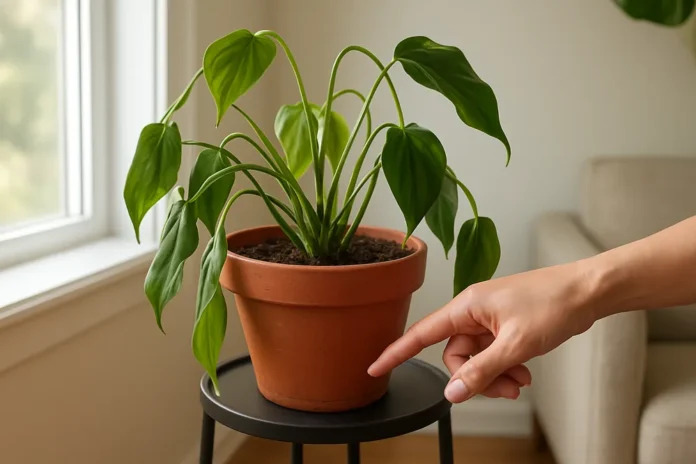
A philodendron usually wilts because its roots are stressed by too much water, too little water, poor drainage, temperature extremes, or transplant shock. In some cases, pests or root damage can also keep the plant from moving water properly.
A wilting philodendron can look dramatic fast. One day the leaves are glossy and upright, and the next they are hanging limp off the stems like the plant gave up overnight. The good news is that wilting is often an early stress signal, not a death sentence.
In my experience, philodendrons wilt most often because something is interfering with how the roots take up and move water. That can mean dry soil, soggy soil, root rot, a pot that drains poorly, or sudden environmental stress. The trick is to look at the whole picture, not just the drooping leaves.
If your philodendron is wilting, pay attention to the soil moisture, the feel of the stems, the condition of the roots, and whether the leaves are also yellowing, browning, or curling. Those clues will usually tell you whether you are dealing with a simple watering issue or a bigger root problem.
What Wilting Usually Means on Philodendron
Wilting means the plant is losing water pressure in its tissues. Healthy philodendron leaves stay firm because the roots are taking up enough moisture and sending it through the stems and leaf veins. When that flow is interrupted, the leaves soften, droop, or collapse.
That interruption can happen for opposite reasons. Soil that has gone too dry leaves the roots with nothing to absorb. Soil that stays wet too long can suffocate roots and eventually rot them, which also prevents water uptake. So the same symptom, droopy leaves, can come from either underwatering or overwatering.
- Leaves droop but feel thin and slightly crispy: often underwatering or very dry air combined with dry soil
- Leaves droop and feel soft or heavy: often overwatering or root stress
- Wilting with yellow leaves: commonly excess moisture, poor drainage, or root decline
- Wilting after repotting: often transplant shock or root disturbance
- Wilting in hot sun or near a vent: often heat stress or rapid moisture loss
When I diagnose a wilting philodendron, I do not trust one leaf. I compare the oldest and newest leaves, feel the potting mix a few inches down, and look for a pattern across the whole plant. A single limp leaf can be minor. A whole plant going soft usually points back to the roots.
Underwatering and Bone-dry Soil
Underwatering is one of the most common reasons a philodendron wilts. If the potting mix becomes very dry, the roots cannot supply enough water to support the leaves. This is especially common in warm rooms, in small pots, or in plants that are slightly rootbound and drying out faster than expected.
A thirsty philodendron often has drooping leaves that feel lighter, thinner, and sometimes a bit curled inward. The pot may feel unusually light when lifted. The soil may pull away from the sides of the pot, and if it has dried severely, water might initially run straight through without soaking in well.
- Pot feels very light
- Top several inches of soil are dry
- Leaves may curl, droop, or look papery at the edges
- The plant perks up within a day after a deep watering
If this is the cause, water thoroughly until excess drains from the bottom. If the mix has become hydrophobic and is resisting moisture, water slowly in stages or bottom water the pot for a short time so the root ball can rehydrate evenly. After that, go back to watering when the top inch or two of soil dries, rather than on a strict calendar.
Overwatering and Early Root Rot
Many gardeners assume a wilting plant needs more water, but philodendrons also wilt when they have had too much. Roots need oxygen as much as they need moisture. In waterlogged soil, air spaces disappear, roots weaken, and fungal rot can set in. Once damaged, the roots cannot move water upward even though the soil is wet.
This kind of wilt often comes with soft stems, yellowing leaves, or a generally dull, lifeless look. The soil may stay wet for many days, and the pot may smell musty or sour. If you slip the plant out of its pot, healthy roots should look pale and firm. Rotting roots are often brown, mushy, and may shed their outer layer when touched.
- Soil feels wet for an extended time
- Lower leaves yellow while the plant still droops
- Stems feel soft instead of firm
- Potting mix smells stale or swampy
- Roots appear brown, mushy, or sparse
If you suspect overwatering, do not keep adding small sips of water because the plant looks limp. I either let the mix dry to an appropriate level if roots still seem healthy, or I unpot the plant and inspect the roots right away if the soil stays soggy and the decline is fast.
To fix mild overwatering, let the plant dry somewhat and move it into bright, indirect light so the mix can lose moisture faster. For root rot, trim away damaged roots with clean scissors and repot into fresh, airy mix in a container with drainage holes. Then water thoroughly once and wait until the upper layer of soil dries before watering again.
Poor Drainage and the Wrong Potting Mix
Sometimes the real problem is not how often you water but what the roots are sitting in. Philodendrons like moisture, but they do not like dense, compacted soil that stays soggy around the roots. A heavy peat mix, decorative cachepot without drainage, or a pot that is too large can all keep the root zone wet too long.
When drainage is poor, wilting can seem confusing because the soil may be wet while the leaves still droop. That happens because suffocated roots cannot function properly. Plants in oversized pots are especially vulnerable because there is more soil than the root system can use, so it stays damp much longer after watering.
- No drainage hole in the container
- Water collects in an outer decorative pot
- Potting mix feels dense and muddy instead of loose and chunky
- The pot is much larger than the root ball
- Soil remains wet a week or more after watering
A better philodendron mix usually includes ingredients that create air pockets, such as bark, perlite, coco coir, or a quality indoor plant mix amended for drainage. The goal is not to make the soil dry out instantly, but to let excess water move through while keeping enough moisture for the roots.
Heat, Cold, and Sudden Environmental Stress
Philodendrons are tropical plants, so they respond quickly to uncomfortable temperatures. A blast of hot afternoon sun, a heater vent, cold air from an AC unit, or a chilly draft from a window can all trigger wilting. In these cases, the roots may be fine, but the leaves are losing moisture faster than the plant can replace it.
Heat stress often shows up as drooping paired with curled leaves, pale patches, or crispy brown margins if sunlight is intense. Cold stress can make the whole plant look limp and dull, sometimes followed by dark, water-soaked patches. A philodendron that was recently moved outdoors or placed near a bright west-facing window may wilt simply because the change was too abrupt.
- Wilting starts after moving the plant
- Leaves droop most during the hottest part of the day
- There are scorch marks or bleached areas on exposed leaves
- The plant sits near a drafty door, vent, or cold glass
Move the plant to a spot with bright, indirect light and stable temperatures. Most philodendrons do best in normal indoor conditions, away from direct midday sun and away from strong hot or cold airflow. Once the environment is steadier, the leaves often regain firmness if no root damage has occurred.
Transplant Shock and Root Disturbance
If your philodendron started wilting right after repotting, division, or shipping, transplant shock is a likely cause. Even healthy roots can struggle for a short time after being disturbed. Breaking up the root ball aggressively, changing the pot size too much, or switching to a very different potting mix can temporarily interrupt water uptake.
A shocked philodendron may droop despite soil that seems properly moist. Leaves can look limp for several days while the roots adjust. This is more common if the repot was done during a hot spell, if some roots were damaged, or if the plant was fertilized immediately afterward.
In most cases, the best response is patience and stable care. Keep the plant in bright, indirect light, avoid overwatering, and do not fertilize until you see signs of recovery. As long as the stems remain firm and the roots are not rotting, the plant usually settles in with time.
After repotting, I judge recovery by new growth, not by whether every old leaf looks perfect again. A leaf that wilted during the move may stay a little tired-looking, but if the plant starts pushing healthy new leaves, the root system is likely back on track.
Pests and Hidden Root Damage
Pests are not the first cause I think of with wilting philodendrons, but they can absolutely contribute. Sap-sucking pests like spider mites, thrips, aphids, and mealybugs weaken the plant by draining moisture and damaging tender growth. Heavy infestations can leave foliage droopy, curled, stippled, or distorted.
Spider mites are especially sneaky because they are tiny and often hide on leaf undersides. You may notice faint webbing, fine speckling, and leaves that seem to wilt even though the watering seems right. Fungus gnat larvae and other root-zone issues can also contribute indirectly by stressing roots in consistently wet soil.
- Fine stippling or silvery scarring on leaves
- Sticky residue or cottony clusters at nodes
- Webbing under leaves or along stems
- New leaves emerge twisted or damaged
- General decline despite otherwise decent watering habits
Inspect both sides of the leaves, the stems, and the soil surface. If pests are present, isolate the plant and treat it with an appropriate method such as insecticidal soap, neem-based products, or repeated rinsing and wiping, depending on the pest. Severe infestations may require several treatments because eggs can hatch after the first round.
How to Tell Which Cause Is Most Likely
Because different problems can all produce wilt, diagnosis matters more than reacting fast with random fixes. Start with the soil. If it is dry deep in the pot and the container feels light, underwatering is more likely. If it is soaked and sour-smelling, overwatering or drainage issues move to the top of the list.
Then look at the leaves and stems. Crispy edges and curling often lean dry. Yellowing, soft tissue, and a heavy limp look often lean wet. If the timing matches a repot, move, cold draft, or heat spike, environmental stress may be the trigger. If nothing else fits, inspect for pests and roots.
- Feel the soil several inches down, not just the surface.
- Lift the pot to judge whether it feels unusually light or waterlogged.
- Check for yellowing, browning, curling, or soft stems.
- Review recent changes like repotting, moving, sun exposure, or drafts.
- Inspect roots and leaves closely if the cause is still unclear.
How to Help a Wilting Philodendron Recover
Recovery starts with correcting the underlying stress, not just making the plant look less droopy for a day. If the plant was too dry, rehydrate thoroughly. If it was too wet, improve drainage and inspect the roots if needed. If stress came from temperature, light, or transplanting, give the plant a calmer environment and time to adjust.
- Water deeply if the root ball is dry
- Repot into airy, well-draining mix if roots are rotting or the soil is compacted
- Use a pot with drainage holes
- Place the plant in bright, indirect light
- Keep it away from direct hot sun, heating vents, and cold drafts
- Hold fertilizer until the plant is actively recovering
- Remove badly damaged leaves only after the plant stabilizes
Do not expect every wilted leaf to bounce back perfectly. Some leaves recover fully, while others remain bent, yellow, or damaged. What matters most is whether the plant stops declining and starts producing healthy new growth. That is the clearest sign the roots are functioning again.
Going forward, water based on the plant's actual needs instead of a fixed schedule. Philodendrons usually prefer the top inch or two of potting mix to dry before the next watering, but that timing changes with season, pot size, humidity, and growth rate.
FAQ
Can a Philodendron Recover After Severe Wilting?
Yes, many philodendrons recover if the roots are still alive and the problem is corrected quickly. Recovery is more likely when the stems remain firm and the newest growth point is healthy.
Should I Water My Philodendron as Soon as I See Drooping Leaves?
Not automatically. Drooping can mean dry soil, but it can also mean overwatering and root rot. Always feel the soil and consider recent care before adding more water.
Why Is My Philodendron Wilting Even Though the Soil Is Wet?
Wet soil plus wilting often points to oxygen-starved roots, poor drainage, or root rot. The roots may be too damaged to absorb water properly even though plenty is present in the pot.
How Long Does Transplant Shock Last in Philodendron?
Mild transplant shock often improves within several days to two weeks. If wilting keeps getting worse, check for overwatering, damaged roots, or a potting mix that stays too wet.
Do Philodendrons Wilt From Low Humidity?
Low humidity alone usually causes curling, browning edges, or slower growth more than dramatic whole-plant wilting. Wilting is more often tied to root and watering issues, though very dry air can make a thirsty plant collapse faster.
Can Direct Sun Make a Philodendron Wilt?
Yes. Too much direct sun can overheat the leaves and make them lose moisture faster than the roots can replace it. This often happens near hot windows or when a plant is moved outdoors too quickly.
When Should I Repot a Wilting Philodendron?
Repot if the soil is staying soggy, the mix is compacted, the pot lacks drainage, or the roots are rotting. If the plant is only slightly dry or mildly stressed from a move, repotting may add more shock than help.
Need the right setup to prevent wilt from coming back? Check our guide to the best philodendron potting mixes and indoor plant watering tools so you can fix root stress fast and keep growth strong.
